Case Design

The materials used (Gold, Silver, Steel, Enamel) and their significance


The case of a pocket watch is not just an exterior. It is a masterpiece that encapsulates centuries of craftsmanship, artistry, and innovation. Every material used in the creation of the case tells a unique story of both function and form. For collectors of antique pocket watches, understanding the significance of these materials enhances the appreciation of the piece. It’s not just about the timepiece’s aesthetics, but also its history, craftsmanship, and the cultural value imbued in each design.

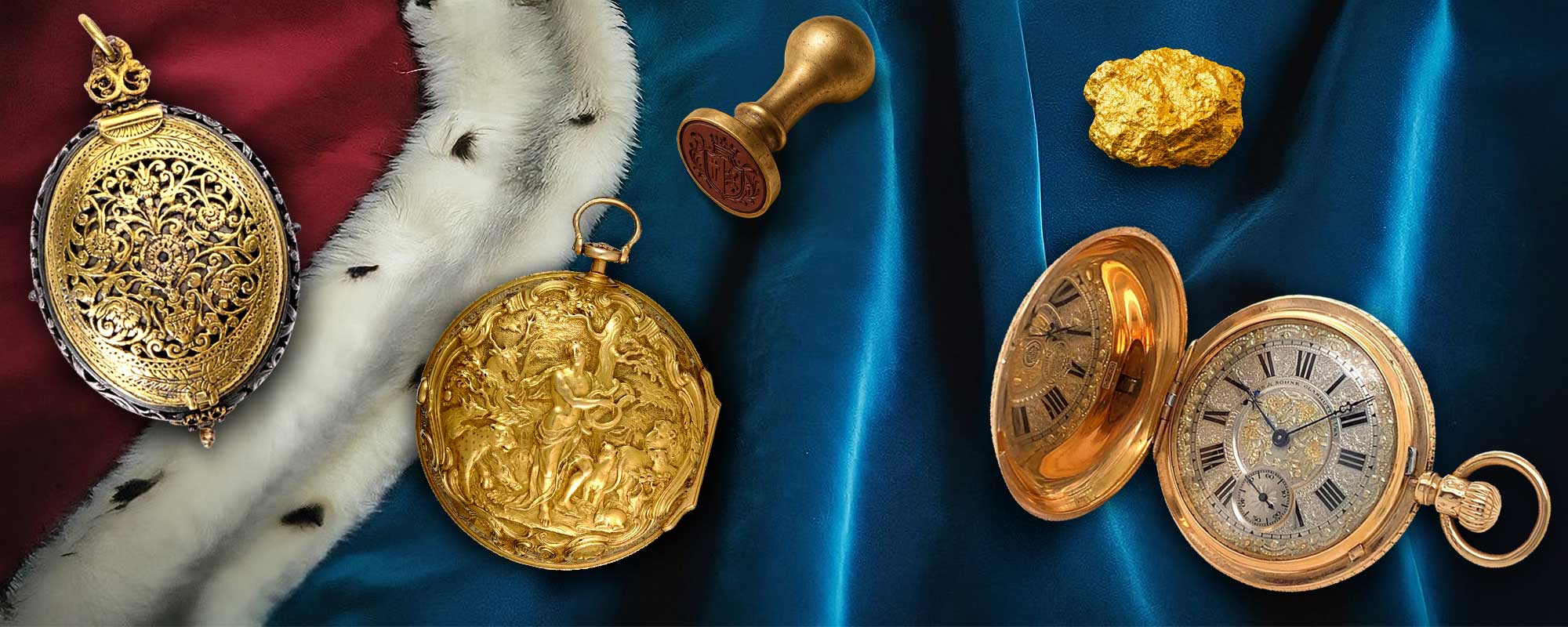
Gold: a timeless symbol of wealth and prestige


Gold has been the pinnacle of luxury in horology for centuries. When it comes to antique pocket watches, gold cases symbolize more than just opulence—they signify craftsmanship of the highest order. Early pocket watches from the 1500s, crafted with fine gold cases, were status symbols for royalty, aristocrats, and wealthy collectors. Gold, with its rich, radiant glow, became the ideal material for horological excellence.

Golden case designs of antique pocket watches

But the significance of gold goes beyond its aesthetic appeal. Gold’s resistance to corrosion, coupled with its ability to be intricately worked, made it an ideal choice for watchmakers. The use of yellow gold was most common, with its warm, timeless hue reflecting the era’s love for rich, regal designs. As time progressed, rose gold became popular, adding a more subtle, romantic appeal to pocket watches. Rose gold’s reddish hue created a luxurious, refined look, and it is still revered today for its rich patina that develops over time.


Gold cases also hold a certain mystique. As these timepieces age, they often develop a patina that tells a story of the watch’s past, enhancing its uniqueness. This distinctive aging process increases the collectability and value of these pieces, making them highly sought after by collectors who appreciate the history and craftsmanship behind them.

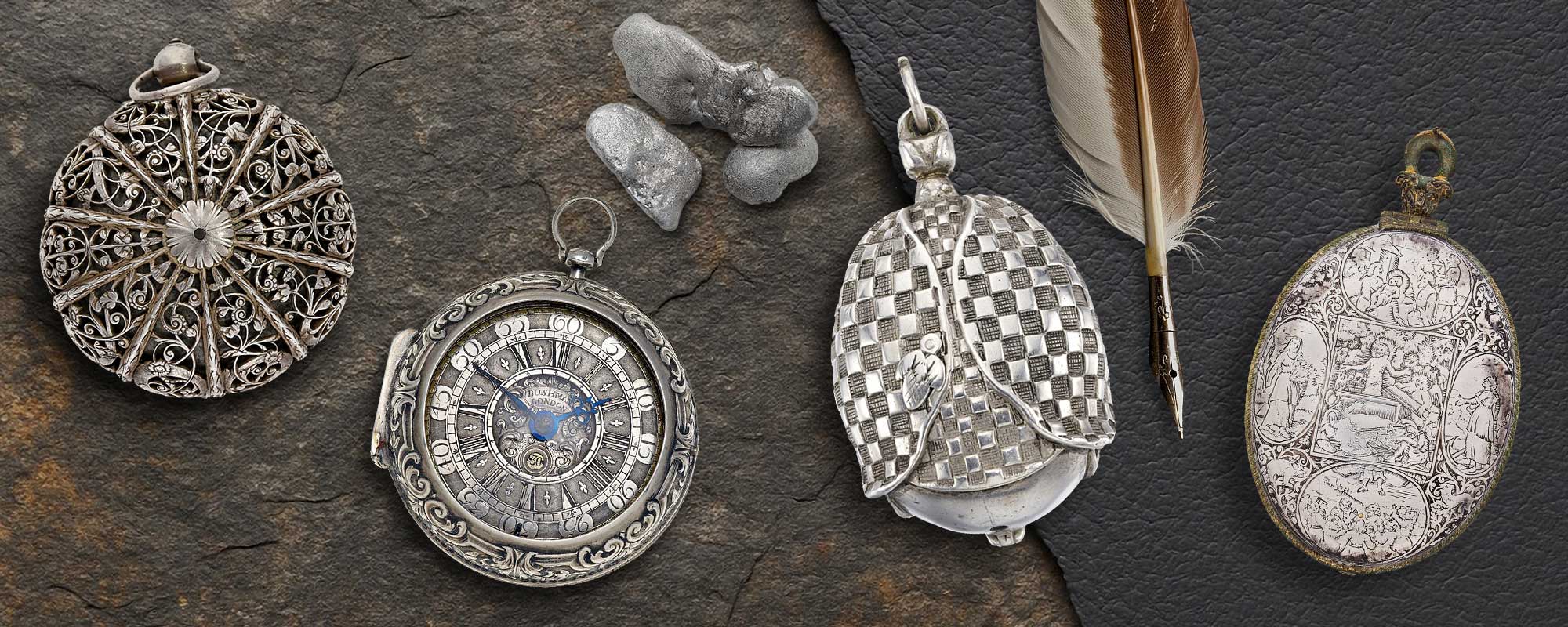
Silver: the classic material of horological art


While gold may be the material of choice for high-end timepieces, silver holds a special place in the history of pocket watches. In the 17th and 18th centuries, silver was the predominant material for watch cases, offering a balance of luxury and practicality. Silver’s bright, reflective surface was perfect for showcasing the intricate engraving work that watchmakers of the period were known for.

Silver case designs of antique pocket watches

In many ways, silver was the workhorse of the pocket watch world. It was more affordable than gold, but still highly prized for its beauty. Unlike gold, silver carries a slightly cooler tone, making it the perfect contrast to the warmth of gold. Silver cases are often marked by delicate engraving, etched patterns, and intricate designs, offering a rich aesthetic that was often customized to the wearer’s taste.


What makes silver so fascinating for collectors is its aging process. Over time, silver cases develop a distinct patina that adds to their vintage allure. The transformation from bright, shiny silver to a softened, aged tone creates a character that cannot be replicated. This aging is highly valued by collectors, who see it as an expression of the watch’s history.

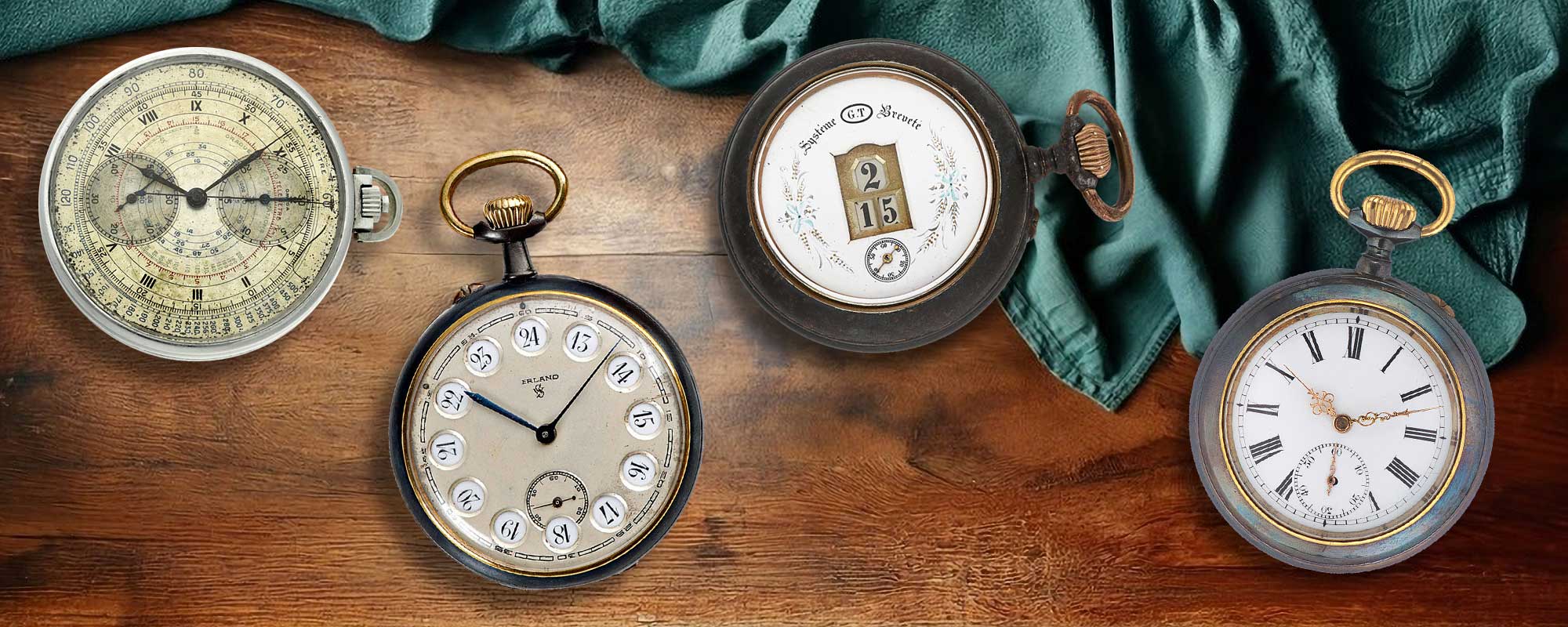
Steel: the strength behind elegant simplicity


While gold and silver reflect luxury, steel is often regarded as the more understated hero in the world of antique pocket watches. Known for its durability, strength, and resistance to wear, steel cases became increasingly popular during the industrial era. Steel pocket watches were built to last and often carried the practical sensibilities of a working-class individual or a traveler who needed a reliable timepiece.

Steel case designs of antique pocket watches

Despite its utilitarian roots, steel has a beauty that only increases with time. Early steel cases were often highly polished, creating a sleek, mirror-like finish. Over time, many of these cases were given a matte finish, adding a more subdued elegance to the timepiece. Steel also allowed for a level of functional design that was not always possible with the more decorative gold or silver.


What makes steel so significant for collectors is its robustness and longevity. Steel cases can withstand the rigors of daily wear much better than their gold or silver counterparts, which is why many well-preserved steel-cased pocket watches remain in circulation today. Steel also provides a distinctive aesthetic that sets it apart from the traditional gold or silver, making it a highly desirable material for those seeking vintage pieces with a sense of both strength and elegance.

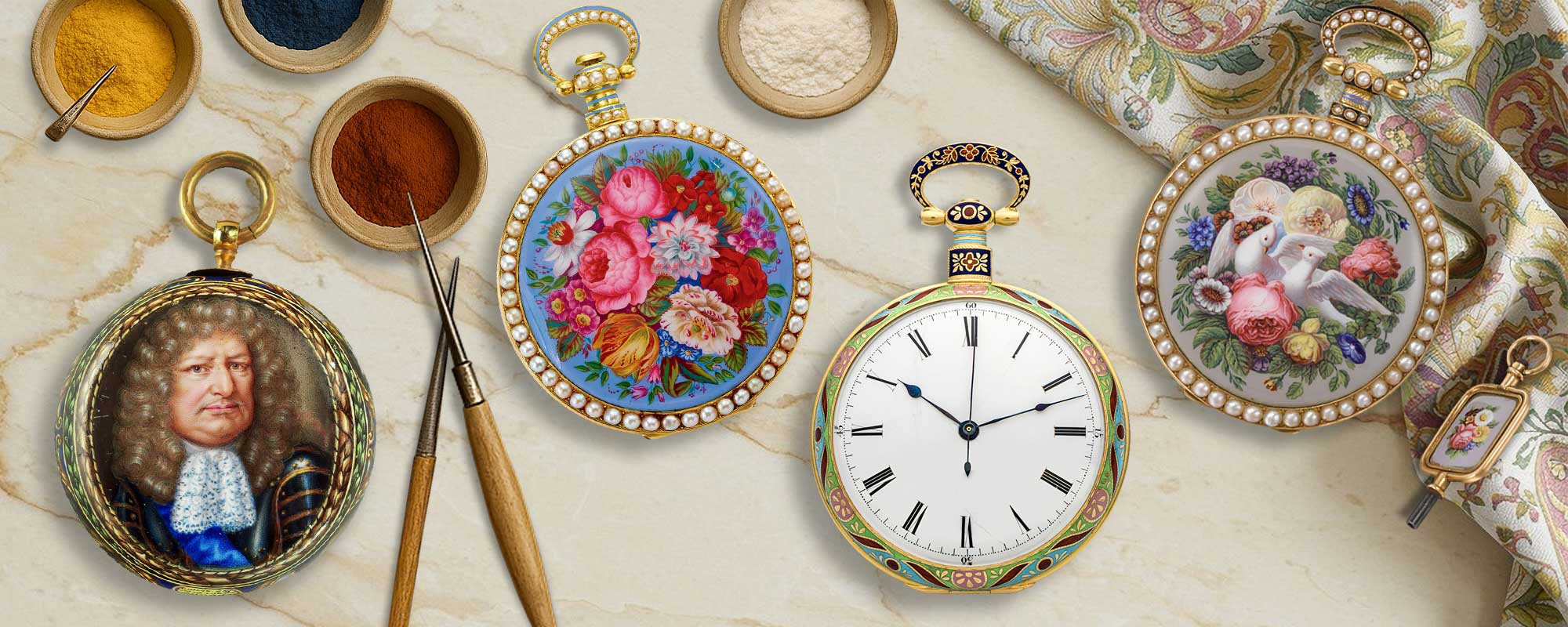
Enamel: the artistry that sets timepieces apart


One of the most striking materials used in antique pocket watches is enamel. While enamel is typically associated with dials, it also plays an important role in the design of the case. Enamel cases, especially those from the 18th and 19th centuries, represent the peak of artistry in horology. These cases were often hand-painted with intricate designs, from floral motifs to miniature portraits, each piece a work of art in itself.

Enamel case designs of antique pocket watches

The process of creating an enamel case is painstaking and requires a high level of expertise. The enamel is applied to a metal surface and then fired at high temperatures to ensure the colors are vivid and durable. The result is a smooth, glass-like surface that catches the light and adds a layer of artistic elegance to the timepiece.


What makes enamel so valuable is the skill required to create it. Each enamel case is unique, and the hand-painted designs make each watch a one-of-a-kind piece. Enamel cases also have the ability to reflect the style of the era in which they were created, making them highly sought after by collectors who appreciate the artistic craftsmanship of timepieces.

The intersection of materials and mastery


Each material used in the case design of a pocket watch is more than just a functional element—it is a reflection of the craftsmanship, the era, and the values of the time. Whether it’s the luxury of gold, the practicality of steel, the beauty of silver, or the artistry of enamel, the case of a pocket watch carries with it the story of its creation and its journey through time.


For collectors, understanding these materials is essential to appreciating the true value of an antique pocket watch. The case is not just a protective cover; it is the watch’s canvas, its symbol of durability, artistry, and tradition. Every scratch, every wear mark, and every unique characteristic adds to the story, making each pocket watch not just a timepiece, but a living history.


As you look at these intricate cases, consider their significance. They are not merely decoration—they are the key to unlocking the rich heritage of pocket watches, and they provide a glimpse into the craftsmanship that made these timepieces both functional and beautiful. For the collector, every material, every engraving, and every design detail is an invitation to dive deeper into the world of antique horology.

To top