Watchmakers and watch Companies starting with the letter B
Browse through top watchmakers and esteemed watch companies starting with the letter B. Delve into their rich legacies, innovative designs, and expert craftsmanship. Ideal for horology lovers and collectors!
Barraud
The Barrauds were a family of watchmakers. Paul Philip Barraud was a prominent English watchmaker who lived and worked in London, specifically in Cornhill. He became well-known for the construction of chronometers. He was born on December 5th, 1752 in Soho, London to Francis Gabriel Barraud and Magdalen Bennin Crespin, the daughter of a well-known Huguenot silversmith named Paul Crespin.
He was a Fellow of the Clockmakers’ Company (1796-1813) and a master from 1810 to 1811. Paul Philip formed a partnership with George Jamison and William Howells. He married Marriet Chapman and they had seven children together. Three of their sons, Frederick Joseph, John and James also learned the watchmaking trade. He further taught other watchmakers, including Thomas Robison from December 1st, 1800, to December 7th, 1812, and William Turpin from June 5th or June 6th, 1809. After a long and painful illness, Paul Philip died on August 26th, 1820 in Croydon, Surrey and Frederick Joseph assumed management of the firm under the name Barraud & Son, Barraud & Sons and Barrauds.
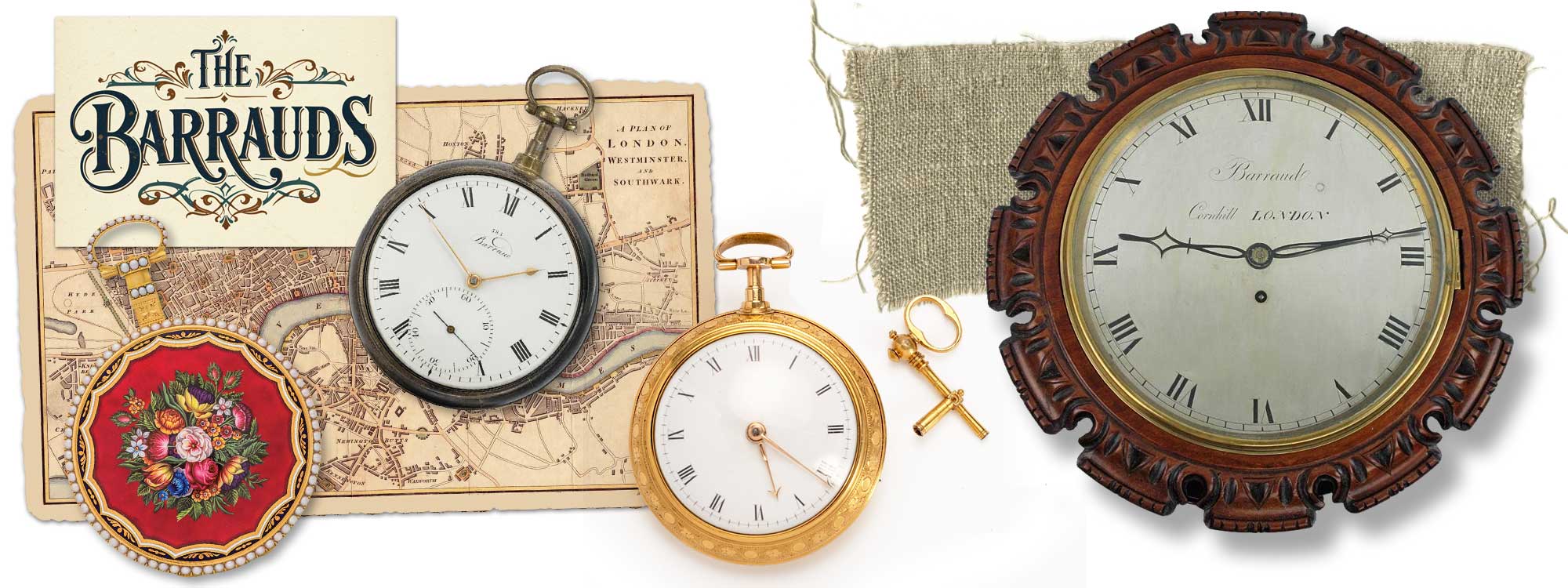
Frederick Joseph was free of the Clockmakers’ Company in 1806. He took his son Frederick Philip and the son of his brother John, Hilton Paul, as his apprentices. John himself had only a minor role in the business and the youngest brother James did not follow the trade at all. The company manufactured over 1.000 chronometers between 1796 and 1820. In 1838, Frederick Philip joined in partnership with John Richard Lund, a horological inventor, they renamed the firm Barrauds & Lund. In 1846 Hilton Paul replaced his uncle, Frederick Joseph in the firm. Frederick Joseph died on September 4th, 1859.
Paul Philippe Barraud was also the great-grandfather of William Barraud (1810-1850) and Henry Barraud (1811-1874), who were well-known animal painters. Henry Barraud’s son was painter Francis Barraud (1856–1924), who became known for creating the iconic “His Master’s Voice” logo of a dog named Nipper next to a gramophone.
Bartlett, Waltham
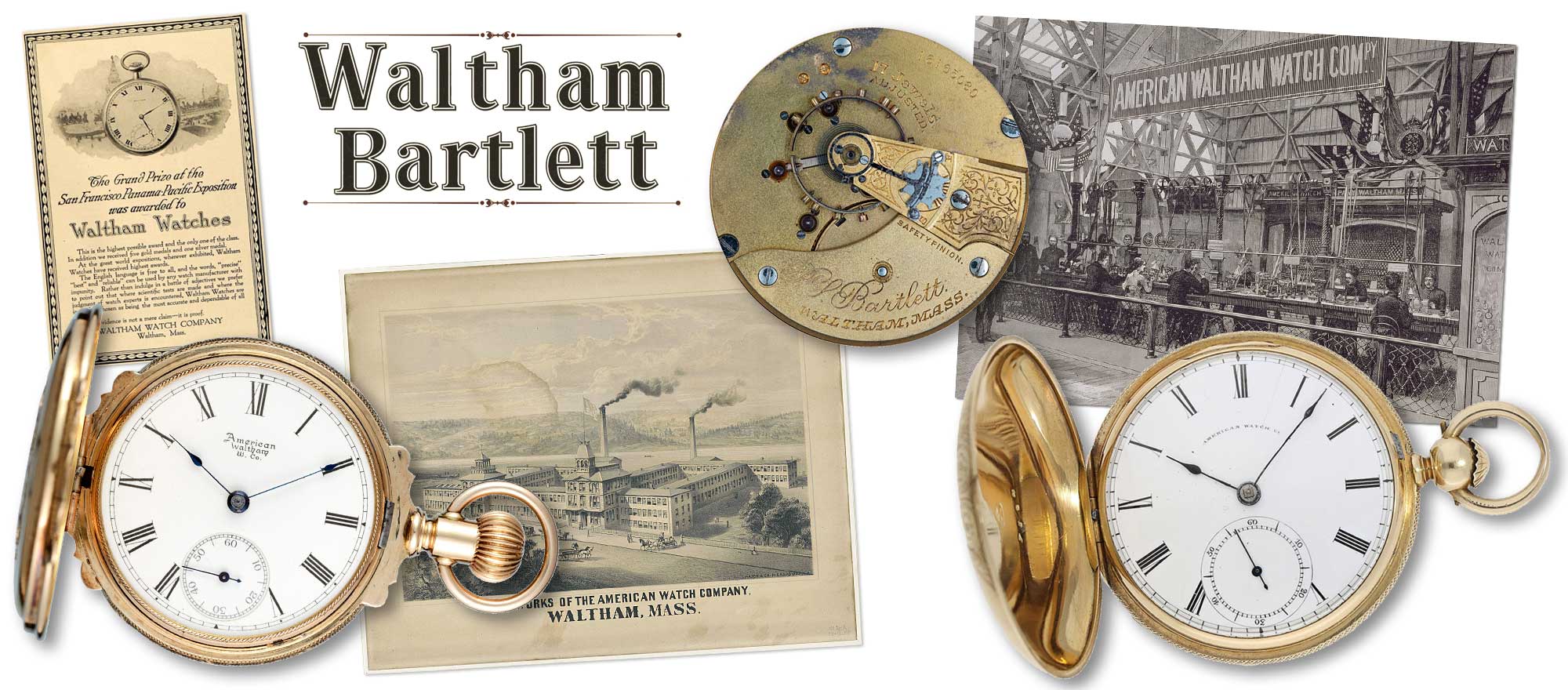
Waltham Bartlett was a watchmaker who worked for the American Waltham Watch Company in the late 19th century. Waltham Bartlett was a renowned American watchmaker who made significant contributions to the watchmaking industry during his career.
Some of his notable achievements include:
- Co-founding the Waltham Watch Company: Bartlett, along with Aaron Dennison and Edward Howard, founded the Waltham Watch Company in 1850, which went on to become one of the most successful watch manufacturers in the world.
- Developing innovative watchmaking techniques: he was known for his innovative approach to watchmaking and developed several new techniques that improved the accuracy and reliability of watches.
- Creating high-quality watches: Bartlett was committed to producing high-quality watches and he oversaw the production of many of the company’s most prestigious models.
- Winning awards for his work: his watches were highly regarded by his peers and he won several awards for his contributions to the field of watchmaking.
Baur, Johann Michael
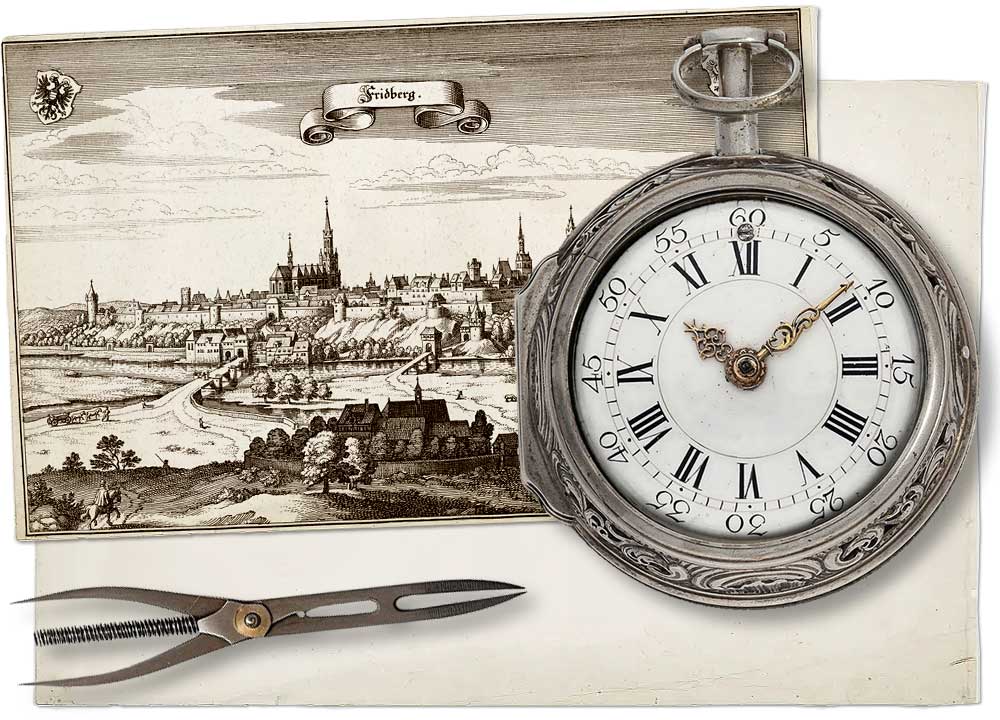
Johann Michael Baur was a well-known watchmaker who worked in Friedberg, Germany around 1770. He made high-quality timepieces. Compared to other watchmakers of his time, Baur’s watches were known for their precision and accuracy. He was also known for his innovative designs and use of high-quality materials, which set his watches apart from those of his competitors.
Baur’s watches were often decorated with intricate engravings and other decorative elements, which added to their aesthetic appeal. He further used complex mechanisms and complications, which made his watches highly functional as well as visually impressive.
Bautte, Jean-François
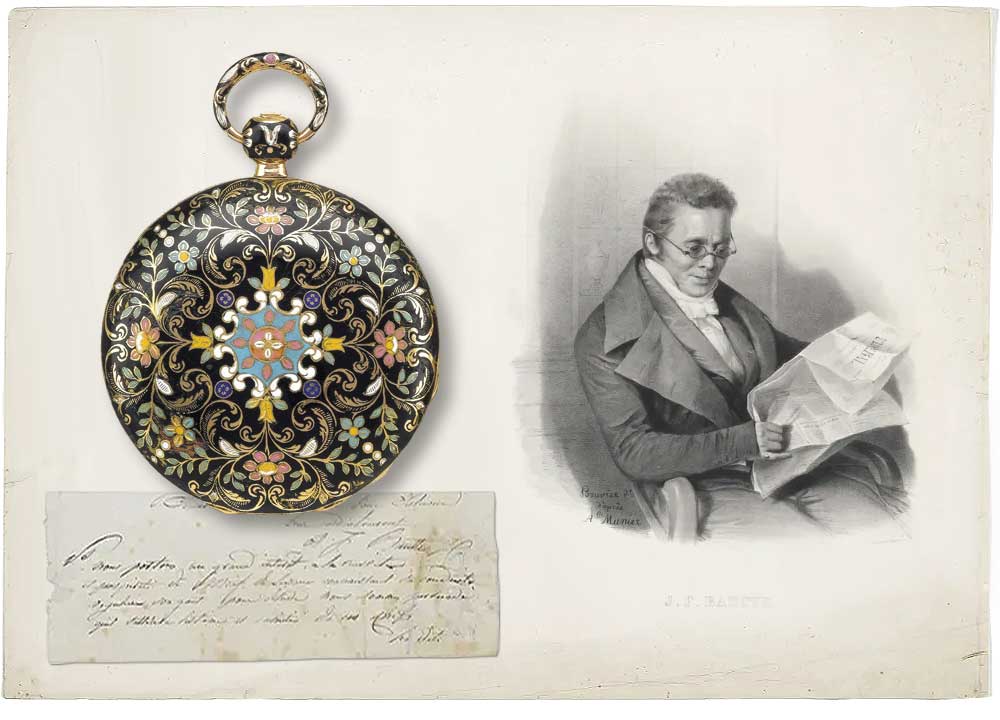
In 1791 watchmaker and goldsmith Jean-François Bautte signed his first watches. He created a manufacturing company in Geneva, grouping for the first time ever all the watchmaking facets of that time. This included the engineering of the watch all the way to the final hand assembly and hand polishing of each piece. In 1832, Jacques Bautte and Jean-Samuel Rossel succeeded him, becoming the head of the company. In 1852, the watchmaker Constant Girard founded Girard & Cie in La Chaux-de-Fonds, Switzerland. He then married Marie Perregaux in 1854 and the Girard-Perregaux company was founded in 1856. In 1906, Constant Girard-Gallet, who took over control of the company from his father, acquired the Bautte firm and merged it with Girard-Perregaux & Cie.
Bartolozzi, Francesco
Francesco Bartolozzi was born on September 21st, 1727 in Florence, Italy and died on March 7th, 1815 in Lissabon, Portugal. He was a painter and engraver who mainly worked in England.
Beguelin, Henry
Henry Beguelin was a Swiss watchmaker who founded his own company in the late 19th century. He was known for creating high-quality timepieces that were both accurate and aesthetically pleasing. Some of his most notable creations include:
The Beguelin chronometer: This was a highly accurate timepiece that was designed for use by sailors and other navigators. It featured a large, easy-to-read dial and was known for its reliability and precision.
The Beguelin pocket watch: This was a classic pocket watch that was popular in the late 19th and early 20th centuries. It featured a simple, elegant design and was often passed down as a family heirloom.
The Beguelin wristwatch: This was one of the earliest wristwatches ever created. It was designed for use by soldiers during World War I. It featured a rugged, durable design and was known for its accuracy and reliability.
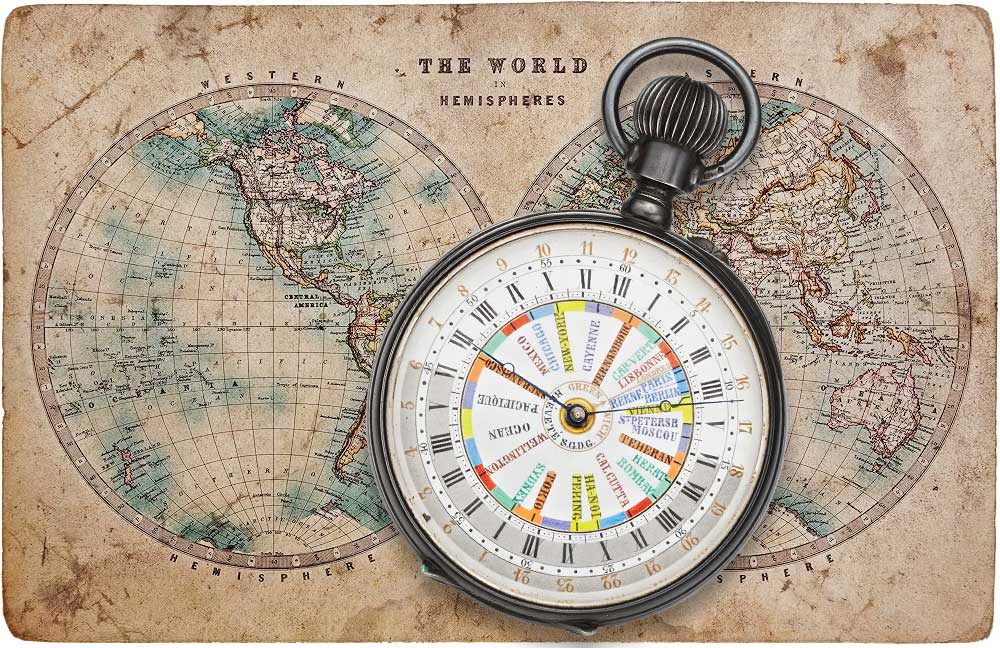
Around 1880 the Swiss watch manufacturer J.L. & A. Beguelin was based in Tramelan and listed in Bern. L. Beguelin from Bern received the US patent No. 34506 on July 13, 1868, for a ‘universal’ clock (World Time clock) which displays the time for various cities around the world, the clock has two dials. The front dial with Roman hours, I-XII in each half, an outer minute track, outermost 24-hour numerals, and a revolving centre with different time zones and the names of 25 world cities. The reverse with the names of 43 world cities and a central revolving dial calibrated from 0-60.
On September 17, 1885, L. Beguelin received the British Patent No. 11,050. The watch has the addition of the ‘Greenwich Patent’. There are indications that the company Beguelin & Co SA later emerged from this venture.
Benac
Benac was a watchmaker based in Besançon, France around 1800. The city of Besançon was a hub of watchmaking during this time and was known for producing high-quality timepieces. Some notable timepieces produced by Benac include pocket watches, chronometers and marine chronometers.
Benrus
Benrus was an American company that was founded in 1921 by Benjamin Lazrus and his brothers, Ralph and Oscar. The name Benrus is derived from a combination of Benjamin’s first and last names. The firm started as a small watch repair shop in New York City and gradually grew into a prominent watch manufacturing company. During World War II, Benrus became well-known for producing military watches for the U.S. Armed Forces. These watches were highly regarded for their accuracy, durability and functionality. The company also produced timepieces for aviators, including the Sky Chief and the Citation models. In the post-war era, Benrus continued to expand its product line and gained popularity among consumers. The brand became known for its innovative designs and high-quality craftsmanship. Benrus watches were often characterized by their distinctive dials, which featured unique designs and colour combinations.
Throughout the 1950s and 1960s, Benrus enjoyed great success and became one of the leading watch brands in the United States. The company coined and trademarked the name Dial-O-Rama in 1956 and started production of this incredibly fun jump-hour design. While the movement was not made by the brand, everything else about the watch exuded the forward and style-conscious thinking Benrus exemplified. While there were around five or six different dials, the first and most sought-after was the Chevron dial, which came to exemplify the model line. While the movement was derived from a jump-hour design from the 30s Benrus was one of the first to revive the format in the late 50s through the 60s in what is called a digital “actual number readout” format. Unlike competitors, Benrus housed the movement in its dust and waterproof housing making it not only fashionable but also more durable. It remains a collector favourite for its quirky style.
The company sponsored various sports events and teams, including the New York Yankees baseball team. However, like many other American watchmakers, Benrus faced challenges in the 1970s due to the rise of quartz watches from Japan. The company struggled to adapt to the changing market and eventually filed for bankruptcy in 1977. Since then, the Benrus brand has changed hands multiple times. It has been revived by different companies, but it has not regained its former prominence in the watch industry. Despite this, vintage Benrus watches from the mid-20th century are still highly sought after by collectors and enthusiasts.
Berthoud, Ferdinand
Ferdinand Berthoud (1727-1807) was a Swiss watchmaker and scientist. He was awarded the title of Master Watchmaker in Paris in 1753. He succeeded the pioneering work of Henry Sully. At the king’s insistence he travelled to England to view the chronometers of John Harrison.
Ferdinand Berthoud settled in Paris on 16 April 1745 at the age of 18, a move that enabled him to perfect his knowledge of the watchmaking-clockmaking profession. Ferdinand Berthoud rapidly acquired a reputation for technical competence and achieved recognition for his innovations in his field.ea necessary to navigation.
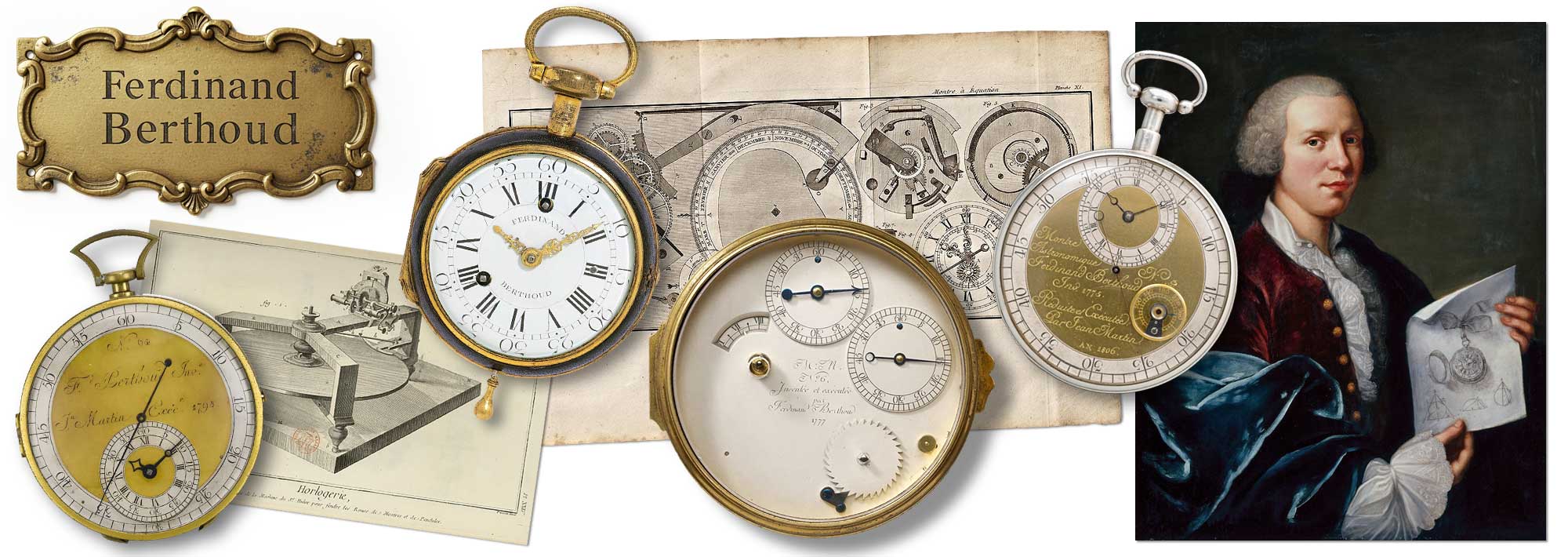
On 13 December 1760, Ferdinand Berthoud submitted to the French Royal Academy of Science a Mémoire sur les principes de construction d’une Horloge de Marine, the famous Marine Chronometer No. 1, whose construction was completed at the start of 1761.
Ferdinand Berthoud was appointed Horloger du roi (Horologist-Mechanic by appointment to the King and the Navy) in 1770. He was also named a member of the Institute right from the time of its creation in 1795. Berthoud had meanwhile become a member of the Royal Societyon 16 February 1764.
He is regarded as one of the inventors of the marine chronometer that served to determine longitude at sea necessary to navigation.
Bobinet, Charles
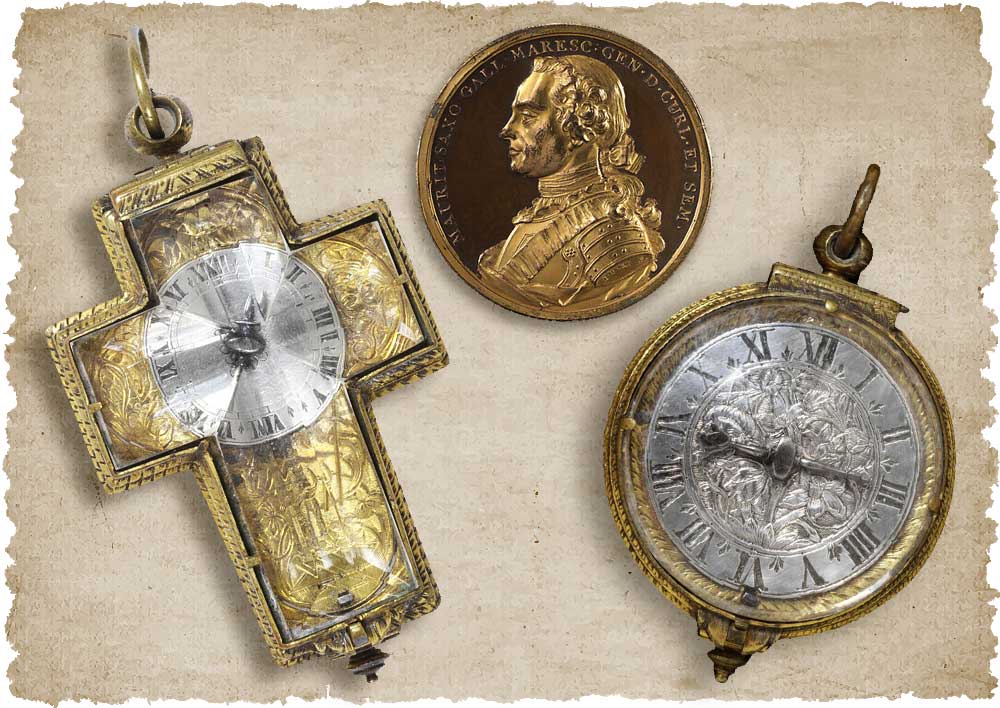
Charles Bobinet, a Swiss watchmaker, was born in or around 1610 as the son of Pierre Bobinet from Poitou, France. Pierre fled to Geneva after St. Bartholomew’s Night. Charles Bobinet married Françoise Adelhardt in July 1637 in Geneva. Their daughter Pernette Bobinet (1649-1695) was born from this marriage. Though based in Castelnaudary, Aude, France for several years, Bobinet was a teacher to several apprentices, including Jean Bastard in 1638, Vincent Perissel in 1639, Pierre Chenevière I in 1654, François Chenevière in 1655 and Jacques Sullin in 1664. Charles passed away on September 15, 1674, in Geneva at 56. His work includes a crucifix watch auctioned at Antiquorum on May 31, 2014, lot No. 27 and watches signed ‘Charles Bobinet Paris’. Moreover, the Metropolitan Museum of Art, the Basel Historical Museum and the British Museum have clocks with enamelled dials by Charles Bobinet in their collection.
Borel Fils & Cie
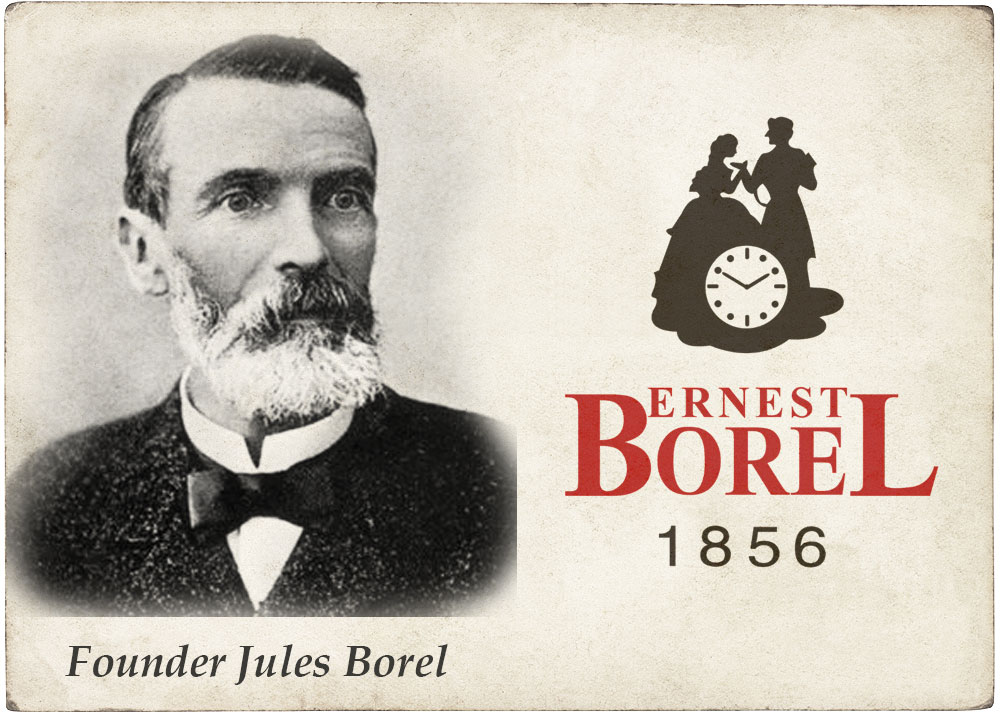
The Borel Fils & Cie watch company was established in 1856 in Neuchâtel, Switzerland by watchmaker Jules Borel. In 1859, along with his brother-in-law, Paul Courvoisier, Borel established the Borel-Courvoisier watch company. They won several awards in the late 19th century including first place in the 1866 Neuchâtel Observatory timing accuracy competition. In 1898, Jules’ son, Ernest Borel, took over the company and he formally changed the name to Ernest Borel & Cie the following year. Ernest Borel was the head of the company until 1936, when his son, Jean-Louis Borel, succeeded him as manager. In 1975, the company was bought by the firm Aubry Frère S.A. It was sold to a Hong Kong-based company in 1989.
Bovet Fleurier SA
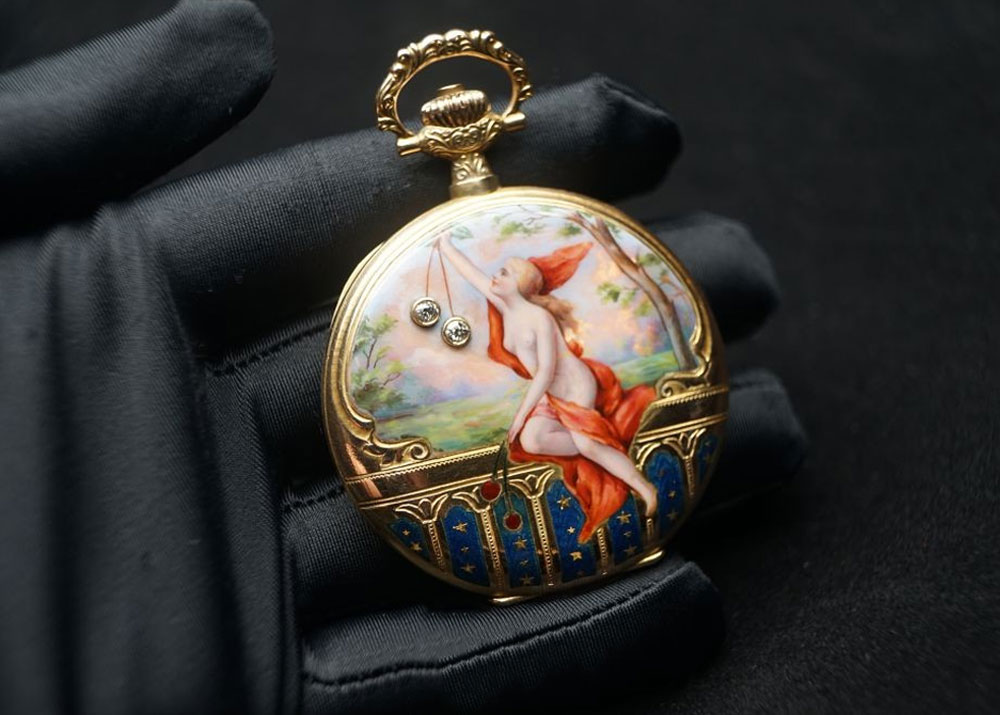
Bovet Fleurier SA is a Swiss brand of luxury watchmakers chartered May 1, 1822 in London, U.K. by Édouard Bovet. It is most noted for its pocket watches manufactured for the Chinese market in the 19th century.
Amongst the European makers of pocket watches who produced watches for the Chinese market, Ilbery in London and Bovet and Vaucher in Fleurier were the most renowned companies. They had branches in China and exported the movements and the wonderful enamelwork for the timepieces from Switzerland to China.The lavishly ornamented cases always had very distinctive decorations; the motifs were usually taken from nature and have lost nothing of their appeal 200 years later, they are still highly sought-after collectors pieces. Only very few of these enamel ornaments have survived the years undamaged, this makes a watch in its original condition like this one even more precious. Master Swiss watchmaker Edouard Bovet was one of the many who concentrated on the Chinese market. He arrived in Canton in 1830 carrying five top-quality watches, all of which he sold immediately, to mandarins who paid him in gold bars.
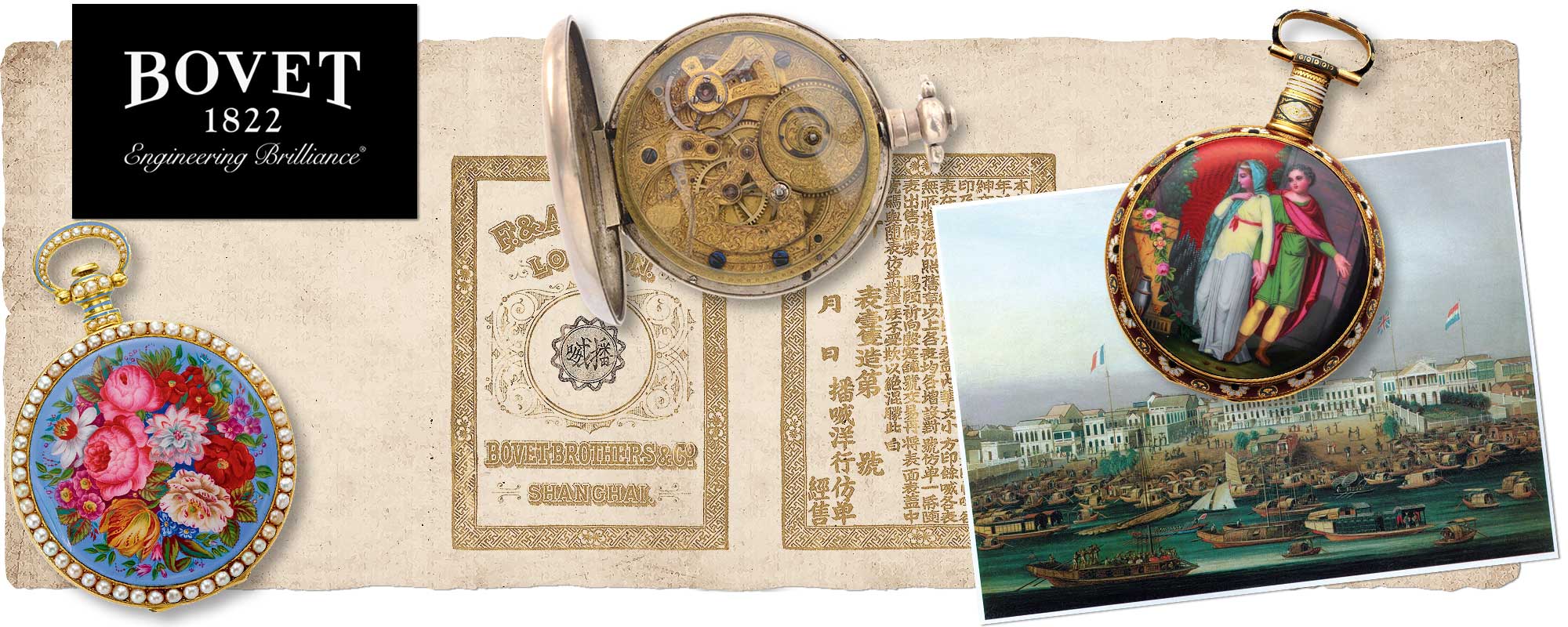
Delighted, he wrote to his brother in Switzerland, enthusing about the market potential and asking him to send more watches, but only of the very best quality, since this was where the demand lay and there was no difficulty about payment. The 17th century Ching Dynasty EmperorK’ang-Hsi was a great admirer of the European sciences, especially that of horology, and he established several imperial workshops in which Chinese craftsmen made clocks and watches under the direction of imported European watchmakers, amongst whom were several masters. At K’ang-Hsi’s invitation, the Zougeese master watchmaker François-Louis Stadlin became director of the imperial workshops, and the Emperor’s favourite.
Breguet, Abraham-Louis
Abraham-Louis Breguet is born on 10 January 1747 in the Swiss town Neuchâtel (German: Neuenburg, formerly: Neufchâtel), which then belongs to the Kingdom of Prussia. He completes an apprenticeship with his stepfather Joseph Tattet in Neuchâtel and from about 1763 in Versailles.
He then works in Paris, probably with Ferdinand Berthoud and Jean Antoine Lépine, before he opens his own workshop there in about 1775. Initially the focus is on the finissage of foreign ebauche movements, but soon follows the production of pocket watches with his own movements, in the style of Lépine.
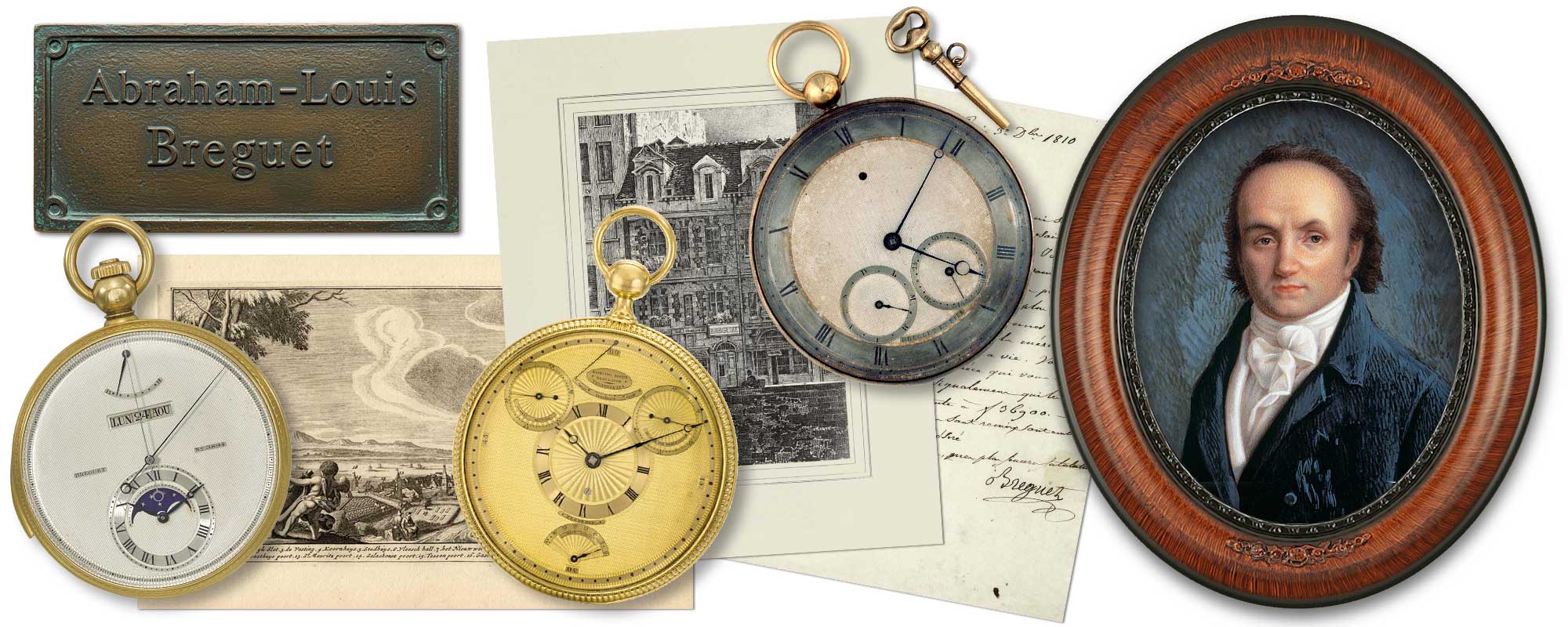
In 1784 he is accepted into the guild as a master watchmaker and in 1785 he becomes purveyor of King Louis XVI. After the beginning of the revolution, in 1793, Breguet fled from France back to Neuchâtel.
During a stay in London, contacts were made to the chronometer maker John Arnold, from which developed a friendship. In 1795 he returned to Paris.
In 1808 his son Louis entered the firm as a partner and continued it after Abraham-Louis Breguet’s death in 1823.
The name of the company evolved to Breguet et Fils in 1808, Breguet, Neveu et Compagnie in 1833 and Montres Breguet S.A. in 1980 and has been a member of the Swatch Group since 1999.
Although the founder, Abraham-Louis Breguet, was Swiss, the company’s operations were firmly rooted in Paris for a significant period. It wasn’t until 1976 that Breguet’s workshops relocated to the Vallée de Joux and the current head office is located in L’Abbaye there.
Pocket watches were signed Breguet et Fils (Breguet and Son) primarily between 1807 and 1833. This change occurred when Abraham-Louis Breguet officially took his son, Antoine-Louis Breguet, into partnership. During this era, you may find variations in the signature depending on the timepiece’s purpose:
- Standard Partnership: Most pieces from this period bear the “Breguet et Fils” signature.
- Royal Navy Title: From approximately 1815 onward, some watches included the prestigious title “Breguet et Fils,Horloger de la Marine Royale”.
Key Signature Transitions
- Before 1807: Watches were typically signed only as “Breguet”.
- Between 1807–1833: The “Breguet et Fils” signature was standard for the joint partnership.
- After 1833: Following Abraham-Louis’s death in 1823 and subsequent management shifts, the firm often reverted to “Breguet” or updated based on the current family head.
Authenticity Note: Genuine period pieces almost never used the signature “Breguet à Paris”. Watches bearing that specific name, or “Breguet et Fils à Paris,” are frequently identified as 19th-century fakes intended to deceive buyers. Authentic Breguets often feature a secret signature—a tiny, nearly invisible engraving on the dial visible only under specific lighting—introduced in 1795 to combat these counterfeits.
Breting, Ulysse-Adrien
Ulysse-Adrien Breting was a Swiss precision watchmaker born in Le Locle on December 1, 1812 (Neuchâtel). He founded Breting Frères with his older brother, Jules Breting, in the 1840s. Their company manufactured a range of timepieces from simple bridge movements to chronometers, jumping seconds with quarter repetition in the Piguet design style and tourbillons. The watches were often characterized by red gold gears and chronometer escapements and were signed only on the dial side with ‘Breting Frères au Locle’.
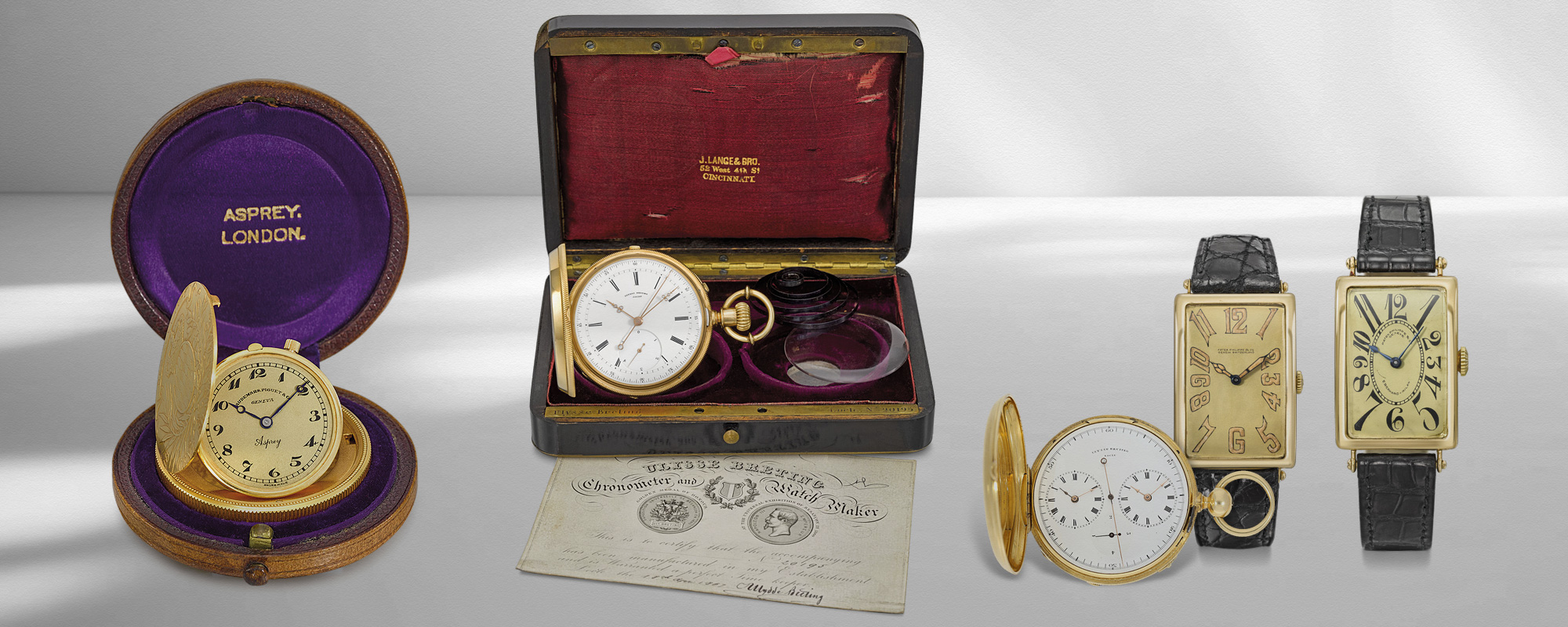
From 1853, Antoine LeCoultre supplied the company with ébauches. Between 1874 and 1875, four clocks with Philippe’s end curves were submitted to the Neuchâtel Observatory, with the highest placing being 8th. In 1876, the company was bought and renamed Ginnel & Ottone Frères.
Ulysse-Adrien Breting was married to Cècile Sandoz and died on January 19, 1891 in Le Locle (Neuchâtel). Both brothers had sons named Ulysse Breting (1835-?) and Jules Breting (1833-circa 1892). Ulysse Breting benefited greatly from the knowledge of his father, Ulysse-Adrien, and achieved fourth prize at the Neuchâtel Observatory in 1875 for a chronometer (bascule escapement). 1876, he won first prize at the Technicum in Le Locle with another chronometer. Until 1887, numerous watches from Ulysse Breting achieved very good placements in the Neuchâtel Observatory.
Brockbank, John
John Brockbank worked in Old Jewry and later Cooper’s court in London. He was apprenticed in 1761 and admitted to the Clockmakers’ Company in 1769.
Buhre, Paul
The Buhre watch company was founded in 1815 in St. Petersburg by Karl Buhre, a Russian businessman of German descent. He moved from Revel together with his son Pavel Karlovich who grew up in the watch business of his father and eventually became his assistant and successor. His eldest son, Pavel Pavlovich Buhre, graduated from the Petropavlovsk Commercial College and became his father’s companion at the age of 26 in 1868. In 1874, he acquired a large watchmaking factory in the heart of the Swiss watchmaking industry in the town of Le Locle. In 1880 he was an appraiser under the Cabinet of His Imperial Majesty, a technician at the Imperial Hermitage, a supplier of the Supreme Court since 1879 and a Merchant of the First Guild since 1884. In the last 30 years before the revolution, Pavel Buhre became the firm without which it is inconceivable to talk about the history of Russian watchmaking. A store was opened in Moscow and then in Kiev to expand the business.
In 1899 the company was awarded the title of Supplier of the Imperial Court. Further, Buhre supplied watches to the railways and the army. Between 1881 and 1894, under the reign of Alexander III, watches were made in simple metal cases. These were prize army and railway watches and the world’s first real wristwatches. At a time when luxury accessory watches turned into a necessity, Pavel Buhre sold watches for everyone. Prices for their watches started from just two rubles. The company owned 50 percent of the Russian market of inexpensive watches. For more wealthy buyers, the same mechanisms were inserted into the silver and gold cases. Complex mechanisms were ordered from the most authoritative Swiss watch companies. In 1916, Buhre obtained a Swiss patent No. 74144 for a chronograph mechanism of its own design. The company was awarded the highest awards at many national and international exhibitions, including at the World Exhibitions in Paris in 1889 a silver and in 1900 a gold medal.
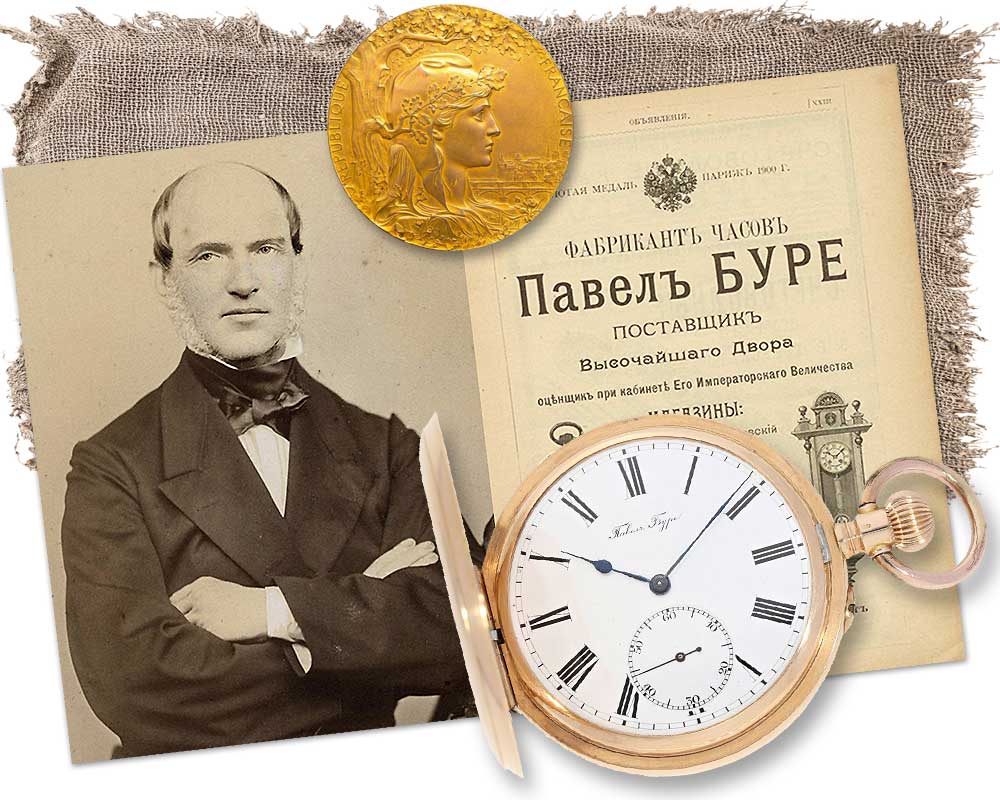
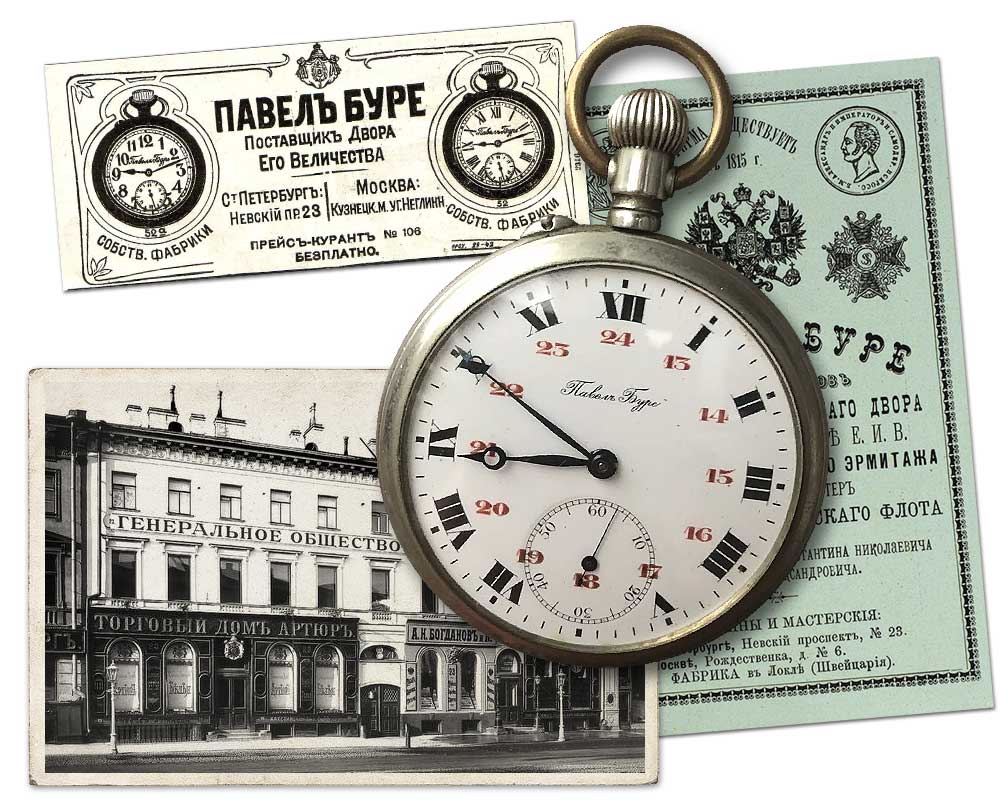
The Revolution of 1917 put an end to business in Russia, but the firm did not cease to exist. The fact that the main production facilities were in Switzerland and the transfer of the headquarters from Petrograd (St. Petersburg) to Le Locle, Switzerland saved the company. Since the main market Russia was lost the first years were very difficult, but the company could not only survive it also significantly increased the geography of supply and became one of the leading watch companies in Switzerland. To be recognizable by consumers all over the world, the name was changed from Pavel Buhré to Paul Buhré. The brand returned to Russia in 2004 with the efforts of the trade house striving to revive the traditions of Pavel Karlovich Buhré, the watchmaker, and the following year, the year of the 190th anniversary of the firm.
Bushman, John
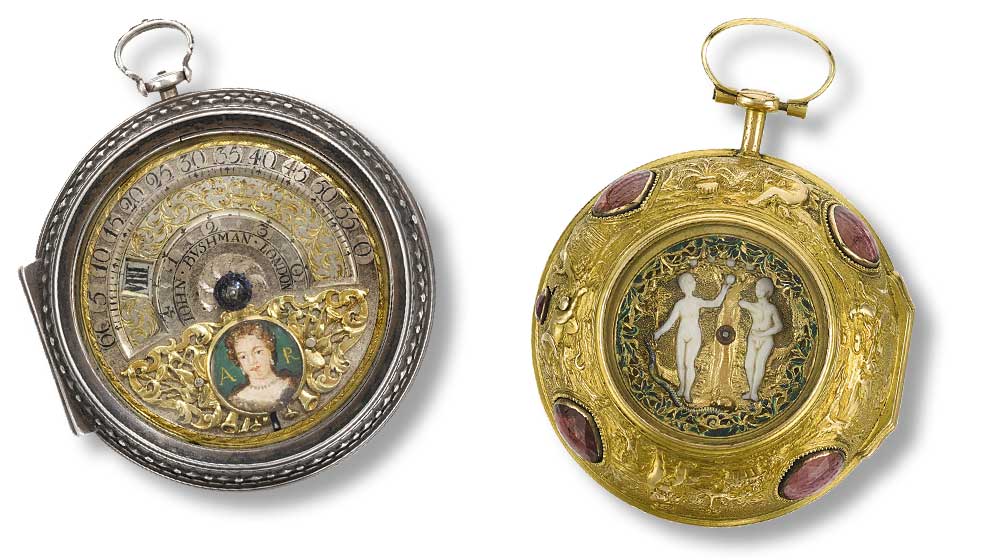
John Bushman (also Buschman or Buschmann) was born in 1661 in Augsburg, Germany as the son of the renowned clockmaker Johann Bushmann II. In circa 1687 he moved to London where in 1690, he got married as Johannes Bushman to 23-year-old Mary Wyatt at Christ Church.
In 1692 he became a Free Brother of the Clockmakers’ Company and was made an assistant in 1720. Bushman presumably worked until 1725.