Watchmakers and watch companies starting with the letter C
Browse through top watchmakers and esteemed watch companies starting with the letter C. Delve into their rich legacies, innovative designs, and expert craftsmanship. Ideal for horology lovers and collectors!
Cabrier II, Charles
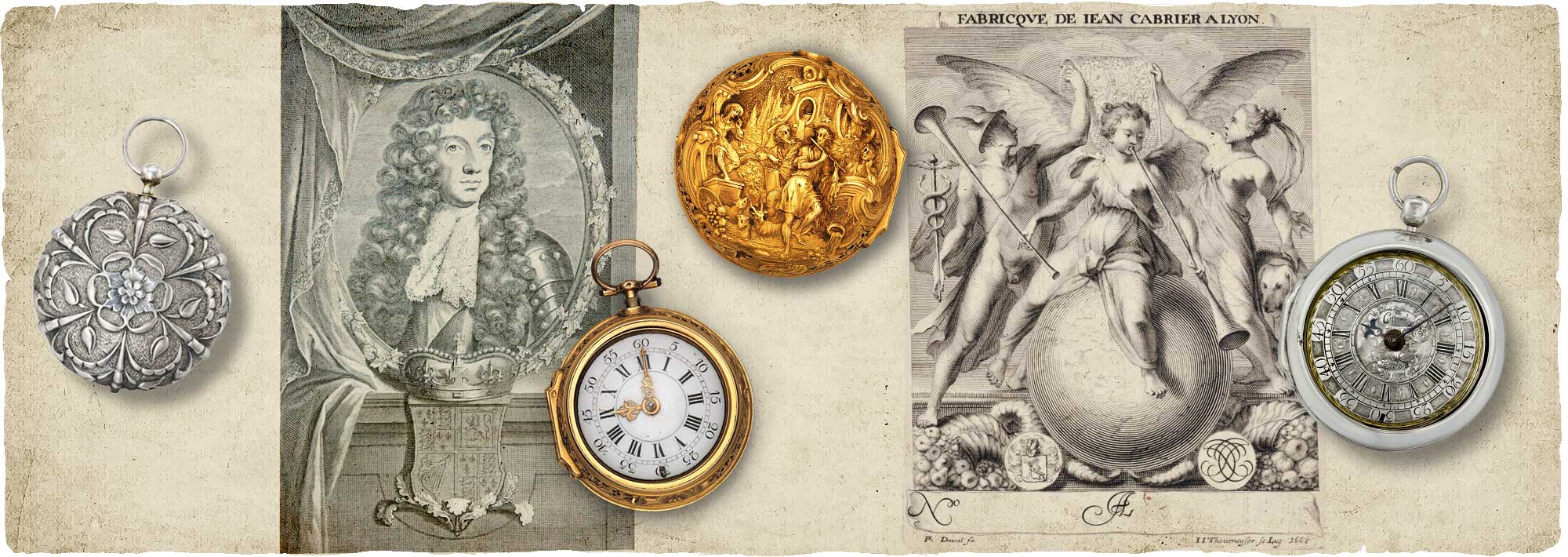
Charles Cabrier II is the second of three generations of London-based clockmakers all named Charles Cabrier. Charles is an unusual given name for a Huguenot family (Old Testament names were preferred, to avoid Catholic saints’ names) but was chosen for the first Charles Cabrier born in 1670 in Lyons, after his great-uncle and godfather Dr Charles Spon, a distinguished 17th century Doctor of Medicine. Charles Cabrier II was apprenticed to his father, Charles Cabrier I, through the London Clockmakers’ Company in 1719, made free in 1726 and served as assistant to the master from 1750 and master of that guild from 1757 to 1772. Until 1759 he had a workshop at 79 Broad Street, near Finsbury Circus, he then moved to Pig Street (which does not exist anymore) near Threadneedle Street. He married Rebecca Stone in April 1725 at St Bride’s Fleet Street. Charles and Rebecca’s first son Charles died in infancy, but their second Charles, born in 1729, later became the third reputed clockmaker Charles Cabrier III.
Capt, Henry-Daniel
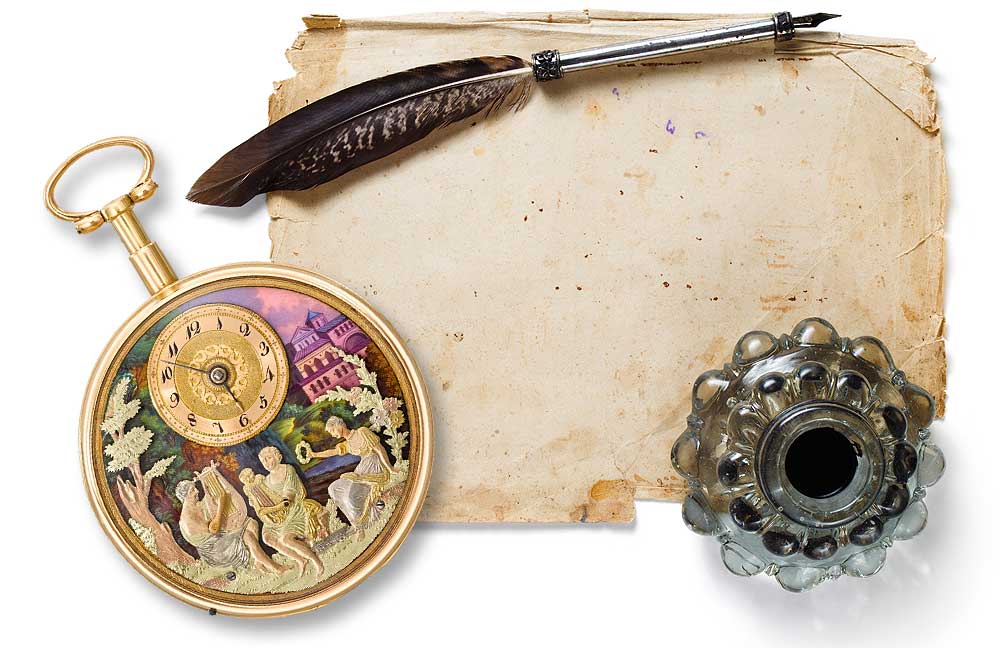
Henry-Daniel Capt was an independent Swiss watchmaker who specialized in watches with additional complications such as musical watches and automatons. Capt was one of the first in Geneva to use barrels and crowns in his automatons. He was born in Chenit in the Vallée de Joux in April 1773, as the son of Jaques Samuel Capt and Susanne Piguet. His brother was Charles Samuel Capt. On January 1st, 1796, he married Henriette Piguet.
In the Vallée de Joux, Capt trained as an établisseur. Around 1789, Henry settled in Geneva and worked for renowned companies such as Jaquet-Droz, Godet, Leschot and his brother-in-law Daniel Isaac Piguet. In 1802 he went into partnership with Daniel Isaac Piguet, which lasted until 1811. When this partnership ended, Capt kept producing his pieces before entering another partnership with Aubert et Fils in 1830 as Aubert & Capt, located in Place Bel-Air, Geneva. The firm was taken over by his son, Henry Capt, in 1844. He opened a shop on the Rue du Rhône in 1855, which quickly gained an excellent reputation. During the 1870’s, the Henry Capt company advertised that they were the only Geneva watch manufacturer to have a branch retail house in London.
He also established branches in Paris, Nice and New York.
Henry-Daniel Capt died in 1837 (though some sources say he died in 1841) and his son, Henry Jr., took over. Though it’s difficult to confirm, there were rumours of the Capt company boasting to be the only Geneva watchmaker with outlets in London.
The house of Henry Capt flourished for many decades and in 1880 Capt’s operation was purchased by Gallopin and became H. Capt Horloger, Maison Gallopin Successeurs. Watches supplied to other stores and houses were either signed “Henry Capt” somewhere on the movement or were simply not signed at all.
Cartier
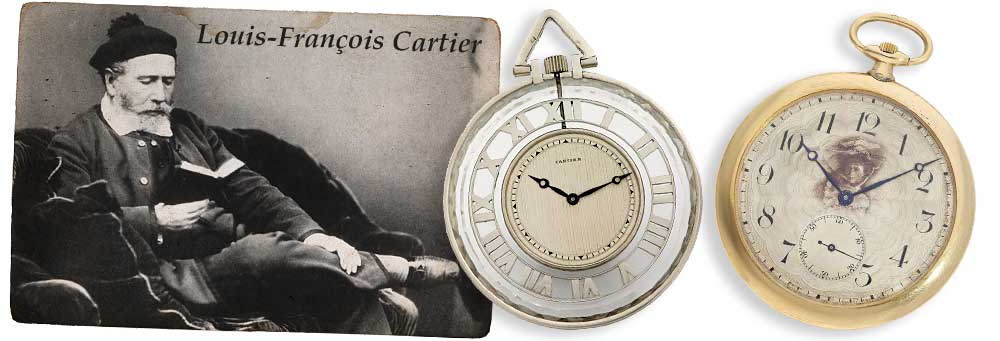
Cartier was founded by Louis-François Cartier. He was born in 1810. In 1847 Louis-François was able to take over the jewellery shop of his teacher Adolphe Picard at 31 Rue de Montreuil, Paris. It is a French jewellery house specializing in making very luxurious jewellery such as rings, bracelets, earrings, necklaces and watches.
Chopard
Le Petit-Fils de L.-U. Chopard & Cie S.A., commonly known as Chopard, is a Swiss manufacturer and retailer of luxury watches, jewellery and accessories. Founded in 1860 by Louis-Ulysse Chopard in Sonvilier, Switzerland, the company has been owned by the German family Scheufele since 1963. Chopard is best known for making high-quality Swiss watches and jewellery, and its clients have included Tsar Nicholas II of Russia. The company is headquartered in Geneva and has a site in Fleurier, Canton of Neuchâtel, that manufactures watch movements.
The company founder, Louis-Ulysse Chopard, was a Swiss watchmaker who grew up in Sonvilier, a town in the Swiss Jura. In 1860, he established his L.U.C. manufacturing company in Sonvilier, having observed that it was more profitable to market the finished watch than to just make the mechanical movement.
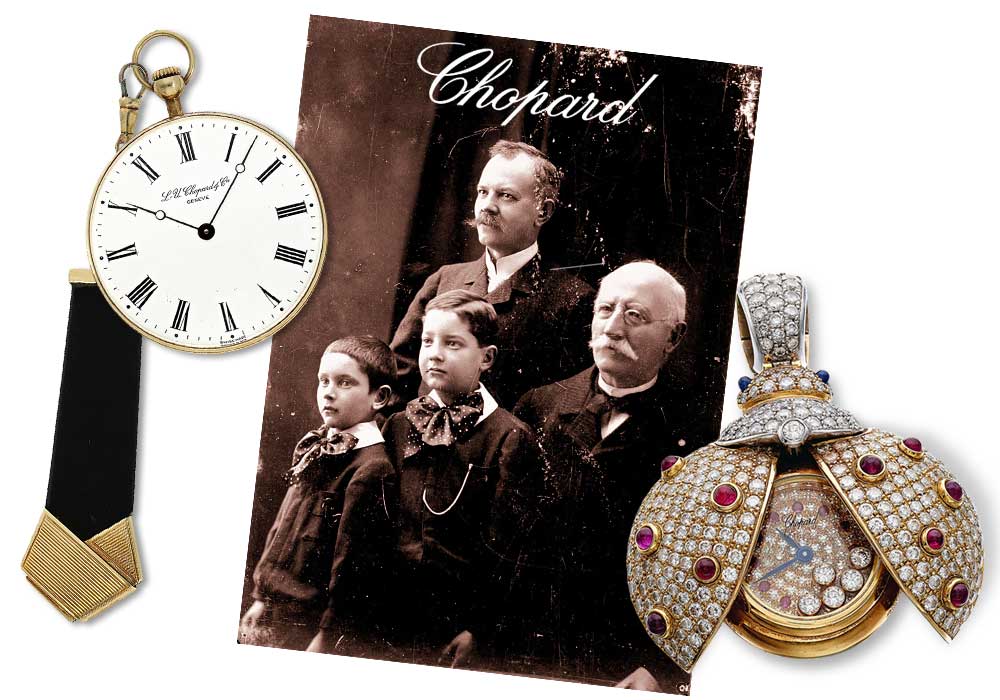
After Louis-Ulysse died in 1915, the company was taken over by his son Paul-Louis and grandson Paul-André. The company specialized in making pocket watches and ladies’ wristwatches. In 1921, Paul-Louis moved the company operations to La Chaux-de-Fonds, in the Canton of Neuchâtel. In 1937, at that time a company of 150 employees, the company relocated to Geneva. This enabled the movements made by the company to be certified with the Geneva Seal, a mark applied only to watch movements made in the Canton of Geneva. Paul-André took over the company in 1943.
In 1963, having no children wishing to continue in the business, Paul-André Chopard sold it to Karl Scheufele III, a German goldsmith and watchmaker from Pforzheim, who was seeking a watch movement manufacturer exclusively for his own business.
Cochin, Charles-Nicolas
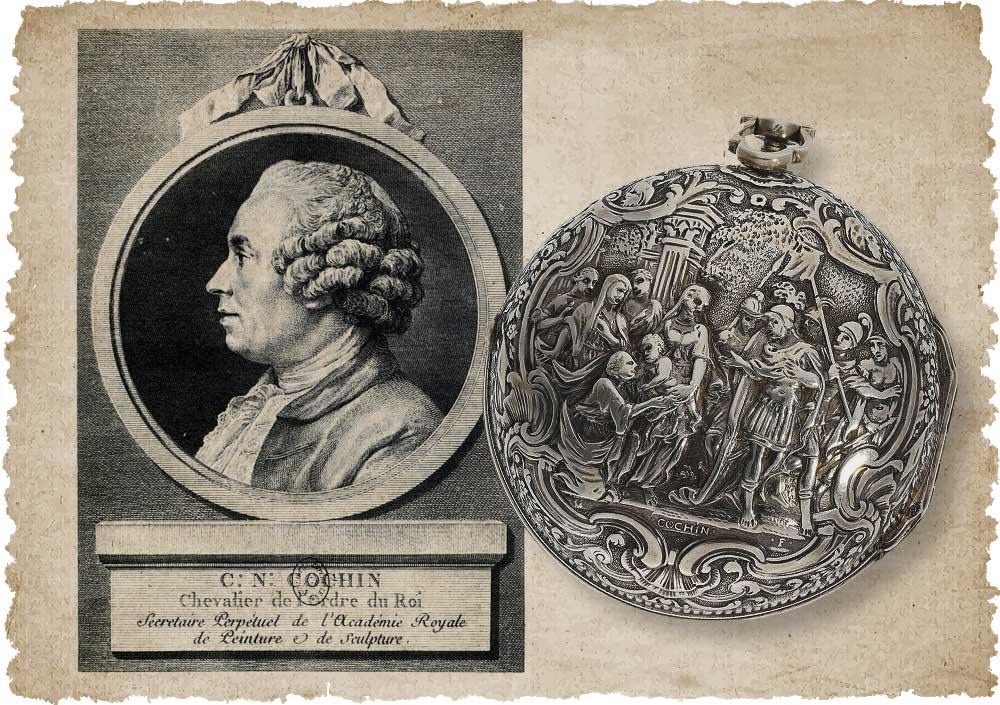
Charles-Nicolas and Daniel Cochin were members of a prominent French family of engravers and printmakers. They were active in the 18th century and were known for their work in creating ornate cases for watches and other small objects. Charles-Nicolas Cochin specialized in creating decorative cases for watches and other small objects.
He had many notable clients and patrons during his career as a casemaker in Paris in the mid-18th century. Some of his most famous clients included members of the French royal family, such as King Louis XV and his mistress Madame de Pompadour. Charles-Nicolas also created cases for other important figures of the time, including wealthy aristocrats and members of the French court. His work was highly sought after due to his exceptional craftsmanship and attention to detail. Daniel Cochin was an ébéniste (cabinetmaker) who worked in Paris during the mid-18th century. He was known for creating high-quality cases for clocks and other timepieces, which were often decorated with intricate marquetry and gilded bronze mounts. While he was primarily known for making cases for watches, he also made cases for other objects such as snuff boxes, scissors and toiletry items. Additionally, Daniel was known for his high-quality workmanship and intricate designs.
Cochin, Daniel
Charles-Nicolas and Daniel Cochin were members of a prominent French family of engravers and printmakers. They were active in the 18th century and were known for their work in creating ornate cases for watches and other small objects. Charles-Nicolas Cochin specialized in creating decorative cases for watches and other small objects. He had many notable clients and patrons during his career as a casemaker in Paris in the mid-18th century. Some of his most famous clients included members of the French royal family, such as King Louis XV and his mistress Madame de Pompadour. Charles-Nicolas also created cases for other important figures of the time, including wealthy aristocrats and members of the French court. His work was highly sought after due to his exceptional craftsmanship and attention to detail. Daniel Cochin was an ébéniste (cabinetmaker) who worked in Paris during the mid-18th century. He was known for creating high-quality cases for clocks and other timepieces, which were often decorated with intricate marquetry and gilded bronze mounts. While he was primarily known for making cases for watches, he also made cases for other objects such as snuff boxes, scissors and toiletry items. Additionally, Daniel was known for his high-quality workmanship and intricate designs.
Colman, François
François Colman was a Huguenot, a Protestant group that faced persecution in France during the 17th century. Many Huguenots, including Colman, fled France and settled in England. He produced a variety of watches, including pocket watches. His watches were known for their high-quality craftsmanship and intricate designs. Some of his watches featured enamel dials, while others had ornate cases made from gold or silver.
Colman was also known for his work on repeating watches, which could chime the time at the push of a button. Overall, François Colman was a highly skilled watchmaker who produced a range of beautiful and innovative timepieces during his career.
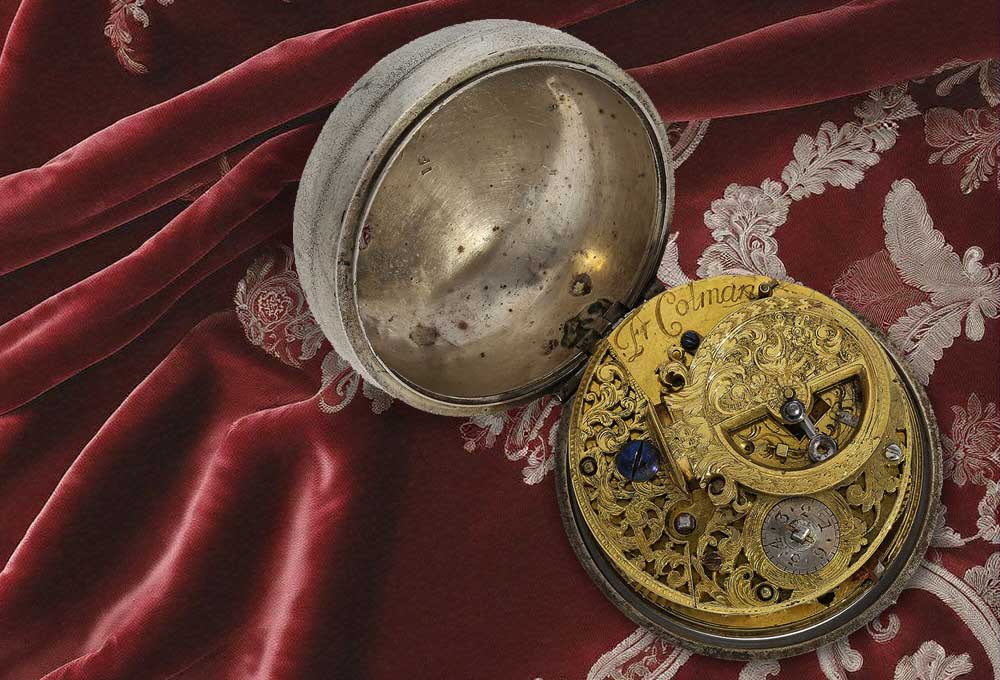
It is difficult to say exactly how Colman’s Huguenot background influenced his watchmaking, but his Protestant beliefs likely played a role in shaping his work ethic and attention to detail. Huguenots were known for their craftsmanship and precision and these values may have been instilled in Colman from a young age. Additionally, Huguenots often found themselves in professions that required a high degree of skill and specialization, such as watchmaking. Colman may have been drawn to this profession because it allowed him to use his talents and expertise to create something of value.
During the time that Colman was active as a watchmaker in Ipswich around 1700, the watchmaking industry there was thriving. Ipswich was known for its skilled craftsmen and had a reputation for producing high-quality clocks and watches. The town had several prominent clockmakers and watchmakers, and there was a strong demand for their products. In fact, Ipswich was one of the leading centres of clock and watchmaking in England during this period. The industry was supported by the town’s wealthy merchants and aristocrats, who were among the main customers for these luxury items. Overall, the watchmaking industry in Ipswich during François Colman’s time was prosperous and well-established.
Conte, Antonio
Antonio Conte (1780-1837) was a printmaker and a stipple engraver from Milan, Italy.
Cox, James
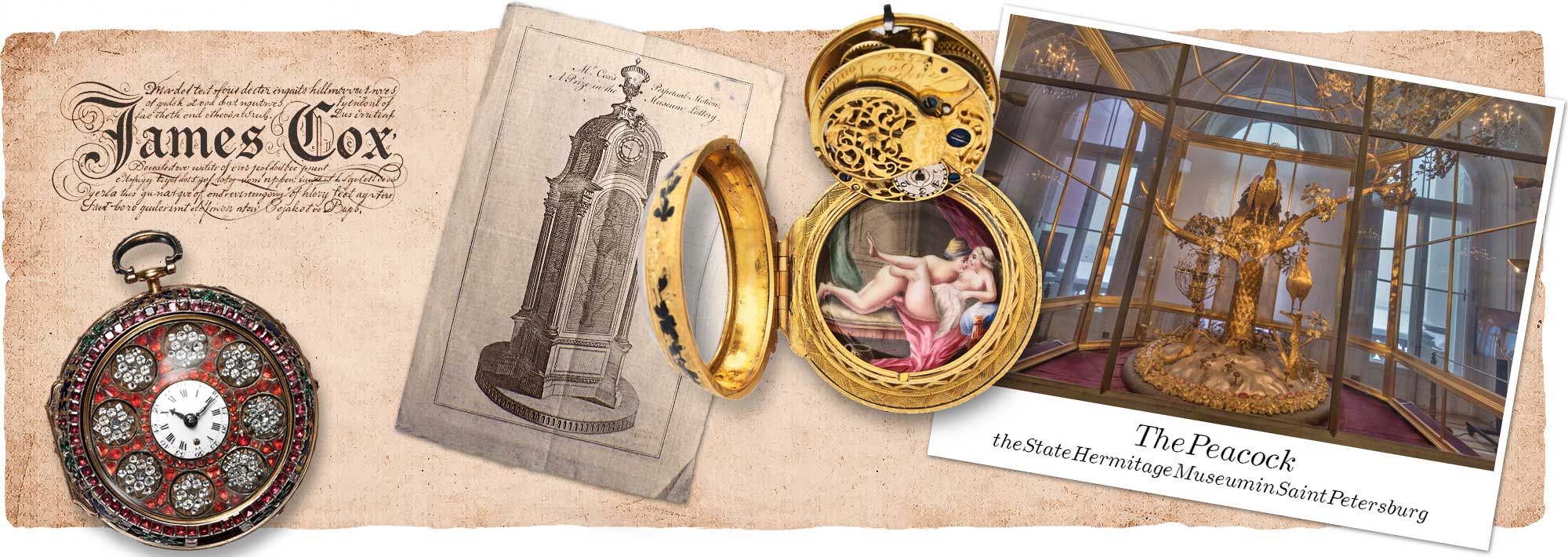
James Cox was a successful British jeweller, goldsmith and entrepreneur who operated from Schoe Lane in London. He is most renowned for inventing the mechanical clock known as Cox’s timepiece, which was powered by atmospheric pressure (similar to the Atmospheric clock). Although the clock still exists today, it has been deactivated since it was moved to the Victoria and Albert Museum. Cox collaborated with Jean-Joseph Merlin in the creation of this clock. One of his most famous works is The Peacock, an automatic clock found in the State Hermitage Museum in Saint Petersburg. Cox worked with various other clockmakers and was one of the main providers of clocks to Emperor Qianlong of China, who ruled officially from October 18th, 1735, to February 9th, 1796, and unofficially until he died in 1799. Many of these clocks are still part of the Forbidden City’s clock collection in Beijing. Due to problems with exports to China and the American Revolution, Cox faced major economic challenges, which led to his bankruptcy in 1778. However, he continued to deliver watches to China through his two sons, one based in London and the other in Canton, mostly originating from Jaquet-Droz and Leschot. Some of his clocks are also on display at the Metropolitan Museum of Art.