Watchmakers and watch companies starting with the letter D
Explore eminent watchmakers and elite watch companies starting with the letter E. Learn about their heritage, creativity, and expert craftsmanship. Essential for horology fans and collectors!
Daurer, Johann Michael
Johann Michael Daurer was a German clockmaker. Around 1800 he worked in Munich. He died in 1865. His son Joseph Michael married Maria Karolina Edmunda Stadler on September 26th, 1842. In 1865 he was based at Sendlinger Gasse 27, Sendlinger Straße today, which still is an important shopping street in Munich’s old town. Karoline worked as a ‘hebamme’ (midwife) at Thalkirchner Straße 1. She was recorded as a watchmaker ‘gatin’ (wife).
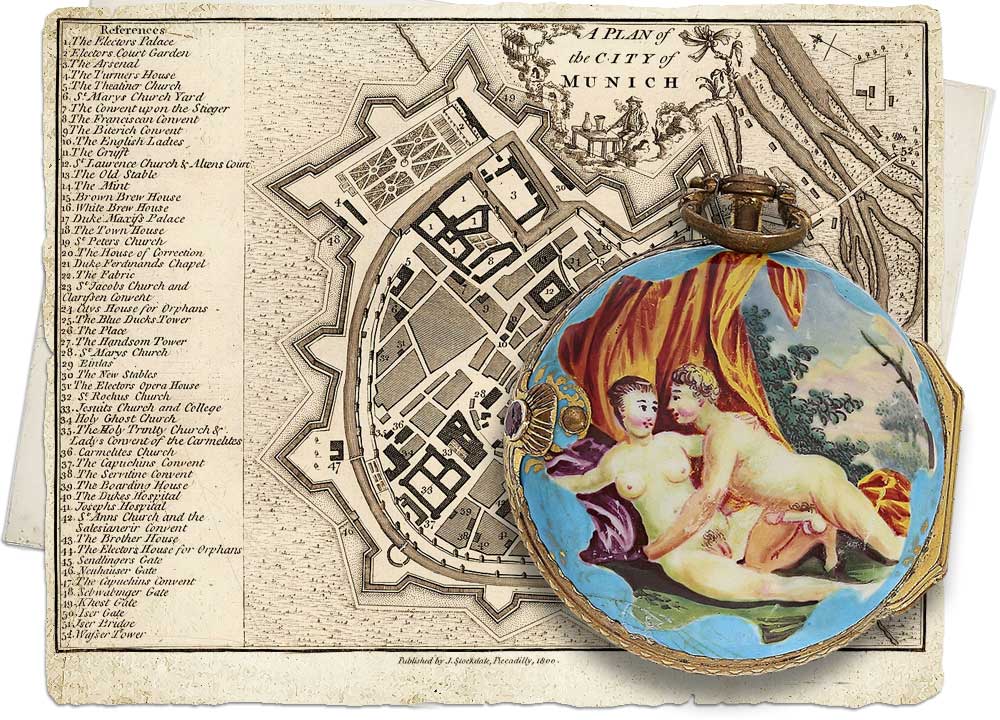
A few watches by Johan Michael Daurer have survived. Amongst these pieces is a repeating pocket watch, movement No. 11115 and a polychrome enamel erotic verge watch. A table clock signed by Johan Michael Daurer is in the Munich City Museum, Inv. No. 34/464.
Dent
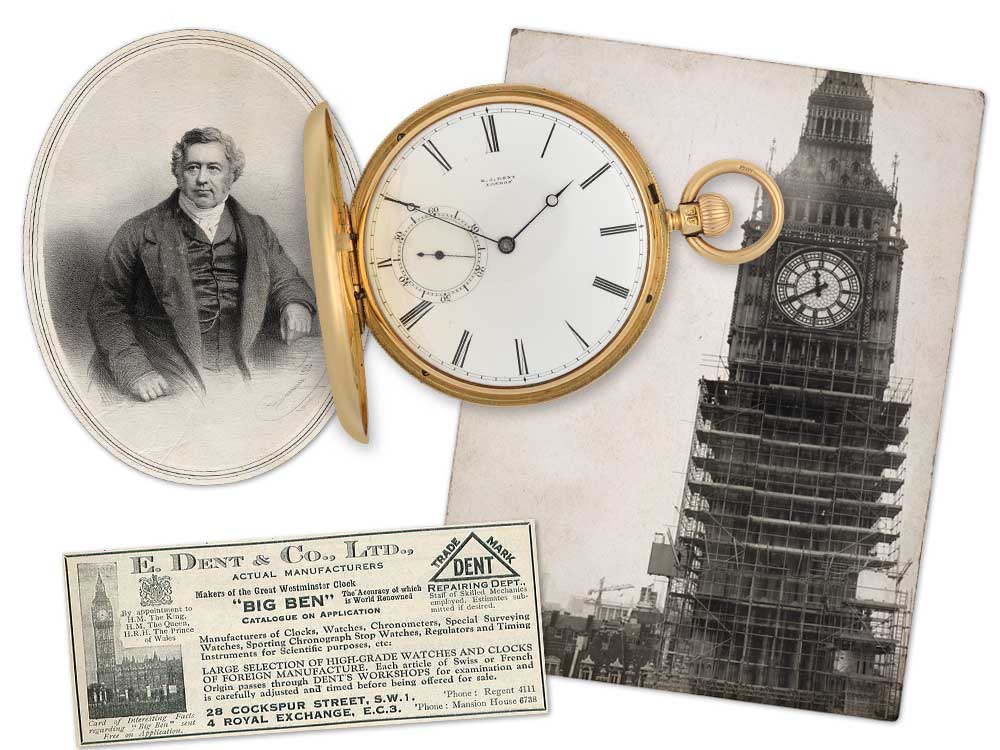
Dent, a celebrated watchmaking dynasty founded by Edward John Dent (1790-1853), was known for high-quality watches, clocks, chronometers and regulators. After starting life as a tallow chandler, Edward John switched to watchmaking. From 1815 to 1829, he was employed by the Vulliamys and the Barrauds. In 1830, he entered into a partnership with J.R. Arnold. In 1840, he set up on his own account at 33 Cockspur Street, London. He was the builder of ‘Big Ben’, the famous Westminster clock and made many fine chronometers and watches as well as others of a high commercial grade. The firm continued until relatively recently at 41 Pall Mall, London, as E. Dent & Co. Ltd.
Didisheim
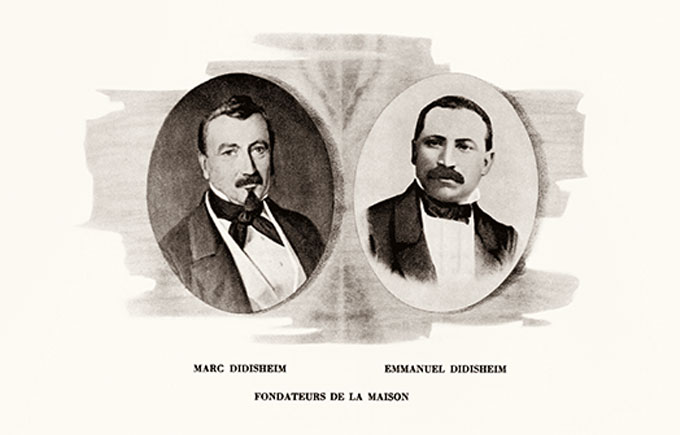
Marc & Emmanuel Didisheim were the founding fathers of the Didisheim watchmaking Comptoir in Saint-Imier in 1850. They soon assigned each other roles, Emmanuel being in charge of horology, and Marc taking care of sales.
One of the main reasons for their success, besides the immediate reliability of their production, lay in their faith in the mechanization of watchmaking. In 1854, they begin building a workshop which grew rapidly to meet the inrush of orders.
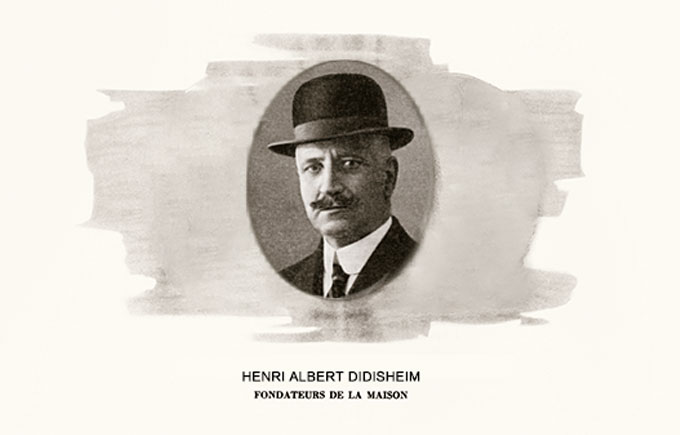
The Swiss watch manufacturer Henri-Albert Didisheim took over the company M & E Didisheim in Saint-Imier with his brothers Charles, Edgar and Hippolyte.
In 1889 the company’s name was changed to Albert Didisheim & Frères and in 1895 it was renamed Henri-Albert Didisheim at that time, based in La Chaux-de-Fonds.
The brand name Marvin was deposited under the direction of Henri-Albert.
Ditisheim, Paul
Paul Ditisheim was born in 1868 in La Chaux-de-Fonds, the historic birthplace of watch-making industry. Paul, son of the famous Ditisheim family, funder and owner of Vulcain, the watch manufacture enjoyed by American presidents Dwight Eisenhower, Harry Truman, Richard Nixon and Lyndon Johnson, was born into the small social circle of industrialist families that led the Swiss watch industry of the time. He studied at the Horological School of La Chaux-de-Fonds and received his diploma at the age of 13. He was then trained in several of the major watch makers and worked at his family’s Vulcain manufacture until 1892 when he founded his own brands: Solvil (whose items were often signed Paul Ditisheim) and Titus (whose items were generally marked separately).
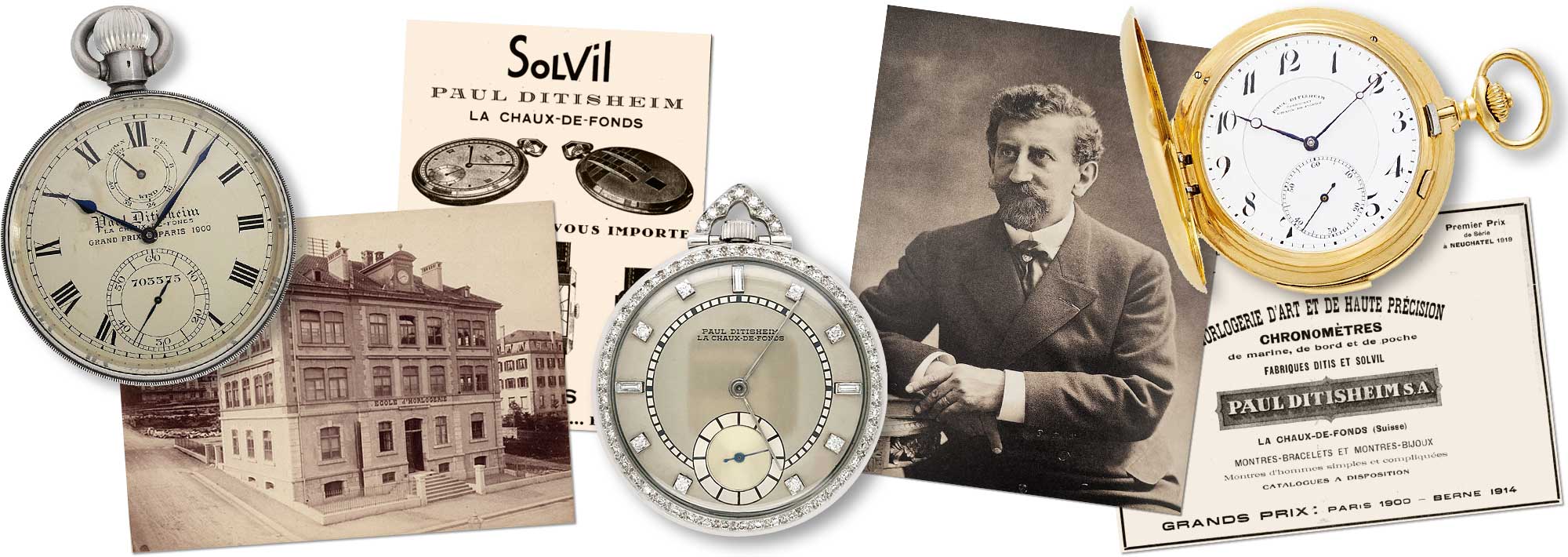
Paul Ditisheim was instrumental in developing the new generation of chronometers, improving them grandly through his studies on the impact of atmospheric pressure and magnetic fields. He invented the affix balance. Thanks to his inventions, he was able to make the most precise chronometers ever made. By 1903, his watches were awarded by the Kew and Neuchâtel Observatories contests. In 1912, he won the world’s chronometric record of the Royal Kew Observatory. He also worked closely with Physics Nobel prize winner Charles-Edouard Guillaume and has been considered the father of the modern chronometers. According to Professor M. Andrade of the Besançon Astronomical Observatory, Ditisheim’s work “constitutes the most important progress of modern chronometry”
Ditisheim died in 1945, leaving a legacy of technical excellence and design that has renewed the reputation of Swiss Made.
Dominice, Denis
Denis Dominice was a prominent watchmaker in Geneva during the 18th century. He is known for his exceptional skills in creating timepieces with intricate designs and technical features. Some of his most significant contributions to the watchmaking industry include:
- Development of the cylinder escapement: Denis Dominice is credited with inventing the cylinder escapement, which is a type of escapement mechanism used in watches. The cylinder escapement uses a cylindrical shaped wheel with teeth that mesh with the escape wheel, allowing for accurate timekeeping.
- Introduction of enamel dials: he was one of the first watchmakers to use enamel dials in his watches. Enamel dials provided a durable and long-lasting surface for the watch face, and they were also aesthetically pleasing.
- Innovation of decorative techniques: Dominice was known for his innovative decorative techniques, such as using gold and enamel to create intricate designs on watch cases and dials. He also experimented with different materials, such as tortoiseshell and ivory, to create unique and beautiful timepieces.
Overall, Denis Dominice’s contributions to the watchmaking industry helped to advance the art and science of watchmaking during the 18th century and beyond.
Duncan, Robert
Robert Duncan was a renowned watchmaker who operated in London during the early 19th century. He was known for his exceptional workmanship and attention to detail. As for the types of watches that Duncan made, he was primarily focused on creating high-quality pocket watches. These watches were often made with gold or silver cases and featured intricate designs on the dials. Duncan was also known for his expertise in creating complicated watches, such as chronometers and repeaters. These watches were highly sought after by collectors and enthusiasts due to their precision and accuracy.
Based on historical records, commissioning a watch from Robert Duncan in London around 1814 would have involved several steps:
- Initial consultation: The first step would have been to meet with Robert Duncan to discuss the specifications of the desired watch. This would have included the type of watch (e.g. pocket watch, wristwatch), the materials used (e.g. gold, silver) and any additional features requested (e.g. a calendar function).
- Design and approval: Once the specifications were agreed upon, Robert Duncan would have created a design for the watch based on the customer’s preferences. The customer would then have had the opportunity to approve or request changes to the design.
- Production: After the design was finalized, Robert Duncan would have begun production of the watch. This process likely involved sourcing materials, assembling the watch component, and testing the accuracy of the timepiece.
- Delivery: Once the watch was completed, Robert Duncan would have delivered it to the customer and ensured that it was in proper working order.
It is worth noting that commissioning a watch from Robert Duncan would have been a costly and time-consuming process, reserved for affluent individuals who could afford such luxury items.
Dürrstein, Johannes
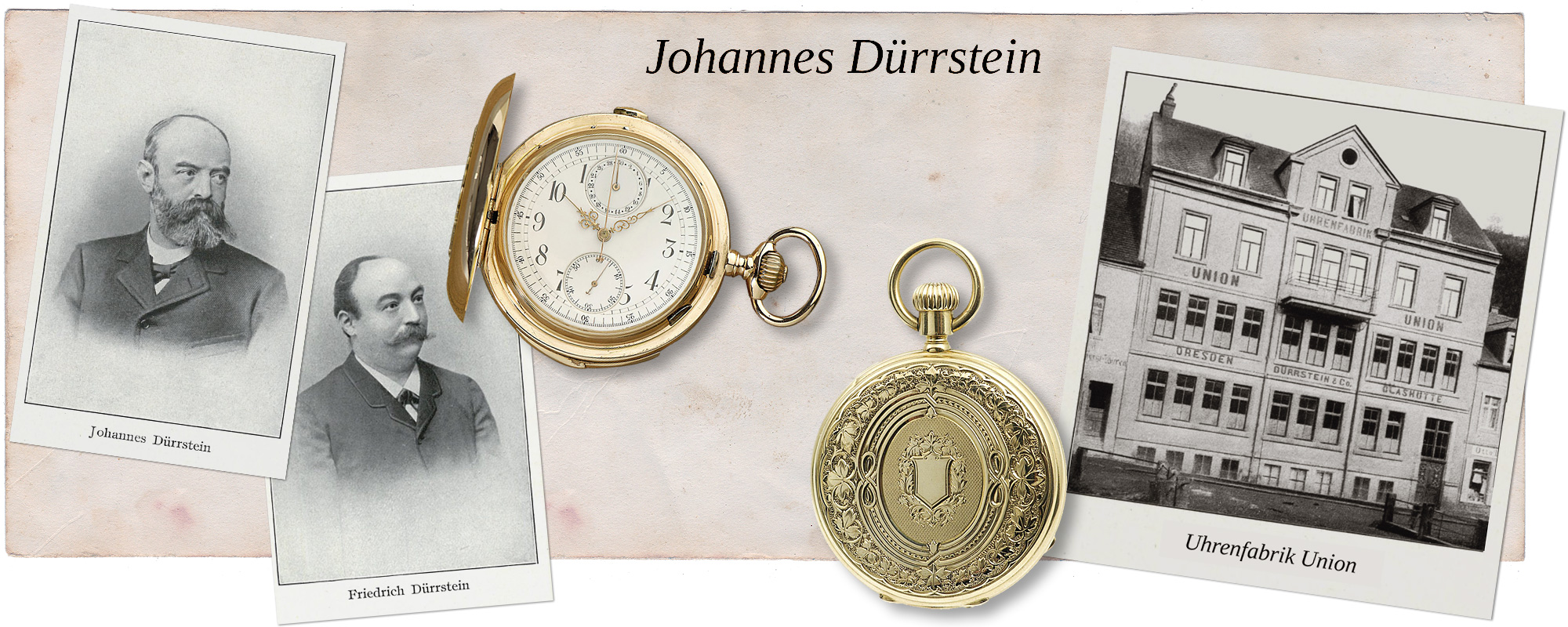
Johannes Dürrstein was born on August 22nd, 1845 in Niederrad and died on May 7th, 1901. Dürrstein grew up in a middle-class family and completed a commercial apprenticeship at the Frankfurt watch wholesaler Ludwig & Fries. He was a German entrepreneur and together with his brother Friedrich, he established his own business in 1874. He repeatedly travelled to Switzerland on business and got to know the important watch manufacturers in the country. The company traded as Dürrstein & Co Glashütte and sold Swiss products as well as watches by A. Lange & Söhne. Nearly 20 years later, in 1893, Dürrstein founded the Uhrenfabrik Union. The watches produced in this manufactory were of outstanding quality and could be made to order with high-value complications of all kinds. The range included pocket chronometers, tourbillons and perpetual calendars and usually came with a rating certificate from the Hamburg Observatory. Dürrstein always tried to satisfy the universally strong demand for high-quality timepieces and mainly used premium Swiss movements which he bought and cased before selling them to his customers.