

Watchmakers and watch companies starting with the letter E
Explore eminent watchmakers and elite watch companies starting with the letter E. Learn about their heritage, creativity, and expert craftsmanship. Essential for horology fans and collectors!
Earnshaw, Thomas
Thomas Earnshaw was born on February 4th, 1749 in Ashton-under-Lyne and died on March 1st, 1829 in London. He was an English watchmaker who, following John Arnold’s earlier work, further simplified the process of marine chronometer production, making them available to the general public.
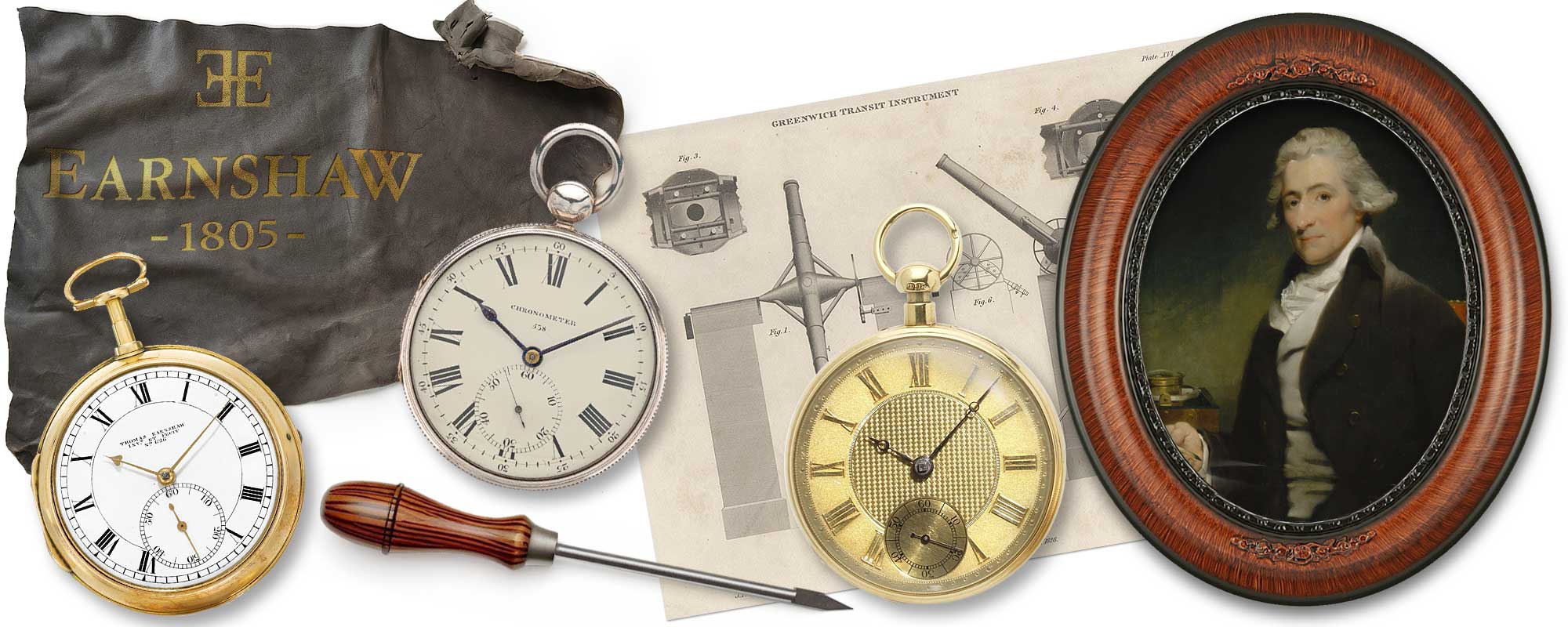
Earnshaw is also known for his improvements to the transit clock at the Royal Greenwich Observatory in London, his invention of a chronometer escapement and a form of bimetallic compensation balance. In 1780, he devised a modification to the detached chronometer escapement, the detent being mounted on a spring instead of on pivots. This spring detent escapement was patented by Thomas Wright for whom he worked in 1783. Whilst initially the design was crude and unsuccessful, with modifications it later became the standard form in marine chronometers, following the invention of the detent escapement by Pierre Le Roy in 1748. John Arnold also invented a similar escapement in 1782. The bimetallic compensation balance and the spring detent escapement in the forms designed by Earnshaw have been used essentially universally in marine chronometers since then, and for this reason, Earnshaw is generally regarded as one of the pioneers of chronometer development.
East, Edward
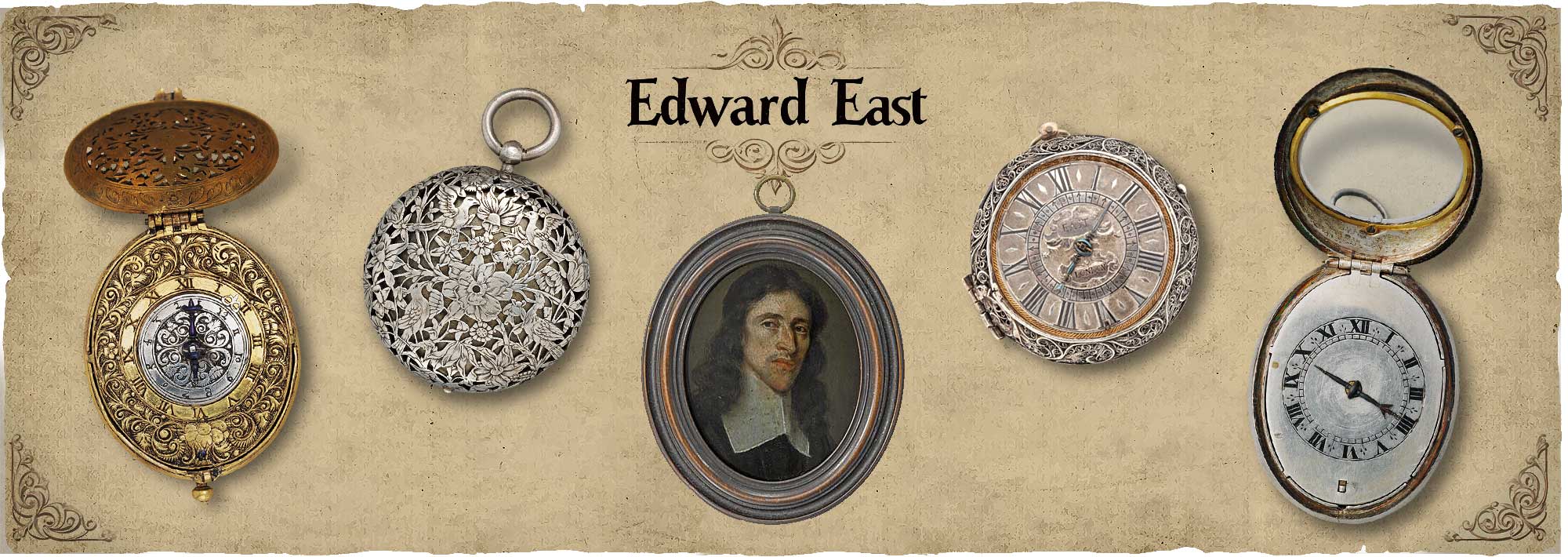
Edward East was born in 1602. He was watch- and clockmaker to King Charles I of England. A notable horologist who succeeded David Ramsay. East was apprenticed to Richard Rogers by the Goldsmiths’ Company in 1618 and was one of the founding members of the London Clockmakers’ Company in 1631. He was named on the charter and held at the same time in its proceedings. After serving in subordinate capacities, he was elected master in 1645, a position he again occupied in 1652. East was then based in the Pall Mall in London, near the tennis court. When tennis and other games were played in the Mall, the King noticed that His Majesty often provided one of East’s watches as a prize. Later, Edward East moved to Fleet Street, where he lived in 1635. According to the London Gazette of 22 and 26 January 1690, he was resident “at the Sun, outside Temple Bar” in The Strand. He presumably died in 1696. Jeremy East was possibly a son of Edward. Jeremy was acquitted by the Clockmakers’ Company in 1641.
Ellicott, John
John Ellicott ( London, 1706 – 1772 ) was an eminent English clock and watchmaker as well as an inventor of the 18th century. His father John Ellicott the Elder, a Cornishman, also was a clockmaker who had been admitted to the Clockmakers’ Company in 1696. He died in 1733. John Ellicott the Younger joined his father’s workshop in London in 1728 and became one of the most important watchmakers in England at the time. He conducted business first from Austin Friars Street EC2 and later from Swithin’s Alley, Royal Exchange. In 1738 he was elected Fellow of the Royal Society.
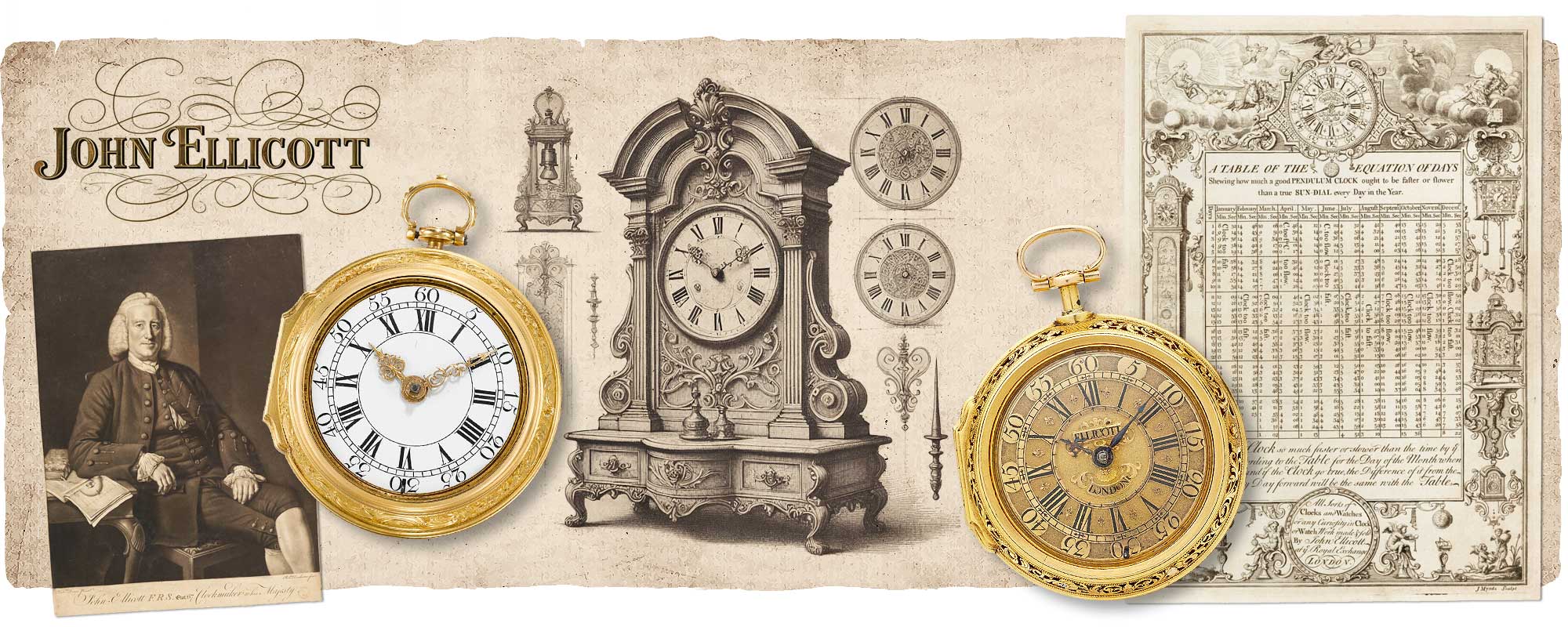
Ellicott showed a keen interest in scientific matters and maintained an observatory at his home in Hackney, parish of St. John, where he observed the planet Venus. He is best known for his work on temperature-compensated pendulums which he developed in 1753, he further improved the cylinder escapement and invented the centre second for pocket watches. Ellicott made many bracket clocks, was a clockmaker to King George III and edited several technical papers. He was married and of this marriage, five children were born, two sons Edward and John and three unmarried daughters, Deborah, Mary and Elizabeth. His son Edward joined the business in 1760. Over their twelve-year partnership, their clocks were simply signed Ellicott London. John Ellicott died unexpectedly as a widower in 1772 in Hackney. His son Edward continued the workshop. He died in 1791.
Emery, Josiah
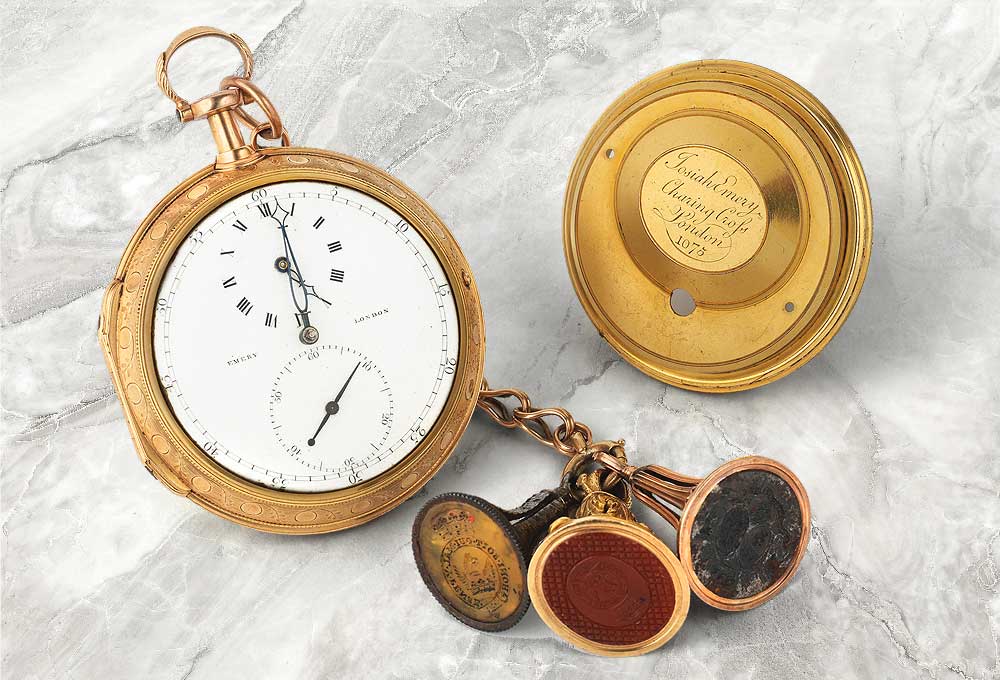
Josiah Emery was born in 1725 in Etagnières, Switzerland and later settled in London, England at 33 Cockspur Street. He is best known as a pioneer of the lever escapement. Emery followed Thomas Mudge as the second maker of lever watches, deriving inspiration directly from the latter’s in-line lever escapement model, but from his own design. Count von Brühl, Ambassador to Great Britain for the Court of Saxony and Thomas Mudge’s steadfast patron and friend, encouraged Emery to make several lever watches. Although Mudge conceived the idea of the lever escapement in 1754, it was not until 1770 that he presented his first watch with this escapement to King George II, and it was only 11 years after this, in 1781, that Emery began work on his own lever watches. He continued to do so for the rest of his life.
Ericsson, August
August Ericsson was a renowned Swedish watchmaker born in Kristeneham in 1842. After completing his apprenticeship in watchmaking in Sweden in 1865, he moved to St. Petersburg, Russia, where he took over the workshop from Gustav Victor Pihl in 1873. In 1885, he became a master chronometer maker and in 1889, he joined the Pulkova Observatory in St. Petersburg as an employee.
Ericsson was highly respected in his time, and his reputation as a skilled watchmaker and dealer was largely due to his use of only the highest quality movements, such as those from Ulysse Nardin, IWC, Longines and Victor Kullberg for his pocket watches and marine chronometers. He supplied clocks to the Tsar’s family and the Russian Navy and was appointed clockmaker to the Swedish court.
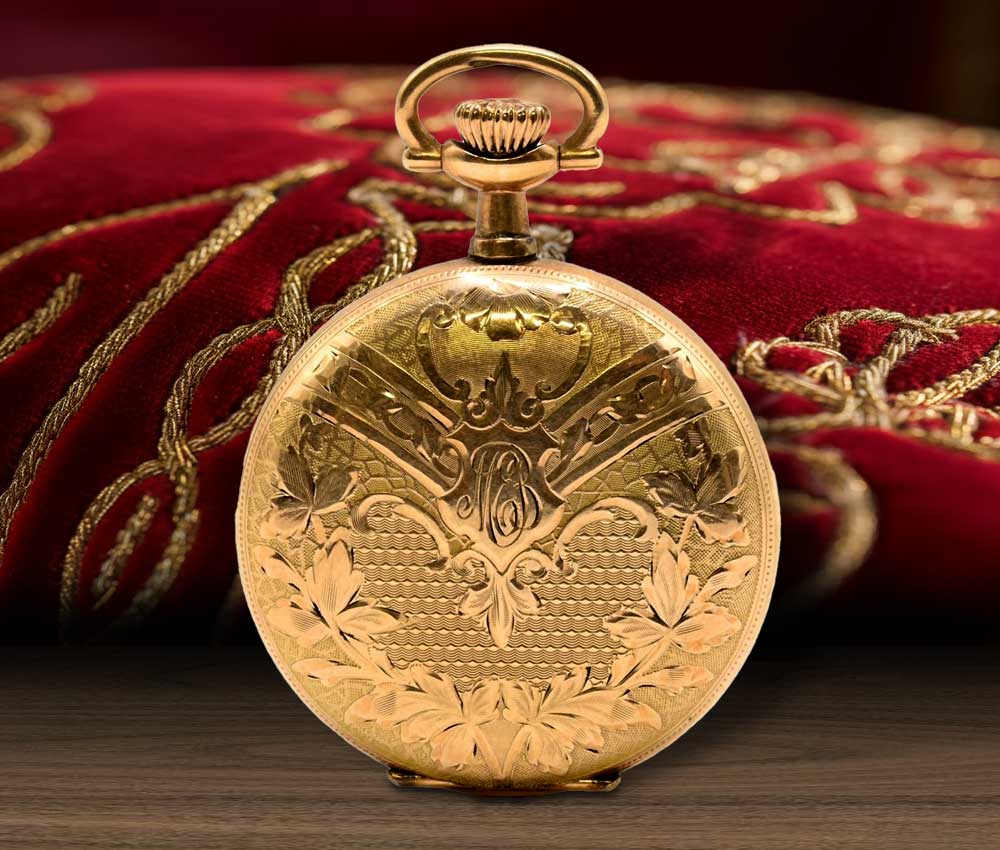
His brother, Bror Ericsson, founded the Stockholm Watchmakers Association in 1884, while Ericsson’s son, Alexander Ericsson, also became a chronometer maker. Carl Ericsson was probably a younger brother and was a watchmaker too. A. Ericsson & Söhne was recorded in St. Petersburg. Ericsson passed away in 1915, leaving behind a legacy of excellence in the world of watchmaking.

