

Watchmakers and watch companies starting with the letter G
Get to know great watchmakers and glorious watch companies starting with the letter G. Explore their histories, unique designs, and expert craftsmanship. Perfect for horology lovers and collectors!
Girard-Perregaux SA
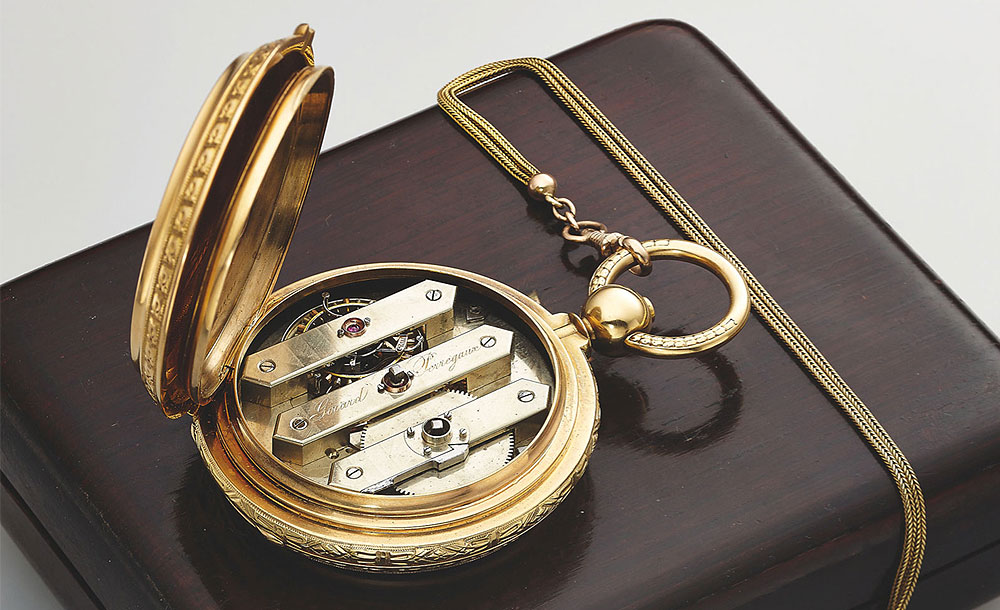
Girard-Perregaux SA is a luxury Swiss watch manufacturer with its origins dating back to 1791. In 2022, the management of Girard-Perregaux completed a management buyout from the French luxury group Kering. Headquartered in La Chaux-de-Fonds, Switzerland, the company opened the Girard-Perregaux Museum near its headquarters in Villa Marguerite in 1999. It is best known for the historic tourbillon with three gold bridges, which was awarded a gold medal at the 1889 International Exposition in Paris soon after the launch of the watch. Other notable models from the company include the collection 1966, Vintage 1945 and models such as the Tri-Axial tourbillon and Laureato, an icon inspired by the 70s.
Glashütter Uhrenfabrik Union Dürrstein & Co
Glashütter Uhrenfabrik Union Dürrstein & Co was a renowned watchmaking company that produced a variety of high-quality watches during its existence from 1893 to 1917. Some of the most popular watches produced by the company included pocket watches, wristwatches and chronometers. One of its most notable products was the Glashütte Union Caliber 49, which was a pocket watch that featured a chronometer-grade movement and was highly accurate. Another popular watch was the Glashütte Union Caliber 66, which was a wristwatch that featured a small second sub-dial and a power reserve indicator.
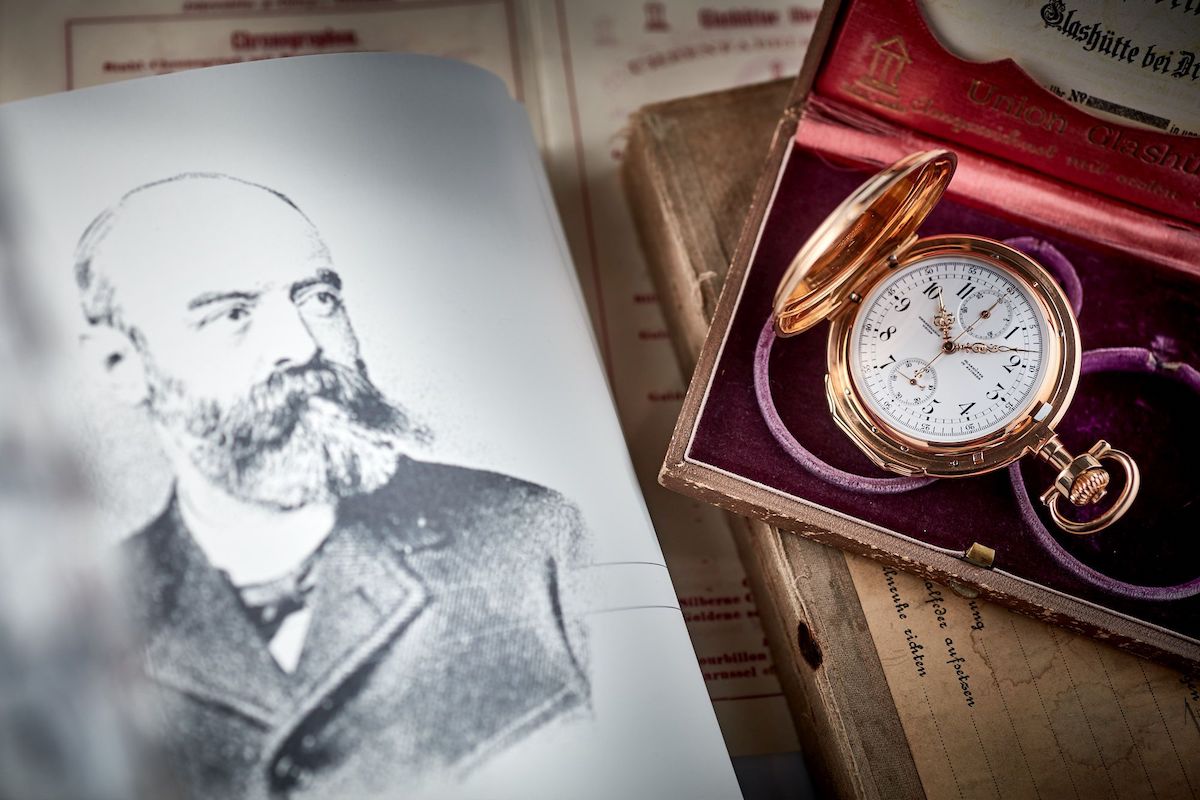
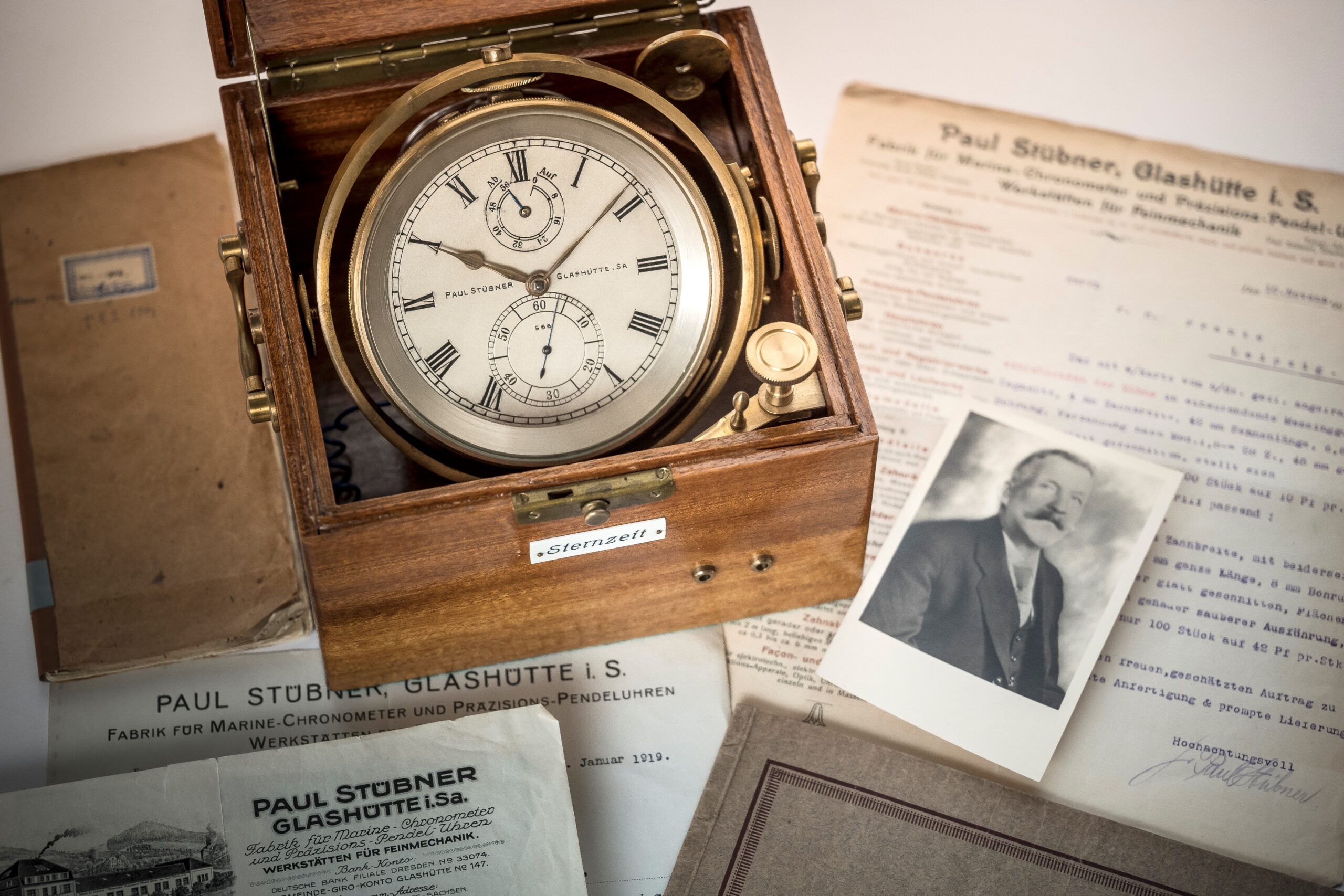
One of the most significant impacts of Glashütter Uhrenfabrik Union Dürrstein & Co on the watchmaking industry in Germany was its role in establishing the reputation of Glashütte as a hub for precision watchmaking. The company’s commitment to quality and precision helped to establish the town of Glashütte as a centre of excellence for watchmaking and many other companies followed in its footsteps. Additionally, Glashütter Uhrenfabrik Union Dürrstein & Co was known for its technical innovations, including the development of new escapements and the use of new materials in watchmaking. These innovations helped to push the boundaries of what was possible in watchmaking and paved the way for future advancements in the industry.
The company ceased operations in 1917 due to the economic hardships caused by World War I. The war had a significant impact on the German economy and many businesses struggled to stay afloat during this time. Additionally, the company’s founder and owner, Johannes Dürrstein, passed away in 1916, which may have also contributed to the company’s closure.
Godon, François-Louis
François-Louis Godon became a master in 1787 and worked at Rue de Valois-St-Honoré from 1789 to 1790. He was watchmaker to the King of Spain. Godon signed his watches ‘F.L. Godon Ro de Camara de S.M.C. (Watchmaker to His Catholic Majesty the King of Spain).
Golay Fils & Stahl.
In 1895, David Auguste Golay died in Geneva and his sons David Louis Golay and Joseph Pierre Golay took over the company. Louis became a jeweller and representative of the A. Golay-Leresche company in Paris at 2 Rue de la Paix. Pierre became a watchmaker and later managed the company in Geneva. The brothers partnered with Edouard Stahl in 1896. Between 1896 and 1906 the company was renamed Golay Fils & Stahl and later Golay Fils & Stahl Successors. In addition to the well-known companies Patek Philippe and Vacheron & Constantin, they also manufactured extremely fine Geneva pocket watches. Their extremely fine gold and enamel timepieces are highly traded today. Alongside Patek Philippe, Golay was one of the few Geneva-based manufacturers of these special watches to feature Geneva signatures.
Graham, George
George Graham was born on July 7th, 1673, maybe 1675 in Kirkliston, Cumberland and he died on November 16th, 1751. He was one of England’s most renowned clock and watchmakers, an inventor and geophysicist, and a Fellow of the Royal Society. Further a Quaker like his mentor Thomas Tompion, Graham left Cumberland in 1688 for London to work with Tompion. He later married Tompion’s niece, Elizabeth Tompion. Graham is credited with inventing several design improvements to the pendulum clock, inventing the mercury pendulum and also the orrery, a mechanical model of the Solar system that illustrates or predicts the relative positions and motions of the planets and moons.
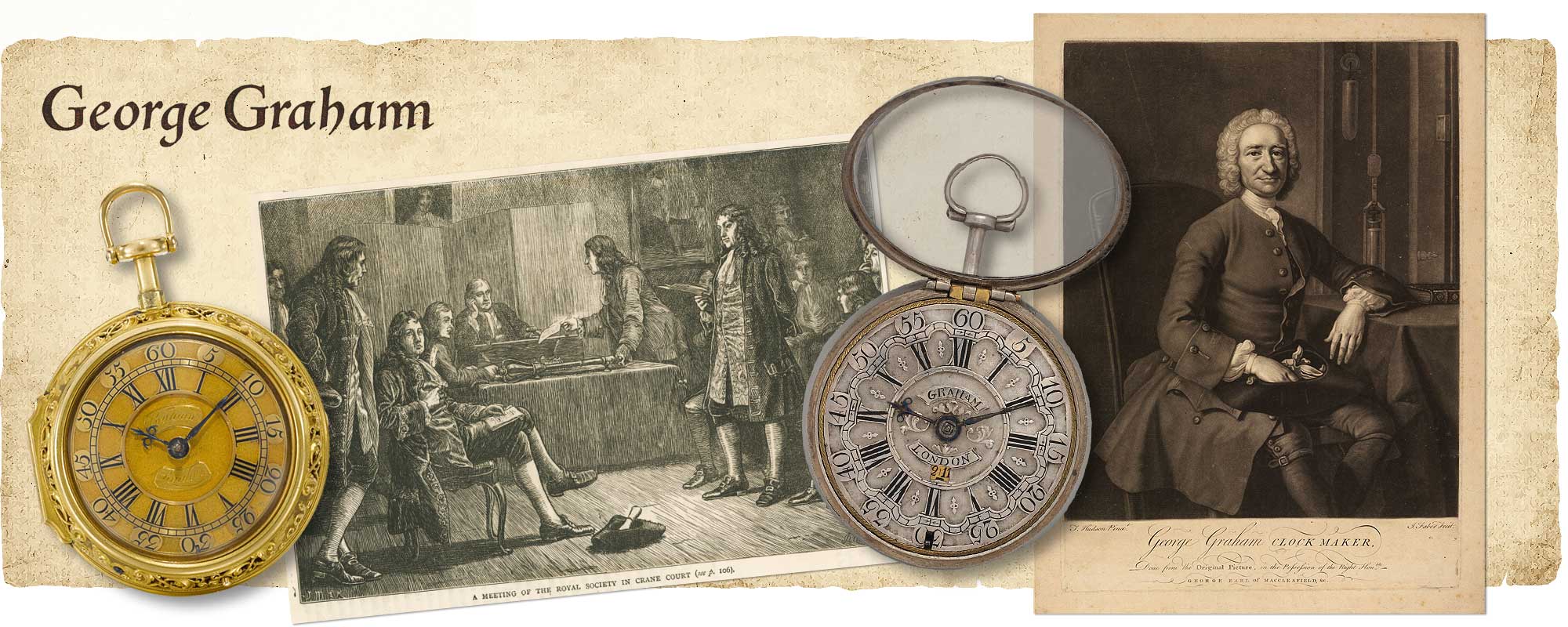
He was made Master of the Worshipful Company of Clockmakers in 1722. Between 1730 and 1738, Graham had as an apprentice Thomas Mudge who went on to be an eminent watchmaker in his own right and invented the lever escapement, an important development for pocket watches. Graham was introduced to John Harisson on the latter’s arrival in London and became a long-time advisor and supporter of Harrison’s work on a marine chronometer. He was also widely acquainted with practical astronomy, invented many valuable astronomical instruments and improved others. On his death, as a sign of the great respect in which Graham was held, Tompion’s grave in Westminster Abbey was opened to receive the body of his former partner.
Gregory, Jeremie
Jeremie Gregory was an important watchmaker in London around 1652. He was born in 1621 to Edward Gregory of St Dunstan’s in the West, London and died in 1685. Edward Gregory was an eyeglass maker and a member of the Goldsmiths’ Company. Jeremy became an apprentice of the Goldsmiths’ Company in 1638 to the master Jeremy East, brother of Edward East. He was acquitted of the Goldsmiths’ Company in 1647, became a member of the Clockmakers Company in 1652 and a master in 1665. Jeremie married twice, first to Elizabeth Grissill (or Griffin) on November 23, 1647. From this marriage, nine children are known. Later about 1669, he married Susanna Reynolds, widow of goldsmith Robert Hancock. Gregory was very good friends with Robert Grinkin Jr. By Gregory at least 15 apprentices were trained as watchmakers on behalf of the Clockmakers’ Company.
Grossmann, Carl Moritz
Carl Moritz Grossmann was born in Dresden on March 27th, 1826. His father was a sorter at the Royal Court Post Office. Moritz grew up in modest circumstances, but his teachers at school soon realised that he was an exceptionally gifted pupil and he received a free place at the “Technische Bildungsanstalt” (which was later to become Dresden’s Technical University). This enabled him to study for two years, just like Ferdinand Adolph Lange some years before him.
In 1842 Grossmann began his apprenticeship with the watchmaker Gottfried Friedrich Kumme (sen) in Dresden and was allowed to end his apprenticeship early because of his unusual talent. He also learnt English, French and Italian. At the same time, Grossmann became friends with the watchmaker Lange who was 11 years older. Both men were ambitious and meticulous workers, keen to learn and build watches. His travels took Moritz Grossmann to Altona in 1847 where he worked with chronometer maker Moritz Krille, afterwards he went to stay with watchmaker to the Munich court Josef Bierganz. He went on to La Chaux-de-Fonds, the Swiss stronghold of the watchmaking industry. From there he travelled to England, France, Denmark and Sweden, always on the lookout for opportunities to learn and further his knowledge and abilities in watchmaking.
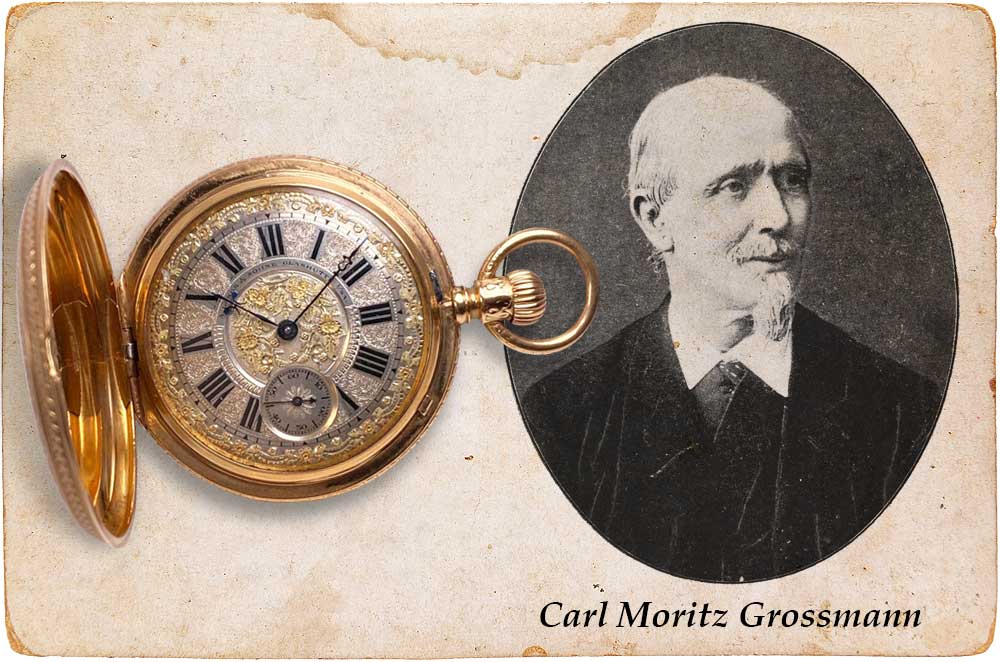
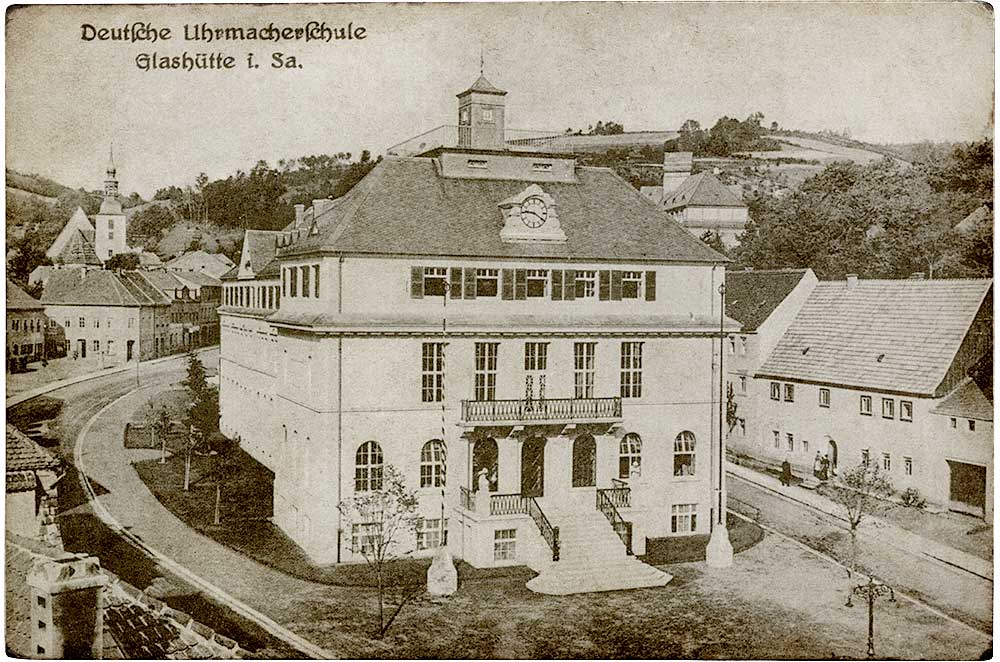
He only returned to Dresden for a short while in 1854 before moving to Glashütte, about 30 km from Dresden. In Glashütte Grossmann invented the “Glashütter Drehstuhl”, a small watchmaker’s lathe. He began devoting himself to the construction of lever escapements and tried to perfect the pivoted detent escapement. He also built precision tools, movement models, fine pocket watches and marine chronometers. Grossmann mastered this multitude of tasks with a team of highly qualified colleagues. He was able to win the two expert watchmakers Ludwig Strasser and Carl Maucksch for his workshop. This allowed Grossmann not only to build his own watches but also to pass his knowledge on to others. Grossmann gave lectures, wrote articles for national and international horological magazines and translated technical books such as Claudius Saunier‘s textbook on watchmaking “Lehrbuch der Uhrmacherei”, which consisted of several volumes. In 1866 Grossmann was the first German to win a competition at the British Horological Institute in London with his paper “On the detached lever”.
Moritz Grossmann was also very socially and politically active. He founded the volunteer fire brigade of the sports club in Glashütte, the military club and supported the building of the railway link to the Müglitz valley. After his wife died in 1871, he remarried and the couple had three children. In 1876 Grossmann became a member of the state parliament of Saxony. He initiated and created the concept for the German Watchmaking School in Glashütte. He founded the school in 1878 and served as its first chairman of the board and taught maths and languages at the school. Moritz Grossmann died after a stroke on January 23rd, 1885 in Leipzig, shortly after holding a lecture on the introduction of Universal Time. Just like his friend Lange, he was only 60 years old when he died. After Grossmann’s sudden death, his factory in Glashütte was dissolved. Source: the Grossmann Uhren GmbH
Gruen Watch Company
The Gruen Watch Company was formerly one of the largest watch manufacturers in the United States. It was in business from 1894 to 1958 and was based in Cincinnati, Ohio. It was founded in 1894 by German-born watchmaker Dietrich Grün, who changed the spelling of his name to Gruen because the letter ü does not exist in English. Gruen was born in 1847. At 15, he was sent away from home to become a watchmaker’s apprentice. Later he worked in Switzerland for three years before going to the United States.
In 1874, he took out a patent for a safety pinion for pocket watches which prevented damage to the watch movement if the watch’s mainspring broke, U.S. Patent 157.913. In partnership with W.J. Savage, the son of a prominent watchmaker and businessman from Columbus, Ohio Gruen started the Columbus Watch Manufacturing Company in 1876. Initially, the company imported and finished watch movements imported from Biel/Bienne, Switzerland. The movements featured Gruen’s 1874 safety pinion design. In 1882, the company was refinanced and reorganized under the name Columbus Watch Company and started manufacturing their movements directly in the U.S.A. During the Panic of 1893, the shareholders forced Gruen out of the company.
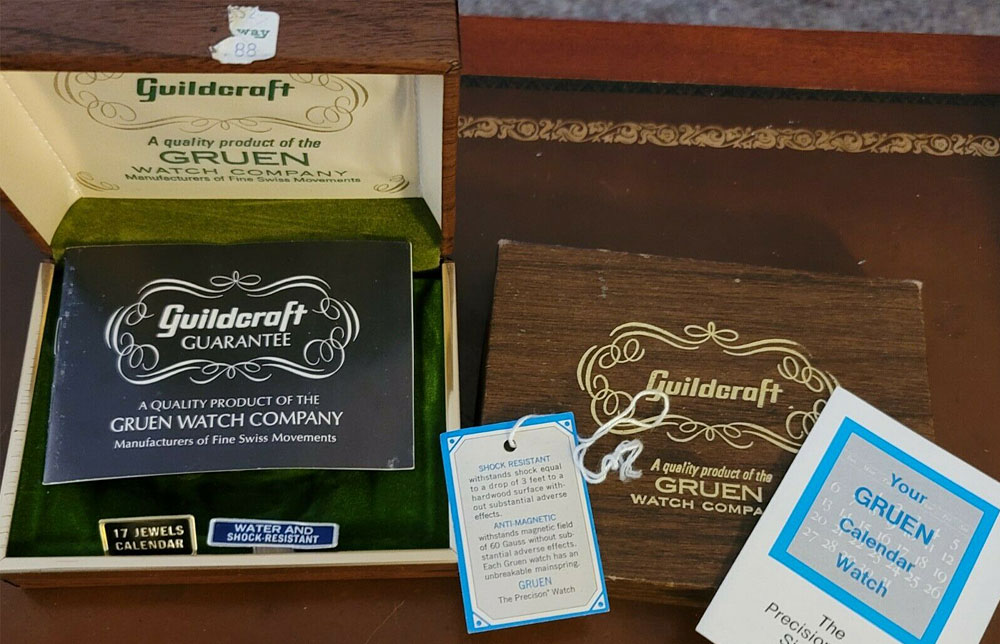
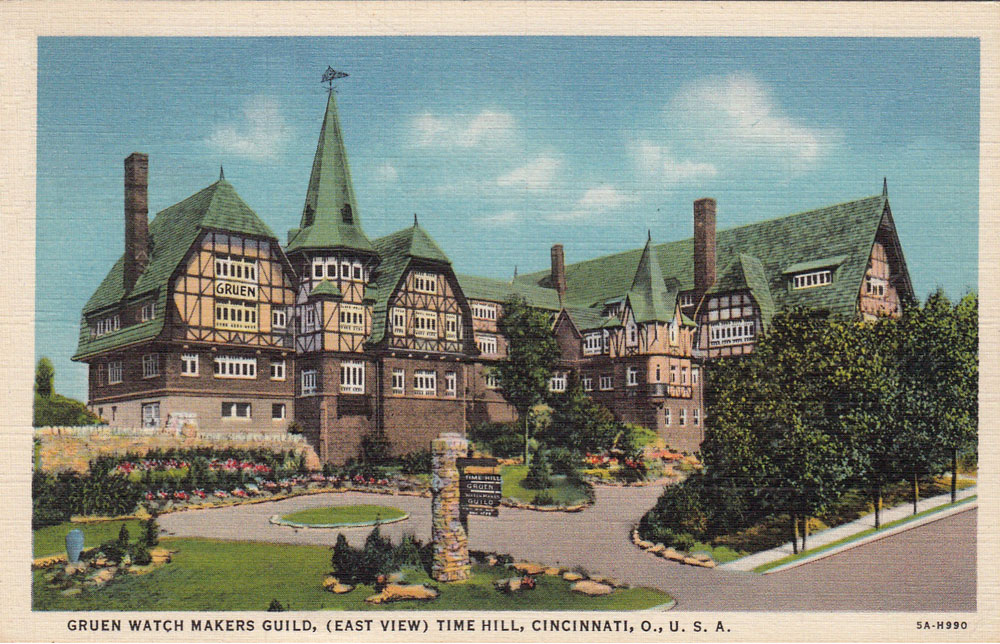
In 1894, Gruen founded a new company in partnership with his son Frederick G. Gruen, D. Gruen & Son. Father and son designed a series of pocket watch movements which were manufactured by the German watchmaking firm of Paul Assmann and incorporated with an escapement designed by Moritz Grossmann. In 1897, as another son, George J. Gruen became an additional partner, the name was modified again. The company moved to Cincinnati in 1898.
In 1900, the company’s name was changed to D. Gruen, Sons & Co. It became partially a Swiss company. The movements were no longer made in Glashütte, Germany, but in Switzerland again. 1903, a subsidiary was formed, the Gruen Watch Manufacturing Company, located in Biel/Bienne, Switzerland. Dietrich Gruen died in 1911.
GUB Glashütte
GUB Glashütte, also known as Glashütter Uhrenbetrieb GmbH, was a watchmaking company based in Glashütte, Germany. The company was founded in 1951 and was one of the five watchmaking companies that formed the Glashütte Original brand in 1994. It was a state-owned enterprise that existed from 1951 to 1994. During its operation, GUB Glashütte produced various types of watches, including:
Mechanical watches: the company was known for its high-quality mechanical watches. They produced both manual winding and automatic watches. These watches were often equipped with Swiss-made movements or movements manufactured in-house.
Dress watches: GUB Glashütte produced elegant dress watches suitable for formal occasions. These watches had classic designs, often featuring thin cases, clean dials, and leather straps.
Sports watches: GUB Glashütte also manufactured sports watches designed for outdoor activities. These watches were more robust and durable, with features like water resistance, shock resistance, and additional complications such as chronographs.
Military watches: As a state-owned company, GUB Glashütte also produced military watches for the German armed forces. These watches were built to withstand harsh conditions and had features like luminous dials for better visibility in low light.
Chronometers: the company was known for its precision timekeeping. They produced chronometer-certified watches, which underwent rigorous testing to ensure accurate timekeeping.
It’s important to note that GUB Glashütte ceased operations in 1994. However, the legacy of their watches lives on through various successor companies in Glashütte, such as Glashütte Original and Nomos Glashütte. In 2000, the Glashütter Uhrenbetrieb GmbH was liquidated due to financial difficulties. The company’s assets were acquired by Nomos Glashütte, another watchmaking company based in Glashütte.
Gübelin AG
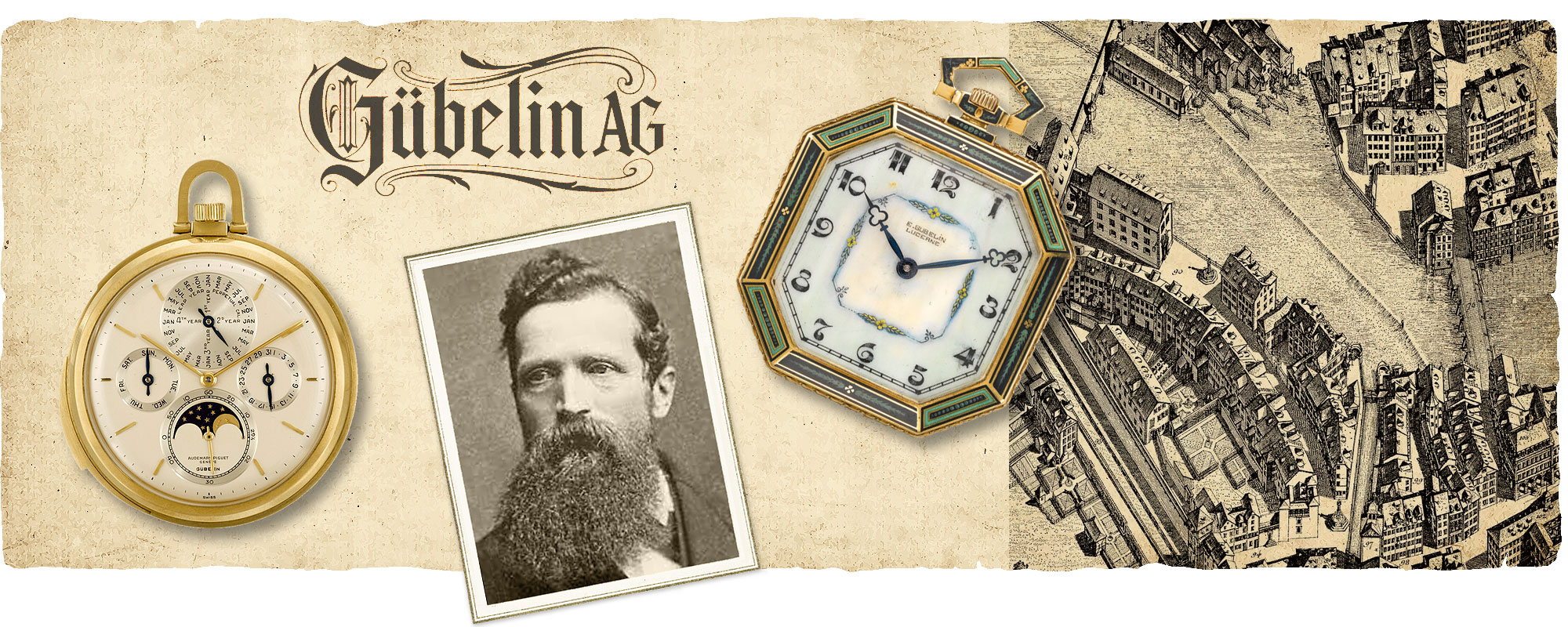
Gübelin AG, a Swiss watch manufacturer. In 1854, Jakob Josef Maurice Breitschmied opened a workshop in Lucerne’s Pfistergasse. One of his apprentices was Eduard Jakob Gübelin. Gübelin fell in love with Bertha Breitschmied, his master’s daughter. In 1886, the two entered into marriage and their son, Eduard Moritz, was born the following year. Eduard Jakob took over his father-in-law’s business in 1899 and continued to work consistently to expand the family business. In 1903, he opened the premises of the new sale in the former Hotel Englischhof. Eduard Moritz married the captain’s daughter, Maria Schriber, in 1912. In 1919, he took over the company’s management from his father and expanded it in 1923 to become a jewellery business with his creations and a gemological laboratory.
Gutkaes, Johann Christian Friedrich
Johann Christian Friedrich Gutkaes was born in Dresden on June 16th, 1785. The choice of his godparents reflects the close connection of the Gutkaes family with the Dresden Court – his grandfather Johann Christian Gutkaese (1682-1757) had been chef to the court of Augustus II the Strong and Friedrich’s father Johann Christian (1753-1835) was a clerk to Frederick Augustus III. According to Karl J. Langer, there is little reliable information on Gutkaes’s training as a watchmaker. The fact that the records of the watchmakers‘ guild in Dresden show no entry for him indicates that he was not apprenticed in Dresden.
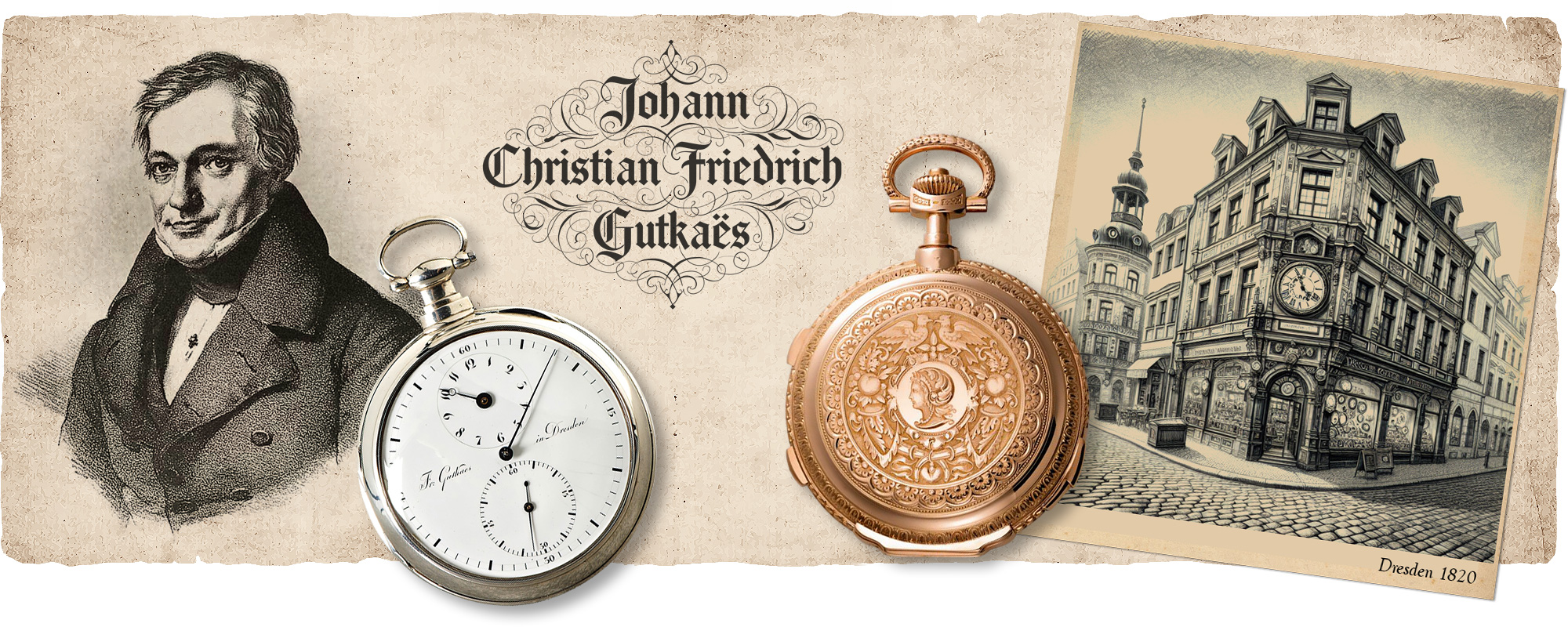
Inspired by his future employer Johann Friedrich Schumann (circa 1759-1817) and his contact with the Mathematisch-Physikalischer Salon, Gutkaes developed a strong interest in astronomy and mathematics. On September 21st, 1815 Gutkaes married Schuhmann’s daughter Friederica Charlotte. About two weeks later he became a master watchmaker in Dresden. He had a flourishing watch and clock shop at the corner of Schlossstrasse und Rosmaringasse. Due to his interest in astronomy, however, he devoted himself mainly to precision watches and the many well-preserved pieces prove his exceptional skills in this field. In 1831, he became the second engineer at the Mathematisch-Physikalischer Salon and maintained the Dresden time service clocks and instruments, together with the first engineer Blochmann. Gutkaes even produced some of these instruments himself, he created for example an astronomical precision pendulum clock for W.G. Lohrmann, director of the institute, and, on Lohrmann’s recommendation, an identical clock for Professor Bessel at the Königsberg observatory.
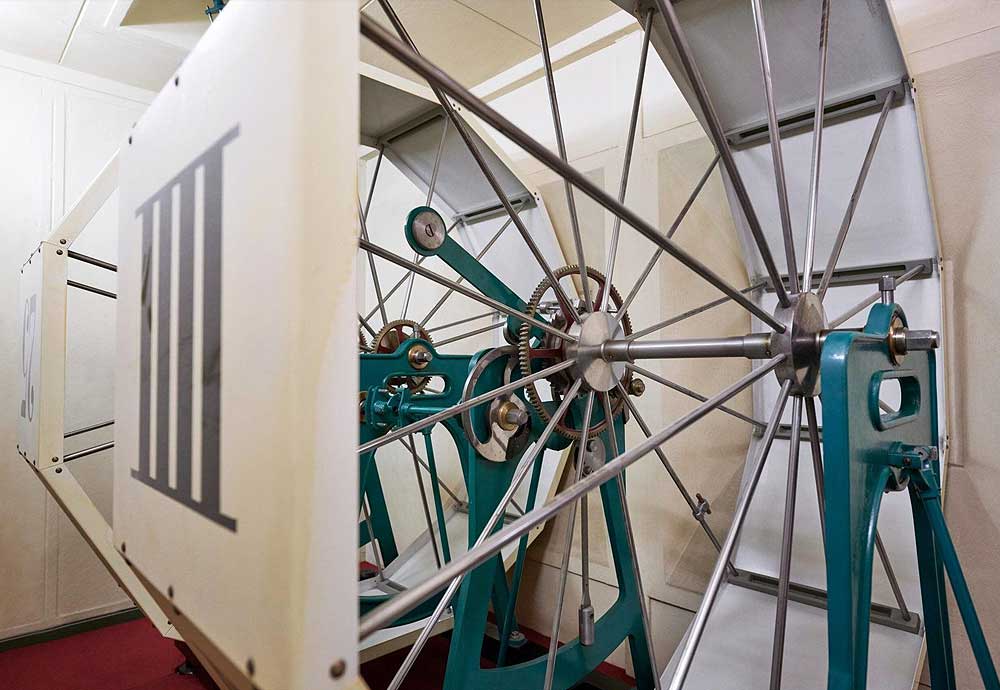
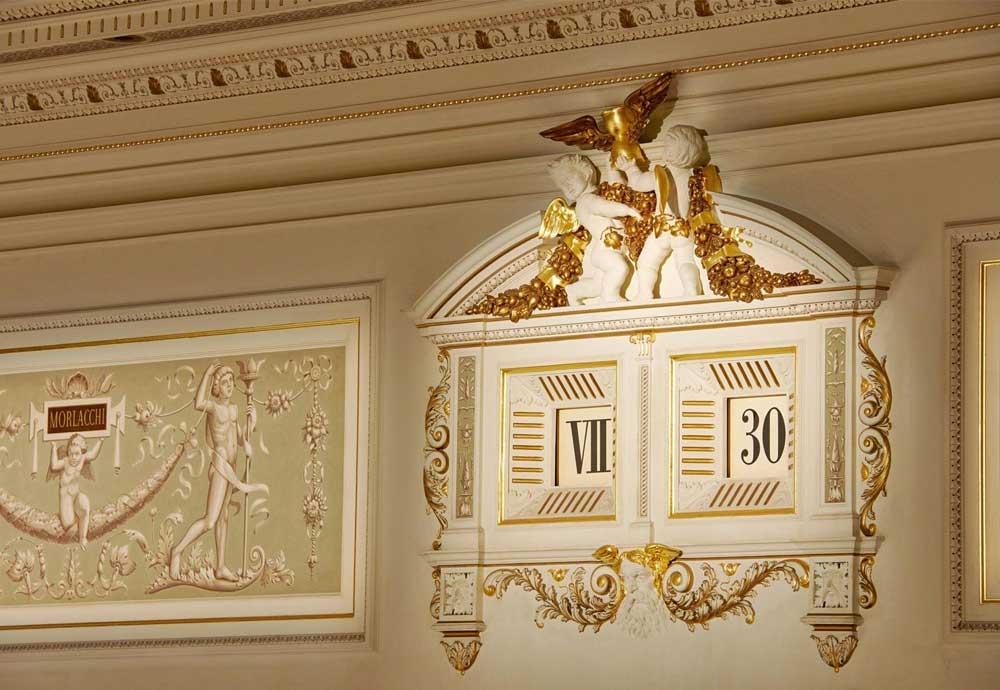
Gutkaes built his clocks in his workshop at Wilsdruffer Gasse, among them the famous ‘five-minute clock’ at the Semper Opera House, which he had designed himself and which had been as spectacular on the day the Opera opened its doors as it is today. Due to his skills, Gutkaes was appointed clockmaker to the court in 1842 and as such was entitled to free living quarters in the castle tower. He subsequently acted as keeper of the tower and looked after the tower clock, which in fact made him responsible for the keeping of time in Dresden. In the same year, he was elected deacon of the Dresden Watchmaker’s Guild.
Among Gutkaes’ apprentices are several well-known, even famous names: from October 20th, 1830 on he trained – in addition to his eldest son Otto – Ferdinand Adolph Lange. In 1832, his second son started his apprenticeship with him and was followed by Moritz Krille in 1834, who later became the successor of Kessels in Altona. French chronometer makers Victor Gannery and B. Scharf also trained with Gutkaes for some time. When Carl Moritz Grossmann (1842) and Adolph Schneider began their apprenticeship in Gutkaes‘ workshop, they were already under the direction of F.A. Lange. Lange and Schneider both married daughters of Gutkaes. During the industrial exhibition of 1844 in Dresden, Gutkaes and Lange exhibited two astronomical pendulum clocks together that were each fitted with an experimental escapement, a seconds counter and a round calliper capable of measuring 1/100 mm. Johann Christian Friedrich Gutkaes died on August 8, 1845, in Dresden at the age of 60.

