Watchmakers and watch companies starting with the letter J
Join in exploring distinguished watchmakers and notable watch companies starting with the letter J. Discover their histories, innovations, and meticulous craftsmanship. Perfect for horology enthusiasts and collectors!
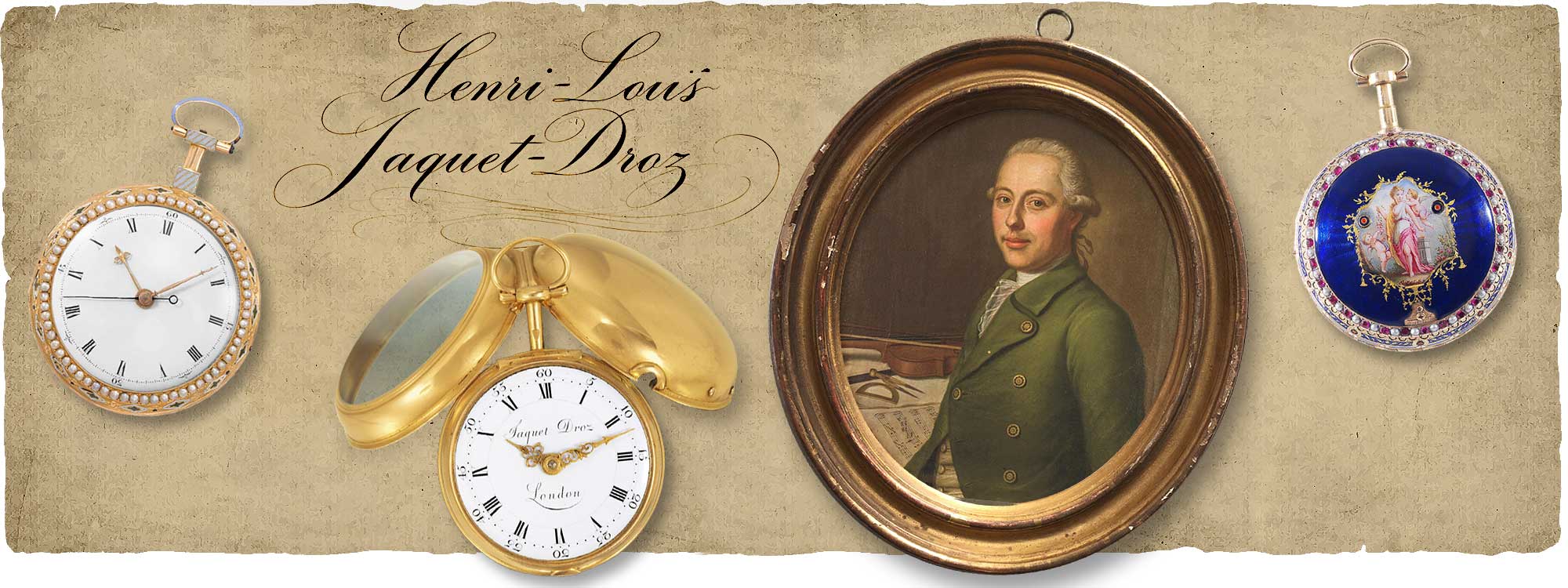
Jaquet-Droz, Henri-Louis
Henri-Louis Jaquet-Droz was born in 1752 in La Chaux-de-Fonds, Switzerland. He was the son and second child of Pierre Jaquet-Droz and his wife Marianne. At a young age, his father sent him to a. LangeNancy in 1769, Henry-Louis took his place in his father’s workshop, alongside Jean-Frédéric Leschot (1746-1824), a neighbour’s child who had come to live and work with Pierre around 1756. This was the beginning of a close and productive partnership between the three men. When Pierre Jaquet-Droz grew old, the firm was taken over by his son Henry-Louis and Jean-Frédéric Leschot and was called Jaquet- Droz & Leschot. Henri Maillardet was the director of the London branch of the Jaquet-Droz firm that was opened in 1783, although Henri-Louis travelled often to London to look after business. In 184 the Jaquet-Droz company moved to Geneva, the centre of watchmaking. Upon his father’s retirement from the family firm, Henry-Louis naturally replaced him. However, Henry-Louis’ health was poor. He died in November 1791, in Naples, Italy, at the early age of 39. Subsequently, Jean Frédéric Leschot took over the firm.
Jaquet-Droz, Pierre
Pierre Jaquet-Droz was born on July 28, 1721, on a small farm (La Ferme de Sur Le Pont) in La Chaux-de-Fonds, Switzerland, as the son of a farmer who was an occasional clockmaker as well. He studied humanities and philosophy in Basel from 1738 to 1739. He became interested in clockmaking and precision mechanics under the tutelage of older relatives from the Brandt-dit-Grieurin, Sandoz and Robert families. On October 25, 1750, Jaquet-Droz married Marianne Sandoz, the daughter of Civil Lieutenant Abraham Louis Sandoz. Soon after the birth of his two children, Julie in 1751 and Henri-Louis in 1752, at the age of 34, Pierre lost his wife, followed by his daughter in 1755. He never remarried.
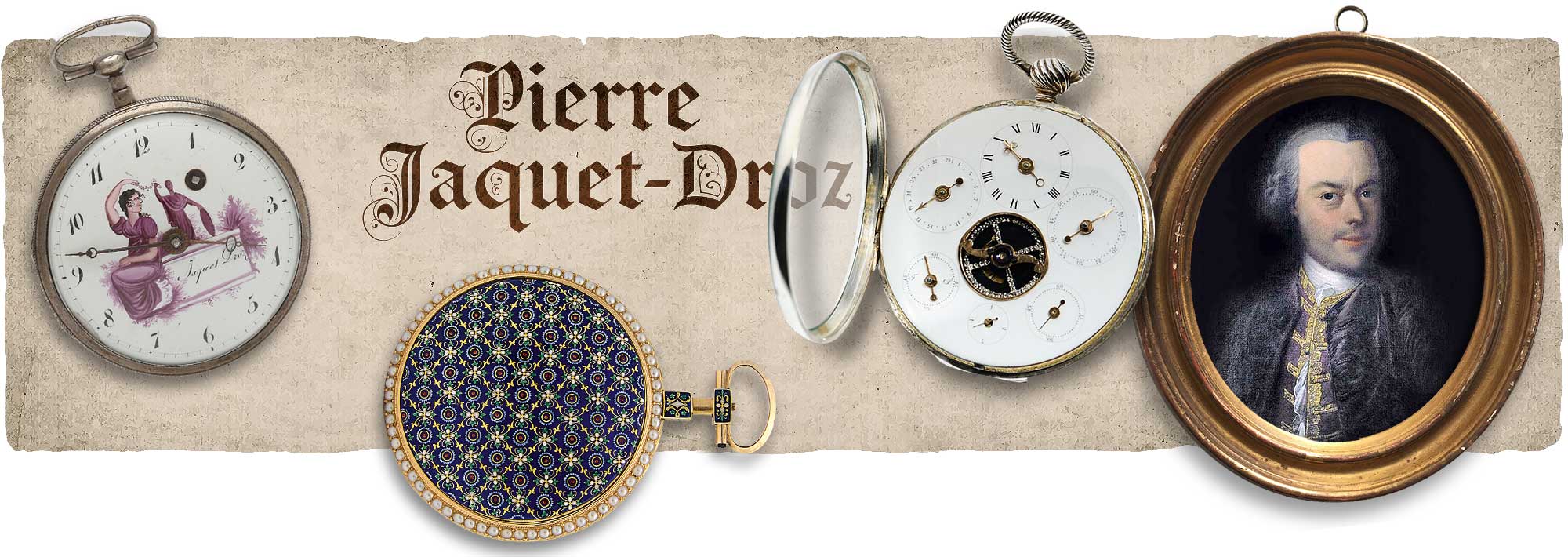
In 1758, Pierre made the long and difficult journey to Spain, to present his works to King Ferdinand VI. When he returned to La Chaux-de-Fonds in 1759, the sum of money he brought back from Spain enabled him to concentrate on making watches, clocks and automata. Jaquet-Droz worked together with his son and a neighbour’s son, Jean-Frédéric Leschot, whom he had taken in after the death of the boy’s mother and thought of as his adoptive son. From 1773 onwards, Jaquet-Droz and Leschot perfected and marketed increasingly sophisticated automata. Their work culminated with the three humanoid automata: The Writer, The Draughtsman and The Musician, presented in La Chaux- de-Fonds in 1774. Encouraged by this success, the Jaquet-Droz family took to the road to exhibit their products. From La Chaux- de-Fonds they travelled to Geneva, Paris, London, Holland, Flanders, Spain, Russia and beyond.
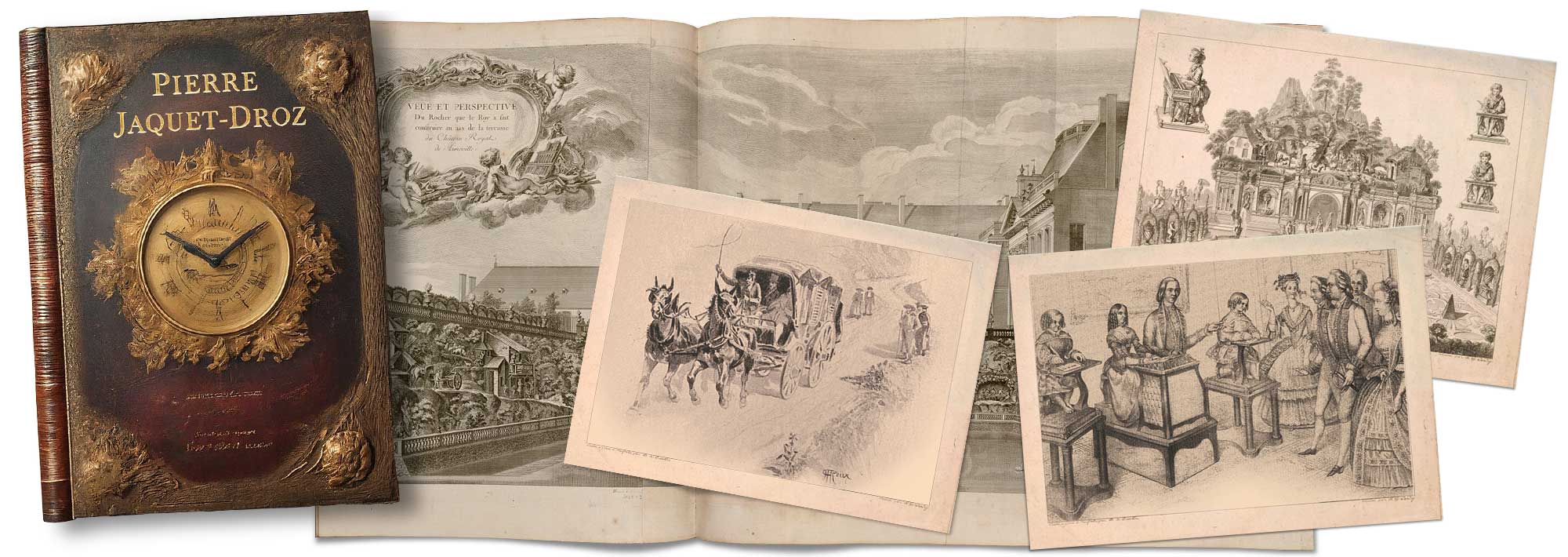
Pierre decided to set up a workshop in London, under the management of his son, Henri-Louis. Exhausted by his travels, the latter delegated some of his responsibilities to Jean-Frédéric Leschot. Leschot was tasked in particular with overseeing the business relationship with the prominent trading company James Cox in London, whose agents in Canton opened up the Far Eastern market for the Jaquet-Droz Company and for many years represented it in China, India and Japan. They also set up a branch in Neuchâtel, Switzerland. For ten years, the company continued to expand. It sold clocks, automata, watches and singing birds all over the world, primarily in China.
In 1784, Jaquet-Droz decided to move to Geneva, Jean-Frédéric Leschot soon joined him and they decided to open the city’s first clockmaking manufacture, simultaneously introducing the production of timepieces featuring complications. In 1788, the success and prosperity of Jaquet Droz & Leschot peaked, but only for a short time. In 1790, drafts made on their principal correspondent in China came back unpaid and their main client in London failed, putting the company in the red. These misfortunes darkened Pierre Jaquet-Droz’s final years. He left Geneva to live in Bienne, Switzerland, where he died in 1790. This in combination with the death of his son Henri-Louis in 1791 at the age of 39, the French Revolution in 1789 and the Napoleonic Wars meant the end of a period of great creativity and prosperity for Jaquet-Droz & Leschot. The Jaquet-Droz brand joined the Swatch Group in 2000. In 2010, the company moved its atelier to La Chaux-de-Fonds.
The Jürgensen Watchmaking Dynasty
A Chronological History
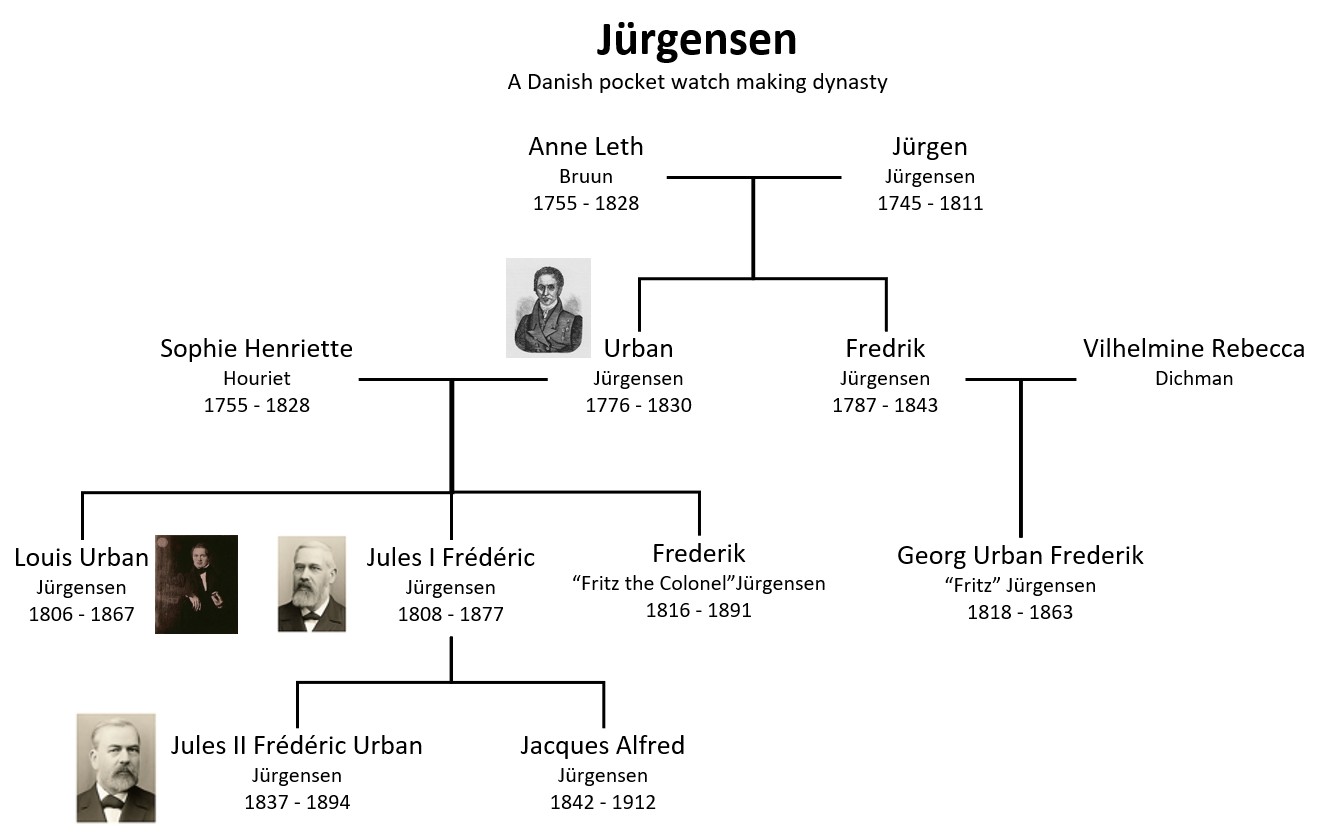
The Jürgensen family played a major role in shaping fine European watchmaking from the 18th to the 20th century. Spanning generations, their legacy is deeply interwoven with horological innovation, royal patronage and meticulous craftsmanship.
Founding the Tradition: Jørgen Jørgensen (1745–1811)
Jørgen Jørgensen, born in 1745, laid the foundation for the family’s horological legacy. It all started in 1759 when the 14 year old Jørgen Jørgensen became the apprentice of the respected Copenhagen watchmaker, Johan Jacob Lincke. In the spring of 1766, Jørgen left Copenhagen for Germany where he pursued an apprenticeship as a journeyman watchmaker for six years. It was in this period that Jørgen changed his name to Jürgen Jürgensen, a more conventional German spelling.
Later, Jürgensen travelled to Le Locle, Switzerland, where he had the privilege of working with Jacques-Frédéric Houriet, a well known and important watchmaker who had founded a watchmaking business of considerable importance and was a great promoter of the emerging industrialisation of watchmaking. All this, of course, was of greatest interest to Jürgensen, who learned new manufacturing methods and how to achieve a high standard of quality in his work.
In April 1773, one year after his return to Copenhagen, Jürgensen applied to the watchmakers’ guild for permission to make a repeating watch as his masterpiece. He had created the necessary drawings and was referred to a watchmaker named Isaac Larpent for a joint execution of the watch. The two men already knew each other and the situation brought them closer to the idea of founding a watchmaking industry in Denmark. In 1780, he entered into partnership with Isaac Larpent, forming the company Larpent & Jürgensen, which operated from Roskilde. In 1781, Jürgen Jürgensen finally received authorisation to establish a watch factory in which new timepieces were created, signed and sold under the name Larpent & Jürgensen. Between 1773 and 1814, the company produced about 4.000 examples.
In 1784 Jürgensen was appointed Watchmaker to the Danish court. He was married to Anne Leth Bruun and they had five children, of whom Urban and Fredrik would continue his work after his death in April 1811.
The Genius of Urban Jürgensen (1776–1830)
Born on August 5, 1776, in Copenhagen, Urban Jürgensen showed early promise. After attending business school, he left at 15 to apprentice under his father. He simultaneously pursued private studies in mathematics and languages under Professor Woolf.
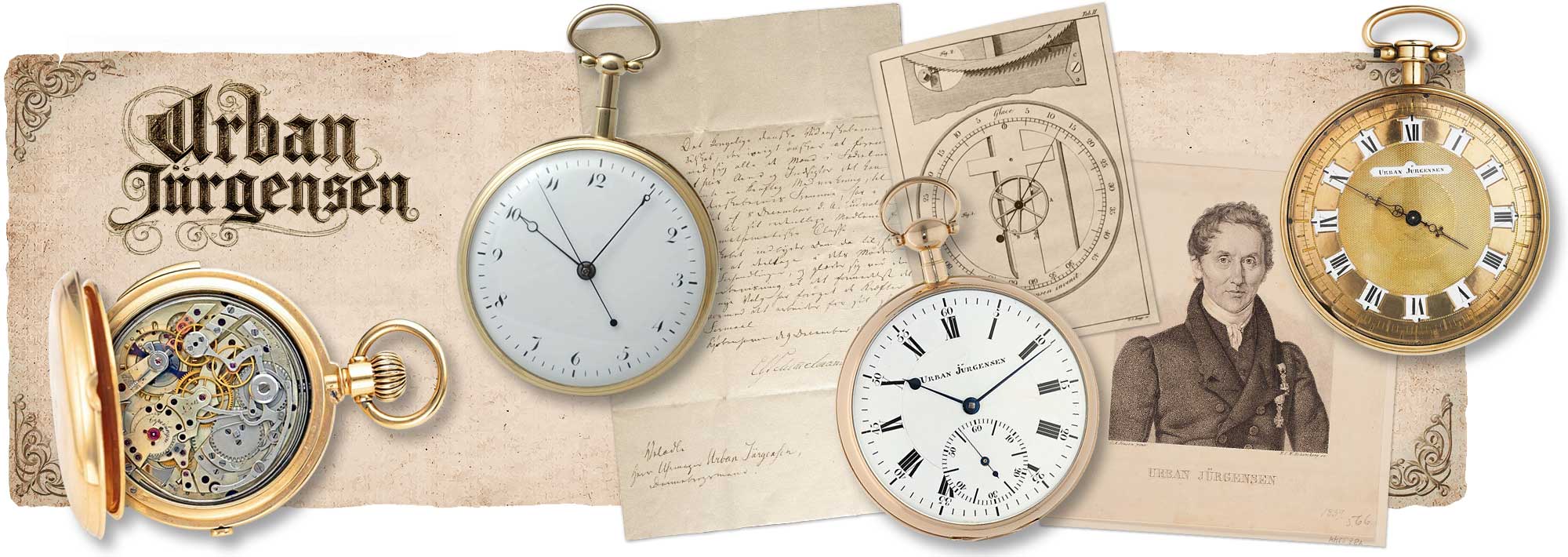
At 20, Urban travelled to Switzerland for further training, spending 18 months in Neuchâtel and six months in Geneva. In 1797, he moved to Le Locle to work with Jacques-Frédéric Houriet. Subsequently, he moved to Paris, where he studied under Abraham-Louis Breguet and Ferdinand Berthoud. Later, he travelled to London to learn marine chronometer design from John Arnold. From London, he travelled back to Switzerland via Paris and married Sophie Henriette, one of the daughters of Jacques-Frédéric Houriet.
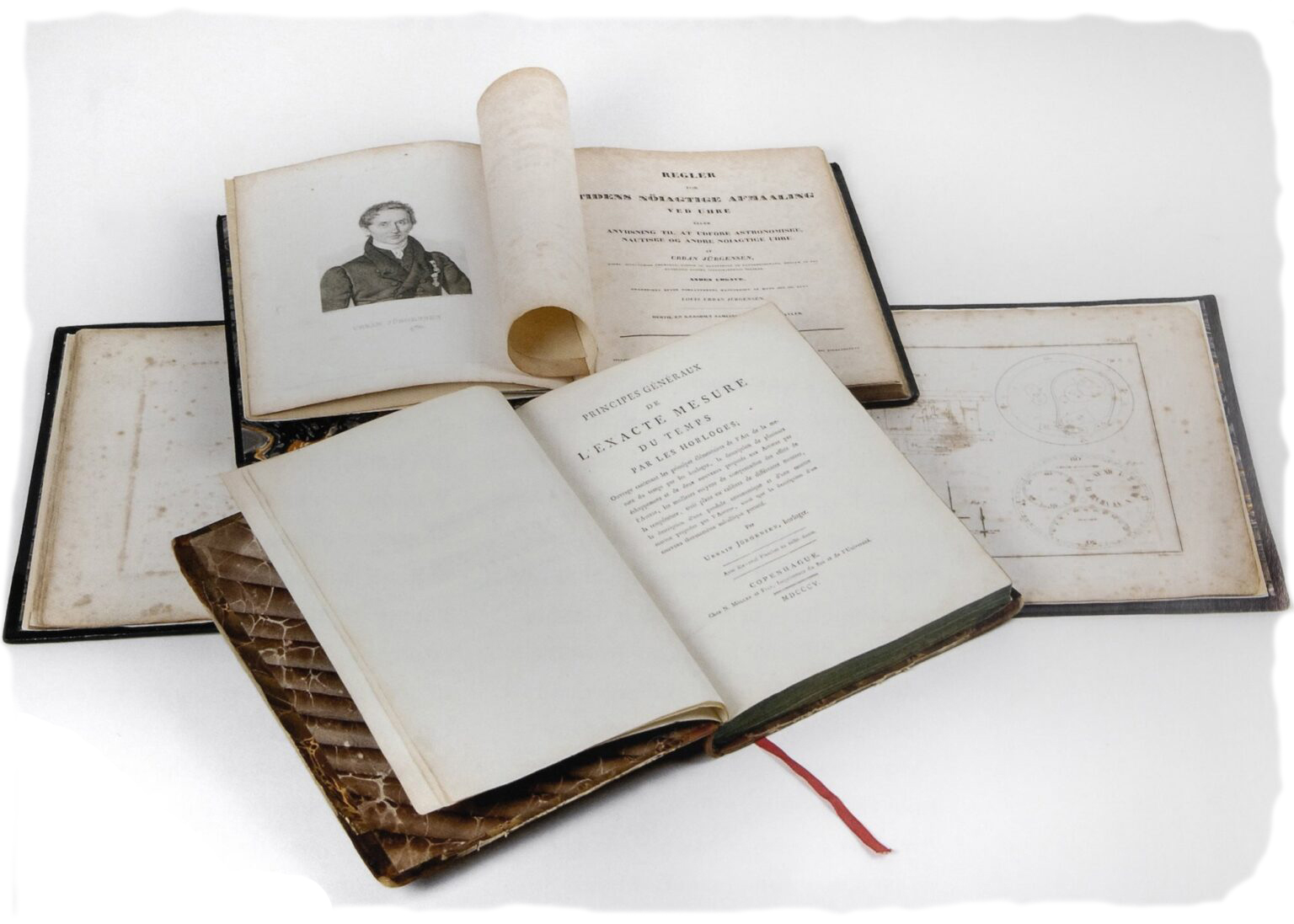
Returning to Copenhagen in 1801, Urban founded a marine chronometer company with Étienne Magnin, who went to St. Petersburg shortly afterwards. That same year, he took his younger brother Fredrik as an apprentice in Le Locle.
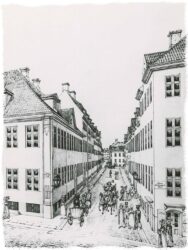
Urban Jürgensen book:
Rules for the
accurate measurement of
time by watches and clocks
dd 1804
Urban Jurgensen’s
location in
Copenhagen,
Denmark,
around 1819
In 1806, Urban’s first son Louis Urban was born, followed by Jules Frédéric in 1808.
Urban received a Royal Appointment from King Frederick VI and became the first watchmaker inducted into the Royal Danish Academy of Sciences.
He died on May 14, 1830, leaving his legacy to his sons.
The Quiet Craftsman: Fredrik Jürgensen (1787–1843 )
Fredrik, the youngest son of Jürgen, was born in 1785. He trained under Urban from 1801 to 1809 and moved to Geneva that year. When his father died in 1811, Fredrik returned to Copenhagen, where he was appointed watchmaker to the Danish court on May 15, 1811, as the successor to his father. Between 1811 and 1843, he produced about 500 pocket watches, known for their double wheel duplex escapements and large steel cylinder escapements.
Fredrik passed away in 1843.
The Reliable Craftsman: Louis Urban Jürgensen (1806-1867)
Louis Urban, the eldest, trained as a watchmaker at his father’s company from 1822 to 1828. He later embarked on an international study trip to renowned workshops in Paris, London, Liverpool, Geneva, and Le Locle. Louis Urban returned home in February 1834, and in June 1835, he married Annette Birgitte Leth Horstmann. They had only one child, Urban August Jürgensen.
Earlier, in 1830, Louis Urban and his brother, Jules Frederik, took over the family business and renamed it Urban Jürgensen & Sønner.
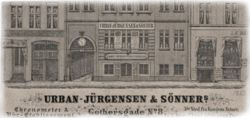
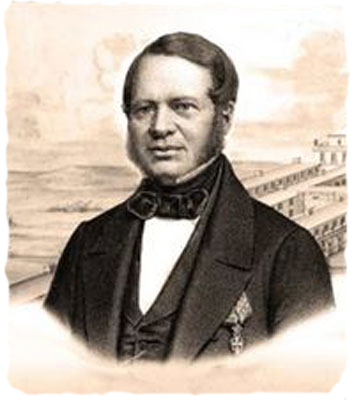
Louis Urban became the sole owner in 1835, managing the Copenhagen business, while Jules moved permanently to Switzerland. Amongst the two sons, Louis Urban remains synonymous with the highest attainable precision and reliability, combined with uncompromising craftsmanship and quality materials. Louis Urban passed away in July 1867 and the Danish branch Urban Jürgensen & Sønner would later be led by his widow, Anette and his younger brother Frédéric.
The Eminent Innovator: Jules I Frédéric Jürgensen (1808–1877)
Born in Le Locle in 1808, Jules Frédéric was Urban’s second son. After moving to Denmark as a child, he returned to Switzerland in 1833, three years after his father’s death and established a highly successful watch business in Le Locle.
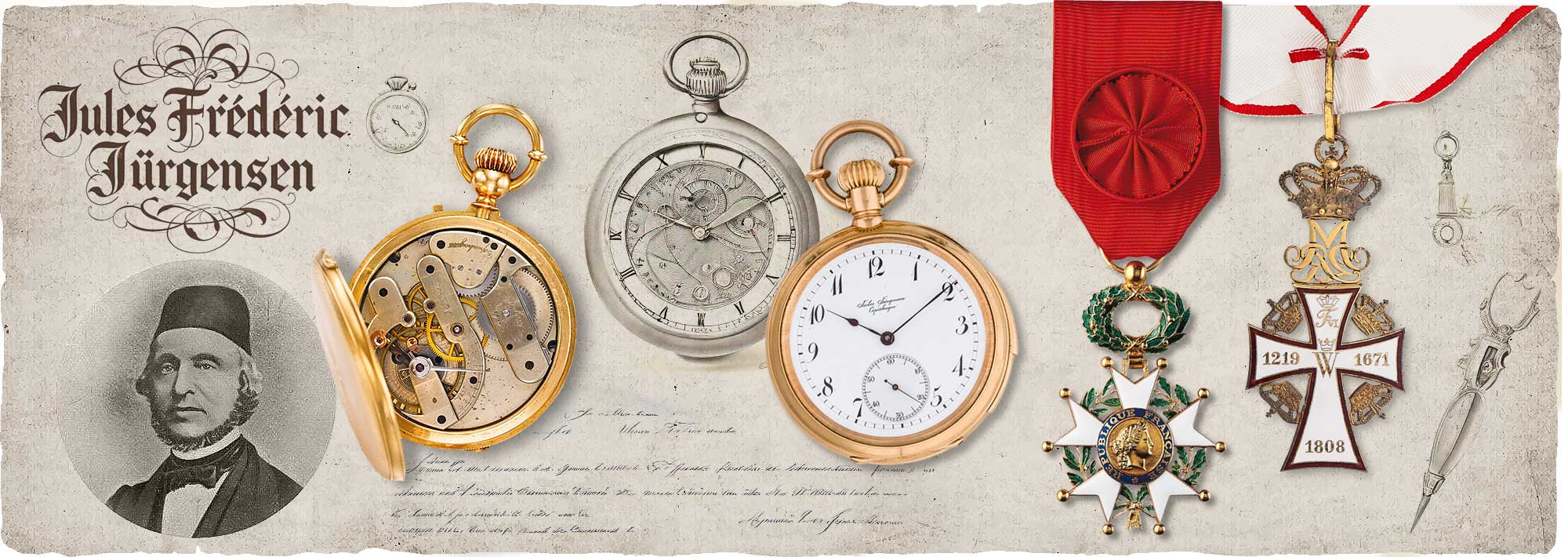
Jules married Anastasia Lavalette in October 1835. They had five children, including two sons, Jules Frédéric Urban (Jules II), born in 1837, and Jacques Alfred, born in 1842. In 1872, Jules I withdrew completely from his business in Le Locle and on June 28, he signed the company over to his eldest son, Jules Frédéric (Jules II). Although gifted in theoretical and practical watchmaking, Jules II preferred to work on the business side of the industry. In the meantime, total production exceeded 15.000 watches.
Jules I became watchmaker to the King of Denmark and was honoured as a Knight of the Légion d’Honneur and Knight of the Royal Order of Dannebrog. His workshop stamped timepieces with the inscription: Jules Jürgensen of Copenhagen.
In 1867, he patented a bow setting mechanism, enhancing the safety and functionality of watch setting. He also contributed to horological education and served on the commission of surveillance for the Geneva School of Horology from 1870 to 1876. Jules died in 1877.
The Next Generation
Jules II Frédéric Urban Jürgensen (1837–1894)
Born in 1837, Jules II Frédéric Urban was the elder son of Jules I Frédéric. Trained alongside his brother Jacques Alfred, he helped run the family business under the name Jules Jürgensen. He was also politically active in Le Locle, where he held various public offices and managed a large farm. In 1862, Jules II married Cécile Dubois. Their only child, Jules Philippe Frédéric, born in March 1864, will be the one family member to break the Jürgensen family watchmaking tradition.
On March 17, 1884, Jules II was made Knight of the Légion d’Honneur.
He died December in 1894.
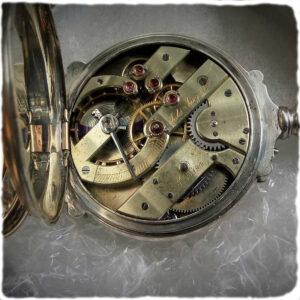
Jacques Alfred Jürgensen (1842–1912)
Born on May 17, 1842, Jacques Alfred was the youngest son of Jules I Frédéric. He initially worked in the family company before establishing his own studio under the brand Jacques Alfred Jürgensen in 1865. Between 1865 and 1896, he produced about 2.200 timepieces, some under alternate signatures.
On the death of his brother Jules II in 1894, his only child, Jules Philippe Frédéric, inherited the factory and all the land.
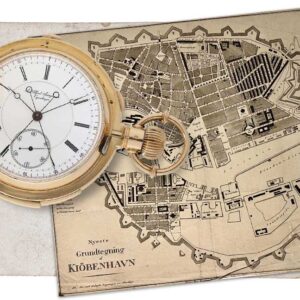
However, as he had no horological ambitions, his mother and Jacques Alfred had to manage the company and the inheritance. Jules Philippe Frédéric took his own life in tragic circumstances on July 15, 1897. This forced Jacques Alfred to buy out the company Jules Jürgensen Copenhagen, merging the two under the name Jules Jürgensen.
He passed away on June 30, 1912, at his home in Yverdon, Switzerland, without children.
Legacy and Beyond
Danish Branch:
After the family era ended, the business passed to its employee Heinrich E. Kiens in 1886, whose sons continued the production. When he took over the business, Kiens renamed the firm Urban Jürgensen & Sønner Eftf (successor). The main business remained on Gothersgade in Copenhagen to manage the trade and repair of high quality clocks. When Kiens died in 1898, his widow continued to run the business until their son, Carl Kiens, took over in 1911.
Swiss Branch:
The company survived the passing away of Jacques Alfred Jürgensen in an unexpected way. David Golay, a trusted friend, continued its operations under the old name after Jacques Alfred’s passing. World War I was raging at the time and business soured. As later fashions shifted to slimmer, lighter weight watches and the company faced other challenges, Golay decided to sell the company.
Unifying the Jules Jürgensen and Urban Jürgensen brands
Two years ago, it was the 250th anniversary of the founding of Urban Jürgensen and this year it will be the year of the return. After nearly 200 years of separate operation, the Jules Jürgensen and Urban Jürgensen brands will be unified again under one umbrella. The company will continue to conduct its design, manufacturing and production operations in Switzerland.