

Watchmakers and watch companies starting with the letter L
Learn about leading watchmakers and legendary watch companies starting with the letter L. Delve into their histories, innovative designs, and craftsmanship. Perfect for horology enthusiasts and collectors!
A. Lange & Söhne
Ferdinand Adolph Lange was the founder of A. Lange & Söhne. He was born in 1815 as the son of Johann Samuel Lange. Early in life, his parents separated and he was adopted by a foster family. Luckily this family offered him a chance at proper education and in 1829, he joined the Technical University of Dresden. Lange’s master was Christian Friedrich Gutkaes, the maker of the famous five-minute clock in the Dresden Opera House and the court watchmaker later on. Lange finished his apprenticeship with honours and went on to work with Gutkaes as his assistant for more than two years.
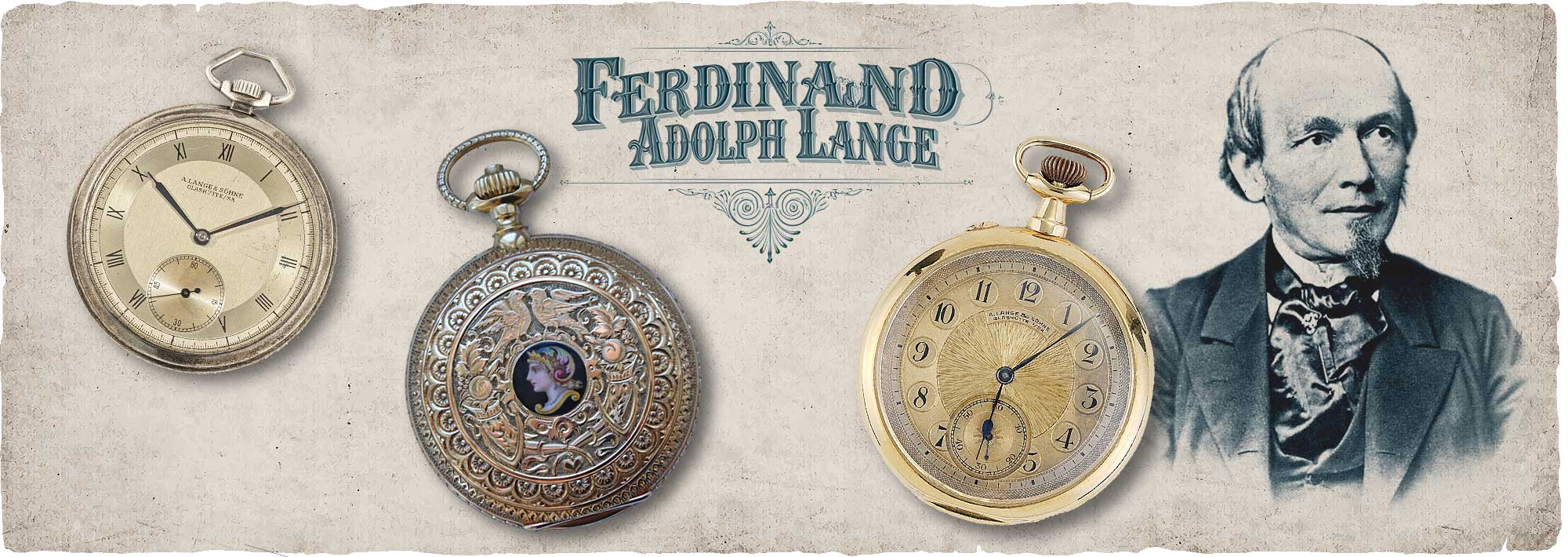
In 1837, Lange decided he wanted to learn the watchmaking craft from the best of the time and this decision took him to Paris, Switzerland and England. He spent four years with the master watchmaker Winnerl, a student of Breguet, in Paris. Lange returned to Dresden in 1841 and took over his now father-in-law Gutkaes’ business in 1842. He had the ambition to bring prosperity to the once rich, now unfortunate Erzgebirge region, Glashütte, he wanted to build a watchmaking industry and create jobs. He received funding from the high council of Saxony and on December 7th, 1845, Ferdinand Adolph Lange founded A. Lange & Cie. He started with fifteen young men who were obliged to work with him for at least five years and following Lange encouraged his apprentices to found their own specialized firms in Switzerland. He set up a watchmaking cluster in the region along with his colleagues Julius Assmann, Adolf Schneider and Moritz Grossmann. At the time, there was a specialist for every part, producing individual pieces of the highest quality. Ferdinand Adolph developed numerous mechanisms, from the remontoir to dead-seconds and repeaters and he introduced the metric system to watchmaking. Eventually, it took Glashütte watchmaking 20 years to develop.
After two successful decades and as the mayor of Glashütte Ferdinand Adolph Lange retired in 1868. He enjoyed his spacious house built adjacent to the factory, which today serves as the headquarters of the modern A. Lange & Söhne. He gave the reigns of his legacy to his sons Richard and Emil Lange, subsequently, the company’s name was changed from A. Lange & Cie to A. Lange & Söhne. Under their management A. Lange & Söhne expanded tremendously. Ferdinand Adolph Lange died in 1875. In 1948, the post-war Soviet administration nationalized the company’s property and the Lange brand ceased to exist. However, in December 1990, following German reunification, the founder’s great-grandson Walter Lange, together with watch industry executive Günter Blümlein, restored the company with the assistance of several Swiss watch manufacturers, including the International Watch Company (IWC) and Jaeger-LeCoultre. Again operating from Glashütte, the company presented its first range of wristwatches in 1994. Today, A. Lange & Söhne wristwatches are sold globally. Lange, like IWC, is now a member of the Richemont group.
Le Phare
The company Le Phare was originally founded by Charles Barbezat-Baillot (1847-1938) and Henry Guye (1838-1877) under the name Guye & Barbezat in Le Locle, Switzerland, high in the Neuchâtel mountains. In 1888, the firm’s name was changed to Le Phare, being the registered name of their complicated watches.
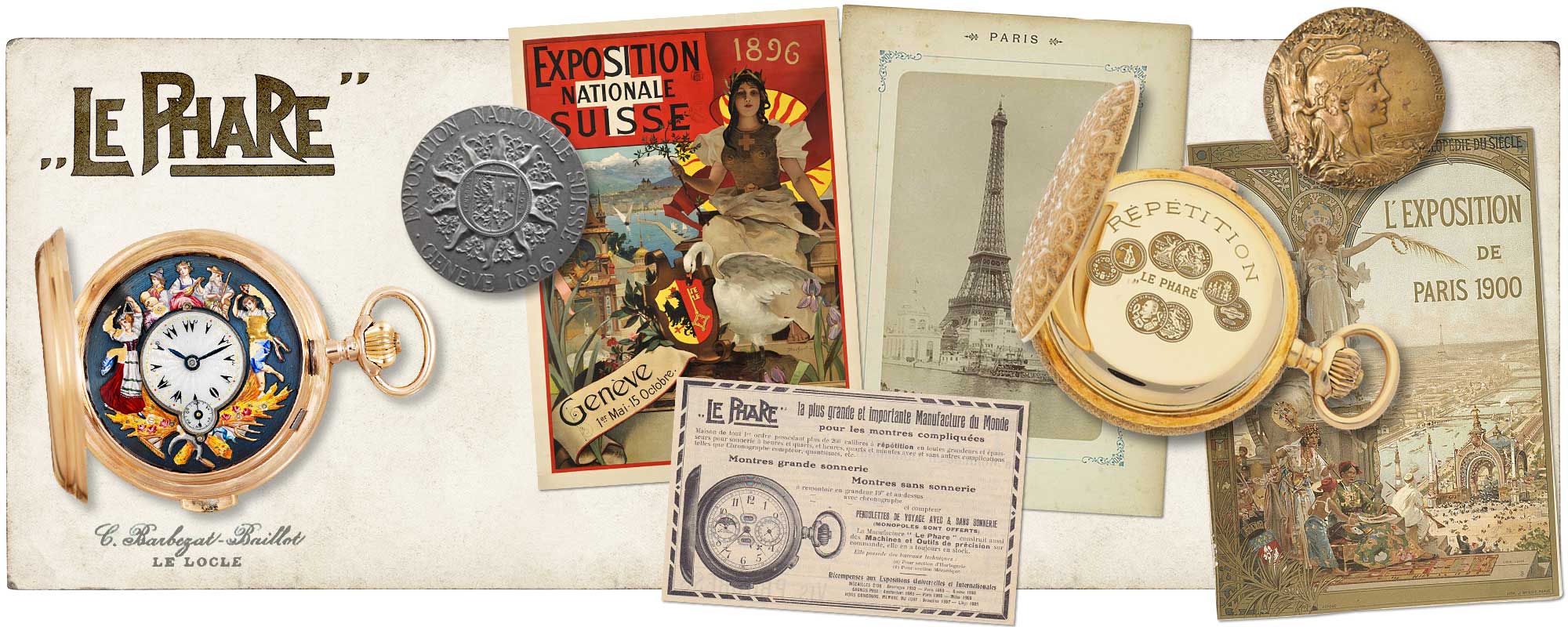
The company, which later launched the Jean d’Eve watch range, has left its mark on the story of Swiss watchmaking. Indeed, from 1889, its watches were rewarded by the most eminent prizes, a gold medal at the National Exhibition of 1896 in Geneva followed that of 1889 at the Great Universal Exhibition in Paris. In 1897 the silent regulator was invented. A veritable technological marvel that overcame the humming problems beset the repeater watches of the day. This brought another gold medal for Le Phare at the Paris Great Exhibition of 1900. In 1900, the company advertised their brands that year as La Locloise, l’Esperanto, Le Phare, Tempora and La Volapuk. The company continued to develop and in 1970 was the second-largest producer of chronograph watches in Switzerland. The management’s strategy is to take maximum advantage of its remarkable know-how to develop new ways of measuring time.
Le Roy et fils
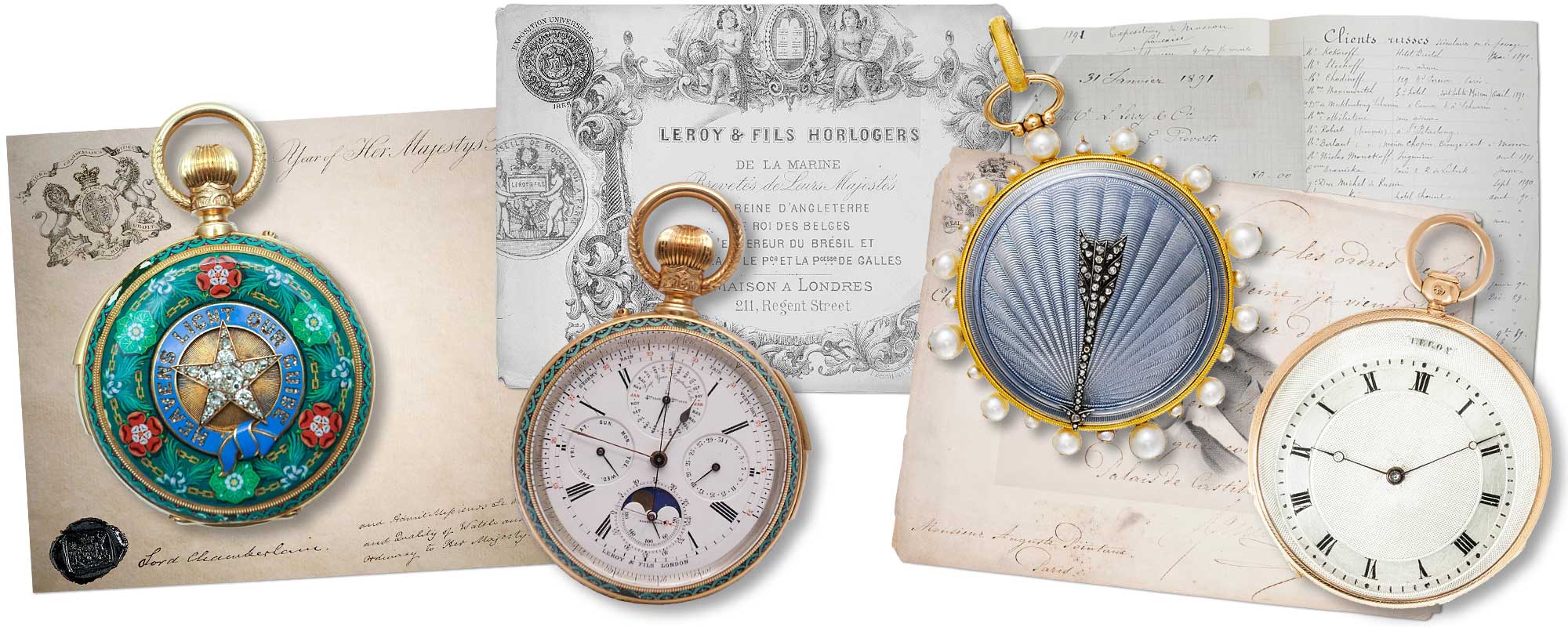
Le Roy et fils was a French watchmaker. The company was founded in 1785 by Basile Charles le Roy. The company became successful and survived the turmoils of the French Revolution. It became the clockmaker to Napoleon I and also was purveyor to his sister Princess Pauline. After the restoration of the Bourbon monarchy, it was a warrant holder for the Duke of Bourbon.
Le Roy, Julien
Julien Le Roy is one of the clockmakers who contributed most to the progress and the reputation of French watch- and clockmaking. Born in Tours on August 6, 1686, and died in 1759 in Paris. He came to Paris in 1699. In 1713 he achieved his master’s degree and in the following years, he became a jury member of the Paris Guild of Watchmakers. Later, Le Roy became director of the Société des Arts de Genève and, in 1739, Court Watchmaker (French Horloger Ordinaire du Roi) under Louis XV, he had his private quarters in the Louvre. He improved almost all branches of clockmaking and many important inventions in the realm of time measurement are owed to him.
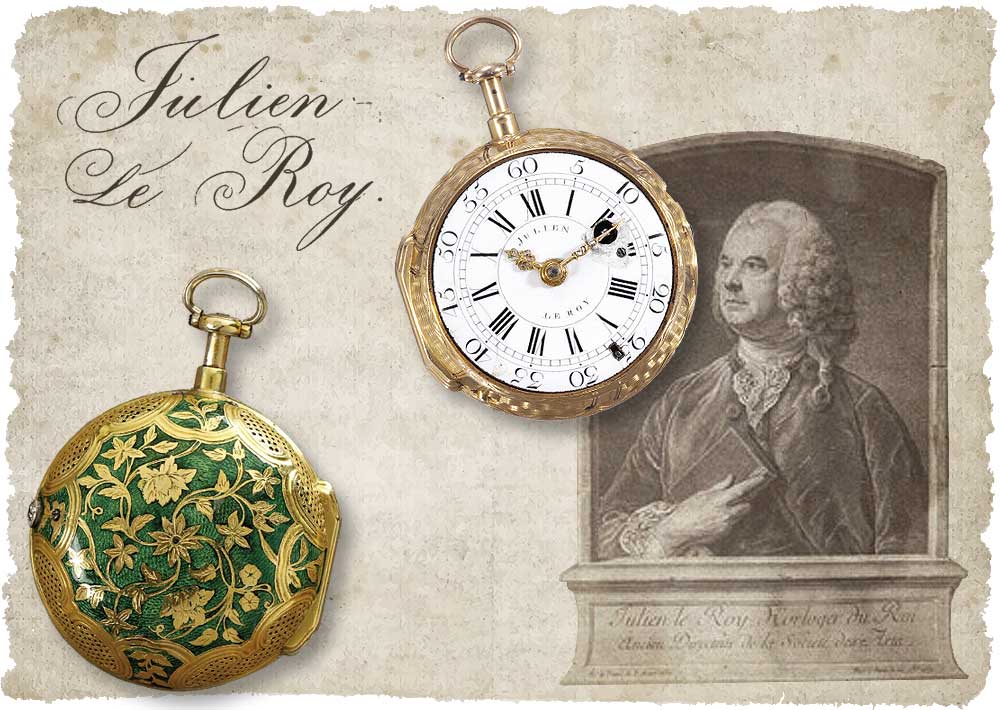
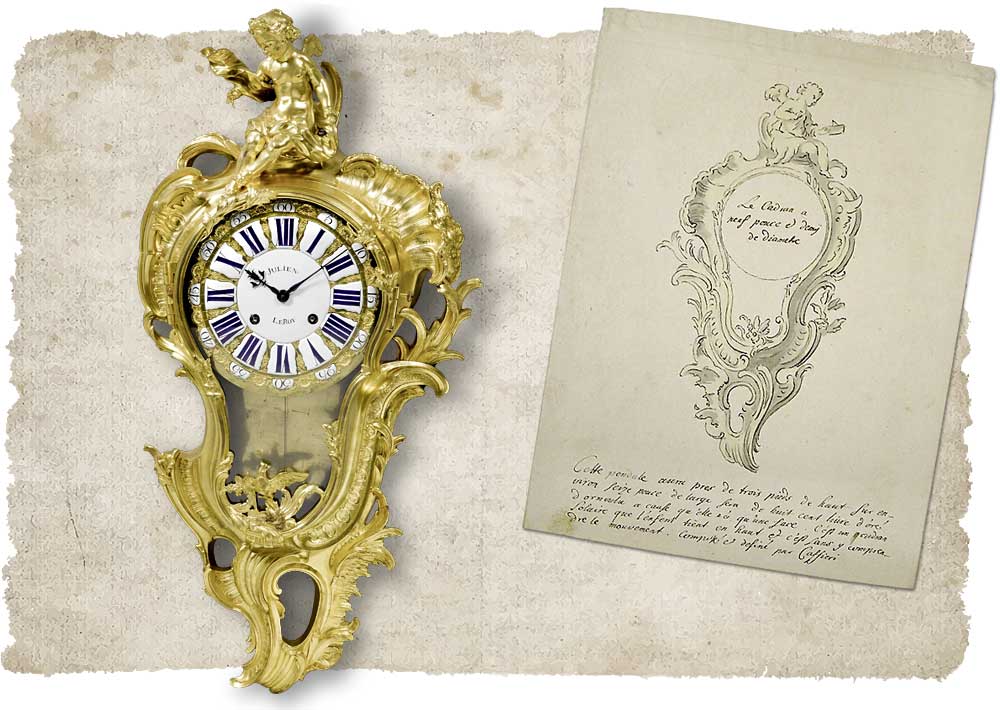
In 1717, Julien Le Roy presented an equation clock to the Royal Academy of Sciences which showed the true time, the place of the sun and its decline. His most important discoveries concerned watch mechanisms. The adjustable ‘potence’ for the verge escape wheel considerably improved the escapement’s functioning and the steel end-piece (coqueret) which allowed oil to be retained in the balance pivots to diminish frictional force, was quickly adopted by other watchmakers. He was the inventor of dumb repeating watches too, in 1740, he created a new arrangement that allowed the area allotted to the repeating work to be enlarged. This invention, called ‘à bâte levée’, was also adopted by his fellow clockmakers. In 1755 he invented a small anchor escapement used as a regulator for the repeating train. He contributed to the Encyclopédie by writing several articles on clockmaking together with his son Jean-Baptiste, the Academician. Le Roy ran his workshop in the Rue de Harlay in Paris until his death. Examples of his timepieces can be found in various important museums around the world, such as the Louvre and the Victoria and Albert Museum.
LeCoultre
The earliest records of the LeCoultre family in Switzerland date from the 16th century, when Pierre LeCoultre (circa 1530 – 1600), a French Huguenot, fled to Geneva from Lisy-sur-Ourcq, France to escape religious persecution. In 1558, he obtained the status of inhabitant but left the following year (1559) to acquire a plot of land in the Vallée de Joux. Over time, a small community formed and in 1612, Pierre LeCoultre’s son built a church there, marking the founding of the village of Le Sentier where the company’s manufacturing is still based today.
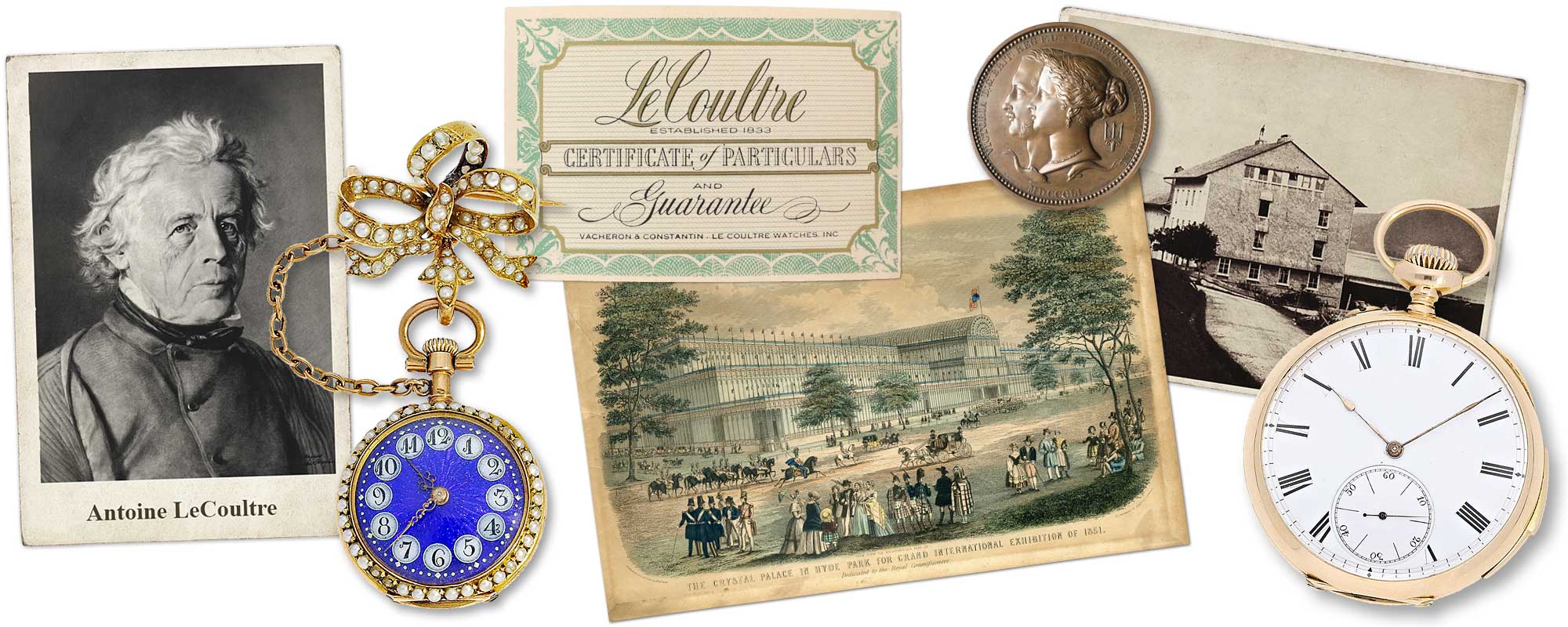
In 1803, Antoine LeCoultre (1803–1881) was born. Following his invention of the machine to cut watch pinions from steel, Antoine LeCoultre in 1833 founded a small watchmaking workshop in Le Sentier where he honed his horological skills to create high quality timepieces.
In 1842, Elie LeCoultre (1842–1917), son of Antoine, was born. The following year, in 1843, Charles Ami Lecoultre (1843–1921) was born.
In 1844, LeCoultre invented the world’s most precise measuring instrument at the time, the millionomètre, and in 1847 he created a keyless system to rewind and set watches. Four years later, in 1851, he was awarded a gold medal for his work on timepiece precision and mechanisation at the first Universal Exhibition in London.
LeCoultre & Cie
In 1866, at a time when watchmaking skills were divided up among hundreds of small workshops, Antoine and Elie established the Vallée de Joux’s first full-fledged manufacture, LeCoultre & Cie, bundling their employees’ expertise under one roof. Under this setup, they developed the first partially mechanized production processes for complicated movements in 1870. By the same year, the manufacturer employed 500 people and was known as the Grande Maison of the Vallée de Joux.
LeCoultre, Charles Ami
From 1881, Charles Ami Lecoultre worked with the renowned Louis Elisée and Henry Daniel Piguet. He specialised in creating complex watches and developed a patent in 1887 for a mechanism that connects the split second hand and its train operating mechanism with the second hand or with the second hand and minute hand. This invention allowed these hands to move in unison with the split-second hand. The hands and their connecting gears were all started simultaneously by the first movement of a push-pin and stopped by a brake lever that is brought in contact with the surface of one of the gears. The second movement of a push pin operated the brake lever, and a lever and heart cam were employed to return the second and minute hands simultaneously to their normal or zero position. They were operated by the third movement of a push pin simultaneously with the disengagement of the split second mechanism.
By 1900, LeCoultre & Cie had created over 350 different calibres, of which 128 were equipped with chronograph functions and 99 with repeater mechanisms. From 1902 and for the next 30 years, LeCoultre & Cie produced most of the movement blanks for Patek Philippe of Geneva.
Jaeger-LeCoultre
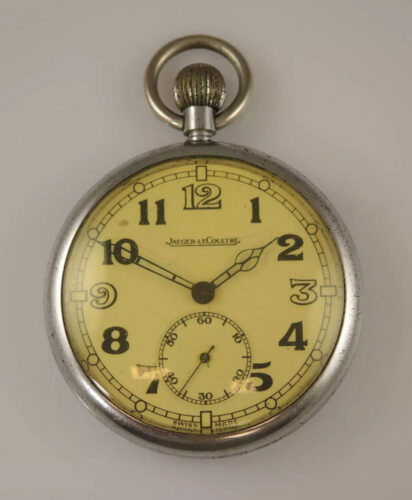
In 1903 a meeting between Frenchman Edmond Jaeger and Jacques-David LeCoultre, a grandson of Antoine LeCoultre, changed watchmaking forever. Together, they successfully fused French style and Swiss technique, an approach which still prevails at the Grande Maison today. The collaboration between Jaeger and LeCoultre led to the company being officially renamed Jaeger-LeCoultre in 1937.
Since 2000, the company has been a fully owned subsidiary of the Swiss luxury group Richemont.
Lehner, Anselm Benedict
Anselm Benedict Lehner was a renowned watchmaker from Augsburg, Germany who created intricate timepieces during the 18th century. He was known for his unique style and the high level of craftsmanship that went into his creations. To create his timepieces, Lehner used a variety of tools and techniques that were common during his time. These included hand engraving, chasing and polishing of the metal components as well as the use of precision gears and other mechanical parts. Lehner was also known for his use of enamel dials, which were painted by hand and fired in a kiln to create a durable finish.
One of the unique aspects of Lehner’s style was his use of decorative elements such as floral motifs, animals and mythological figures. He also incorporated intricate designs and patterns into the metal components of his timepieces, creating a sense of depth and texture that was not common in other watches of the time. Lehner’s style and techniques were developed over many years of practice and experimentation. He was influenced by other watchmakers of his time, as well as by the artistic and cultural trends of the period. Through his dedication to his craft, Lehner became one of the most respected watchmakers of his era and his timepieces continue to be highly valued by collectors today.
Lugrin SA and Lemania Watch Co.
Lemania, later known as Nouvelle Lemania, was a Swiss watch and movement manufacturer founded by Alfred Lugrin in 1884 under the name Lugrin SA in L’Orient Vallée de Joux. Lugrin acquired his expertise as an employee at Jaeger-LeCoultre in Le Sentier, specializing in producing chronographs, stopwatches and repeater watches. In 1895, Lugrin SA moved into its own factory building in L’Orient. The name Lugrin SA was retained until 1930 when Lugrin’s son-in-law, Marius Meylan, established the brand name Lemania Watch Co. based in L’Orient. In 1932, Lemania, Omega and Tissot merged to form the SSIH group.
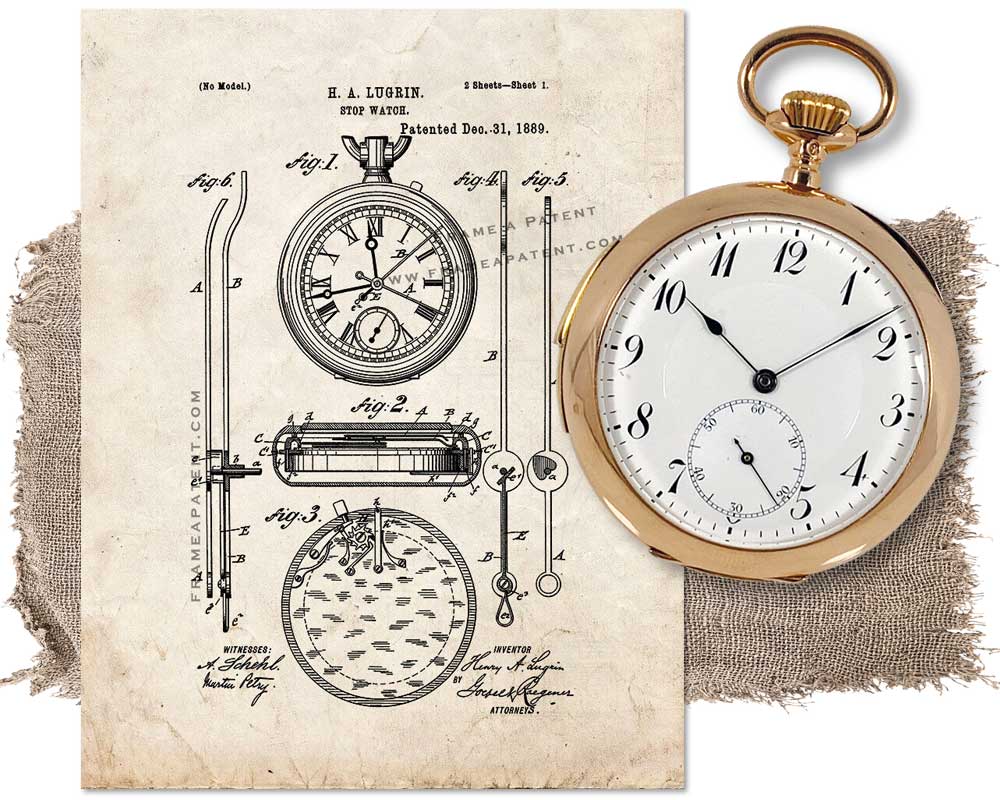
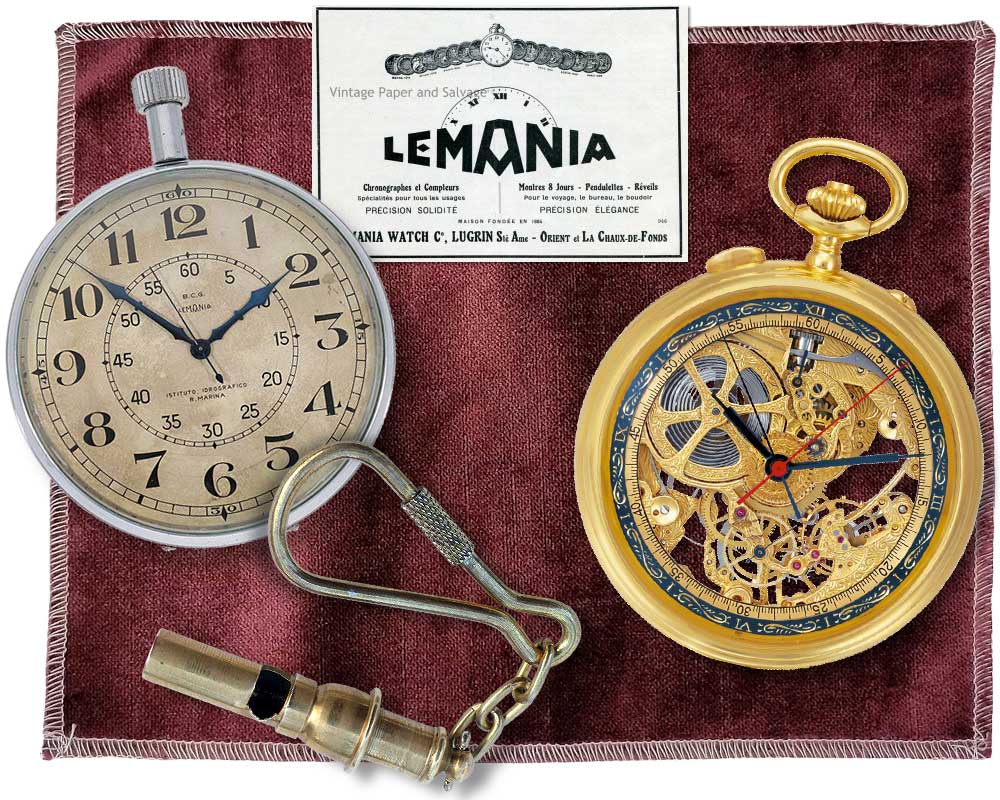
Lemania gained fame when the Lemania 1873 movement was selected by NASA in 1962 for use in the Omega Speedmaster Professional (as Omega calibre 861), which caused a stir in 1969 with its use on the moon. Albert Gustave Piguet developed this movement. In 1977, Lemania separated from SSIH as part of a management buyout and changed its name to Nouvelle Lemania. In 1992, Nouvelle Lemania joined the Groupe Horloger Breguet and was taken over by the Swatch Group along with Breguet in 1999. The movements of Lemania and Nouvelle Lemania were highly regarded among experts. The automatic chronograph movement Lemania 5100, known for its robustness and reliability, ceased production at the end of 2002.
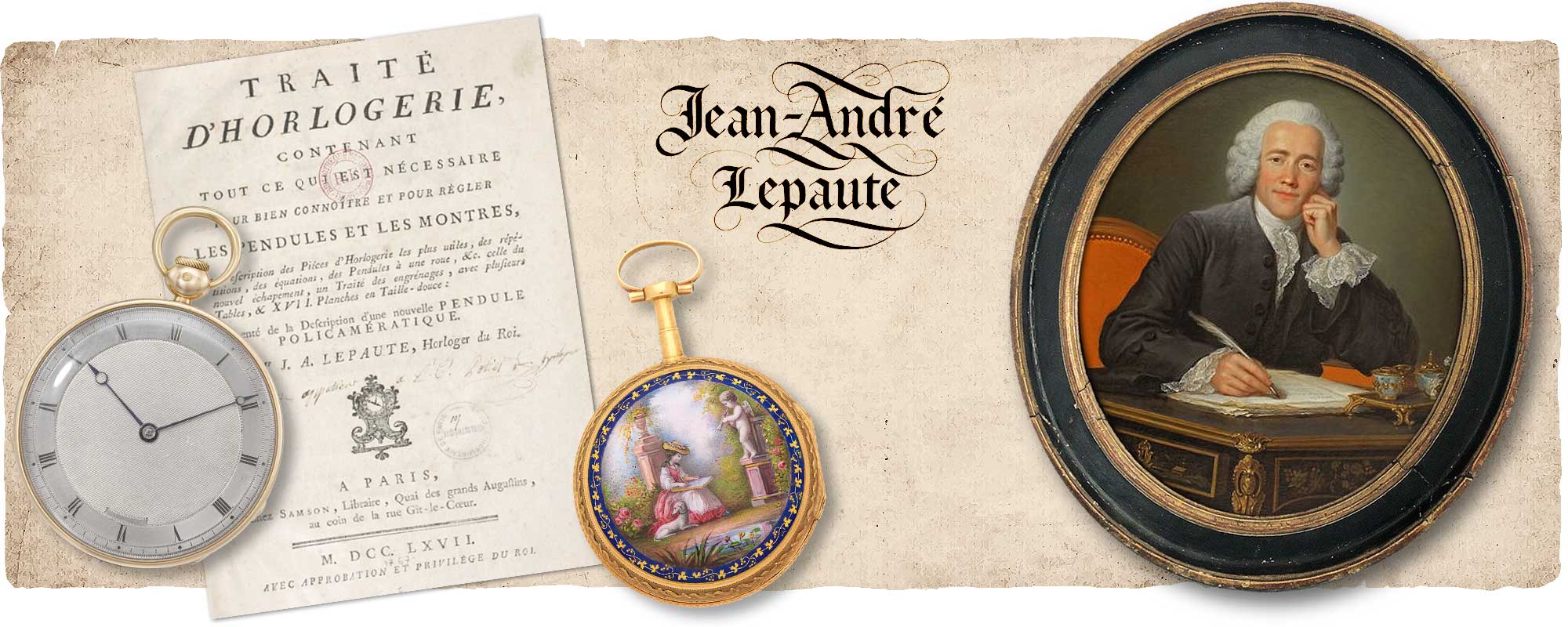
Lepaute, Jean-André
Jean-André Lepaute was a renowned French clockmaker who served as Horloger de L’Empereur (Clockmaker to the Emperor) in Paris during the late 18th century. He was known for creating some of the most intricate and advanced timepieces of his time. Lepaute came from a family of clockmakers and was trained in horology by his father and uncle. He later worked with his brother, Jean-Baptiste Lepaute, in their family workshop.
Lepaute, Pierre-Basile
Pierre-Basile Lepaute (1750 – 1843) took over the famous Lepaute clockmaker dynasty founded by Jean André Lepaute (1720 – 1789) in the 1740s and managed it together with his son Pierre-Michel Lepaute (1785-1849). He held the title of Horloger de l’Empereur during the imperial period. Lepaute was one of the main suppliers of clocks to the imperial court and was allowed to exhibit at the industrial fairs in 1819 and 1823. The Lepautes were among France’s leading watch- and clockmakers. Among the members of the family were inventors and writers, as well as researchers and excellent master craftsmen. Customers included Louis XV, Louis XVI, Madame du Barry, Duc de Bourbon, the Princess de Monaco, King Ferdinand VI, King Charles III and Charles IV of Spain.
Jean-André Lepaute gained a reputation for his skill in clockmaking and was appointed as Horloger de L’Empereur in Paris during the reign of Napoleon Bonaparte. As Horloger de L’Empereur, Lepaute was responsible for creating and maintaining the clocks and timepieces used by the Emperor and his court. He also worked on other important projects, such as designing the clock for the Palais Bourbon and creating a clock that could measure time accurately to the second. During his time as Horloger de L’Empereur, Lepaute created several notable clocks and timepieces, including the astronomical clock at the Palais des Tuileries, which was considered one of his greatest achievements. He also created a clock for the Château de Bellevue, which was owned by the brother of King Louis XVI, as well as a clock for the Château de Fontainebleau. In addition to these large-scale projects, Lepaute also created many smaller clocks and watches, some of which were designed for specific individuals, such as Marie Antoinette. His clocks were known for their precision, intricate designs and use of advanced technology.
Lepaute had several notable apprentices and successors in the field of clockmaking. One of his most famous apprentices was his nephew, Pierre-Basile Lepaute, who went on to become a renowned clockmaker in his own right. Other notable successors include Ferdinand Berthoud, who was a student of Pierre-Basile Lepaute and went on to become a prominent clockmaker and marine chronometer designer and Jean-André Lepaute, who was also a nephew of Jean-André Lepaute and continued the family tradition of clockmaking.
Lépine, Jean-Antoine
Jean-Antoine Lépine (also L’Pine, LePine, Lepine or L’Epine) was born as Jean-Antoine Depigny on November 18th, 1720 in Challex, France. He was an influential watchmaker. Lépine contributed inventions which are still used in watchmaking today and was amongst the finest French watchmakers, who were contemporary world leaders in the field. Since his childhood the horologist showed an inclination towards mechanics, beginning his horological career and making fast progress, in particular, under the direction of Mr Decroze, manufacturer of Saconnex watches, in the suburbs of Geneva, Switzerland.
Lépine moved to Paris in 1744 when he was 24 years of age, serving as an apprentice to André-Charles Caron (1698–1775), at that time clockmaker to Louis XV. In 1756 he married Caron’s daughter and associated with him, under the name ‘Caron et Lépine’, between 1756 and 1769. Watches with a signature Caron et Lépine or equivalent are not known, apparently, Lépine was independent to a certain extent. As early watches were not numbered, it is uncertain when Lépine began to sign watches with ‘L’Epine à Paris’ on the movement and partially ‘L’Epine à Paris’ on the dial.
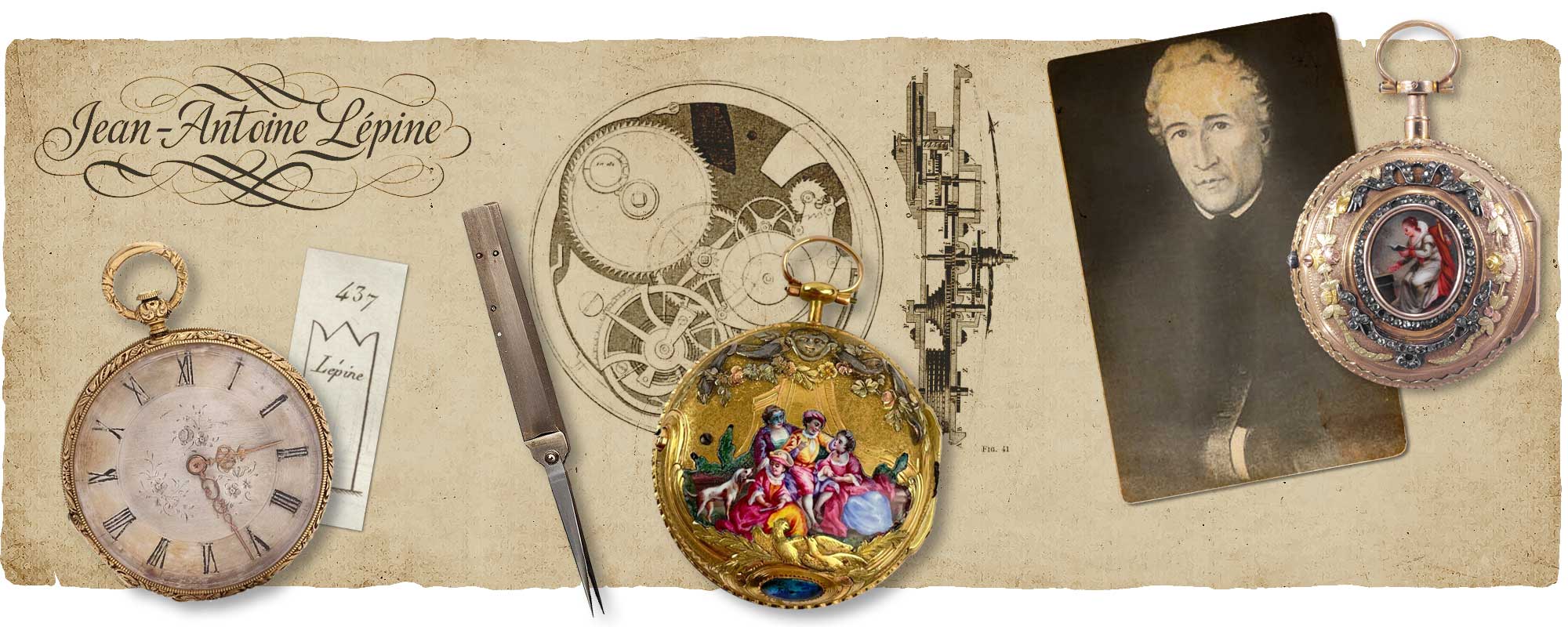
On March 12th, 1762, he became maître horloger (master horologist) and probably since that year he was the teacher of Abraham-Louis Breguet, with whom he had a business relationship over many years. In the Breguet archive, many watches are recorded as delivered by Lépine. In 1765 or 1766 (precise date not known), he was appointed Horloger du Roi (Clockmaker to the King). In 1766 he succeeded Caron and appeared on the list of Paris clockmakers of that year as Jean-Antoine Lépine, Hger du Roy, rue Saint-Denis, Place Saint Eustache. Ten years later, in 1772, he established himself in the Place Dauphine, in 1778-1779, Quai de l’Horloge du Palais; then in the Rue des Fossés Saint Germain l’Auxerrois near the Louvre in 1781 and finally at 12 Place des Victoires in 1789. In 1782, his daughter Pauline married one of his workmen, Claude-Pierre Raguet (1753–1810), with whom he formed a partnership in 1792.
He was also associated for a certain period with the philosopher Voltaire, at his watch manufactory set up in 1770 at Ferney. It is not known the exact role he played in the Ferney Manufacture royale, either technical director and/or associate. However, most ebauches for his watches were made there, at least between 1778 and 1782. An unsigned memoir of 1784 reports that Lépine stayed in Ferney for 18 months and that he had watch movements made there with a value of 90,000 livres a year. As a clock- and watchmaker to Louis XV, Louis XVI and Napoleon Bonaparte, Lépine’s creations were well respected and in demand. He died at the age of 93 on May 31 in Paris, France.
Longines Francillon S.A.
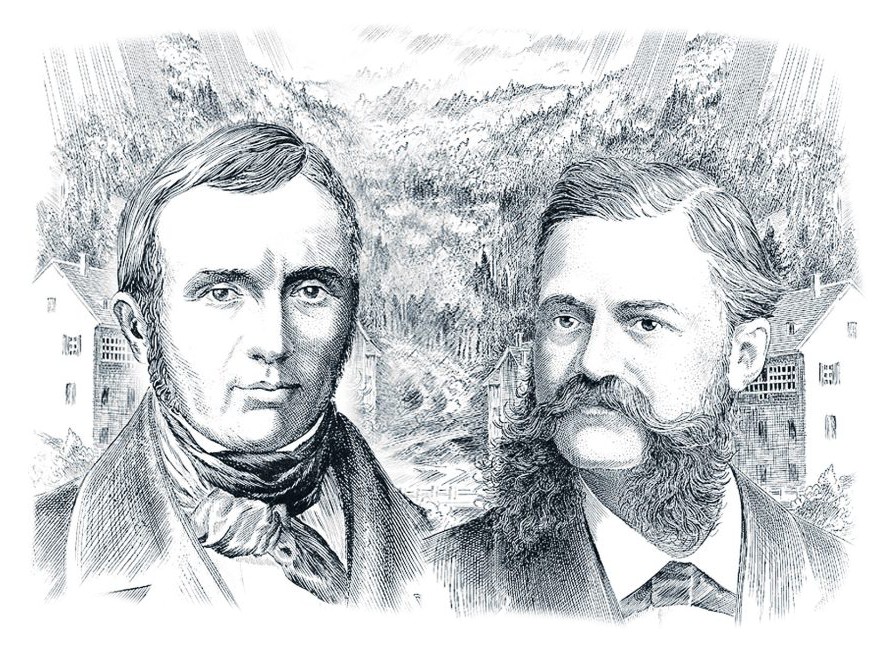
Compagnie des Montres Longines Francillon S.A. or simply Longines, is a Swiss luxury watchmaker based in Saint-Imier, Switzerland. Founded by Auguste Agassiz in 1832. Auguste had two partners, lawyers Henri Raiguel and Florian Morel.
The company’s original name was Raiguel Jeune & Cie. By 1846, Raigeul and Morel had retired from the watchmaking industry, leaving Agassiz as the sole head of the company. Several years later, Agassiz brought his nephew, trained economist Ernest Francillon, into the business. Francillon was the mastermind behind several impressive innovations that would distinguish the company.
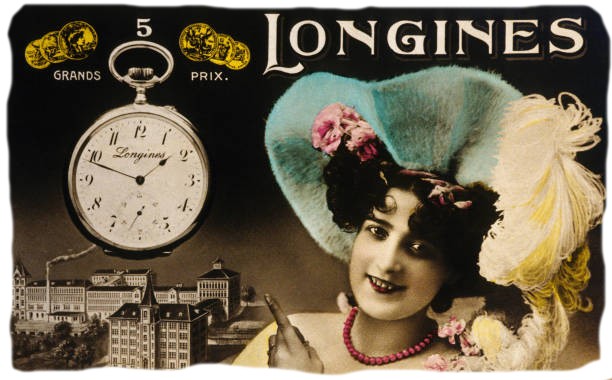
Under Francillon, the company began segueing out of the établissage system and moved towards more modern production methods. Francillon solidified his firm’s progression to mass production in 1867 by establishing his first factory in southern St. Imier known locally as Les Longines (long meadows), which gave rise to the Longines name. In order to protect against counterfeiting even then, the name “Longines” is registered with the Federal Office of Intellectual Property on 27 May 1889. On 27 March 1893 it is registered at the International Intellectual Property Office and thus the company is the oldest registered watch manufacturer in the world.
To help his efforts to improve the production at Longines further, Francillon brought on Jacques David, a talented engineer. He appointed him as Technical Director and put him in charge of the new factory. Francillon sent Jacques David to the 1876 World’s Fair in Philadelphia to gather new ideas and strategies from American watchmakers.
Upon returning, David wrote a 108-page report detailing what he learned during his trip. The report is considered one of the most significant documents in watchmaking history, detailing the inner workings of American watch factories. In his analysis, David concluded the Swiss watchmaking industry needed to change significantly to keep pace with its American competitors.
In 1878, Longines developed its first chronograph movement, the 20H, a mono-pusher chronograph, in which all three chronograph functions (start, stop and reset) were controlled through the crown. With this movement, Longines could produce stopwatches suitable for precise timing in professional events.
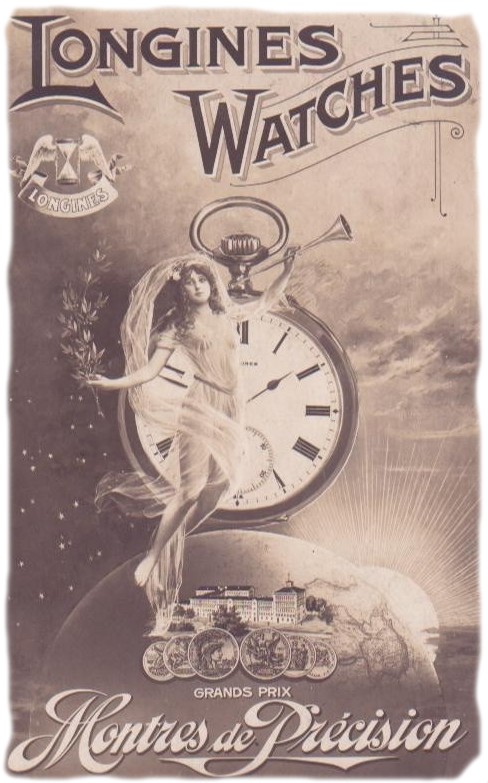
By 1880, Longines was known for the quality and precision of its timepieces, that year Francillon trademarked the Longines name and its winged hourglass logo in 1889. It is the oldest unchanged active trademark registered with the World Intellectual Property Organization (WIPO). By 1886, Longines had established itself as a primary supplier of timing equipment for most New York sporting officials. The company has been a subsidiary of the Swiss Swatch Group and its predecessors since 1983.

