

Watchmakers and watch companies starting with the letter P
Peruse prominent watchmakers and prestigious watch companies starting with the letter P. Uncover their histories, innovative designs, and craftsmanship. Ideal for horology aficionados and collectors!
Patek, Philippe & Co
Founded on May 1, 1839, in Geneva by Polish businessman Antoine Norbert de Patek and watchmaker François Czapek, the company began under the name Patek, Czapek & Cie. Their partnership was short-lived, ending in 1844 due to creative differences.
That same year, Patek met Jean-Adrien Philippe, a gifted French watchmaker who had just introduced a groundbreaking invention: the keyless winding system, allowing watches to be wound and set via the crown. Impressed by his innovation, Patek formed a new partnership with Philippe in 1845 which was named Patek & Comp, which later became Patek, Philippe & Co in 1851.
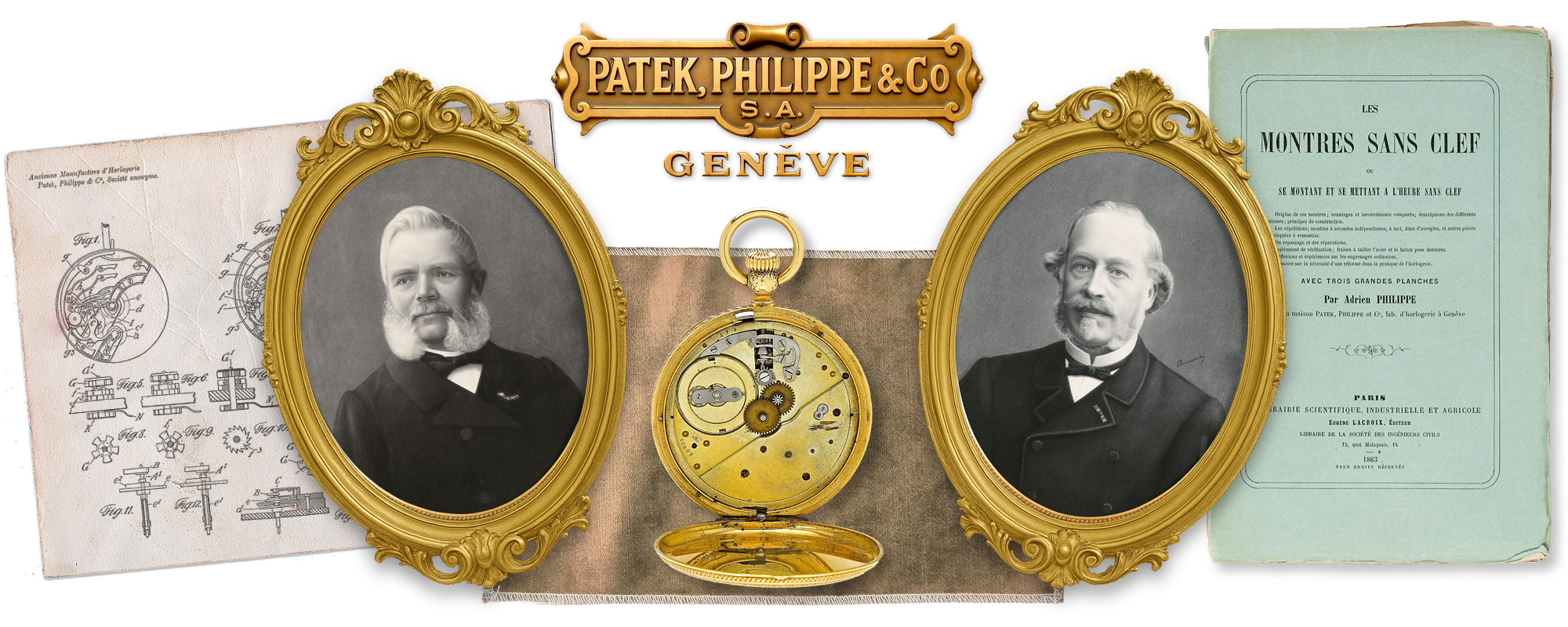
Over the decades, Patek, Philippe gained renown for its commitment to craftsmanship and innovation. The company introduced the first watch with a minute repeater in 1845 and filed multiple patents, including for the double chronograph (1902) and perpetual calendar wristwatch (1925). In 1937, they launched the world’s first “Heure Universelle” wristwatch, displaying all 24 time zones simultaneously.
The brand became known for its complex mechanical watches. In 1989, for its 150th anniversary, Patek, Philippe unveiled the Calibre 89, the most complicated pocket watch ever made, with 33 complications and 1,728 components. Equally iconic is the Sky Moon Tourbillon, a masterpiece with 686 parts—crafted in a strictly limited edition of three per year.
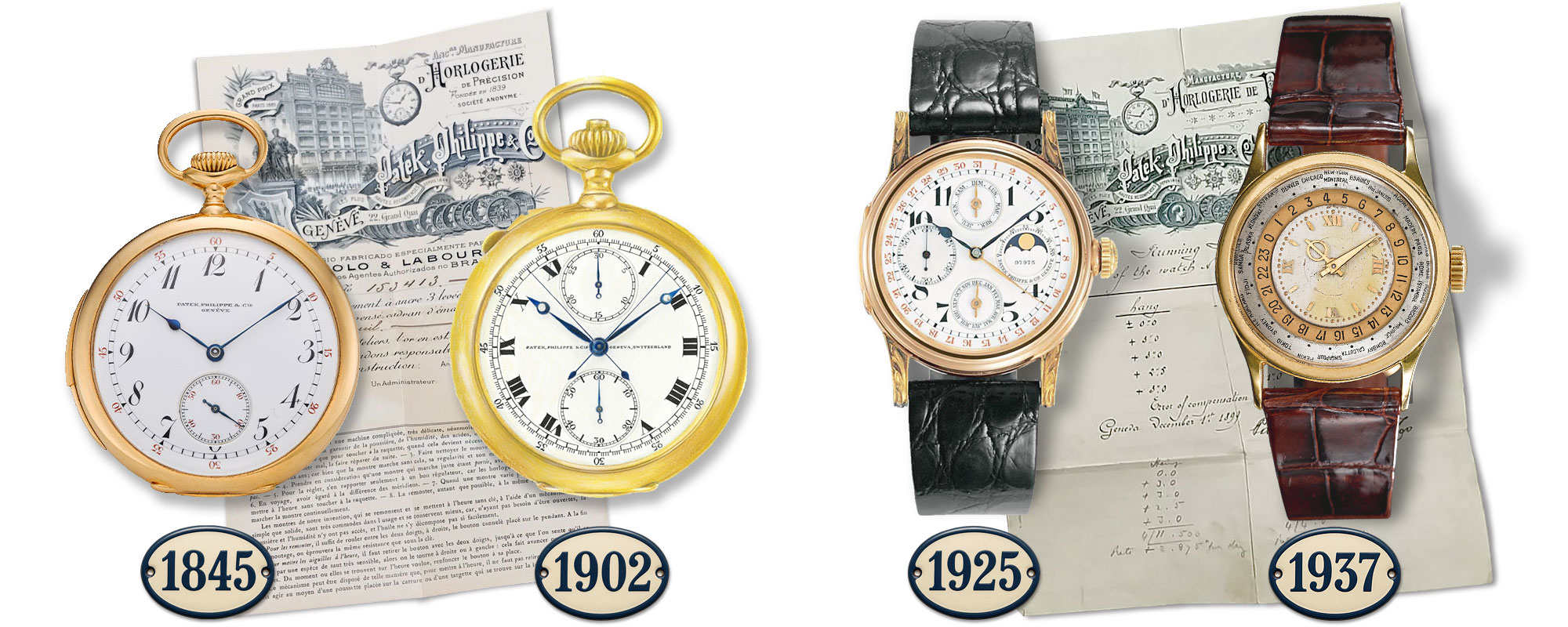
In 1932, the Stern family acquired Patek, Philippe, ensuring the company’s continued independence. The company was known as “Patek, Philippe & Cie” from 1851 until 2009, when the name was changed to “Patek Philippe”, removing the ampersand and comma from the name. The shift occurred when Thierry Stern took a leading role in the company, as part of a legal name change for the company itself.
Today, under the leadership of Thierry Stern, Patek Philippe remains family owned, an exceptional feat in the modern watch industry.
The company produces all movements in-house and has received over 70 patents. It remains the only Geneva based manufacturer whose entire mechanical movement production qualifies for the prestigious Geneva Seal. Its watches consistently set auction records, including a 1933 pocket watch sold for $11 million in 1999, and again in 2014 for €19 million.
Regarded as one of the “Big Four” in haute horlogerie – alongside Audemars Piguet, Vacheron Constantin and A. Lange & Söhne – Patek Philippe continues to define timeless precision and unmatched elegance in the world of fine watchmaking.
Perelle, Gabriel
Gabriel Perelle was born in 1604 in Vernon, Eure and died in 1677 in Paris. He was a French draftsman and printmaker of topographic views and landscapes. Perelle specialized in classical landscapes. He founded an etching workshop, and his sons Nicolas and Adam assisted him. Perelle produced several hundred engravings both from his own drawings and from those of other artists. These engravings in the etching and intaglio (a technique in which the image is incised into a surface and the incised line or sunken area holds the ink) mainly depict landscapes of the Paris region, including views of castles, where he introduced variety by adding ruins and various accessories.
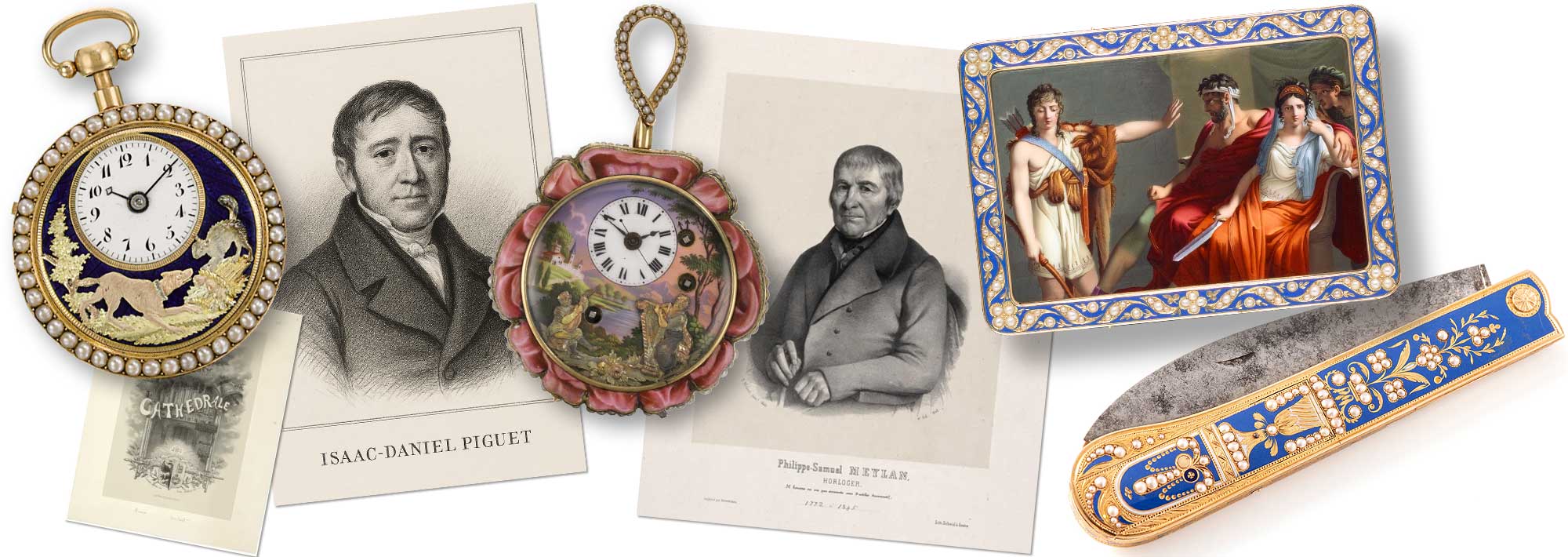
Piguet & Meylan
Piguet & Meylan were both originally from the village of Le Chenit in the Vallée de Joux, Isaac Daniel Piguet (1775-1841) and Philippe Samuel Meylan (1772- 1845) came to Geneva as young men and formed a partnership that lasted from 1811 to 1828. The company specialized in elaborate and beautifully decorated musical watches, including skeleton and automaton watches and mechanical animals. They employed some of the best enamel painters to decorate their watches. The company further are particularly known for their watches made for the Chinese Market. Examples of their work are in many of the world’s foremost collections including the Patek Philippe Museum in Geneva, the Metropolitan Museum of Art in New York and the Musée d’Horlogerie in Le Locle. The firm was established at 45, Rue Jean Jacques Rousseau in Geneva. After their association came to an end both Piguet and Meylan continued for some time to work with their sons.
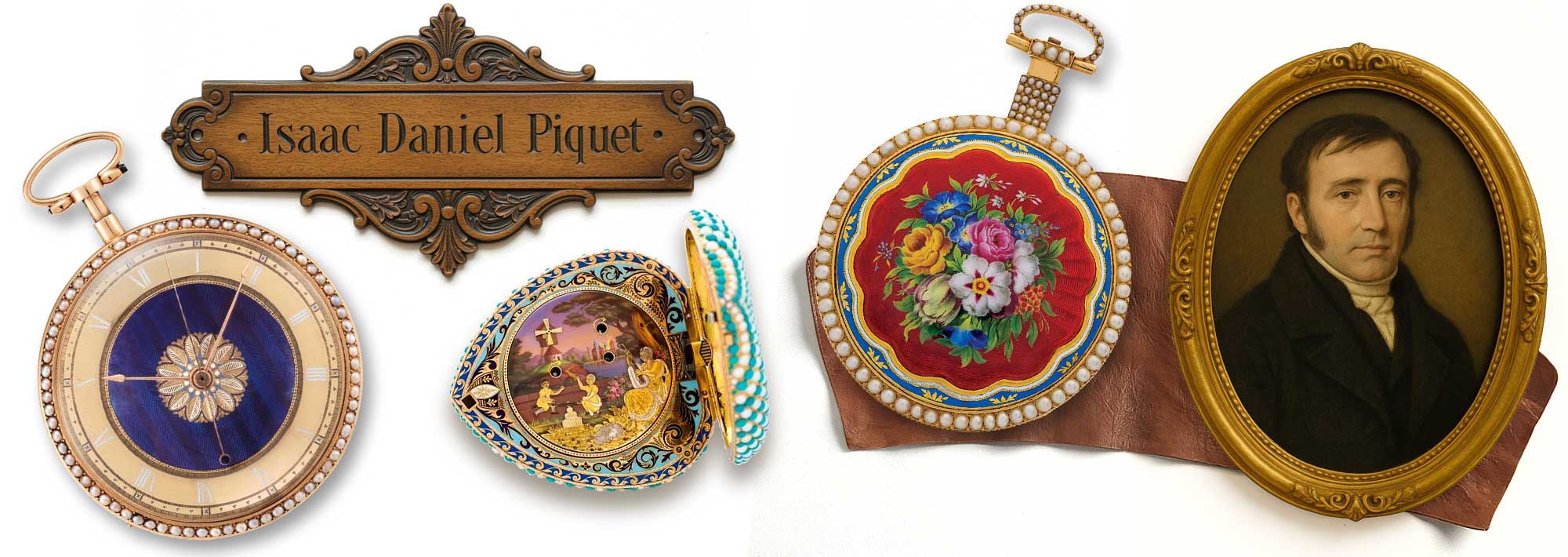
Piguet, Isaac Daniel
Isaac Daniel Piguet was born in 1775 in Le Chenit in the Vallée de Joux, he was the son of Pierre Moïse Piguet and Elisabeth Nicole. He married Jeanne Françoise Capt around 1795 and around 1800 settled in Geneva with his family. Piguet went into business with Henry Daniel Capt, his brother-in-law, on February 10, 1802. Later on, he met another watchmaker from his native region, Philippe Samuel Meylan and they entered into a partnership, founding the Piguet & Meylan firm, which was to last from 1811 to 1828. After the association between Piguet & Meylan came to an end Piguet and his son David Auguste established a new company, Piguet père & fils, located at 69, Rue Jean-Jacques Rousseau. Isaac Daniel Piguet died in Geneva, on January 20, 1841, at the age of 66.
Poletnich, Guillaume
Guillaume Poletnich was a skilled watchmaker who worked in Paris during the mid-18th century. He was known for creating intricate and highly decorative timepieces, many of which were commissioned by wealthy patrons.
Prior, Edward
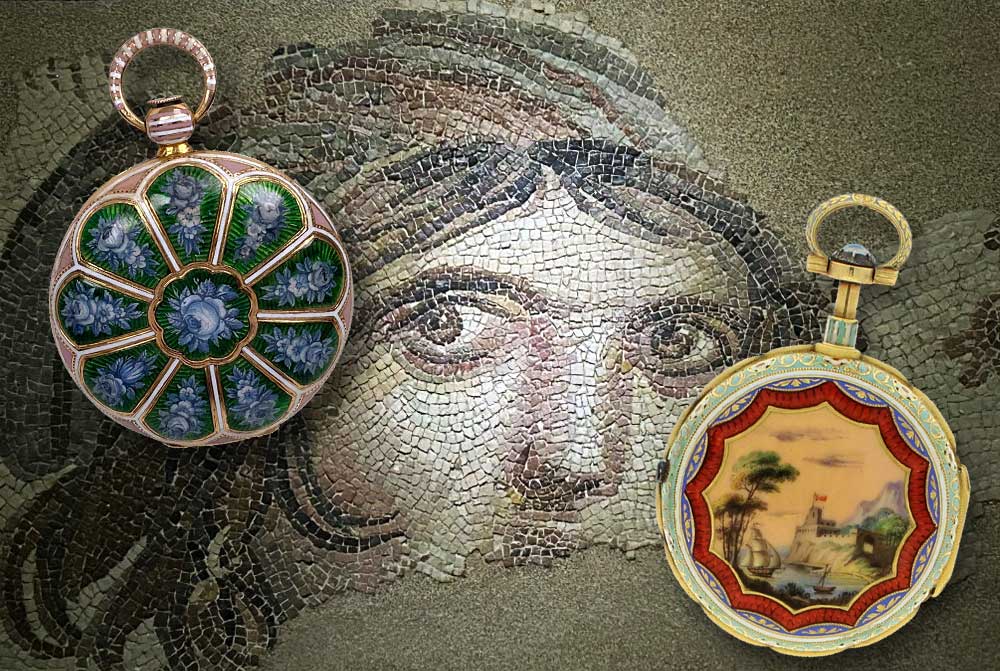
Edward Prior, born in 1800, was a London watchmaker of high repute, specializing in watches for Turkey and the Ottoman Empire.
His father was the English watchmaker John Prior (or Josephus Pryor) who was based in Nessfield. Edward ran a watch workshop in London with his brother George. The company/watch brand continued after Prior died in 1868.
Prior, George
George Prior was a renowned watchmaker from London who lived during the late 17th and early 18th centuries. He is known for his high-quality pocket watches, which were highly sought after by the wealthy elite of his time. George Prior was a highly skilled and accomplished watchmaker who made significant contributions to the field of horology. Some of his most notable achievements include:
- Inventing the detached lever escapement, which greatly improved the accuracy and reliability of pocket watches.
- Developing a new type of balance wheel, which was more efficient and reliable than previous designs.
- Creating a range of high-quality watches that were popular with wealthy clients, including members of the royal family.
- Establishing a successful watchmaking business in London, which became renowned for its quality and craftsmanship.
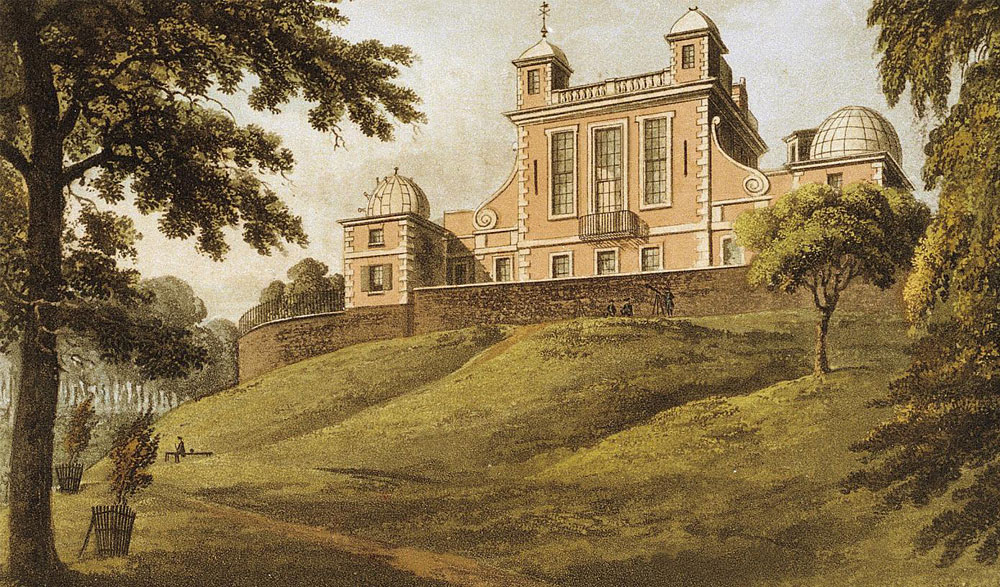
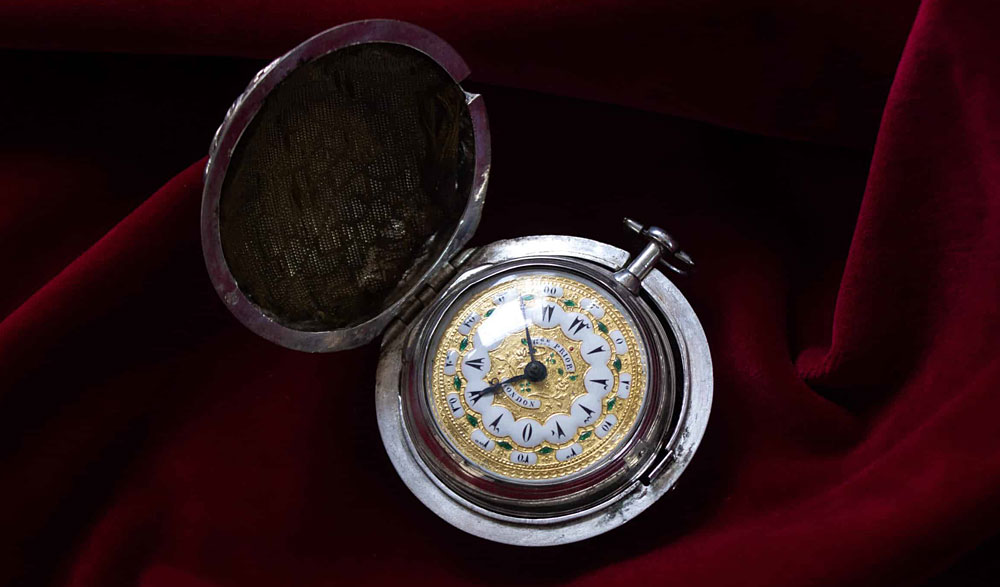
One of his most significant contributions to the industry was the development of the cylinder escapement, which was a major improvement over the earlier verge escapement. The cylinder escapement was more accurate and reliable than the verge escapement and it quickly became the standard in watchmaking. Prior was also known for his work on chronometers, which were used for navigation at sea. He worked closely with the Royal Observatory in Greenwich to develop accurate timepieces that could be used to determine longitude at sea. George Prior’s contributions to watchmaking in London were significant and helped to establish the city as a centre of innovation and excellence in the field. His legacy continues to be felt in the industry today and he is remembered as one of the most important watchmakers of his time.

