

Watchmakers and watch companies starting with the letter W
Witness watchmakers and well-known watch companies starting with the letter W. Delve into their legacies, design innovations, and craftsmanship. A must-read for horology lovers and collectors!
Watteau, Jean Antoine
Jean Antoine Watteau, better known as Antoine Watteau, was born in Valencijn on October 10, 1684, and died in Nogent-sur-Marne on July 18, 1721. He was a French painter of the Rococo period. Watteau’s place of birth was conquered by the French in 1678.
Webster, William
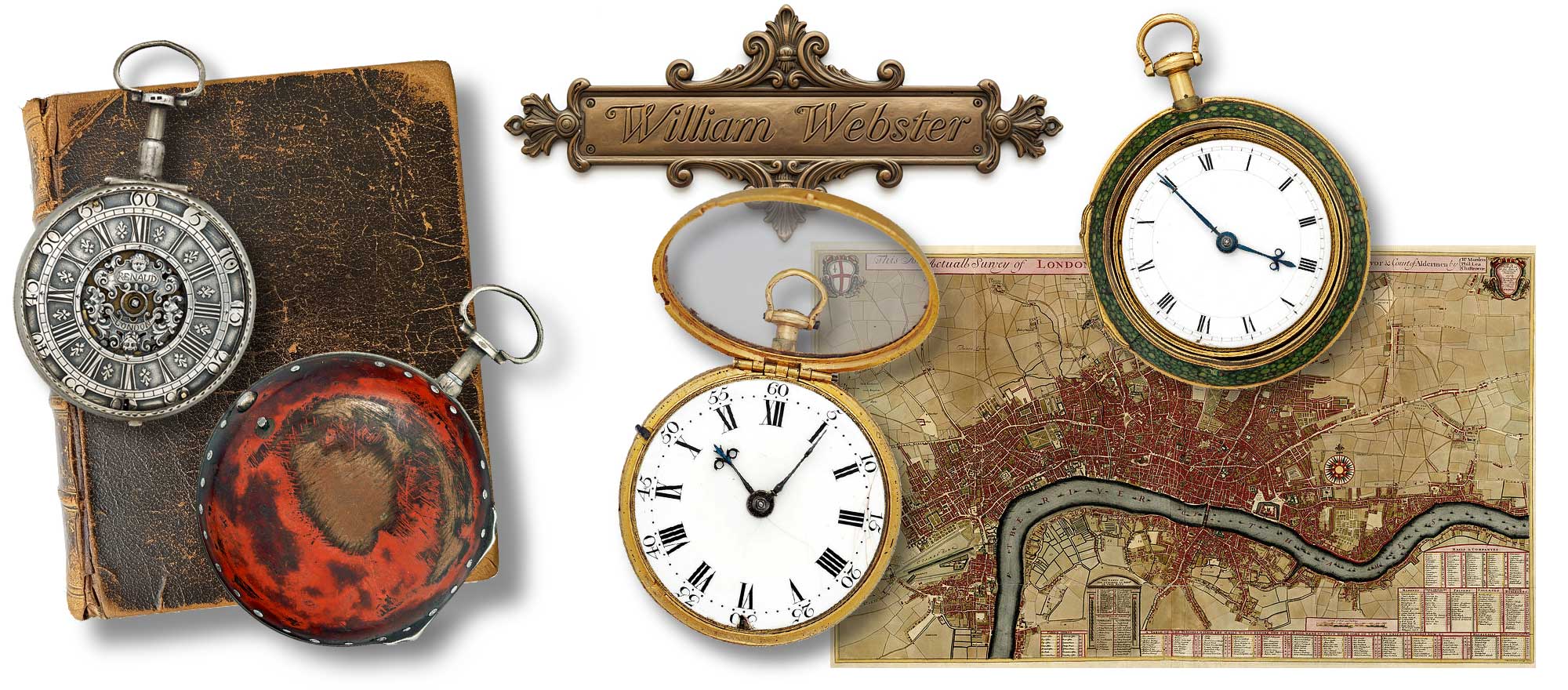
William Webster was an English watchmaker who was based in Exchange Alley, London. He began his career as an apprentice to his uncle, John Barnett, in March 1702. Sadly, Barnett passed away just six months later. Webster then went on to work with Thomas Tompion, where he honed his skills and became a highly skilled watchmaker. In July 1710, he became a member of the Clockmakers’ Company and opened his shop on Exchange Alley the following year. After Tompion’s death, Webster advertised that he had learned all of Tompion’s secrets and became a highly respected watchmaker in his own right. He even served as the Junior Warden of the Clockmakers’ Company from 1734 until he died in 1735. Webster’s legacy as a watchmaker continues to be celebrated today.
Wildschiödtz, Carl Christian
Carl Christian Wildschiödtz is rarely found in literature and even more rarely on the market. Nevertheless, he is no stranger to the world and has worked with famous watchmakers throughout his life. Wildschiødtz was born in Copenhagen on December 30, 1824, as the son of a tailor. He was apprenticed at the age of 15 and later went to Paris to Winnerl for about two years. Here his skills and knowledge developed to such an extent that he participated in the manufacture of Winnerl’s astronomical pendulum clock. In 1848, he returned to Denmark to participate in the war in Holstein, which he did not join after all. Probably Louis Urban Jürgensen helped to keep him at home.
Wildschiødtz joined Urban Jürgensen & Sønner and stayed here for 12 years, where he created many important works and had the opportunity to show what he had learned abroad.
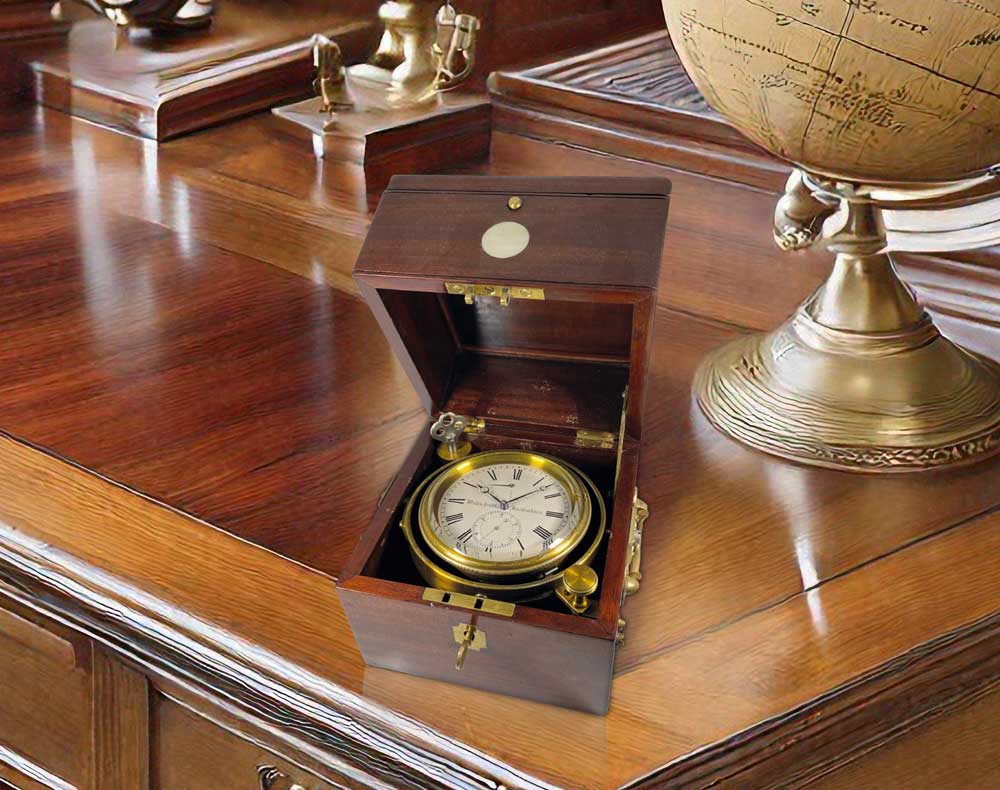
At the 1873 World Exhibition in Vienna, he was listed in the Danish section as a clock and chronometer maker from Copenhagen with the work of an astronomical pendulum clock and a transparent disc for a tower clock. Around this time, he tried, unsuccessfully, to establish the first watchmakers’ association in Denmark. In 1876, he was then elected chairman of the Clockmakers’ Association founded on April 7, 1875, after which he devoted the rest of his life to the association, partly at the Clockmakers’ Association and partly in his company. For his services, he was knighted by Dannebrog on November 12, 1892. He died in Copenhagen on March 9, 1897.
Wilkinson, Thomas
Thomas Wilkinson was a renowned watchmaker in London during the late 18th century. He was known for producing high-quality timepieces that were both accurate and aesthetically pleasing. Some of the most notable timepieces produced by Thomas Wilkinson include:
- The Wilkinson watch: A pocket watch that was made in 1785. It was known for its precision and accuracy and it featured an elegant design that was typical of Wilkinson’s work.
- The Wilkinson chronometer: A marine chronometer that was made in the late 18th century. It was used by sailors and navigators to determine their position at sea and was known for its accuracy and reliability.
- The Wilkinson clock: A tall case clock that was made in the late 18th century. It featured an ornate design that was typical of Wilkinson’s work and it was known for its precision and accuracy.
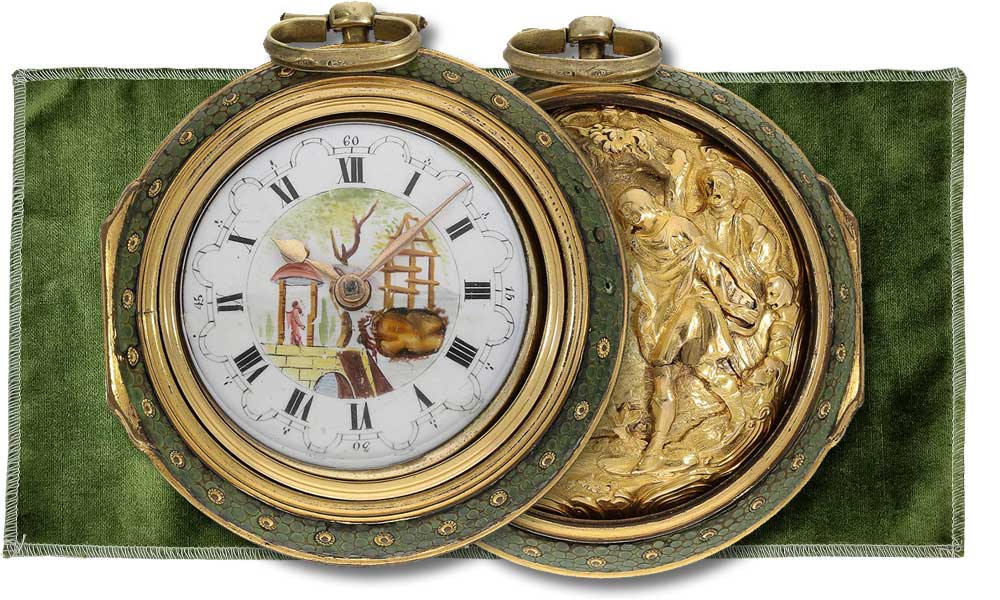
There are several surviving examples of Thomas Wilkinson’s watches that are still in working order today. One notable example is the “Thomas Mudge watch” which was made by Wilkinson in collaboration with Thomas Mudge, a well-known watchmaker of the time. This watch is currently housed in the British Museum in London and is considered to be one of the finest examples of 18th-century watchmaking. Another surviving example is the “Wilkinson half-quarter repeater” which is housed in the Metropolitan Museum of Art in New York City. This watch is notable for its intricate design and high level of craftsmanship. While these are just a few examples, there are likely other surviving Thomas Wilkinson watches that are still in working
Winnerl, Joseph Thaddäus
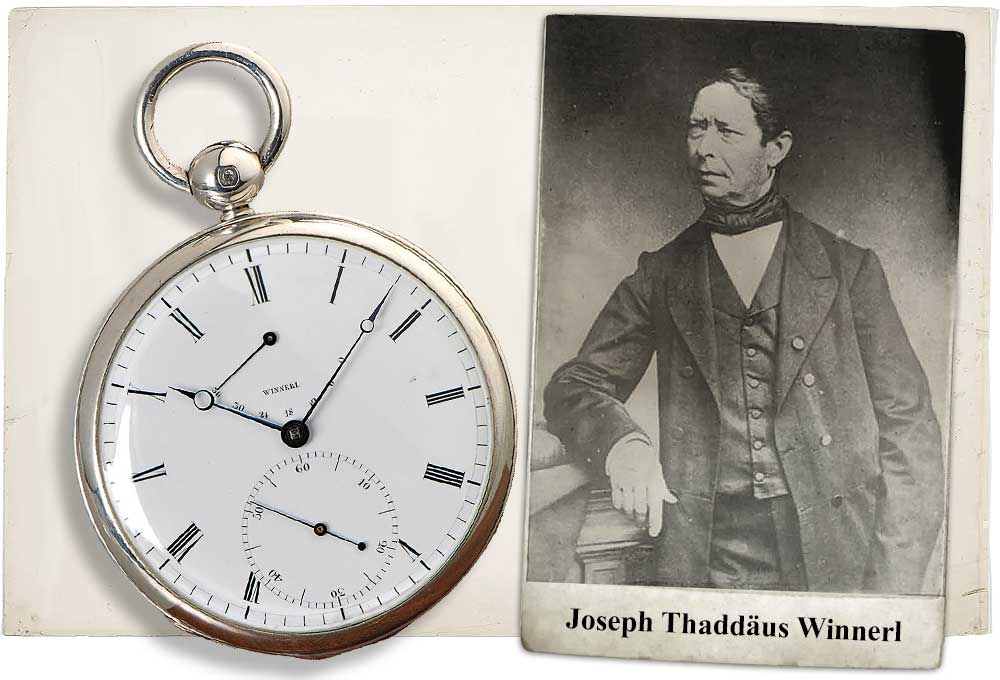
Joseph Thaddäus Winnerl was born on January 25th, 1799 in Mureg, Styria in Austria. He served as an apprentice for Georg Schmidt Fidel in Graz and qualified in 1816. At the beginning of 1823, Winnerl worked in Breslau and then for Kessels in Altona, for Urban Jürgensen in Copenhagen and from 1829 in Paris, where among others he worked for Breguet et fils.
In 1831 he produced the first pocket watch with ‘seconde independante’ (independent seconds). Its centrally positioned seconds hand could be stopped and then started again independently from the clockwork any number of times, however, after the completion of the timekeeping, it would slowly go back to zero. Only then a new timing process could be initiated. In 1832 he started his own business in Paris. He produced marine chronometers, precision pocket watches and precision pendulum clocks. From 1835 to 1841 Ferdinand Adolph Lange worked for him. Winnerl specialized in marine chronometers and produced several timekeepers of outstanding quality.
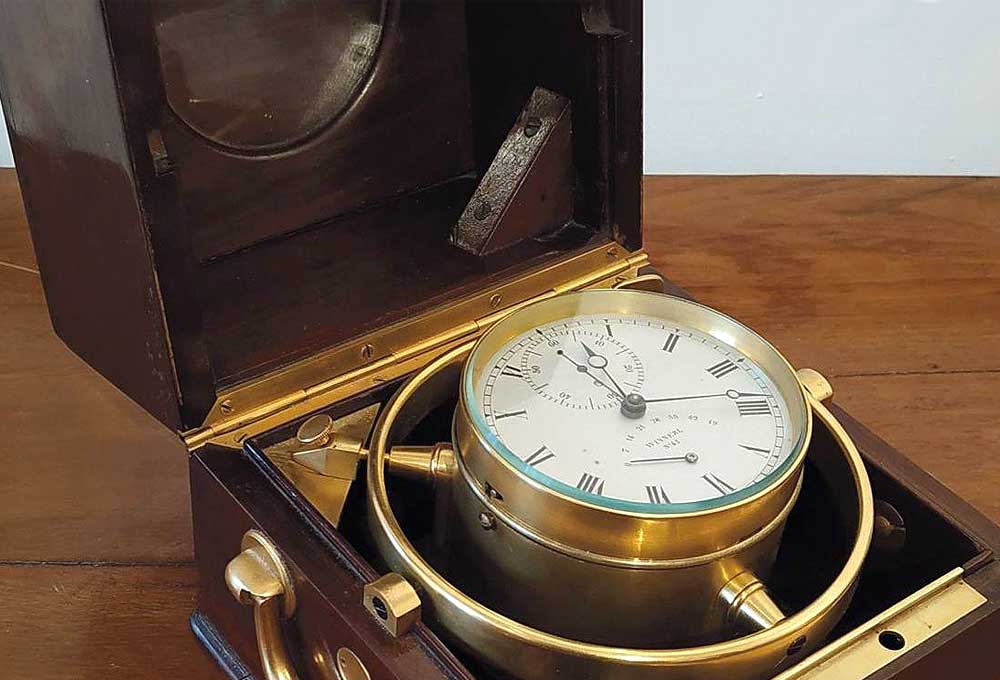
In 1844 the Société d’encouragement not only described and illustrated his pendulum clocks and seconds counters but also his publications on isochronism of the pendulum caused by the force of the suspension spring. In 1868 Winnerl created the first pendulum clock with an electric contact which was placed in the basement of the observatory in Paris – it is still there today. He used Thomas Reid’s escapement, which he modified so finely that it produced the most perfect results.
Winnerl also worked on improving lever escapements, for example in large clocks. He was honoured with several awards for his creations and in 1844 he was made a Chevalier de la Légion d’Honneur, in 1855 an Officier. Winnerl retired from business in 1870 and sold his workshop to the watchmaker Bernard Callier. Winnerl died on January 27th, 1886.

