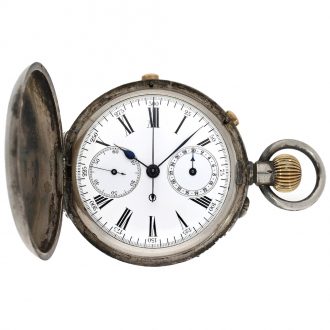
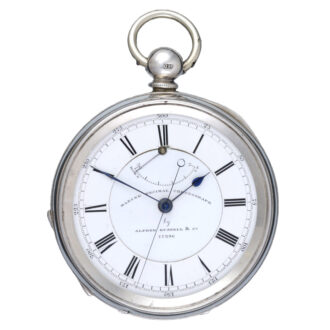
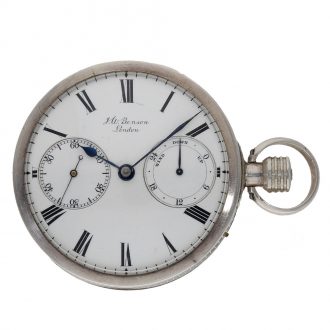
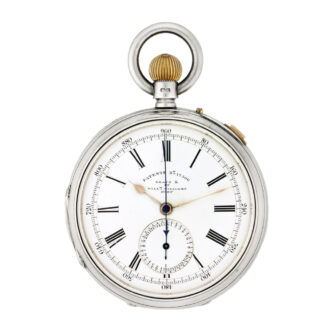
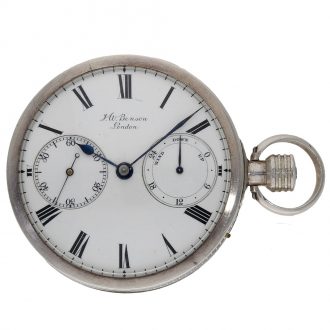
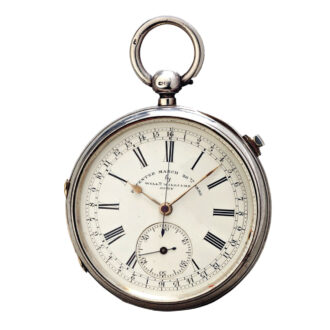
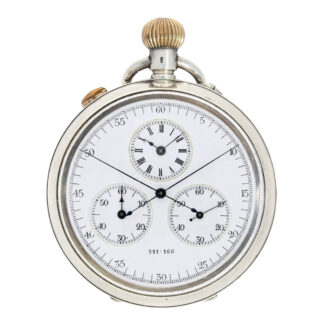
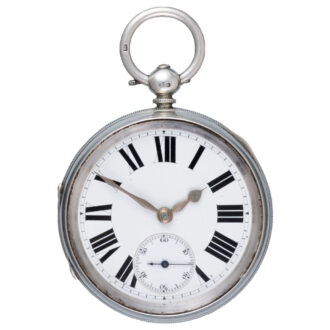
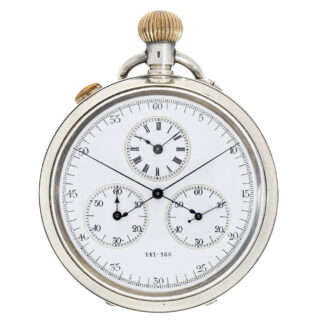
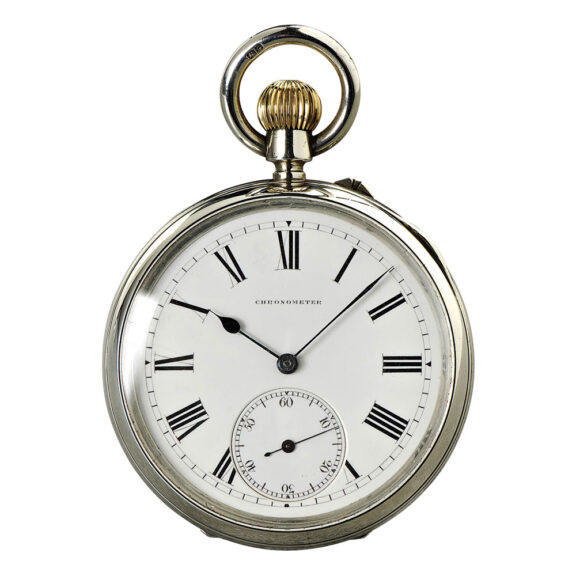
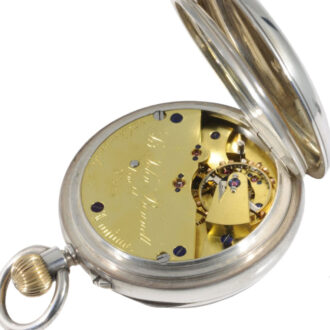
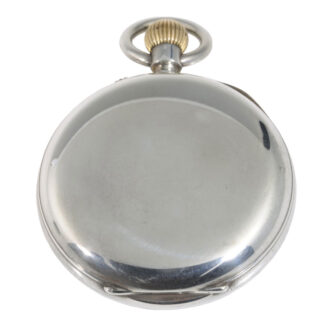
English chronometer with spring detent escapement Circa 1890
- Kenmerk
- DB0263
- Diameter
- 54 mm
- Estimate
- € 2.750 - 5.000
- Price sold
- € 3.300
Silver pocket chronometer by Sir John Bennett
–
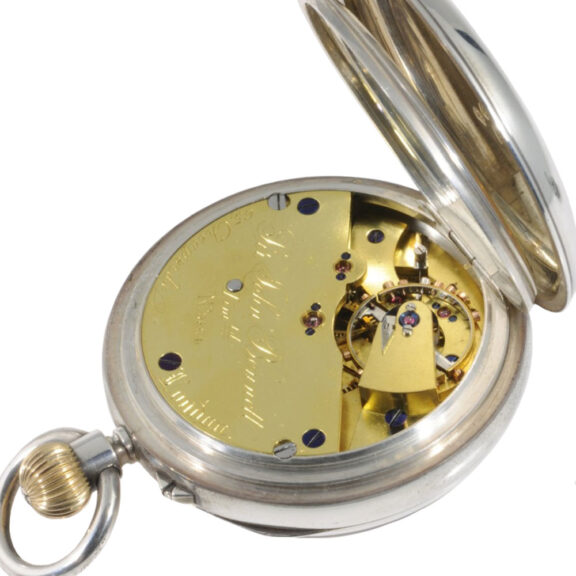
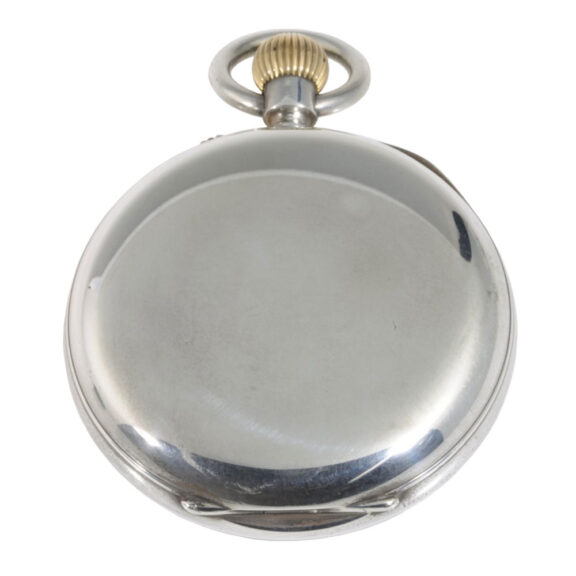
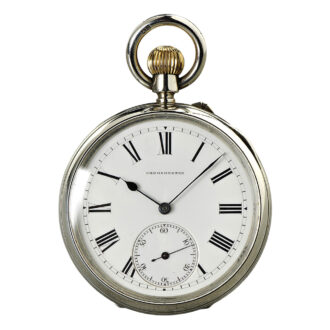
An English silver open faced precision pocket chronometer, circa 1890. 2/3 Plate movement, spring detent escapement according to Thomas Earnshaw, gold screw compensation balance with gold and platinum regulation screws. White enamel dial with Roman hours, outer minute divisions and sunk subsidiary seconds. Plain case, maker’s mark DR. Movement signed and numbered.
–
Diameter: 54 mm
–
Weight: 141 g
–
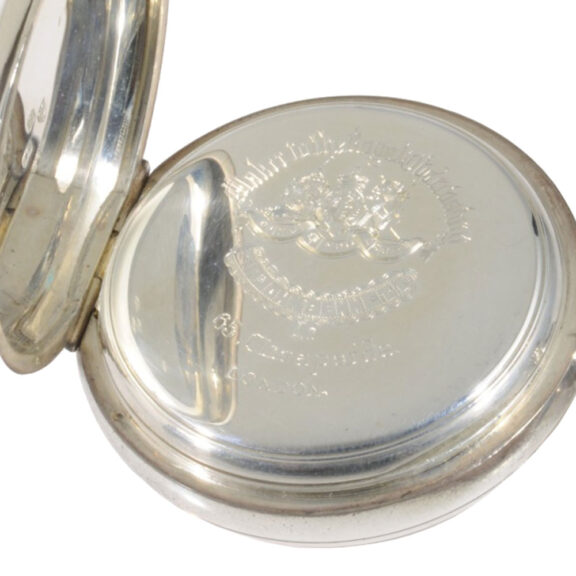
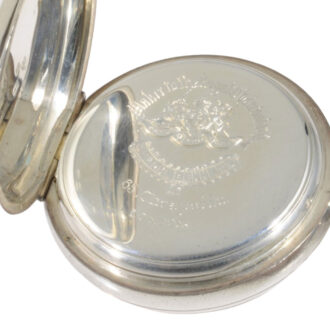
Signed: Sir John Bennett 65 Cheapside London Maker to the Royal Observatory
–
Sir John Bennett was born in 1814 and died in 1897. He came from a watchmaking family, and he and his brother took over the family workshop when their father died early. Bennett started his own workshop in 1847 in Cheapside; he was a clever and marketing-oriented businessman who caught the eye of the public during the Great Exhibition of 1851 when he booked the title page of the exhibition catalogue as well as stand No. 1. His shop windows were decorated with pocket watches and modern advertising slogans, and when the Big Ben clock was installed in 1860, Bennett built a similar clock with an automaton and presented it in his window. The display attracted so many people that the police hat to control the traffic around his shop. The clock was later bought by Henry Ford and is still displayed in the Ford Museum in Dearborn, Michigan, U.S.A. Charles Dickens was also one of Bennett’s customers. John Bennett was knighted by Queen Victoria in St. Paul’s Cathedral in 1871; he was also elected Sheriff of London at a later date.
Signed: Sir John Bennett 65 Cheapside London Maker to the Royal Observatory
Share this page: