Rare Swiss gunmetal chronograph pocket watch Circa 1916
- Kenmerk
- DB0459
- Diameter
- 83 mm
- Estimate
- € 350 - 800
- Price sold
- € 400
Gunmetal chronograph by Le Phare
–
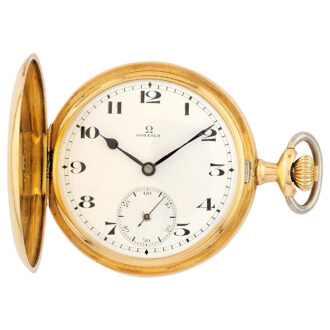
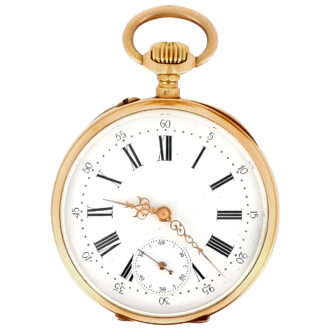
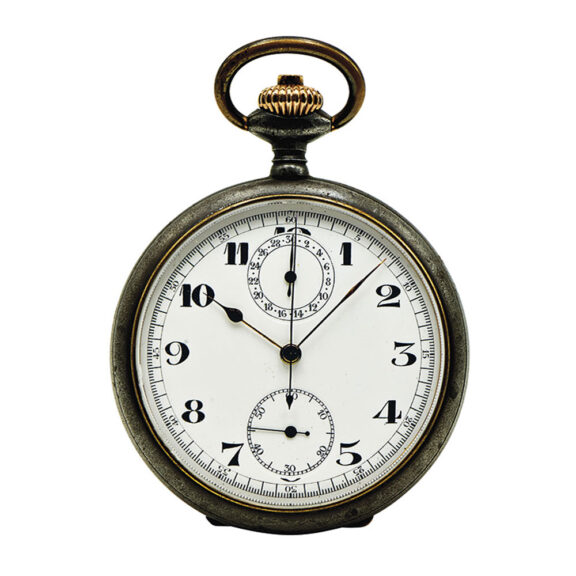
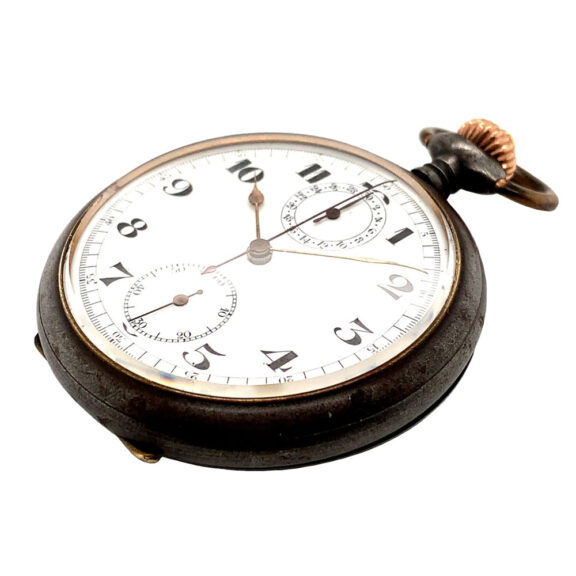
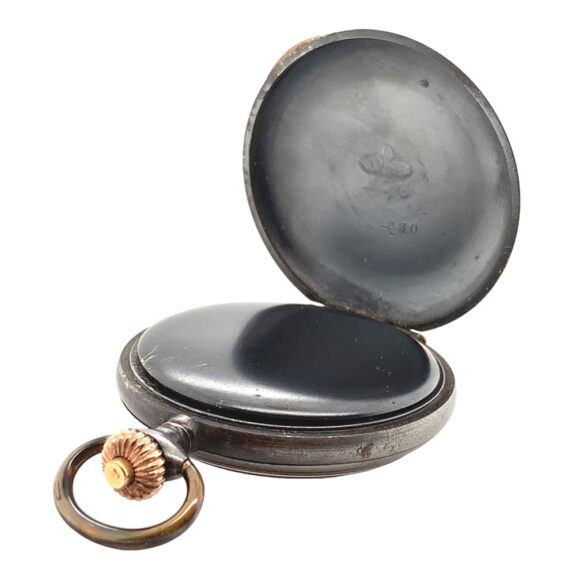
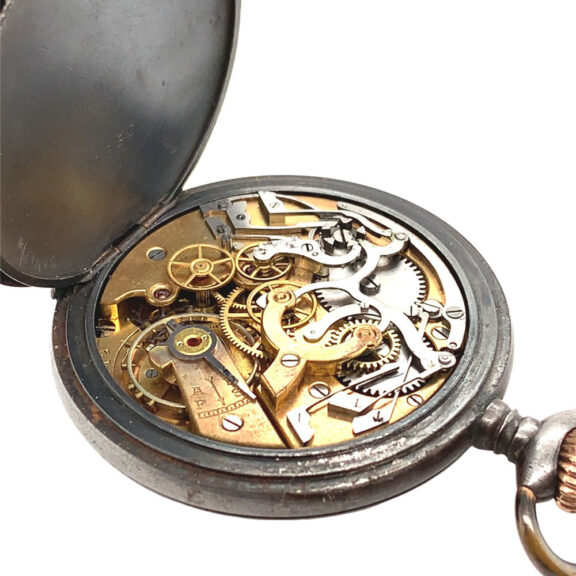
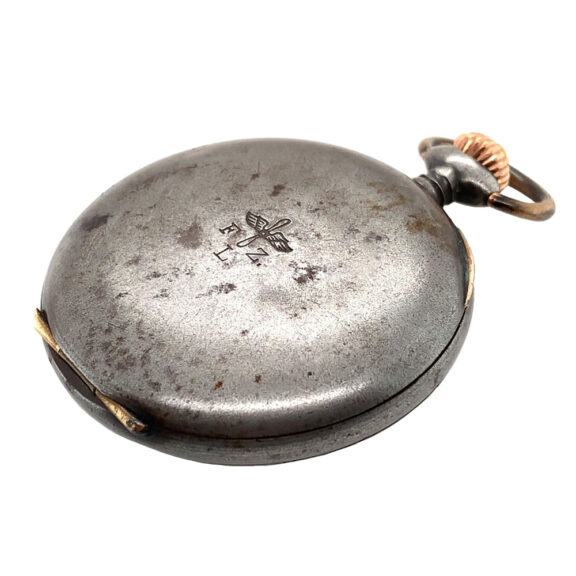
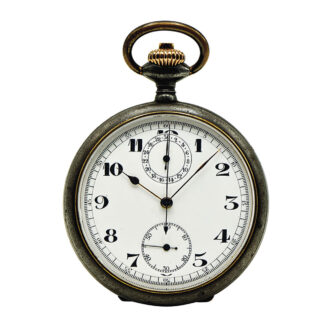
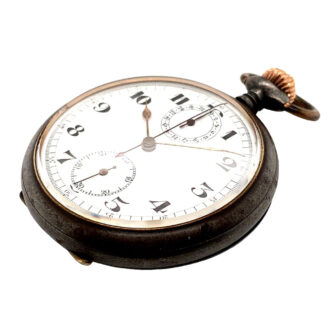
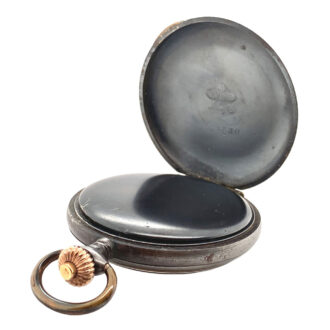
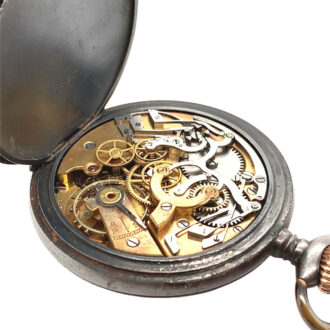
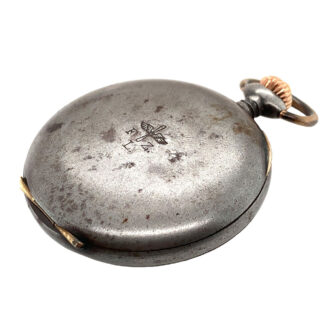
A very rare Swiss gunmetal open faced chronograph of the Flieger- und Luftfahrtzentrum Berlin (FLZ), circa 1916. Presumably delivered by watch dealer and jeweller Friedrich Wilhelm Kreis in Berlin/W. ¾ Plate movement, screw compensation balance. White enamel dial with Arabic numerals and subsidiary seconds at 6 o’clock. Plain iron, gunmetal finished case with a rose gold crown and hinge, the engraving FLZ on the back with an air force symbol propeller above.
Case and movement numbered.
–
Diameter: 51 mm
–
Weight: 83 g
–
Signed: Le Phare
–
According to Dr. Konrad Knirim, this chronograph was used by the Prussian aviation units during the First World War. The marks show a winged propeller with the letters FLZ, often in combination with full owner’s identification.
–
These watches were converted and delivered most probably by watch dealer and jeweller Friedrich Wilhelm Kreis in Berlin/W, who supplied a great number of pocket chronographs and stopwatches. Friedrich Wilhelm Kreis owned the company Strasser & Rohde from 1918 until his death and moved it from Glashütte to Berlin.
–
Around 1916 the Flieger- und Luftfahrt-Zentrum (FLZ) (the air force maintenance unit) at Berlin, Adlershof was formed from the Prüfanstalt und Werft (PuW) (the testing and the service divisions). The FLZ at Adlershof still existed during the Second World War.
–
The Le Phare watch manufactory was founded in 1888 in Le Locle, Switzerland, high in the Neuchâtel mountains. The company, which later launched the Jean d’Eve watch range, has left its mark on the story of Swiss watchmaking. Indeed, from 1889, its watches were rewarded by the most eminent prizes, a gold medal at the National Exhibition of 1896 in Geneva followed that of 1889 at the Great Universal Exhibition in Paris. In 1897 the silent regulator was invented. A veritable technological marvel that overcame the humming problems beset the repeater watches of the day. This brought another gold medal for Le Phare at the Paris Great Exhibition of 1900. The company continued to develop and in 1970 was the second largest producer of chronograph watches in Switzerland. The management’s strategy is to take maximum advantage of its remarkable know how to develop new ways of measuring time.
Signed: Le Phare
Share this page: