Swiss 9K gold Class A observatory chronometer Circa 1952
- Kenmerk
- HC0868
- Diameter
- -
- Estimate
- € 3.000 - 6.000
- Price sold
- € 3.450
Gold Art Deco dress watch
–
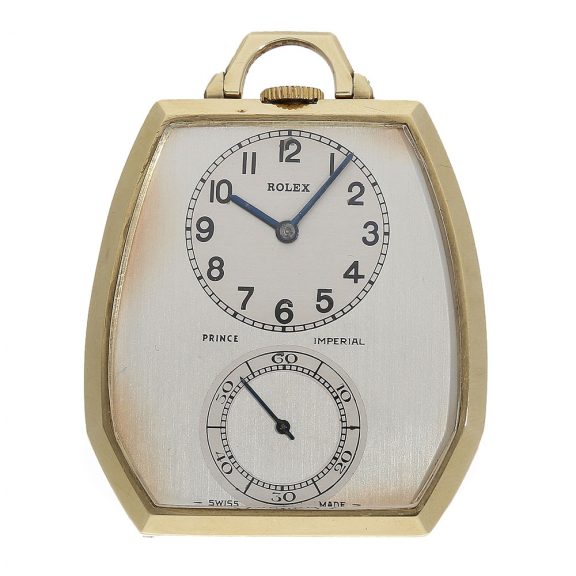
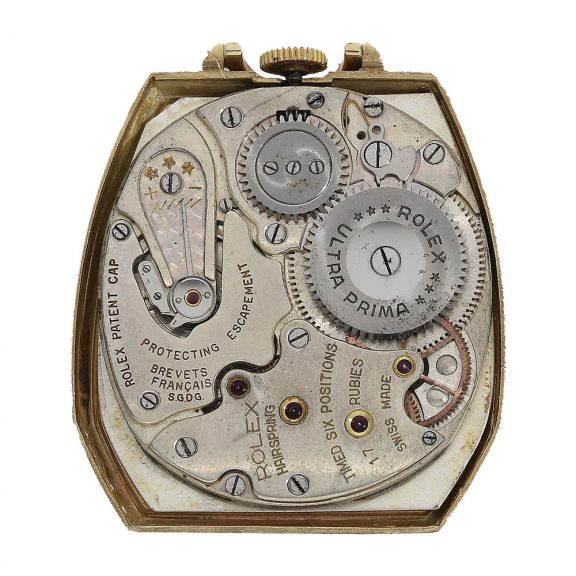
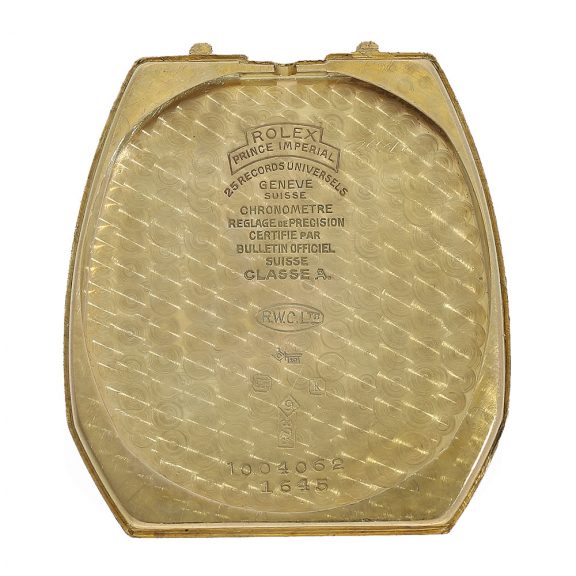
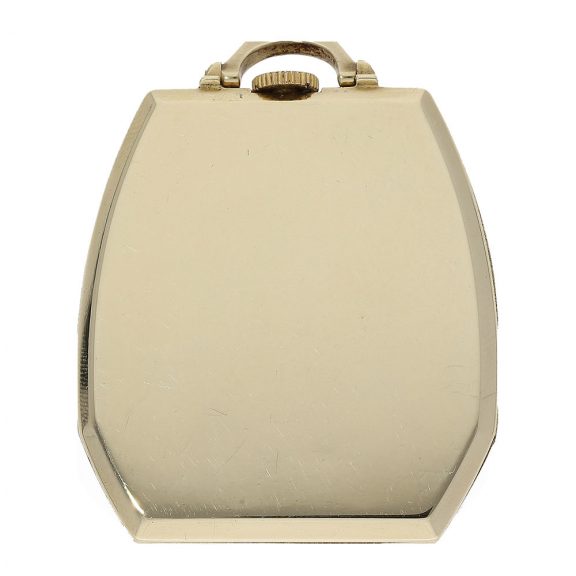
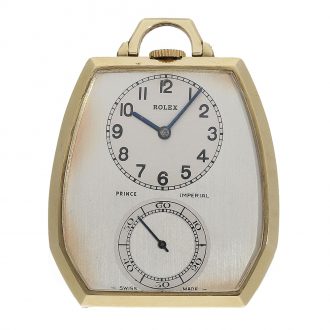
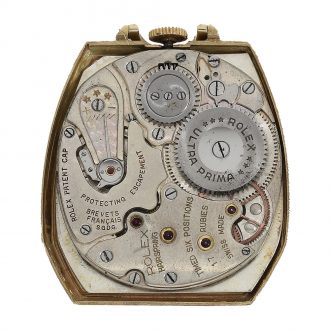
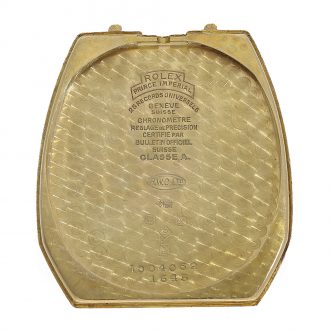
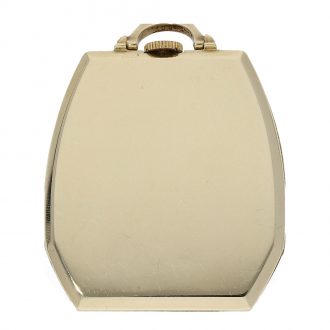
An extremely rare Art Deco dress watch, the observatory Chronometer Class A Prince Imperial made by Rolex in Genève, Switzerland, circa 1952. The numbered open faced plain hexagonal case of this watch was crafted from 9 carat gold. The two tone dial has blued steel hands and the movement with manual winding is of Ultra Prima quality chronometer caliber and has a lever escapement.
–
Dimensions: 37 x 48 mm
–
Signed: Rolex Price Imperial Swiss made
–
With its phenomenal observatory quality movement, the Prince Imperial was long considered the highest quality dress watch available at the time.
–
Rolex
1905 Hans Wilsdorf
The history of Rolex is inextricably linked to the visionary spirit of Hans Wilsdorf, its founder. In 1905, at the age of 24, Hans Wilsdorf founded a company in London specializing in the distribution of timepieces. He began to dream of a watch worn on the wrist. Wristwatches were not very precise at the time, but Hans Wilsdorf foresaw that they could become not only elegant, but also reliable. To convince the public of the reliability of his resolutely innovative timepieces, he equipped them with small, very precise movements manufactured by a Swiss watchmaking company in Bienne.
1908 Genius in five letters
He said, “I tried combining the letters of the alphabet in every possible way. This gave me some hundred names, but none of them felt quite right. One morning, while riding on the upper deck of a horse drawn omnibus along Cheapside in the City of London, a genie whispered ‘Rolex’ in my ear.”
1910 The quest for chronometric precision
Rolex first concentrated on the quality of the movements. The relentless quest for chronometric precision rapidly led to success. In 1910, a Rolex watch was the first wristwatch in the world to receive the Swiss Certificate of Chronometric Precision, granted by the Official Watch Rating Centre in Bienne.
1914 Class A precision certificate
Four years later, in 1914, Kew Observatory in Great Britain awarded a Rolex wristwatch a class A precision certificate, a distinction which until that point in time had been reserved exclusively for marine chronometers. From that date forward, the Rolex wristwatch was synonymous with precision.
1919 Geneva
Rolex moved to Geneva, a city renowned internationally for watchmaking. Montres Rolex S.A. was registered in Geneva in 1920.
Signed: Rolex Price Imperial Swiss made
Share this page: