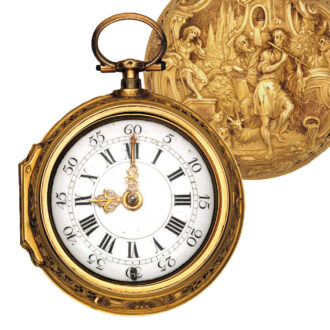
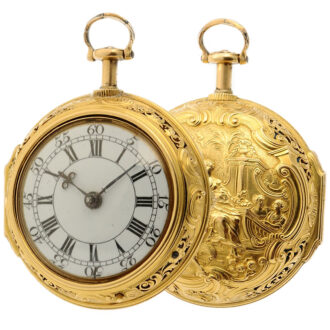
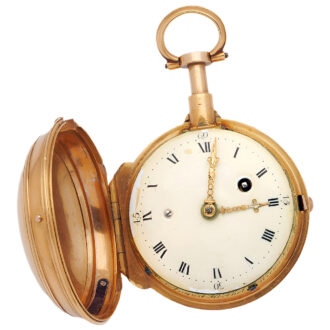
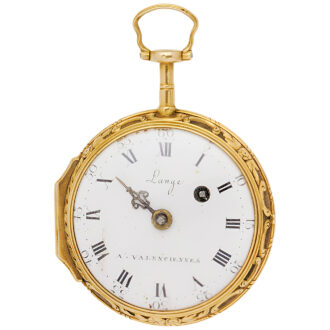
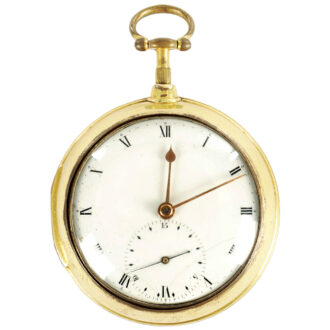
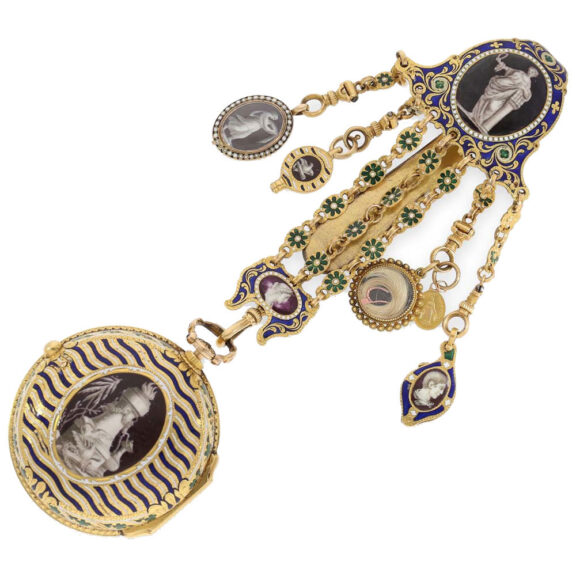
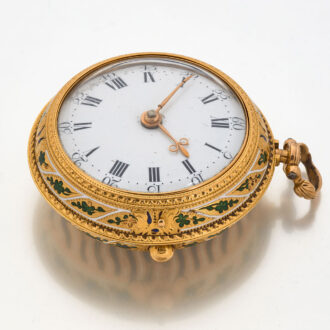
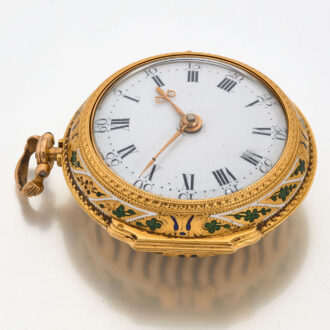
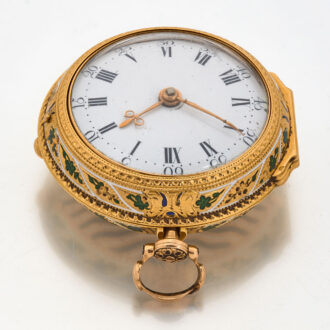
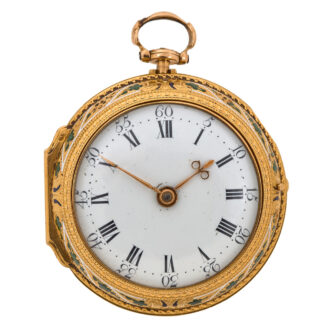
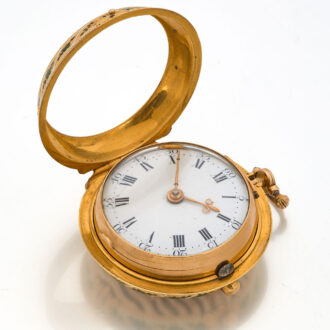
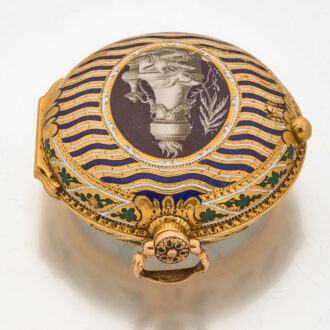
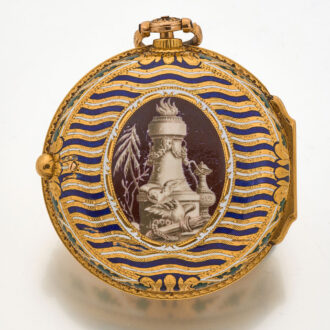
Early English gold verge with matching chatelaine Circa 1742
- Kenmerk
- GF0283
- Diameter
- 49 mm
- Estimate
- € 10.000 - 20.000
- Price sold
- € 16.250
Gold and enamel chatelaine watch by Stephen Gibbs
–
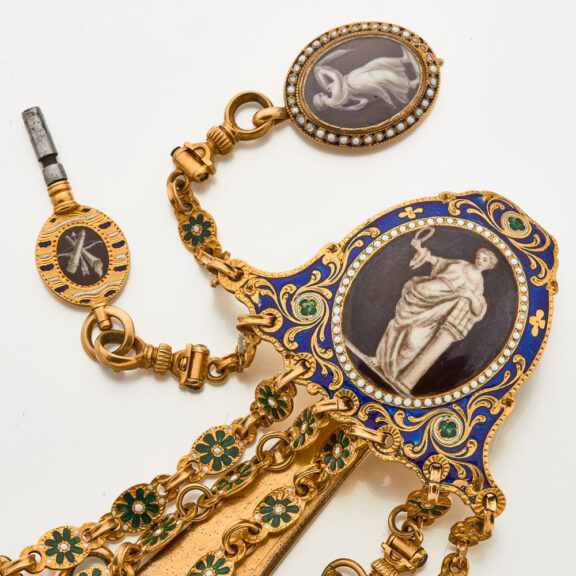
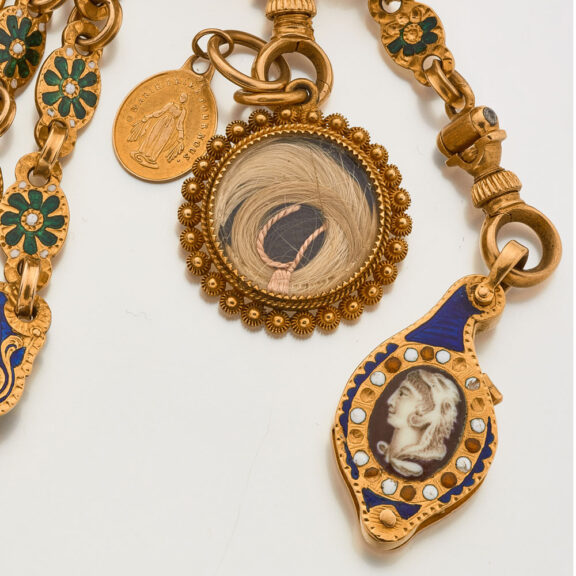
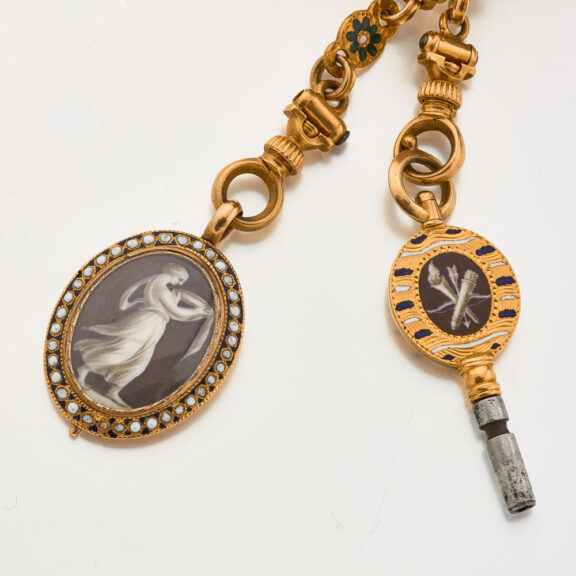
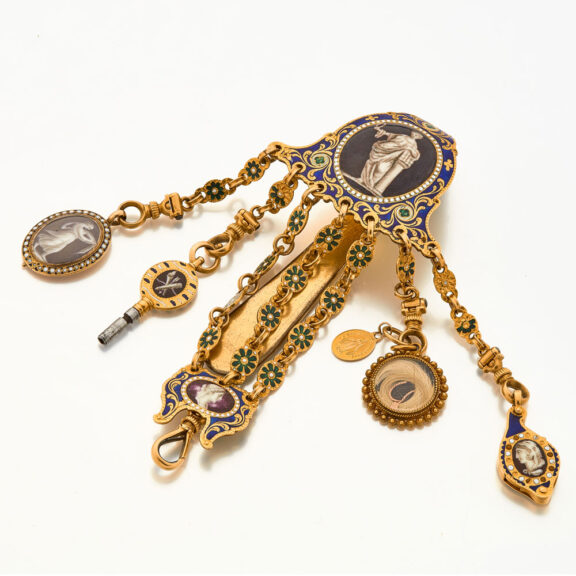
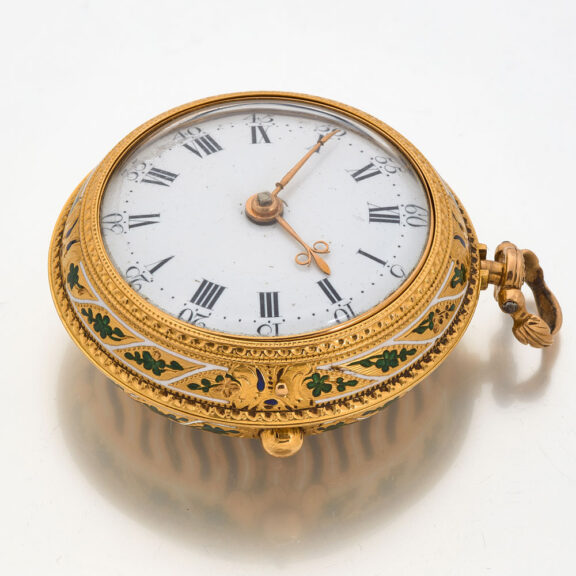
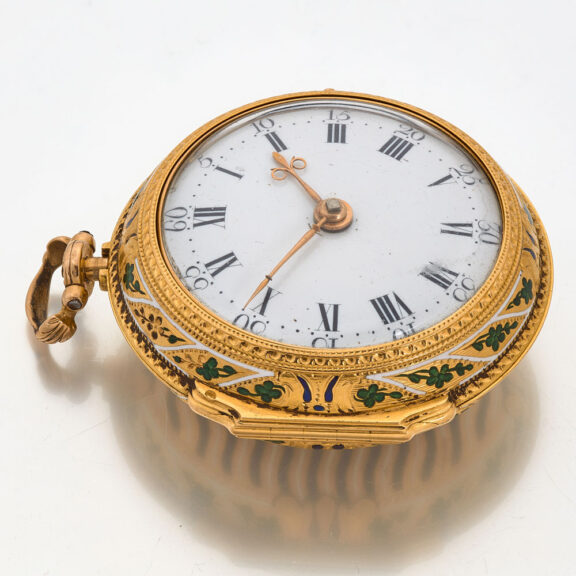
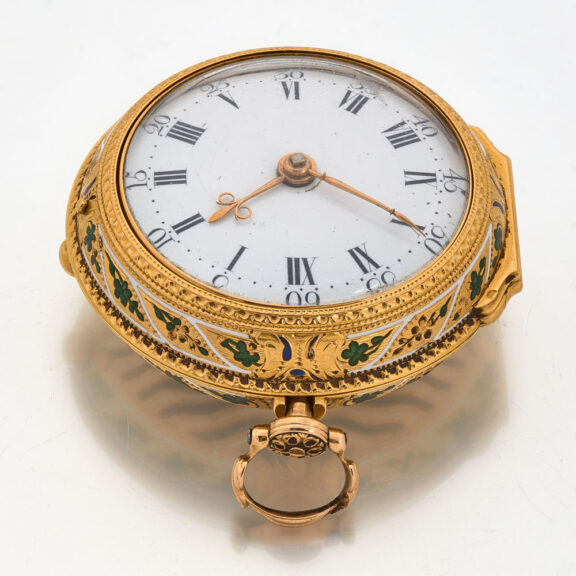
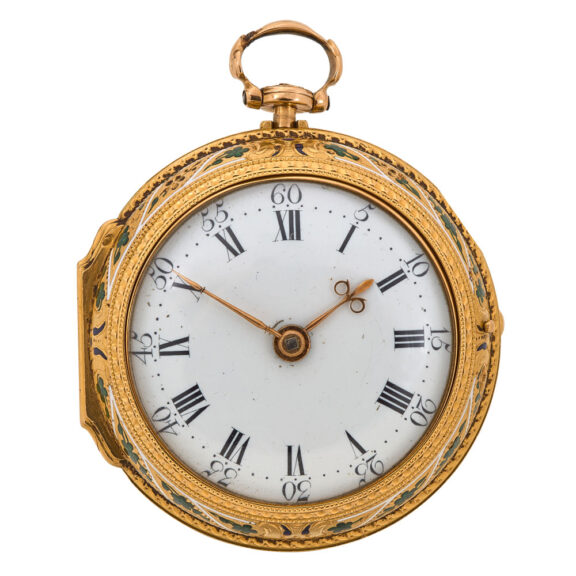
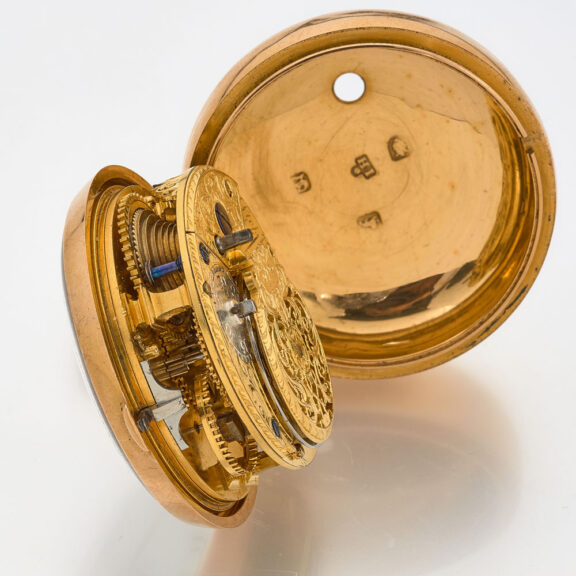
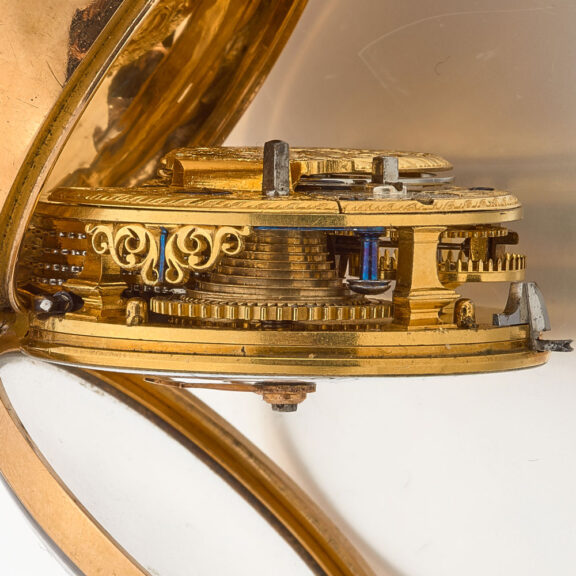
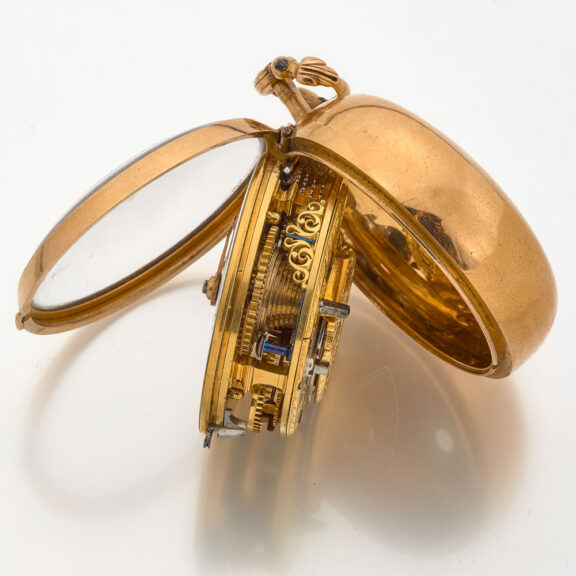
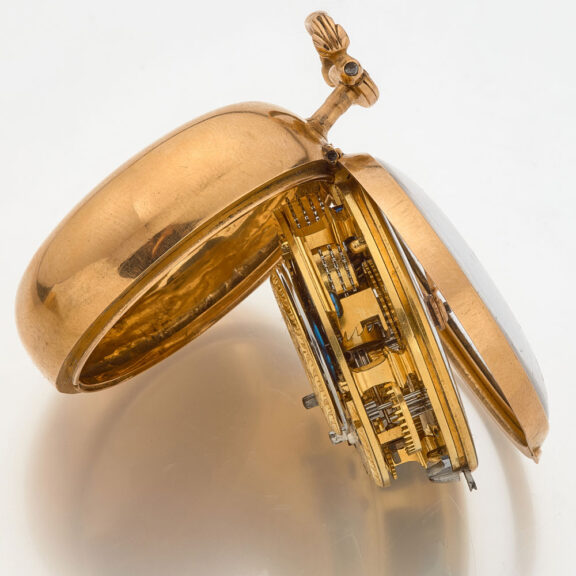
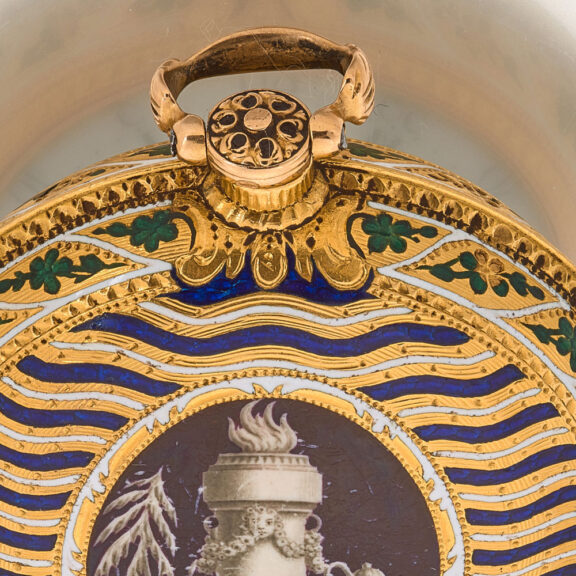
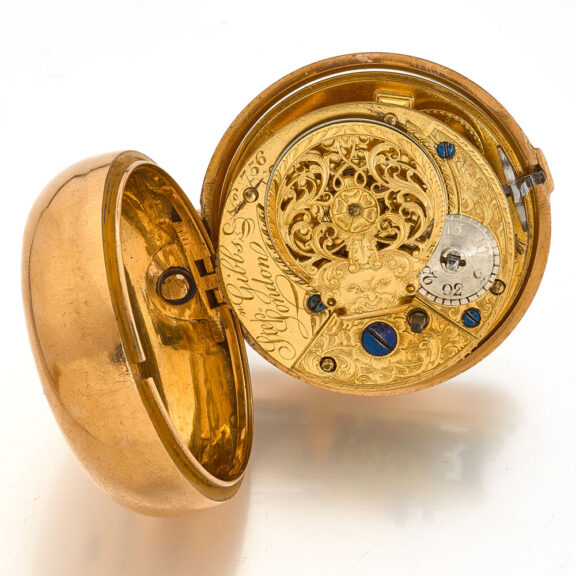
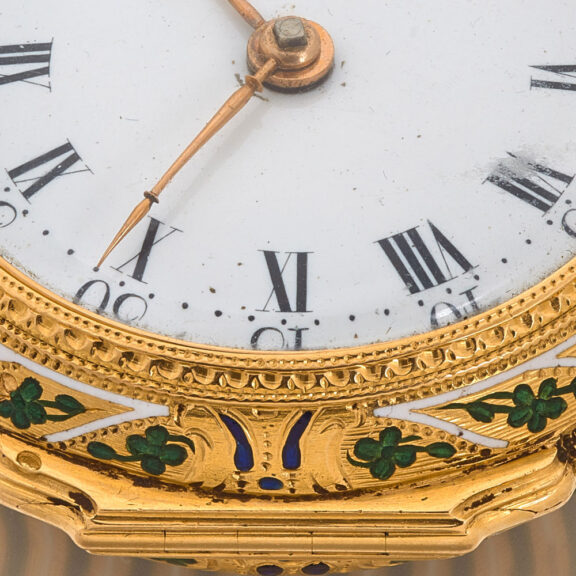
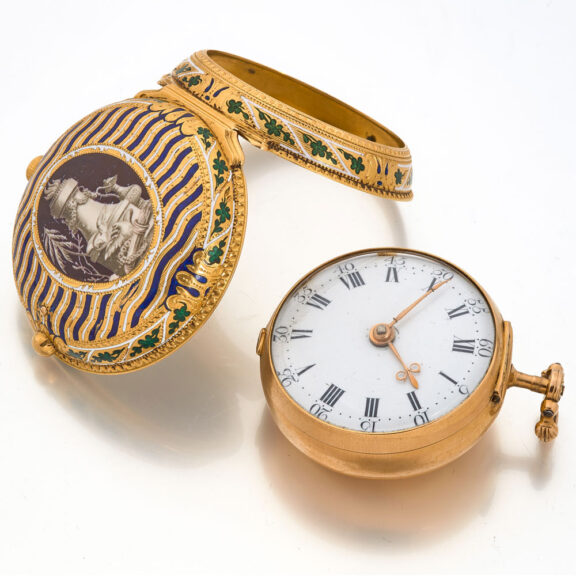
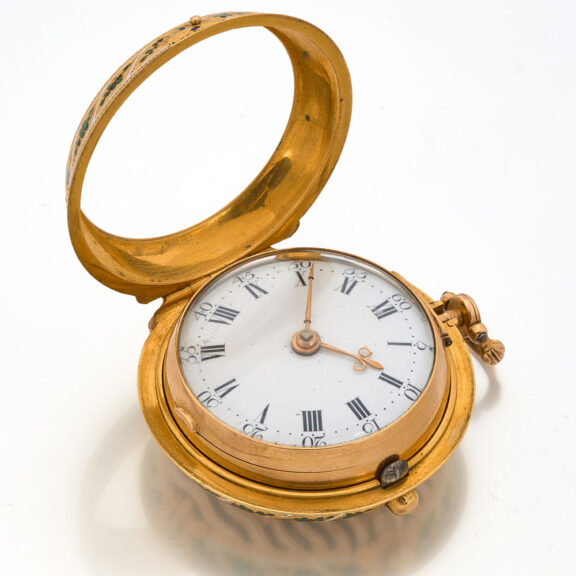
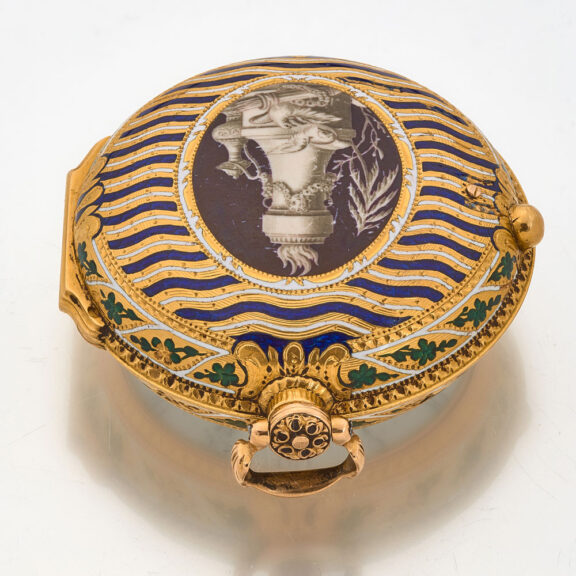
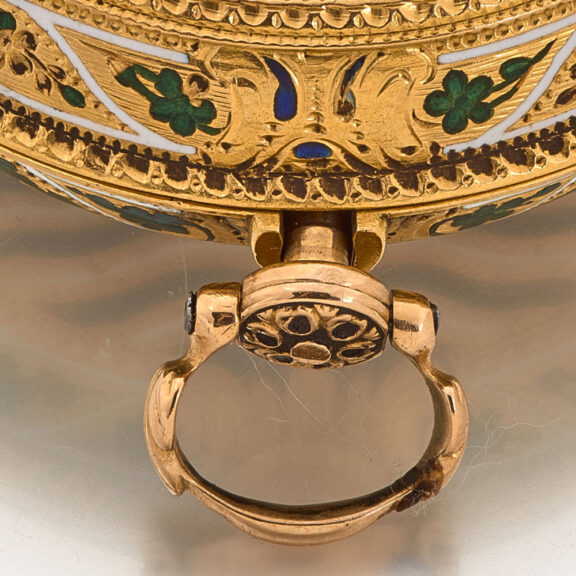
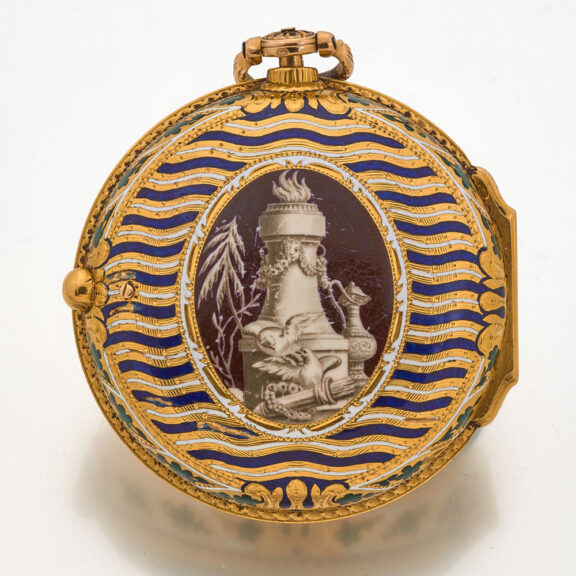
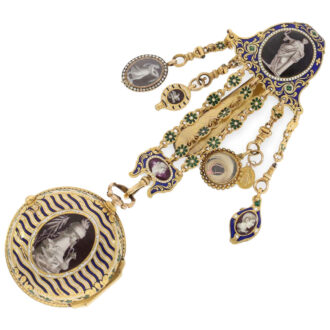
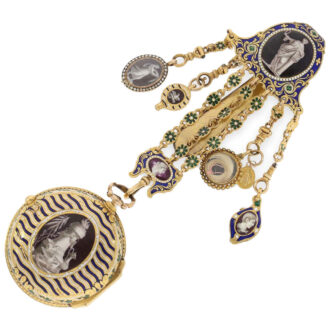
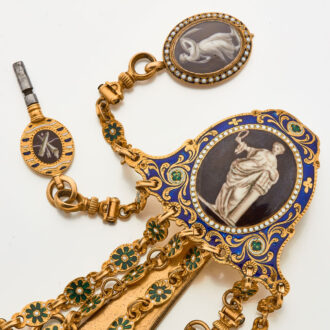
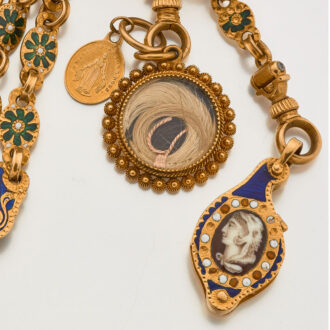
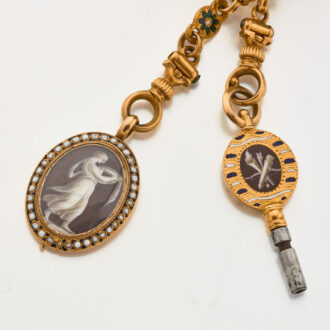
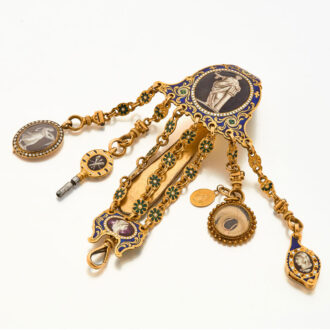
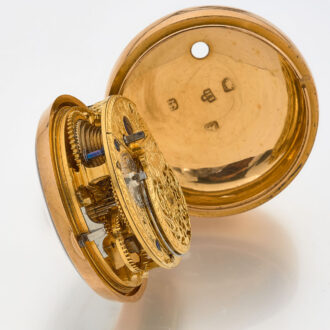
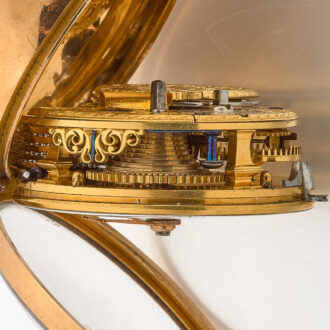
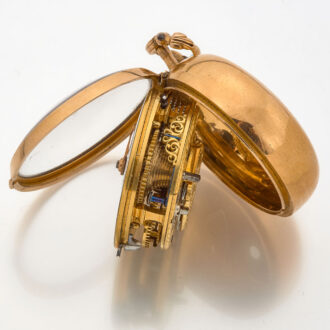
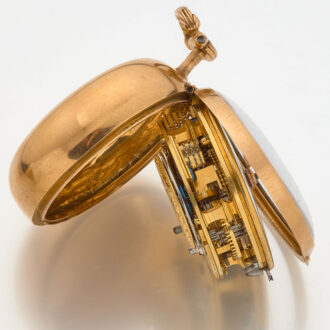
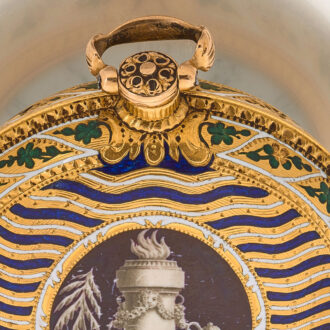
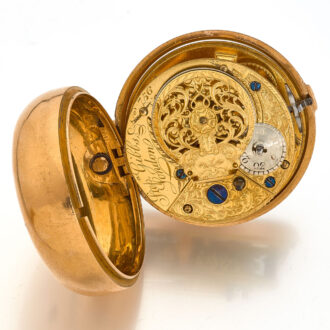
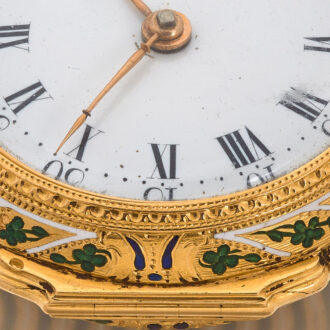
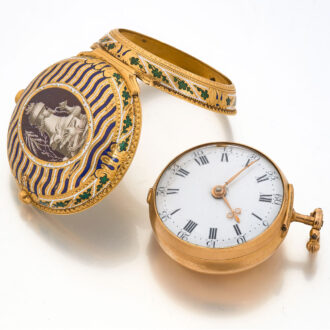
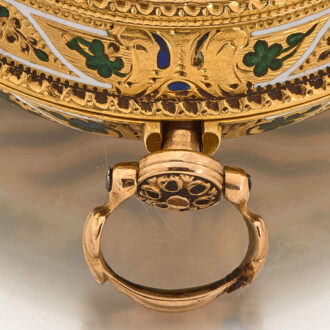
A very early and important English 18 carat gold and enamel pair-cased verge pocket watch with corresponding chatelaine, circa 1742. The magnificent early English verge movement signed and numbered, the balance cock with a grotesque face, worm gear. The high-quality case is made in the manner of George Michael Moser, London hallmarks from 1742, case maker’s mark IH. A very beautifully preserved white enamel dial with Roman hours, Arabic five-minute numerals and very fine gold hands. Comes with the original chatelaine also made in the manner of George Michael Moser, the front gold and enamel, the reverse of metal, enamelled in dark blue and green to match the watch, the finest en grisaille painting and equipped with rare accessories: a miniature magnifying glass, a medallion and the original key.
–
Diameter: 49 mm
–
Weight: 106 g
–
Signed: Stepn Gibbs London
–
Stephen Gibbs was recorded in London, Lombard Street, from 1733 to 1764.
–
George Michael Moser was born on 17 January 1706 in Schaffhausen, Switzerland, and died on 24 January 1783 at Somerset House, London. He was a renowned artist and enameller of the 18th century, father of celebrated floral painter Mary Moser and, with his daughter, among the founder members of the Royal Academy of Arts in 1768. He was the son of Michael Moser, an eminent Swiss engineer and metalworker. Moser trained initially as a coppersmith in Geneva and later learnt additional skills as a chaser, goldsmith and engraver. He moved to London during the 1720s and married Mary Guynier. Surviving metal works by him include elaborate gold snuffboxes and watch cases (including movements by noted watchmakers George Philip Strigel and John Ellicott, among others), and silver candlesticks in the rococo style. He subsequently rose to be head of his profession as a gold chaser, medallist, and enameller and was particularly distinguished for the compositions in enamel with which he ornamented the backs of watches, bracelets, and other trinkets. A beautiful example of this work was a watch case executed for Queen Charlotte, adorned with whole-length figures of her two eldest children, for which he received a hatful of guineas. Moser was drawing master to George III during his boyhood, and on his accession to the throne was employed to engrave his first great seal. When the art school afterwards known as the St. Martin’s Lane Academy was established about 1736, in Greyhound Court, Strand, he became manager and treasurer and continued in that position until the school was absorbed into the Royal Academy. When he died he was buried in the churchyard of St Paul’s, Covent Garden his funeral being attended by almost all his fellow academicians and pupils. On the day after Moser’s death, a notice of him from the pen of Sir Joshua Reynolds was published, in which he was described as the first gold chaser in the kingdom, possessed of a universal knowledge of all branches of painting and sculpture, and ‘in every sense the father of the present race of artists.
–
Reference 0082000
Signed: Stepn Gibbs London
Share this page: