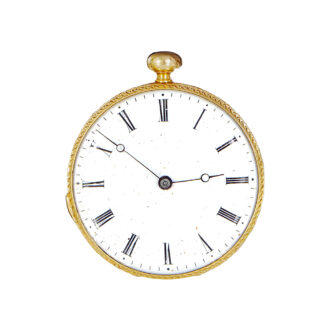
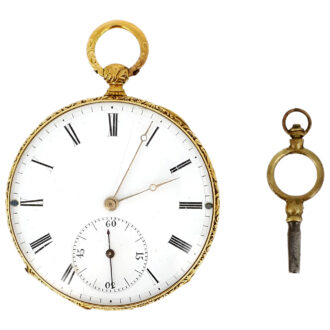
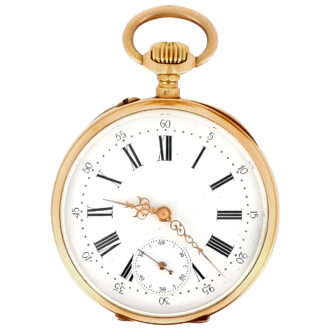
English 18 carat gold precision pocket watch Circa 1811
- Kenmerk
- HC1980
- Diameter
- 58 mm
- Estimate
- € 5.500 - 8.000
- Price sold
- € 3.700
Very fine pocket watch with duplex escapement
–
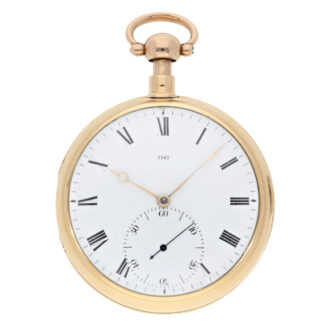
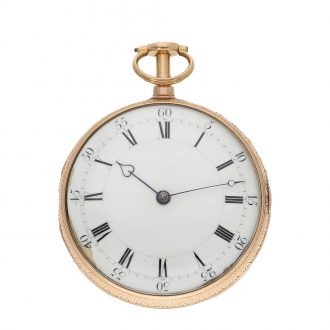
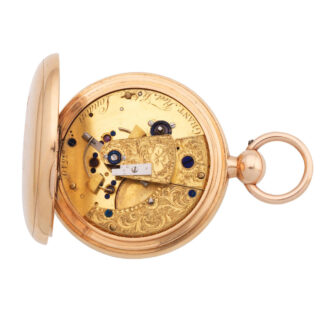
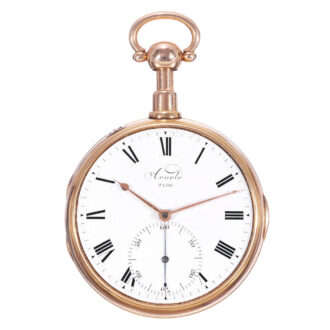
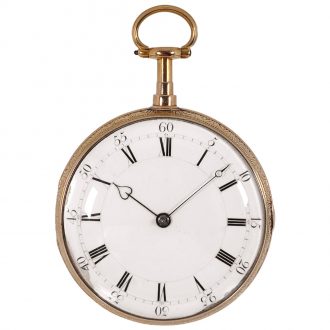
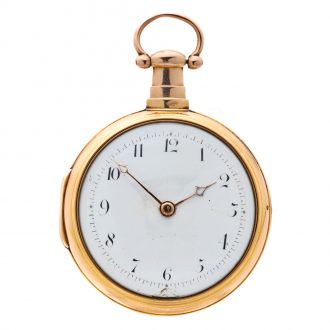
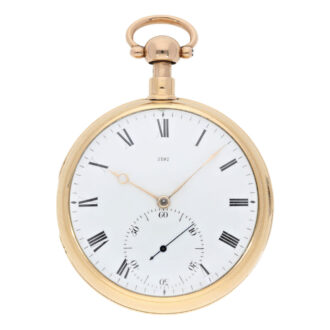
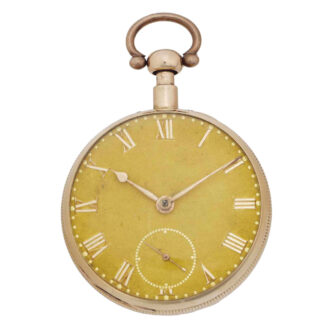
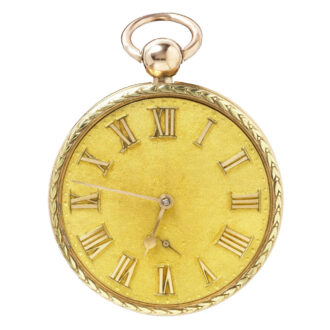
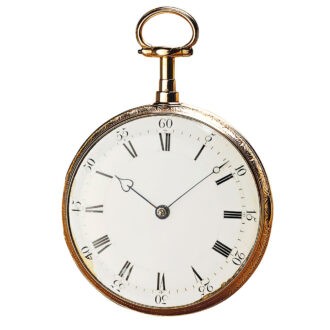
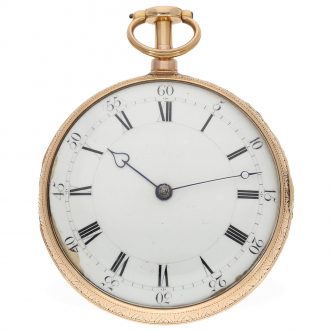
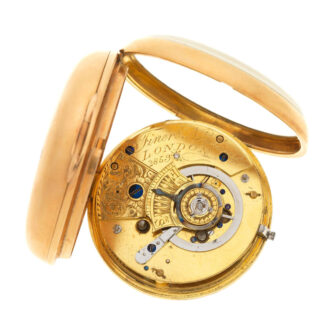
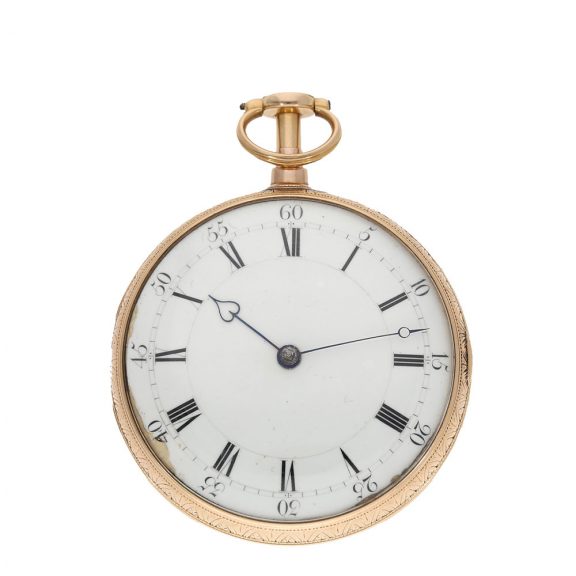
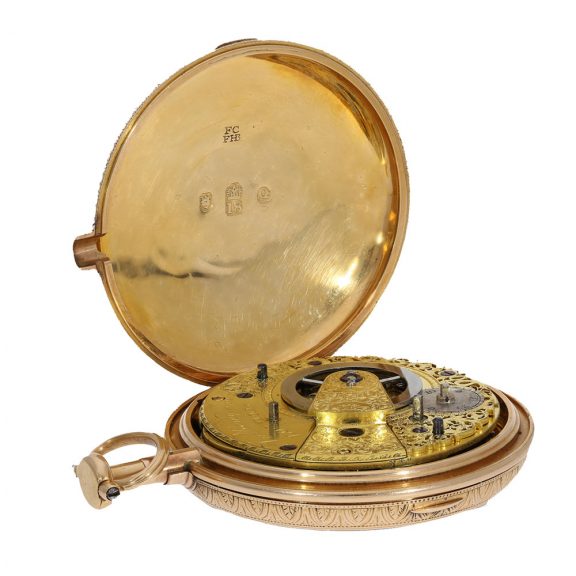
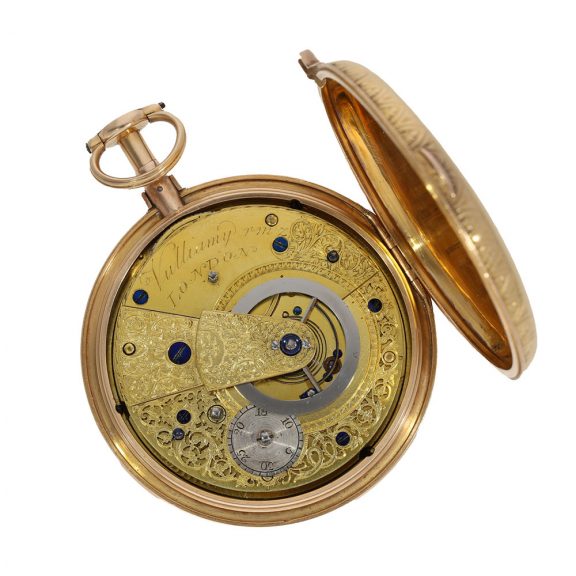
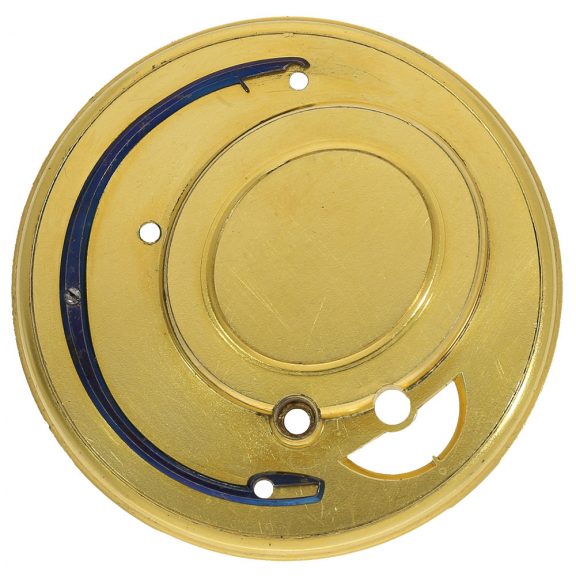
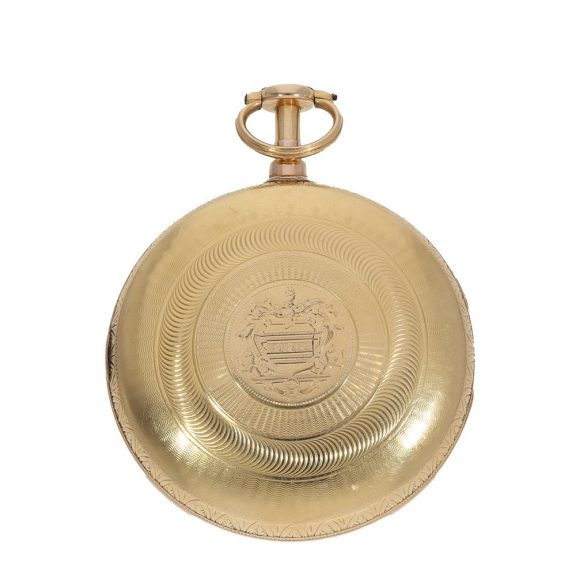
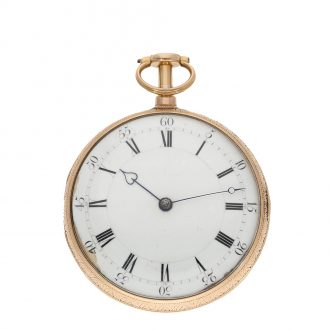
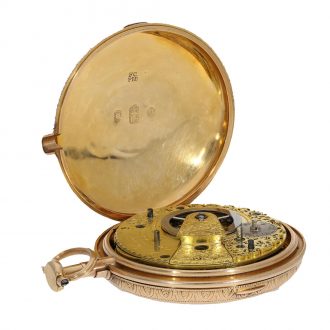
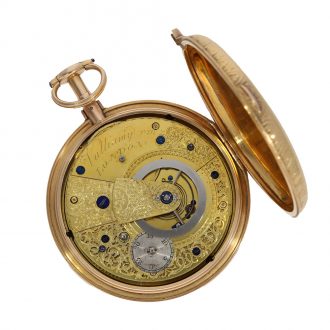
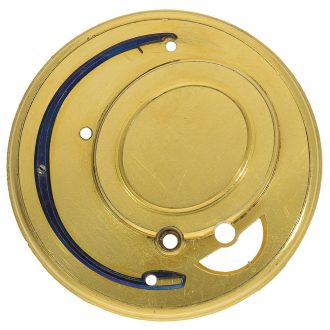
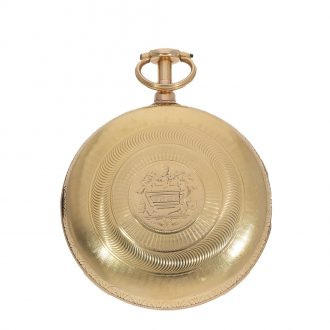
A very fine precision pocket watch with duplex escapement, made by Benjamin Lewis Vulliamy in London, England, circa 1811. The extremely heavily constructed case of this watch was crafted from 18 carat gold and features a magnificently engraved and engine turned back lid, the maker’s mark FC/FHB, a noble coat of arms on the back and the original cuvette. The original enamel dial features an outer track with Arabic 5 minute numerals, Roman hour numerals, the original heart shaped hour hand and a replaced minute hand. The engraved movement is fitted with a very fine caliber duplex escapement, a large steel balance with rare temperature compensation and a diamond end stone.
The movement is signed.
–
Diameter: 58 mm
–
Weight: 172 g
–
Signed: Vulliamy rmz London
–
The watch presented here is an early English precision watch of excellent movement quality with an extremely heavy gold case.
–
Vulliamy
The Vulliamy’s were a distinguished family of watchmakers in London of Swiss origin clock and watchmakers who held the prestigious role of Royal Clockmaker in Britain for 112 years, spanning four generations and five monarchs.
The dynasty began when (François) Justin Vulliamy moved from Switzerland to London around 1730. He apprenticed under Benjamin Gray, the “Watchmaker in Ordinary” to King George II. Justin solidified the family’s position by marrying Gray’s daughter, Mary, and becoming his partner in 1743. Upon Gray’s death in 1764, Justin took over the business at 68 Pall Mall, which remained the family’s headquarters for a century.
The most prolific member, Benjamin Lewis (1780–1854), served as the Royal Clockmaker to George IV, William IV, and Queen Victoria.
The watchmaking line ended with Benjamin Lewis in 1854, as his children pursued careers in architecture and civil engineering.
–
In the signature of a Vulliamy pocket watch from around 1811, the letters “rmz” (or similar letter combinations) functioned as a coded serial number.
Because the “key” to this code was never publicly recorded, researchers today often rely on the hallmarks found inside the gold or silver watch case to determine the exact year the watch was made, which for a watch with an “rmz” signature around that time would typically align with a London hallmark for 1811.
Signed: Vulliamy rmz London
Share this page: