English fine and rare gold pocket chronometer Circa 1799
- Kenmerk
- SA0148
- Diameter
- 58 mm
- Estimate
- € 20.000 - 30.000
- Price sold
- € 28.000
Fine and rare gold pocket chronometer
–
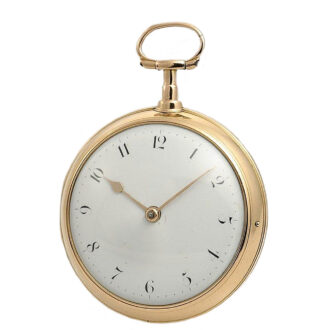
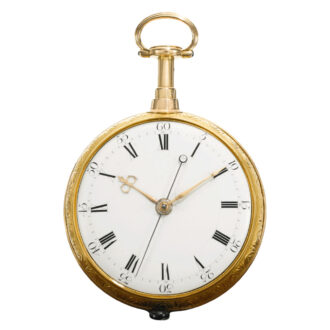
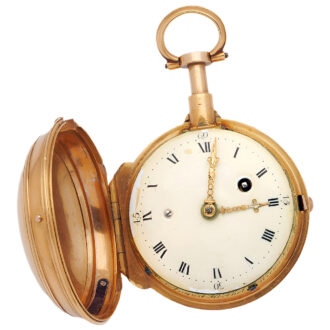
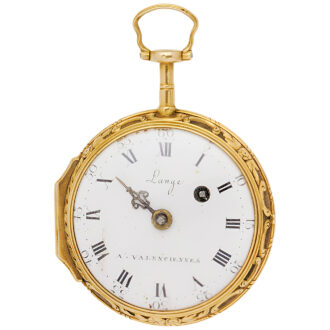
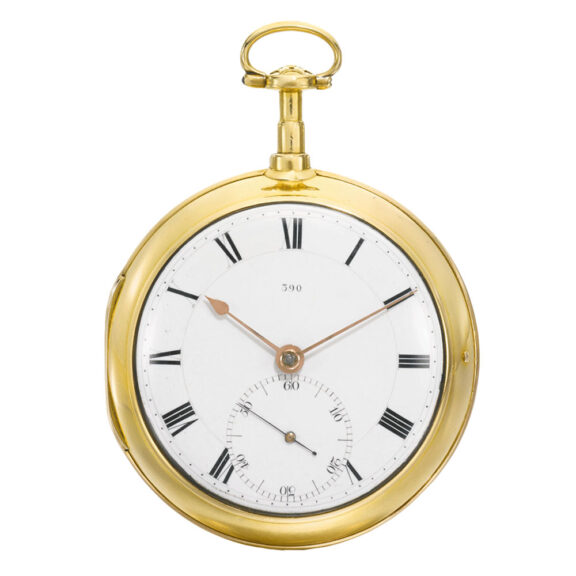
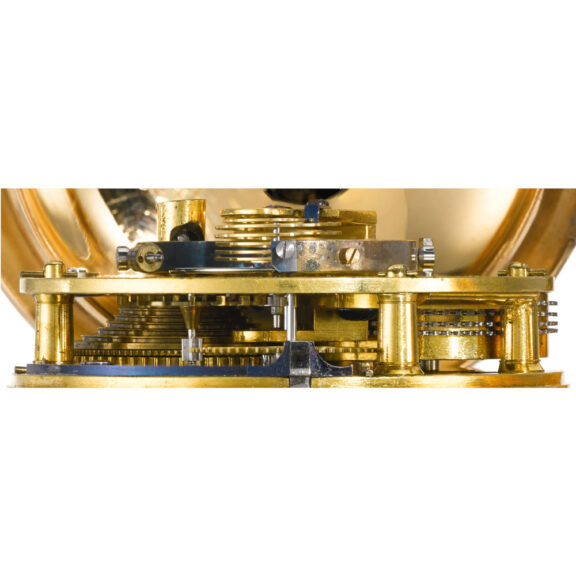
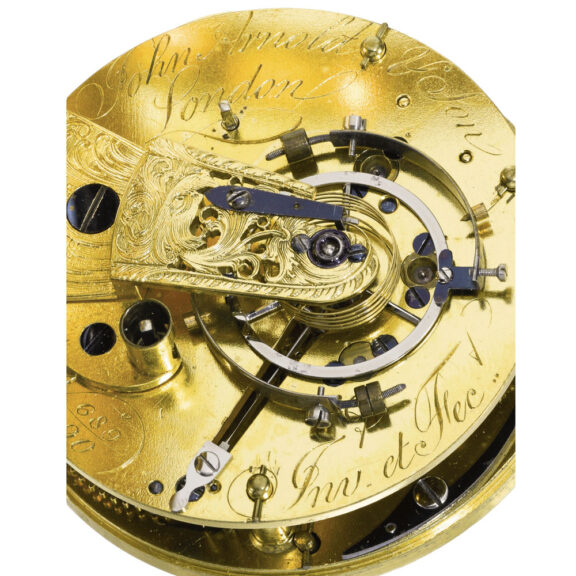
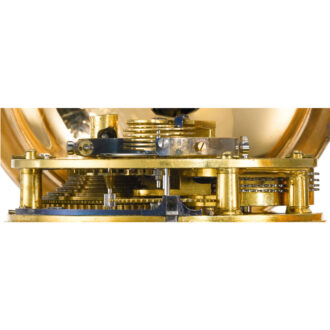
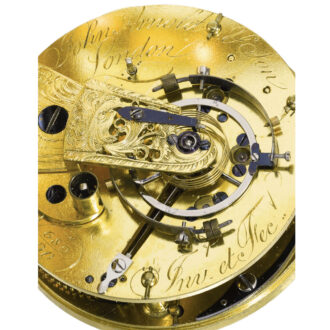
An English fine and rare gold pair cased pocket chronometer, circa 1799, gilded full plate movement, spring detent escapement, two-arm bimetallic compensation balance with wedge-shaped weights and timing screws, balance cock with diamond endstone, fusee and chain, cylindrical pillars, movement signed and numbered Thos. Earnshaw Invt et Fecit.
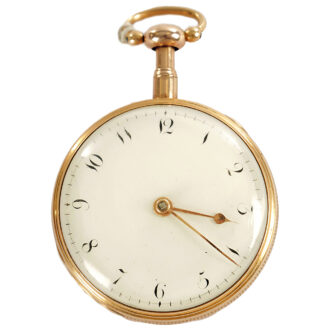
White enamel, Roman numerals, outer minute ring, subsidiary seconds, gold hands, dial signed and numbered Thos. Earnshaw Invt et Fecit.
Plain gold cases, the inner with winding aperture to back, both cases hallmarked 1799, outer case with maker’s mark TC beneath an axe for Thomas Carpenter.
–
Diameter: 58 mm
–
Signed: Thos. Earnshaw Invt et Fecit
In their own lifetimes, the invention of the spring detent escapement was the subject of an acrimonious dispute between Thomas Earnshaw and John Arnold. The dispute was exacerbated by a clash of characters and the bitterness of rivals, a story that is fascinatingly re-told in Vaudrey Mercer’s excellent work, John Arnold and Son.
Earnshaw trained as a watch finisher. This is one of a number of watches that he finished in such a way as to demonstrate how to avoid unnecessary costs and still maintain the highest standards. He has not gilded the plates nor blued any of the steel parts. The movement is not hinged to the case but secured with screws. Apart from the finish, the movement of the present watch is to the same.
specification as Earnshaw no. 626/3069 which is illustrated in T. Camerer Cuss, The English Watch 1585-1970, Both 626/3069 and the present watch have the same dial and hands and the cases are by the same makers.
Signed: Thos. Earnshaw Invt et Fecit
Share this page: