English silver “Duo in Uno” chronometer watch Circa 1869
- Kenmerk
- HC2104
- Diameter
- 54 mm
- Estimate
- € 2.500 - 6.000
- Price sold
- € 2.500
Extremely rare experimental pivoted detent chronometer
–
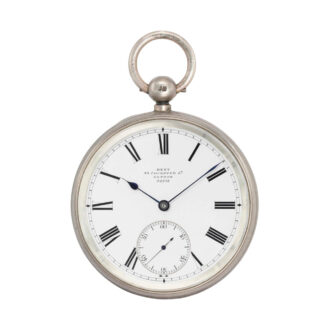
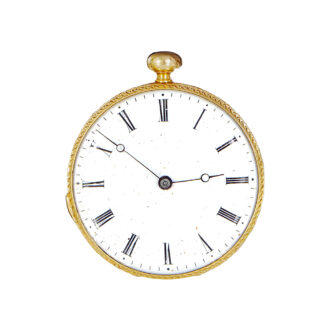
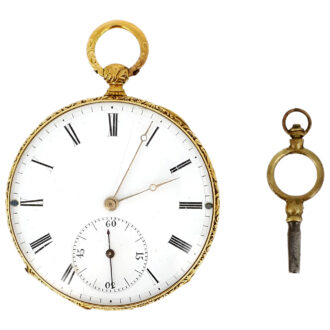
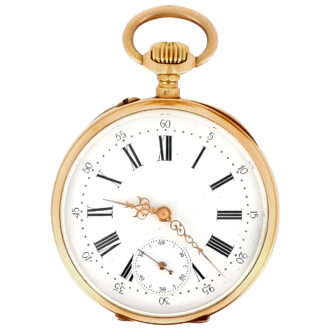
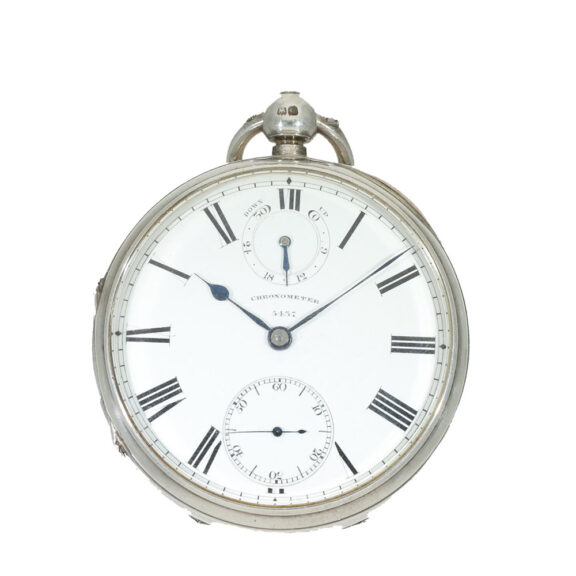
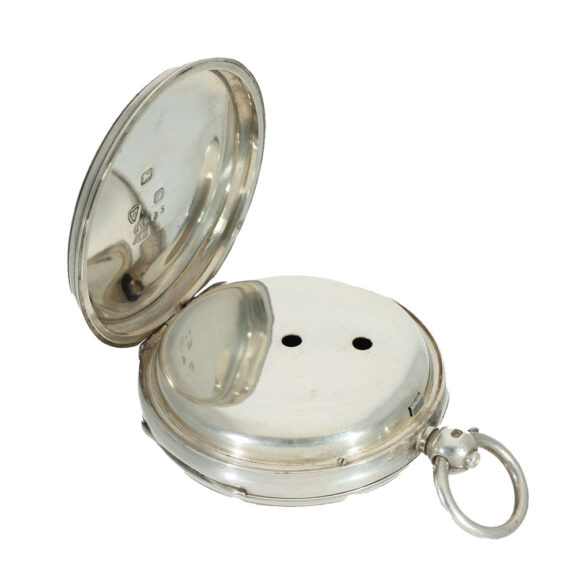
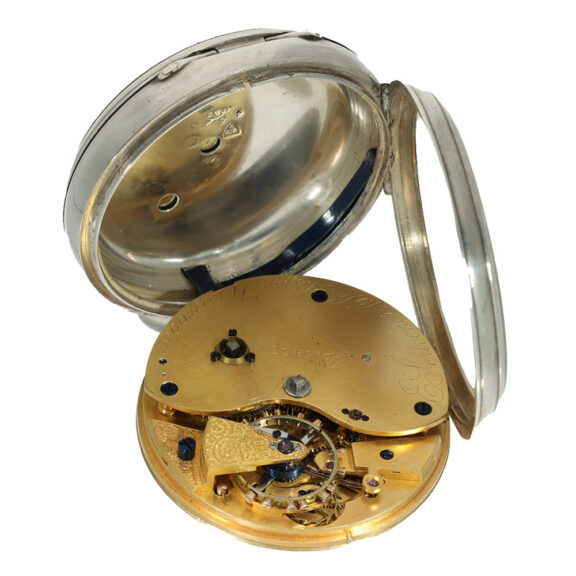
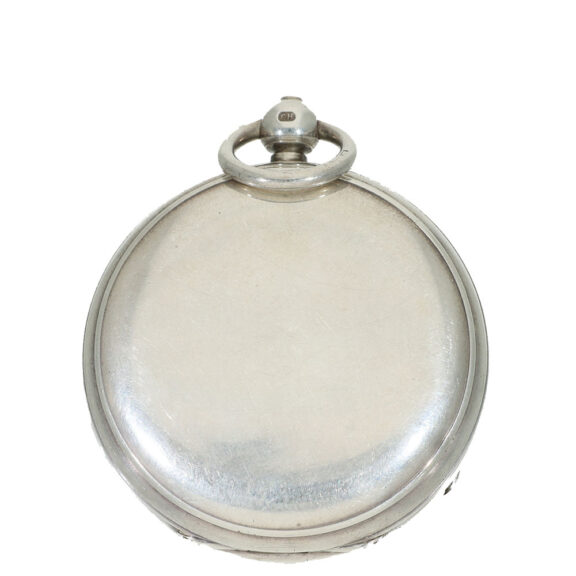
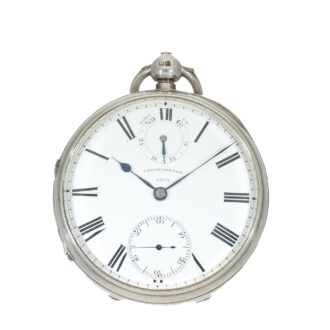
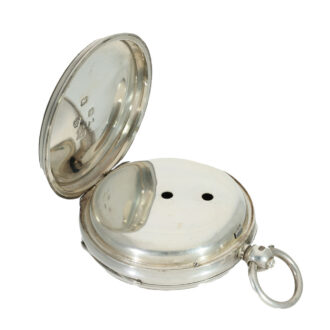
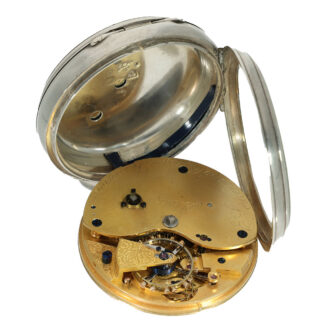
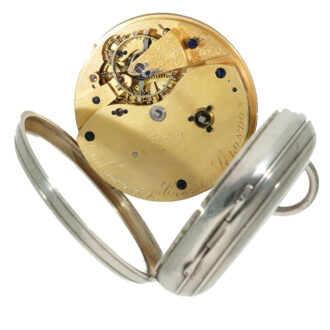
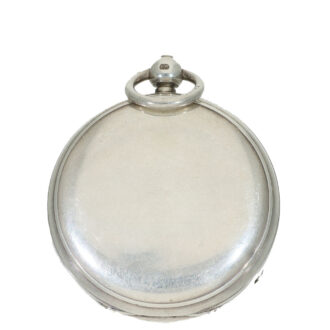
An extremely rare experimental pivoted detent chronometer with “Duo in Uno” hairspring and a power reserve, made by Edward Scrivener on 19 Cockspur Street, London, England, circa 1869. This watch features a case crafted from silver and bears the master’s mark CH (probably the pocket watch casemaker Charles Hill) and original London 1869 Hallmarks. The enamel dial, marked Chronometer, features an outer minute and hour track with Roman hour numerals, a subsidiary seconds dial at 6 o’clock, a power reserve indicator at 12 o’clock and blued steel hands. The numbered movement is equipped with an experimental chronometer escapement and a very rare “Duo in Uno” hairspring.
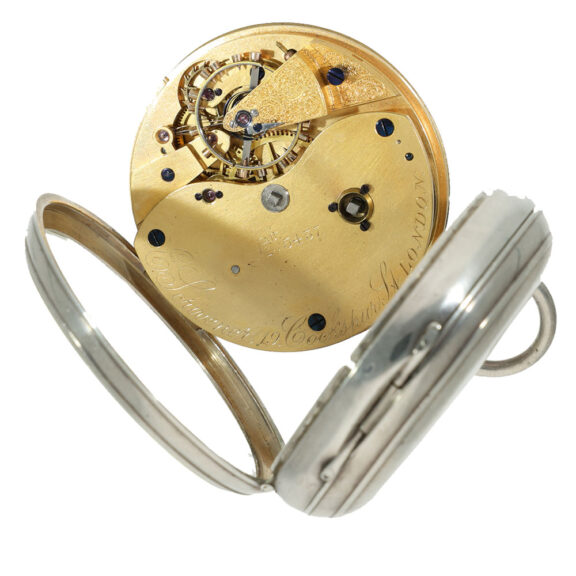
The dial and movement bear matching numbers and the movement is signed.
–
Diameter: 54 mm
–
Weight: 132 g
–
Signed: E. Scrivener 19 Cockspur Street London
–
Duo in Uno balance spring
The “Duo in Uno” balance spring makes it possible to reduce the height of a helical hairspring and thus save space in the height of a pocket chronometer movement. In fact, it is a flat hairspring that transitions into a helical hairspring. The duo in uno was first presented at the 1862 World’s Fair in Kensington, London, at the Charles Frodsham stand. According to Frodsham, it provides “almost certainly correct performance in all the various positions with a perfectly poised balance”.
–
Scrivener
Edward Scrivener was an elite 19th century English watchmaker, master chronometer maker and jeweler. He operated his business in London from approximately 1848 to 1880 from his workshop and storefront located at 19 Cockspur Street, Pall Mall.
Scrivener did not mass produce timepieces; instead, he focused on bespoke, mechanically advanced pieces for wealthy clients and military personnel. His historical legacy is anchored by two main achievements:
- The “Duo in Uno” Balance Spring: Scrivener was one of the few master watchmakers capable of executing the highly complex “Duo in Uno” balance spring. This experimental technology converted a flat balance spring into a cylindrical one. It significantly saved vertical space inside a pocket watch casing while maintaining perfect poise in all positions.
- Experimental Escapements: He specialised in crafting experimental pivoted detent chronometer escapements. These were highly prized for their precision timekeeping and are strongly sought after by horological collectors today.
Following Edward Scrivener’s retirement and subsequent demise in the late 19th century, his business ceased operations entirely and dissolved.
Signed: E. Scrivener 19 Cockspur Street London
Share this page: