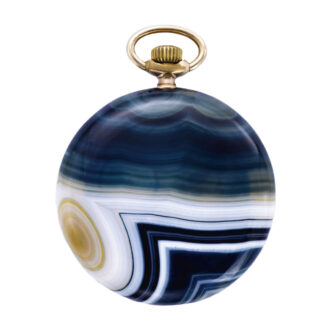
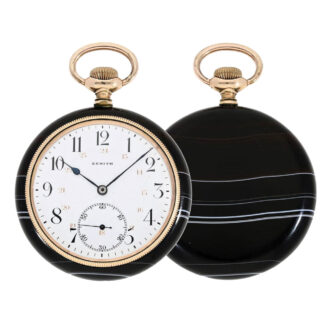
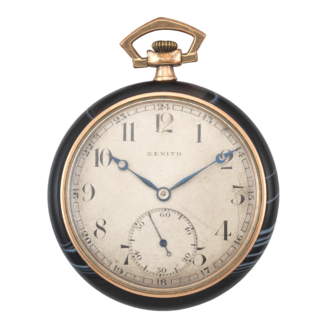
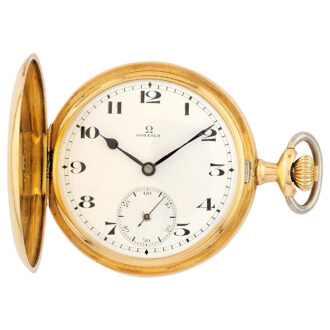
Fine Swiss onyx and enamel lever pocket watch Circa 1920
- Kenmerk
- SA0903
- Diameter
- 50 mm
- Estimate
- € 10.000 - 15.000
- Price sold
- € 12.000
Onyx and enamel open faced keyless lever
–
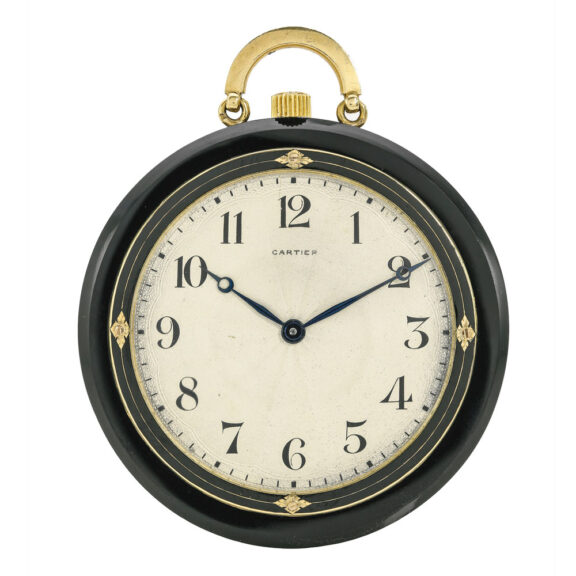
A fine and rare Swiss onyx and enamel open faced keyless lever pocket watch, circa 1920. Lever movement, manual winding, 18 jewels, cut bi metallic compensation balance, precision snail regulation. Silvered guilloché dial with black Arabic hours and outer minute track, Breguet-style blued hands. Polished case, cloisonné enamel bezel.
Case, movement and bezel numbered, dial signed. Comes with a Hong Kong Laboratory Certificate.
–
Diameter: 50 mm
–
Signed: Cartier
–
–
A fine and rare Swiss onyx and enamel open faced keyless lever pocket watch, circa 1920. Lever movement, manual winding, 18 jewels, cut bi metallic compensation balance, precision snail regulation. Silvered guilloché dial with black Arabic hours and outer minute track, Breguet-style blued hands. Polished case, cloisonné enamel bezel.
Case, movement and bezel numbered, dial signed. Comes with a Hong Kong Laboratory Certificate.
–
Diameter: 50 mm
–
Signed: Cartier
–
Cartier is a French luxury goods conglomerate company that designs, manufactures, distributes and sells jewellery and watches. Founded in Paris, France, in 1847 by Louis-François Cartier, the company remained under family control until 1964. The company maintains its headquarters in Paris.
–
Cloisonné is an ancient technique for decorating metalwork objects with coloured material held in place or separated by metal strips or wire, normally of gold. In recent centuries, vitreous enamel has been used, but inlays of cut gemstones, glass and other materials were also used during older periods, indeed, cloisonné enamel very probably began as an easier imitation of cloisonné work using gems. The resulting objects can also be called cloisonné.
–
Cloisonné is an ancient technique for decorating metalwork objects with coloured material held in place or separated by metal strips or wire, normally of gold. In recent centuries, vitreous enamel has been used, but inlays of cut gemstones, glass and other materials were also used during older periods, indeed, cloisonné enamel very probably began as an easier imitation of cloisonné work using gems. The resulting objects can also be called cloisonné.
Signed: Cartier
Share this page: