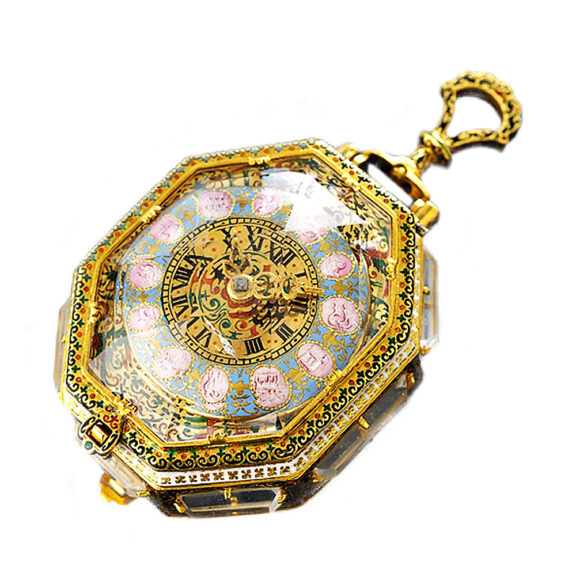
German octagonal neo Gothic gold enamel pendant watch Circa 1850
- Kenmerk
- AD9685
- Diameter
- 45 mm
- Estimate
- € 15.000 - 30.000
- Price sold
- € 38.600
Pendant watch in rock crystal case
–
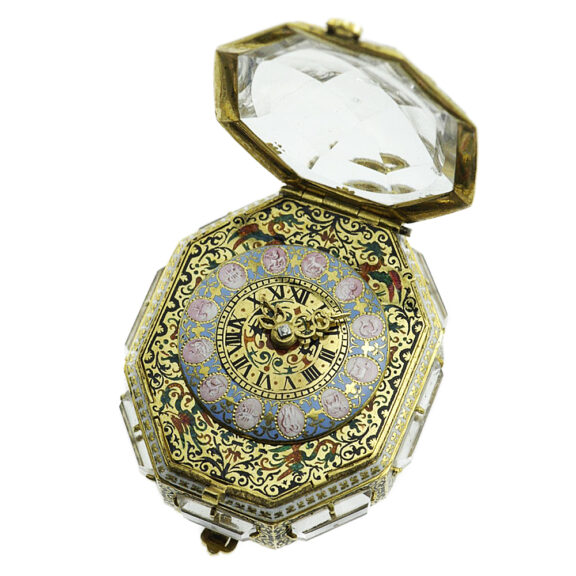
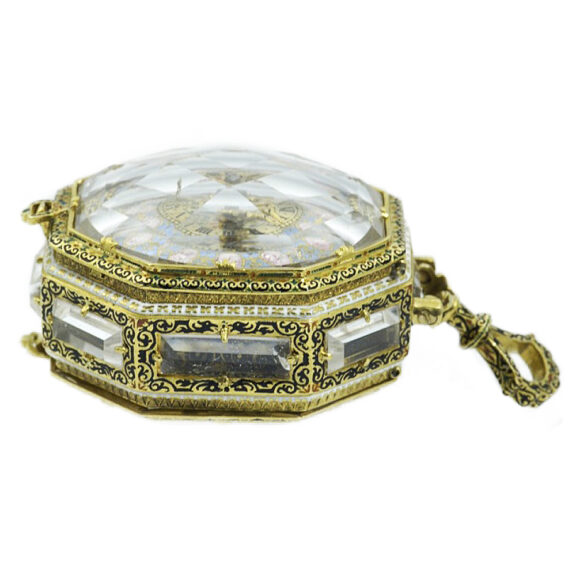
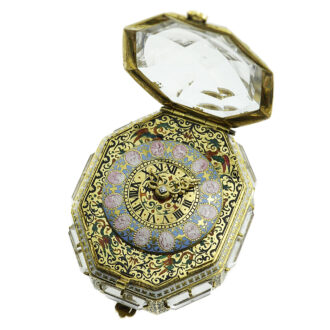
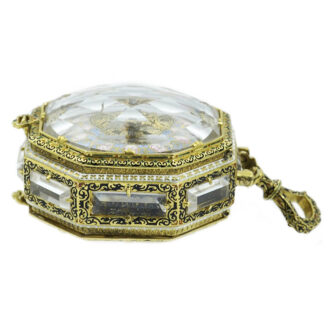
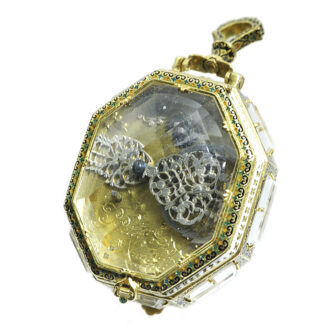
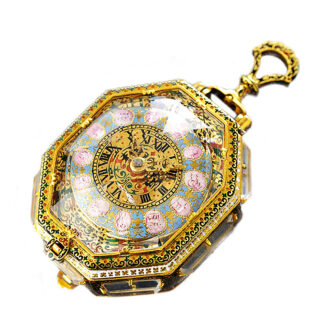
A German exquisite and important octagonal neo Gothic gold enamel 16th century style pendant watch in a rock crystal case, circa 1850.
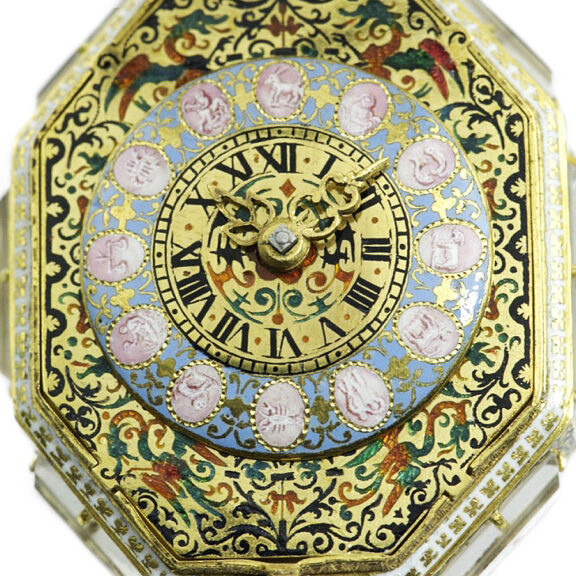
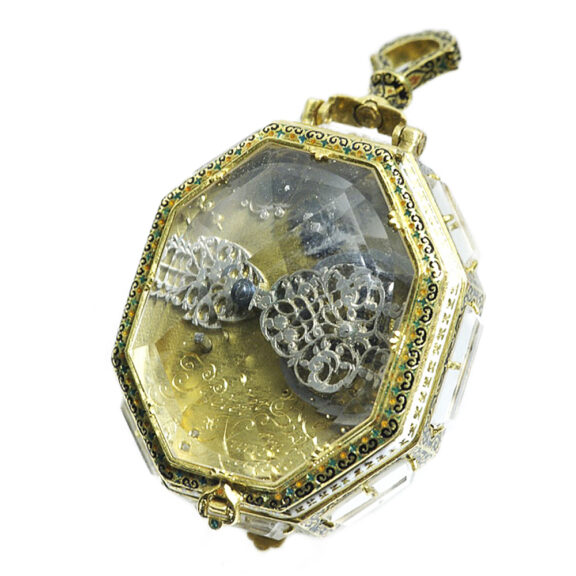
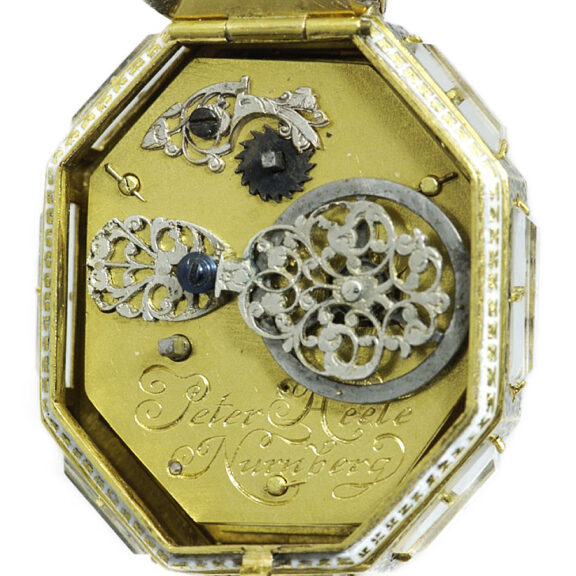
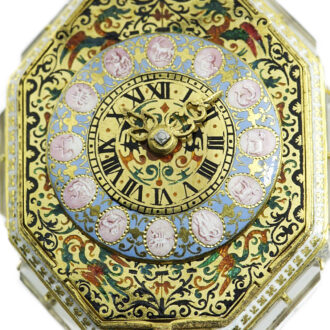
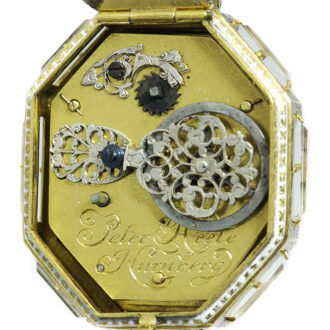
Octagonal gold, rock crystal and champlevé enamel case. Gold dial with Roman hours, polychrome translucent champlevé enamel inlays, and gold hands. Octagonal shaped full plate movement, chain/fusee, verge escapement, and a three arm iron balance.
–
Dimensions: 45 x 36 x 30 mm
–
Weight: 72 g
–
Signed: Peter Heele, Nürnberg
–
This type of watch was produced in the late 19th century and was usually bought by collectors of neo Gothic souvenirs. The movement uses 18th-century parts and the watch belongs to one of several such series produced in Germany; presumably, the manufacturer was the company “Keks und Schwartz” in Munich.
–
Peter Henlein
Peter Henlein, also known for short as Peter Hele, was born in Nuremberg around 1480, was a locksmith by profession and was registered as a master of the locksmith’s trade in the Nuremberg Citizens and Masters’ Book on November 16, 1509. Peter Henlein, who was already involved in watchmaking as a journeyman, built small portable clocks before 1510. The shape of his first portable watch is not known – it is believed that it also had a striking mechanism and ran for up to 40 hours. The clocks of that time had, to regulate the rate, instead of the current spiral spring, two upright movable pig bristles, on which the restlessness struck; they also had percussion. Henlein is considered to be the inventor of the stack freed, which compensated for the spring drive and promoted the construction of portable watches. These clocks were later called “Nuremberg Eggs” because of their thick, egg-shaped shape. The egg shape of such clocks did not appear until after the death of Henlein.
Peter Henlein died in Nuremberg towards the end of August or the beginning of September 1542. Since 1902 it has been commemorated by erecting a monument in the city of Nuremberg.
Signed: Peter Heele, Nürnberg
Share this page: