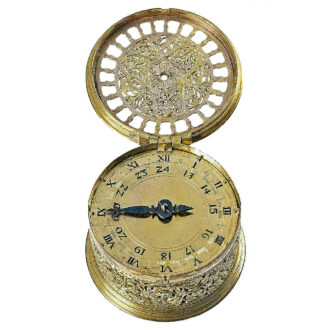
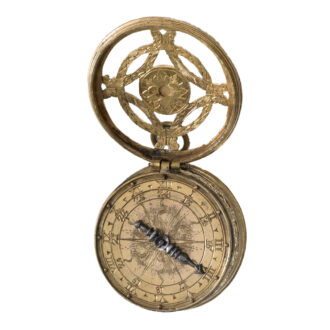
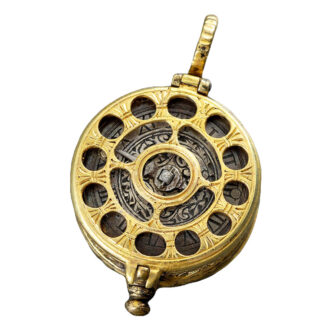
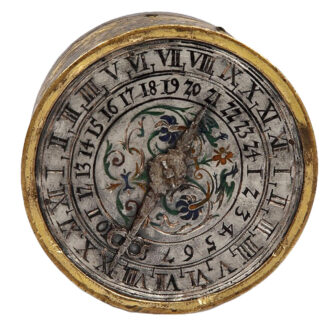
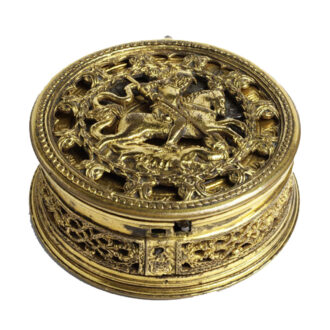
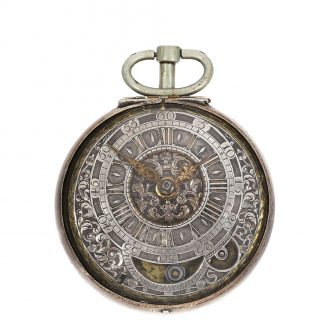
German Renaissance watch with hour self strike Circa 1560
- Kenmerk
- AD8507
- Diameter
- 63 mm
- Estimate
- € 35.000 - 60.000
- Price sold
- € 49.600
Rare large Renaissance clock watch with stack freed
–
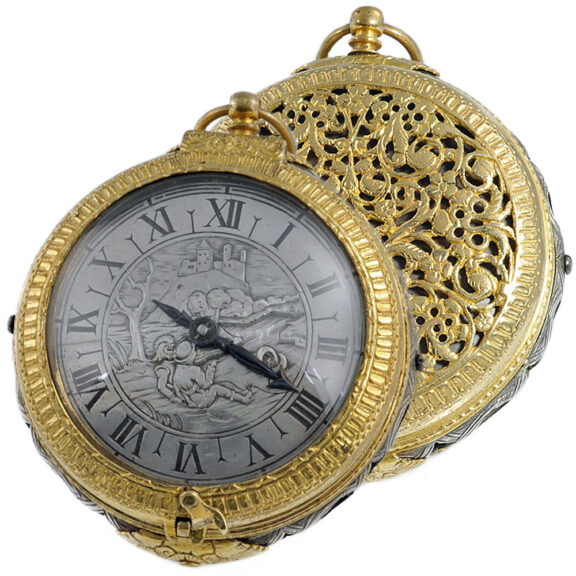
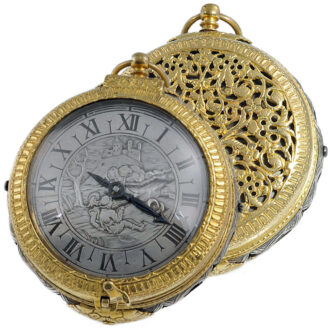
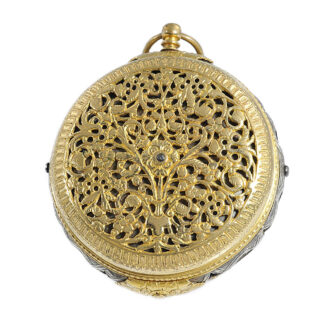
An important, rare and large German Renaissance verge clockwatch with hour self-strike and stackfreed, circa 1560.
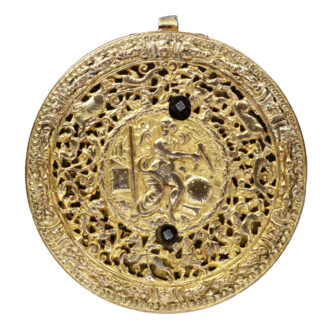
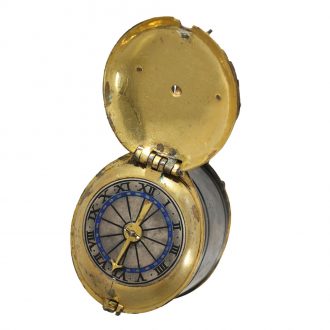
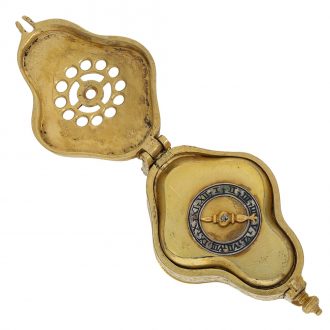
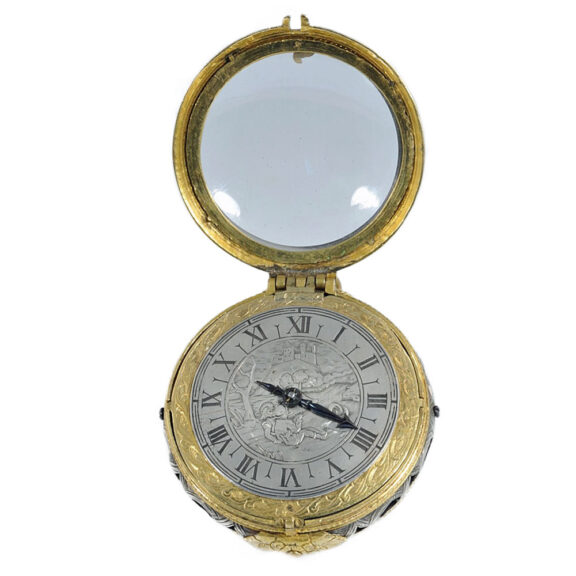
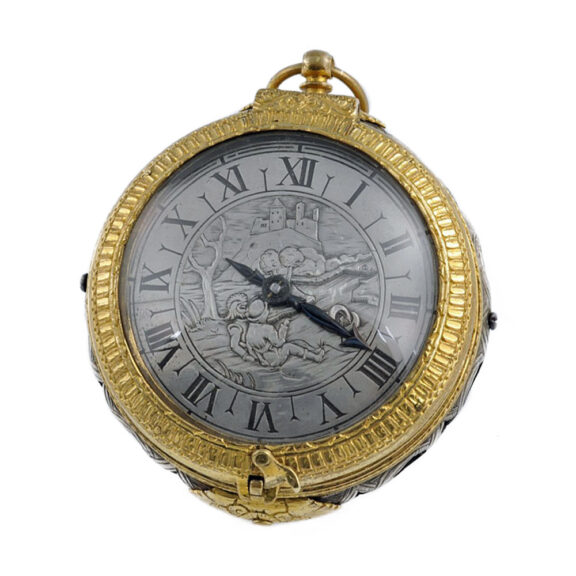
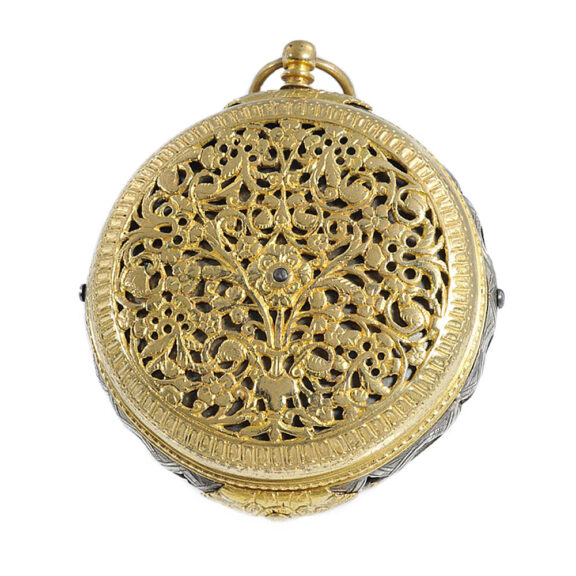
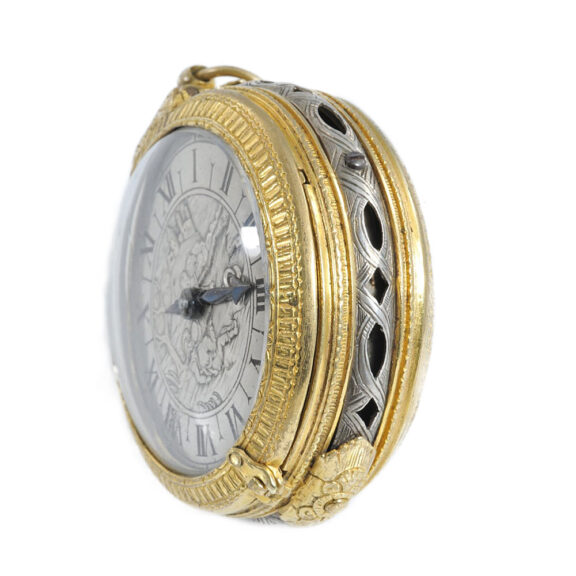
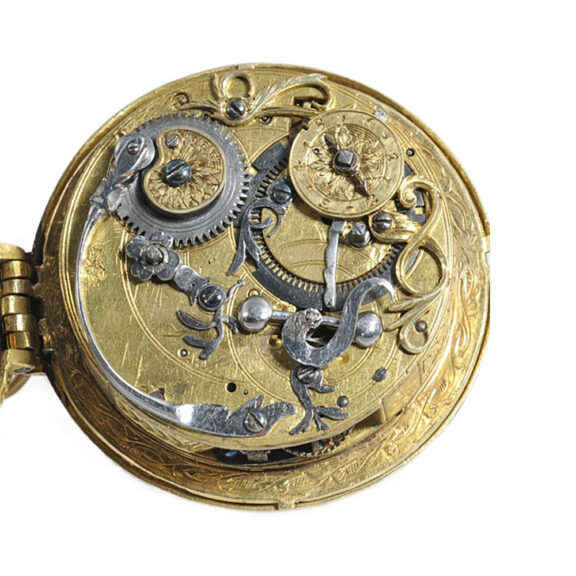
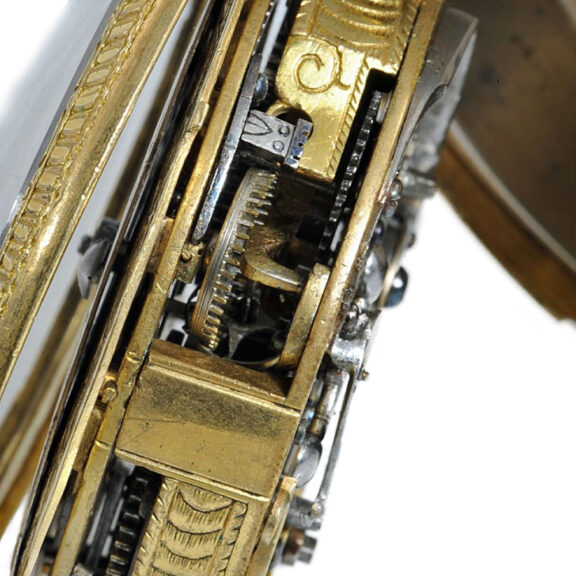
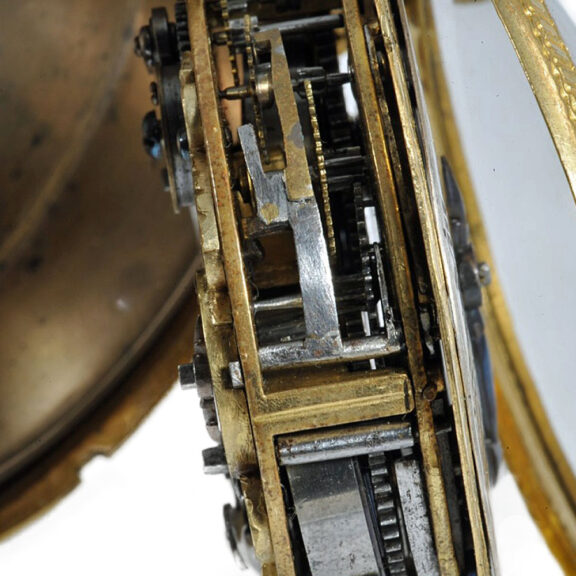
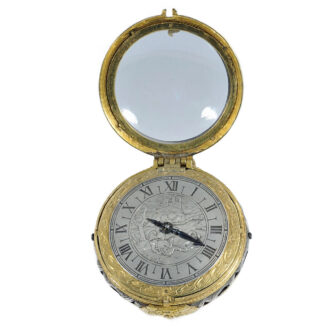
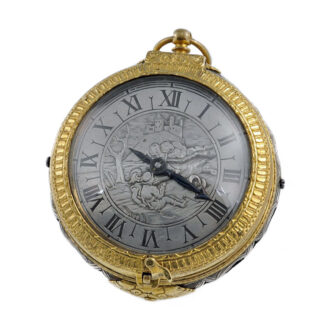
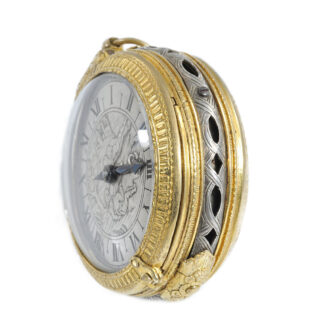
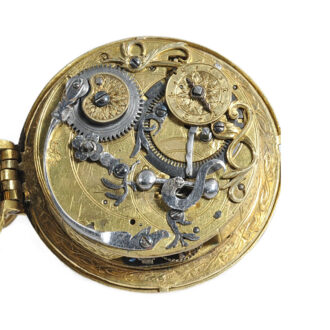
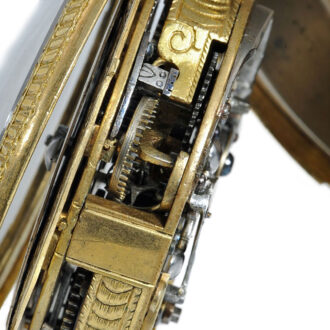
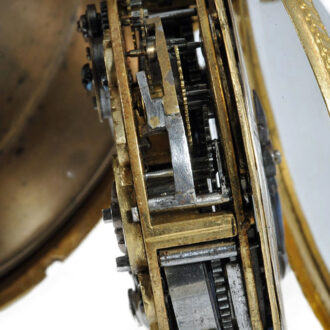
The case is fire gilt and silver, the backside lavishly florally pierced, the edges engraved with geometrical pattern, silver case band with pierced and engraved geometrical design. The dial is silver with a florally engraved border, radial Roman numerals, an animated landscape, a river scene, a large castle on the centre field, and a single-blued steel hand. Firelight brass full plate movement with punch mark PRT, verge escapement, stack freed, foliot and hog’s bristle, locking plate with internal teeth, and one hammer/ one bell.
–
Diameter: 63 mm
–
Weight: 262 g
–
Signed: PRT Paulus Rosentreter, Nuremberg
–
This watch from Nuremberg is a supreme example of the transition from the “Horologium ferreum”, the pendant watches with movements that were – particularly in Southern Germany – in the first half of the 16th century completely made of iron, to the French constructions, which at the time already used brass or gilded brass parts. “The surviving early German pendant watches all have a stack freed because it allows a flatter design”, writes Klaus Maurice.
The stackfreeds always had full plate movements.” The signature around the master’s mark at 12 on the backplate is “PRT”, which we read as “Paul(us) RosenTretter”; the mark clearly shows a rose branch with leaves and large petals that is wound around a shoe or boot – one can observe the design particularly well when the mark is turned on its head. It is unclear yet if the shapes above the opening of the shoe and at its back end are related ornaments. It is quite impressive to see how elaborate the hand-filed iron cog and crown wheels of the watch are; an even greater surprise, however, are the details of the movement and the strike mechanism -produced less than 50 years after Peter Henlein.
There are not even 20 years between the earliest known German master’s mark of Caspar Werner of Nuremberg in 1548 and this mark of his fellow countryman “Paulus Rosentretter”, who became a citizen of Nuremberg as well as a master in 1566: “Paulus Rosentretter, Cleinvhrmacher, ist maister worden adi 24. November 1566” (Paulus Rosentretter, watchmaker, became a master on November 24, 1566).
Unfortunately, Rosentretter did not have much time to enjoy his new rights; he died 12 years later on May 23, 1578, probably not even 40 years old. Hans Sachs, shoemaker, Meistersinger and poet, had been laid to rest only two years before him – which means that our watch was a contemporary of that famous son of Nuremberg.
At this point, the watch is the only existing piece created by this master; a monstrance clock made of rock crystal and bearing the mark “PR”, which Heinrich Lunardi mentions as having possibly been created by Paulus Rosentretter today no. 1392 of the “Sammlung fuer Plastik und Kunstgewerbe” in the Kunsthistorisches Museum in Vienna was probably made in Augsburg and certainly dated to the first quarter of the 17th century; hence it clearly cannot be attributed to Rosentretter.
–
A stackfreed is a simple spring-loaded cam mechanism used in some of the earliest antique spring-driven clocks and watches to even out the force of the mainspring to improve timekeeping accuracy. Stackfreeds were used in German clocks and watches from the 16th to the 17th century before being replaced in later timepieces by the fusee. The term may have come from a compound of the German words starke (“strong”) and feder (“spring”).
Signed: PRT
Share this page: