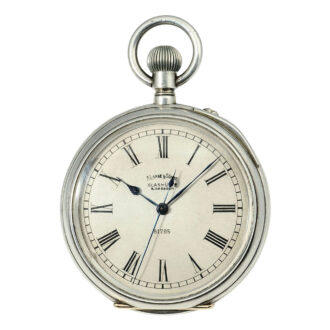
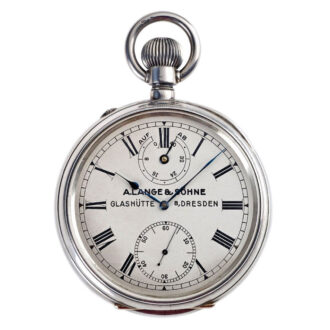
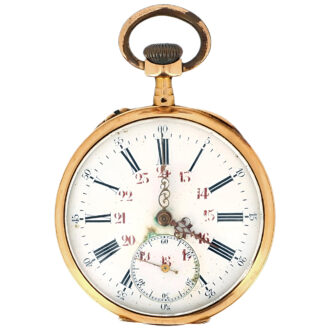
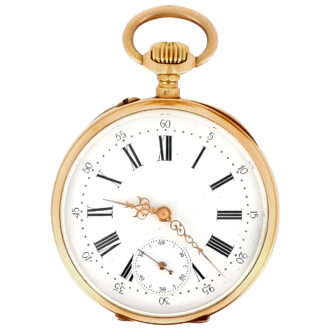
German silver cased Glashütte deck chronometer Circa 1918
- Kenmerk
- AD2052
- Diameter
- 61 mm
- Estimate
- € 30.000 - 50.000
- Price sold
- -
Open faced deck chronometer by A. Lange & Söhne
–
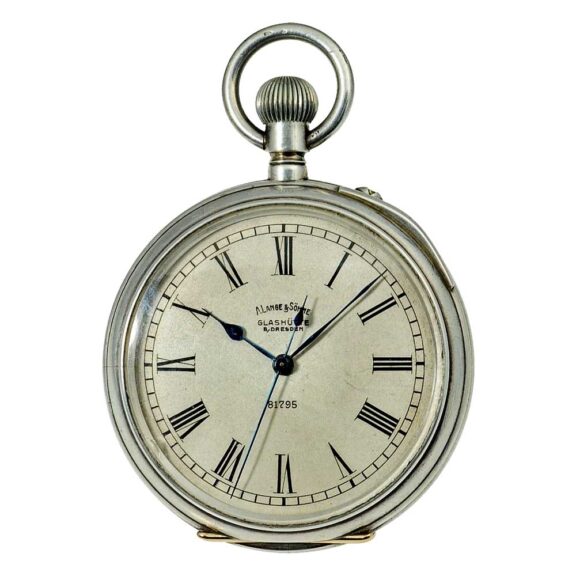
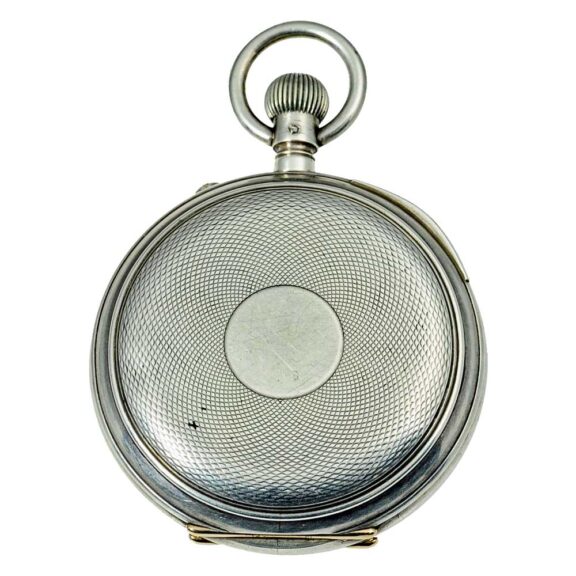
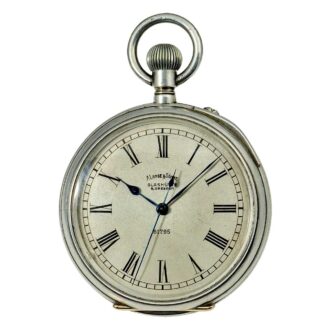
A German Glashütte half seconds beating deck chronometer, circa 1918. Delivered on May 17th, 1918 to the Imperial Hydrographical Institute in Pola for 396 Marks, manufactured in quality 1A. A total of only 41 pieces were produced by Lange & Söhne – with Lange extract from the archives.
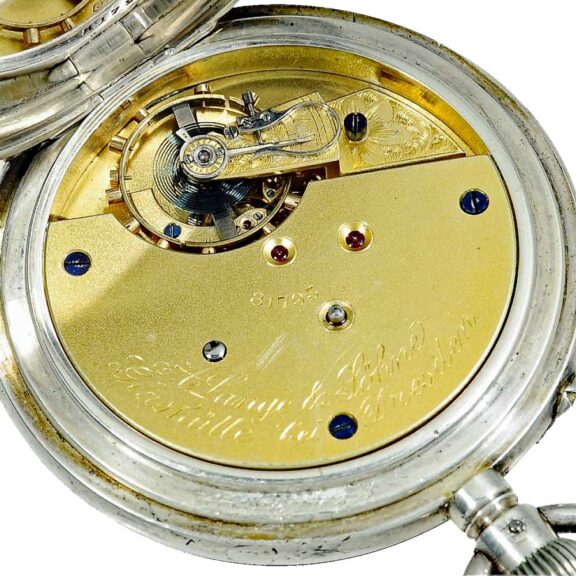
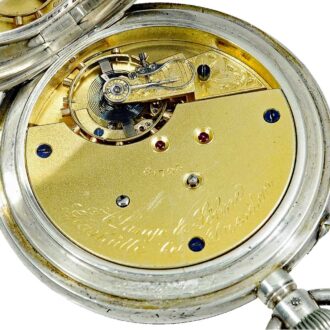
This watch consists a silver engine turned case with case design “Jürgens” and a matt silvered signed dial with Roman numerals, center seconds and blued steel hands. It has a signed 2/3 plate movement, a Grossmann’s pivoted detent chronometer escapement with 2 screwed gold chatons and a gold screw compensation balance.
–
Diameter: 61 mm
–
Weight: 184 g
–
Signed: A. Lange & Söhne, Glashütte B/Dresden
–
Pocket chronometers with barrel
Pocket chronometers are considered to be the precursors to deck watches. Lange & Soehne originally produced pocket chronometers with going barrels for scientific purposes. Often set in wooden boxes, they were to be used as deck chronometers on ships. Following this style the watches were designed with 14,400 alternations per hour; as a result the second hand was able to jump every half second. The watches all have pivoted detent escapements, which were designed in two different styles: one version was the chronometer escapement according to Berthoud, the other the escapement according to Julius Grossmann, which had an additional safety lever to prevent the escapement wheel from going on once the balance had been taken out.
Signed: A. Lange & Söhne, Glashütte B/Dresden
Share this page: