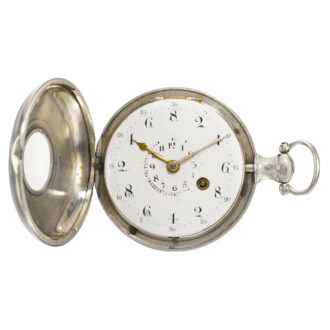
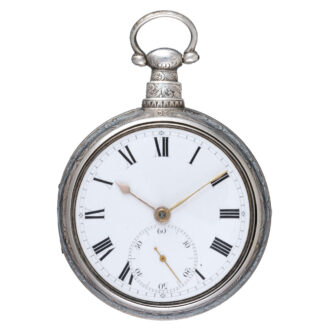
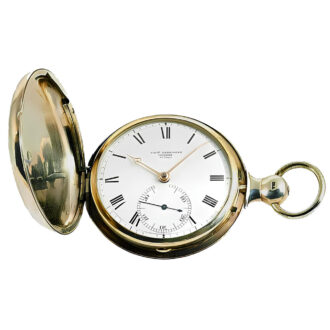
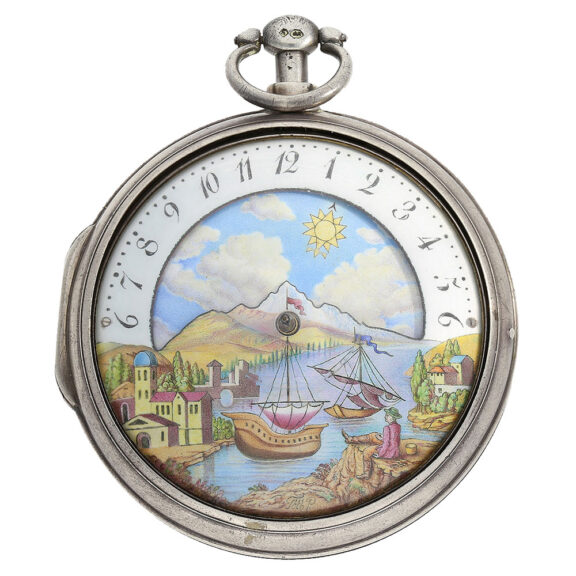
Large English pocket watch with magnifying glass painting Circa 1814
- Kenmerk
- HC0458
- Diameter
- 62 mm
- Estimate
- € 3.500 - 6.000
- Price sold
- € 3.790
Large pocket watch day/night indicator
–
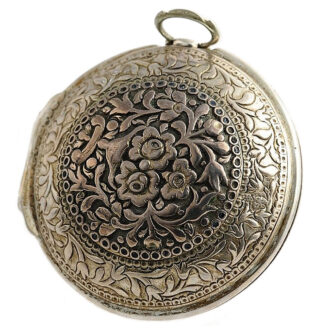
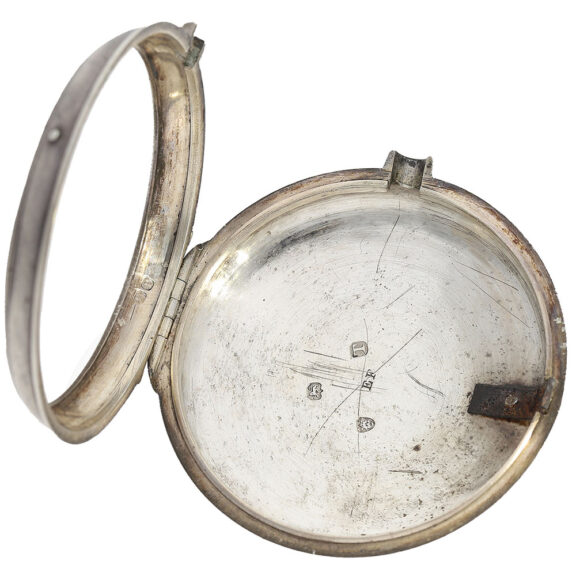
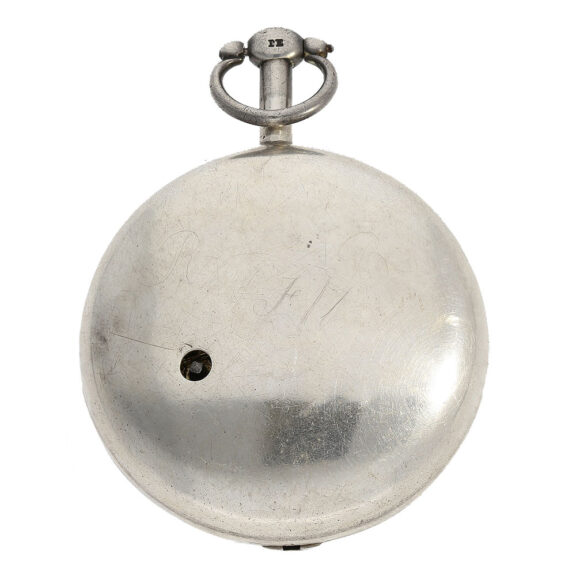
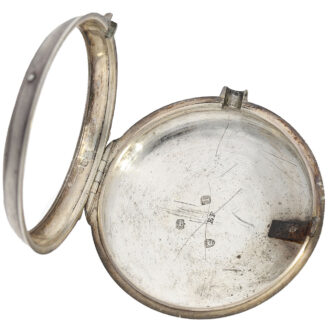
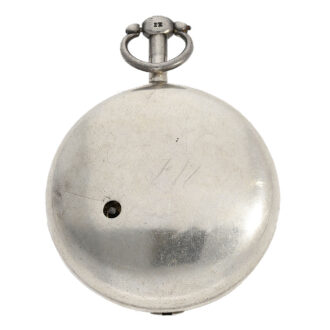
A large pocket watch with magnifying glass painting and day/night indicator, made by Robert Duncan in London, England, circa 1814. This timepiece boasts a double open faced silver case, adorned with matching Hallmarks from the year 1814, adding to its historical significance. The floral motifs adorning the watch are intricately crafted, showcasing the talent and artistry of the craftsmen involved in its creation. However, what truly sets this watch apart is its enamel dial with a magnifying glass painting. This rare feature depicts a harbour in front of a majestic mountain landscape, creating a visually stunning and captivating scene. The dial also features a unique retrograde display of the time above the sun and moon, with a marking arrow indicating the current time.
The movement features a magnificent spindle escapement, is signed and numbered 5755, showcasing the attention to detail and precision that went into its creation and the fire gilt plate further enhances the aesthetic appeal of the watch, adding a touch of elegance to its overall design.
In terms of condition, this pocket watch is in optically perfect shape. Any chips in the edge area have been professionally restored by Pál Tóth, one of the most renowned enamel painters of the 20th century. His expertise ensures that the watch retains its original beauty and charm, allowing collectors and enthusiasts to appreciate its splendour for years to come.
–
Diameter: 61.5 mm
–
Weight: 151 g
–
Signed: No name
–
Robert Duncan was a renowned watchmaker who operated in London during the early 19th century. He was known for his exceptional workmanship and attention to detail. As for the types of watches that Robert Duncan made, he was primarily focused on creating high quality pocket watches. These watches were often made with gold or silver cases and featured intricate designs on the dials. Duncan was also known for his expertise in creating complicated watches, such as chronometers and repeaters. These watches were highly sought after by collectors and enthusiasts due to their precision and accuracy. Based on historical records, commissioning a watch from Robert Duncan in London around 1814 would have involved several steps:
– Initial Consultation: The first step would have been to meet with Robert Duncan to discuss the specifications of the desired watch. This would have included the type of watch (e.g. pocket watch, wristwatch), the materials used (e.g. gold, silver), and any additional features requested (e.g. a calendar function).
– Design and Approval: Once the specifications were agreed upon, Robert Duncan would have created a design for the watch based on the customer’s preferences. The customer would then have had the opportunity to approve or request changes to the design.
– Production: After the design was finalized, Robert Duncan would have begun production of the watch. This process likely involved sourcing materials, assembling the watch components, and testing the accuracy of the timepiece.
– Delivery: Once the watch was completed, Robert Duncan would have delivered it to the customer and ensured that it was in proper working order.
It is worth noting that commissioning a watch from Robert Duncan would have been a costly and time consuming process, reserved for affluent individuals who could afford such luxury items.
Signed: No name
Share this page: