Silver English technically highly interesting chronometer Circa 1864
- Kenmerk
- HC0929
- Diameter
- 52 mm
- Estimate
- € 2.500 - 6.000
- Price sold
- € 2.500
Silver watch with original watch paper
–
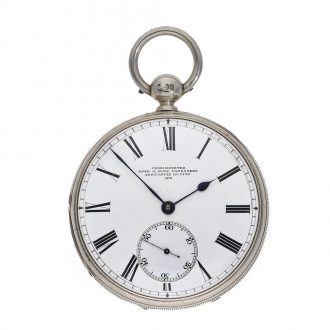
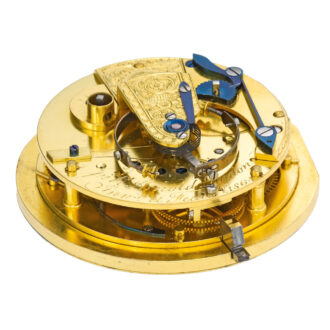
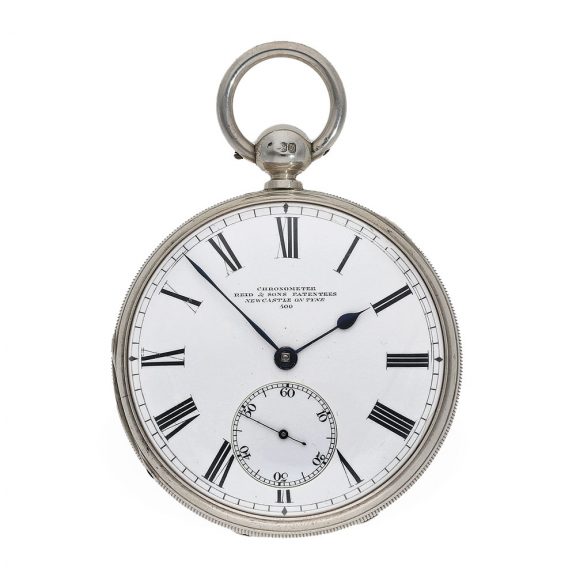
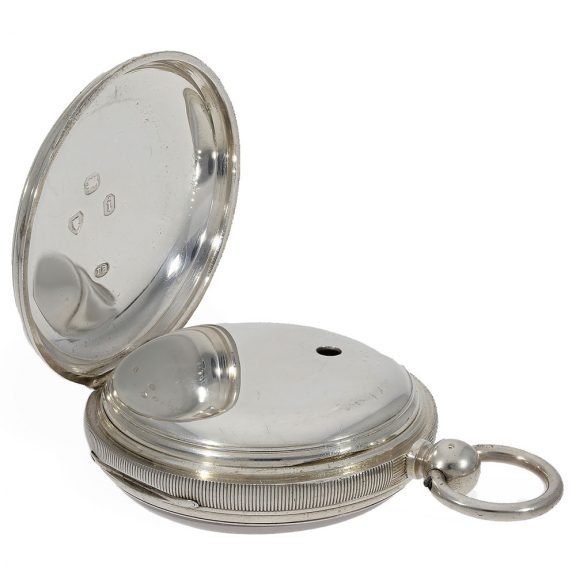
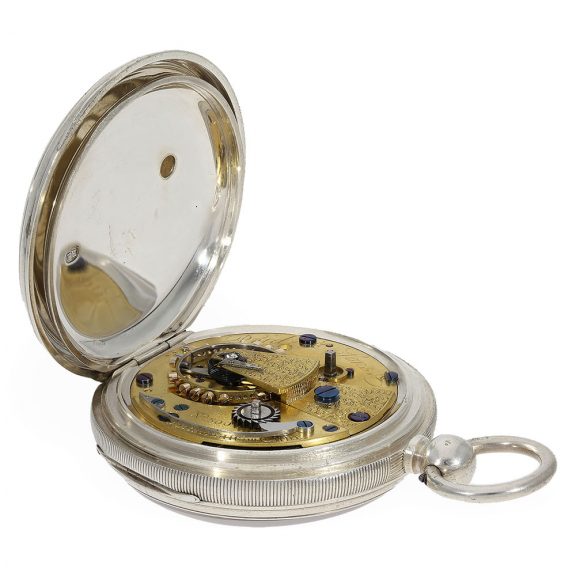
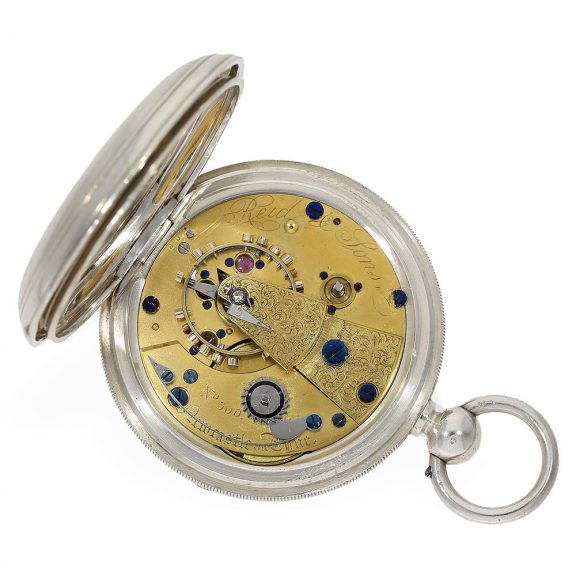
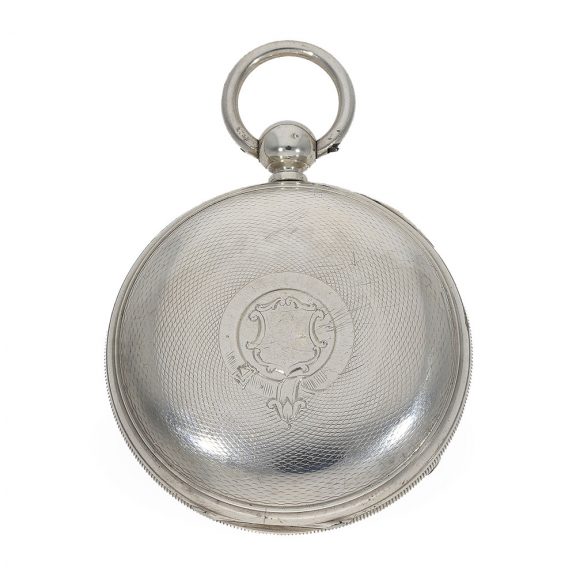
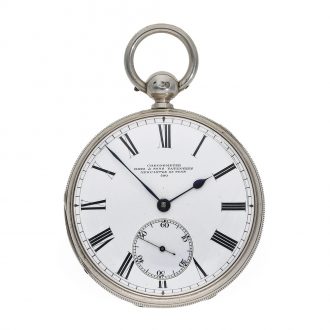
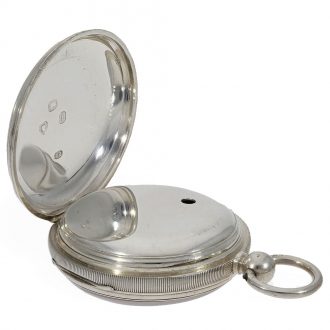
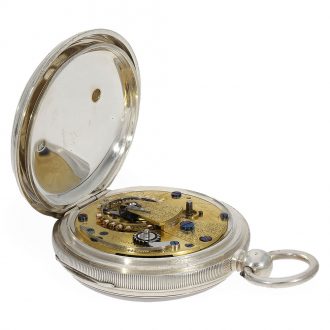
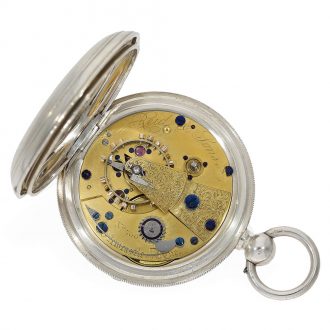
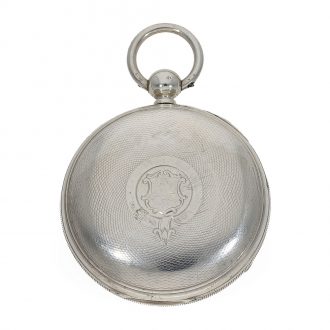
A technically highly interesting sidereal time chronometer made by Reid & Sons in Newcastle, England, circa 1864. The open faced solid case of this watch is crafted from silver, carries London Hallmarks 1864 and has an engine turned back. The numbered white enamel dial has Roman hour numerals, a subsidiary seconds dial at six o’clock with Arabic numerals and blued steel hands. The numbered extremely rare chronometer movement “sidereal time chronometer” has a detent chronometer escapement, a chronometer balance with gold screws, a helical hairspring, a diamond end stone and key winding.
Dial and movement with matching numbers and signed.
–
Diameter: 52 mm
–
Weight: 138 g
–
Signed: Reid & Sons Patentees, Newcastle on Tyne
–
Sidereal time chronometers
Only very few pocket chronometers were so called “sidereal time chronometers”. Sidereal time is also a true time, but in contrast to solar time, it depends only on the rotation of the Earth. In every astronomical observatory there is a pendulum clock or sidereal time chronometer regulated to sidereal time, so that sidereal time can always be read there. Regulating pendulum clocks or chronometers in sidereal time is the responsibility of chronometer makers or specialists, as electronic measuring instruments cannot be used for this purpose. A sidereal day is the length of one rotation of the Earth, measured from one culmination of a star to the next. It is essentially the same length on all days of the year; there are only minor influences of nutation and precession, but these are only significant for astronomers. A sidereal day is 23 h 56 min 3.44 s long, so it is 3 min 56.56 s shorter than a mean solar day. The sidereal year has 366.2422 sidereal days, one day more than a solar year. A sidereal day is also divided into 24 h of 60 min of 60 s each, which are all correspondingly shorter than solar hours, minutes and seconds.
Signed: Reid & Sons Patentees, Newcastle on Tyne
Share this page: