Swiss charming gold and enamel verge pocket watch Circa 1630
- Kenmerk
- AD2361
- Diameter
- 32 mm
- Estimate
- € 15.000 - 30.000
- Price sold
- -
Gold and enamel verge watch attributed to Les Frères Huaut
–
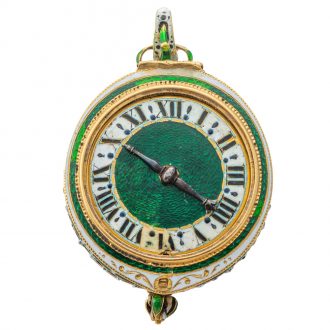
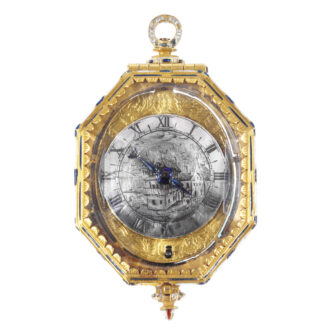
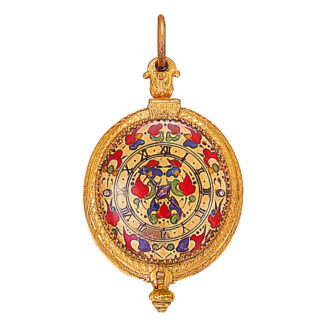
A small Swiss charming gold and enamel open faced verge pocket watch, circa 1630
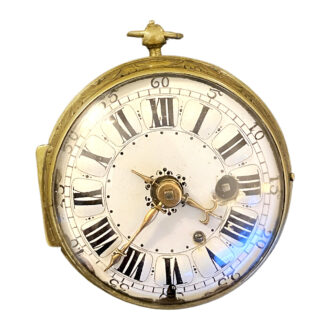
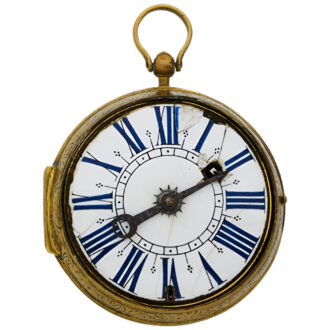
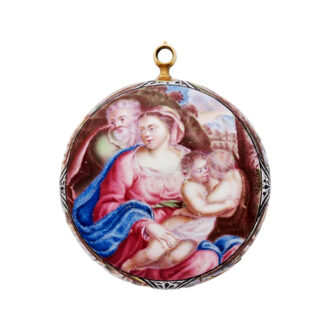
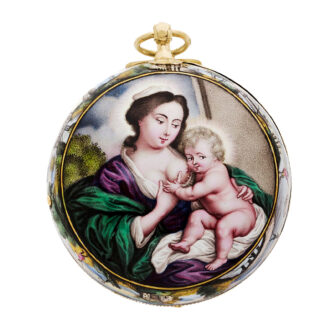
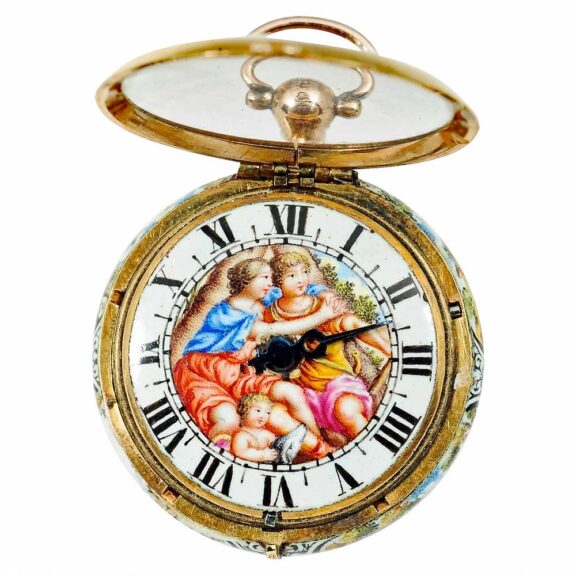
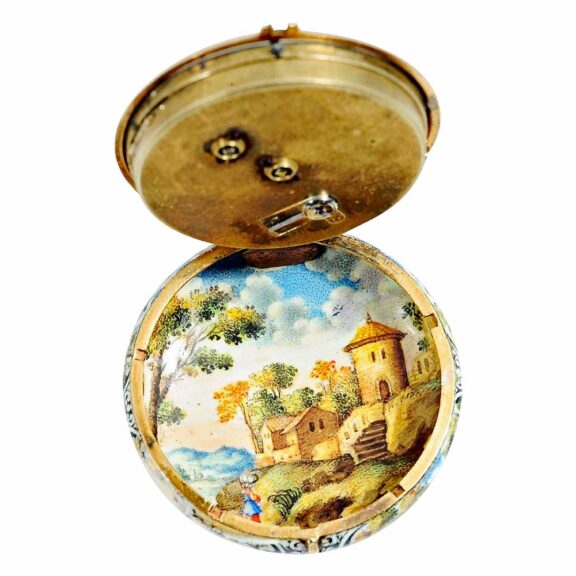
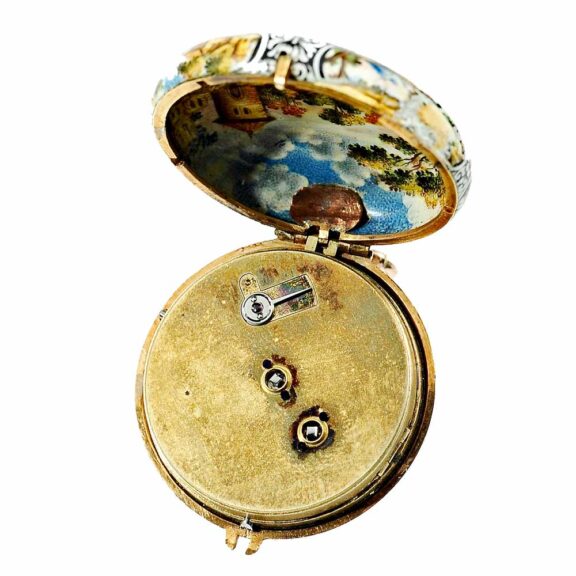
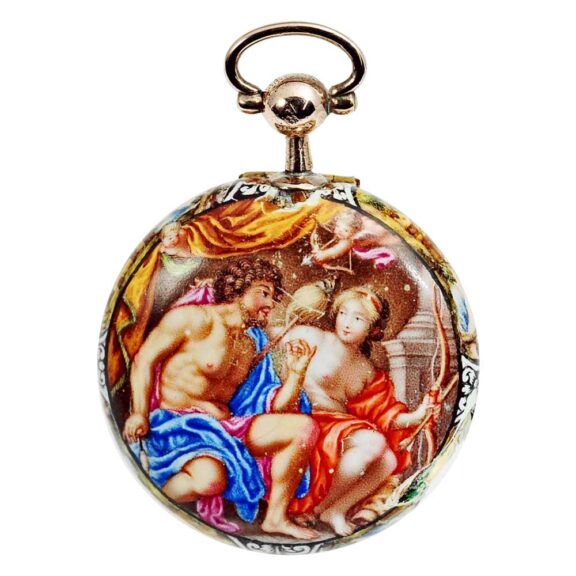
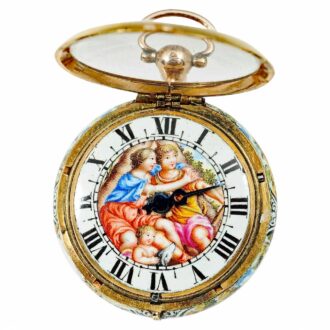
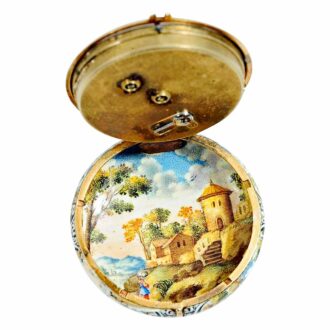
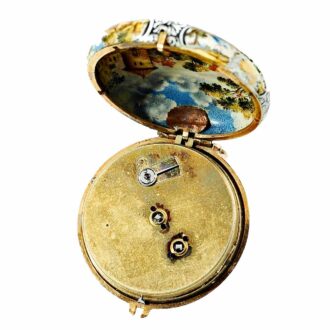
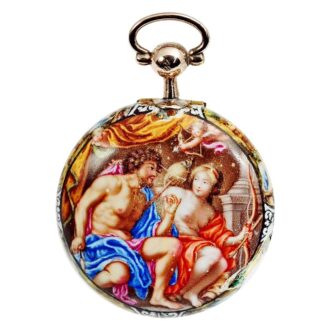
The case back is decorated with a polychrome enamel scene showing Heracles and Omphale, the band has four vignettes with castles and farmsteads in mountain landscapes separated by ornamental flower bands, on the inside another enamel scene depicting a maiden walking along the bank of a river towards a hamlet. White enamel dial with Roman hours, a polychrome enamel cartouche in the centre with a painting of Cupid and a pair of lovers. A later bridge movement of approximately 1840, three-arm brass balance, keywind.
–
Diameter: 32 mm
–
Weight: 26 g
–
Signed: No name
–
The painted on enamel cases by ‘Les deux Frères Huaut’ were among the finest examples of their kind from the Geneva School and were not only highly valued when originally made, but remained as art treasures in the centuries that followed. A perfect example is this watch case, which was deemed of such excellent quality that it merited a custom-made movement, at the beginning of the 19th century. Apparently, several examples of cases enamelled by members of the Huaud family were still available at the period, for many watches with a later movement by other makers are known to have been specially made to be housed in these cases. Pierre Huaud I was the founder of the Huaud dynasty.
–
Pierre Huaud I (Le Pere), Geneva, 1612-1680. Born in Chatellerault, France, son of French goldsmith Jean Huaud, a refugee in Geneva in 1630 at the age of 18, indicating that he may well have begun his training under his father or another French goldsmith. Some sources suggest that this may have been in Blois and that his subsequent full apprenticeship under Legère was required in order to be received as Master in Geneva. Apprenticed to Laurent Legère in the same year, a companion in 1634 and Master in 1636. Married in 1643 to Françoise Mussard and amongst their children, three sons who became enamellers – Pierre II (1647-1698), Jean-Pierre (1655-1725) and Ami (1657-1724). In 1671, Pierre I and his three sons were made ‘bourgeois’ of the city of Geneva.
Share this page: