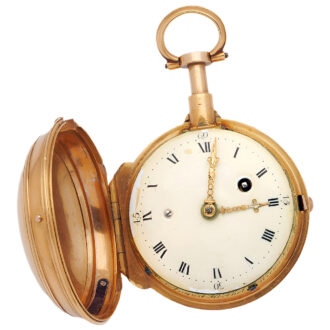
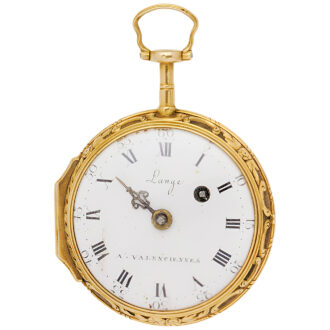
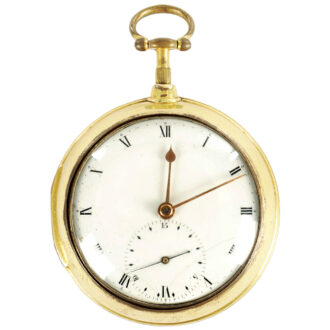
Swiss verge watch with later Dutch movement Circa 1680/1720
- Kenmerk
- AS1625
- Diameter
- 42 mm
- Estimate
- € 17.500 - 32.500
- Price sold
- € 21.950
Gold, enamel verge watch by Brothers Huaut
–
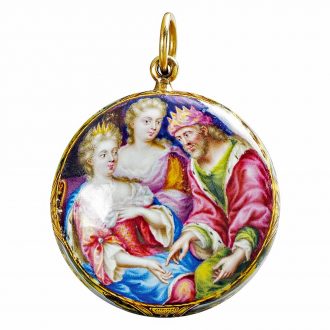
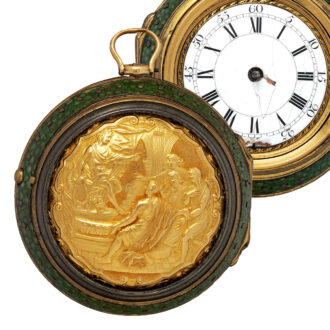
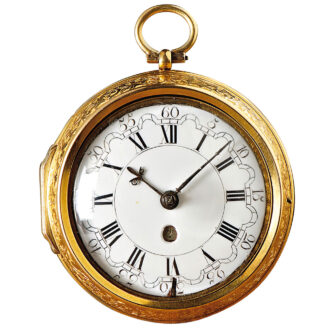
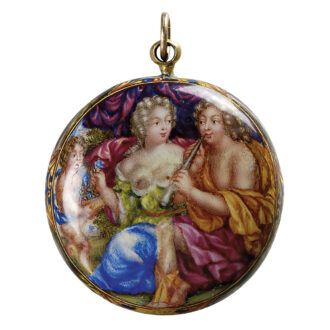
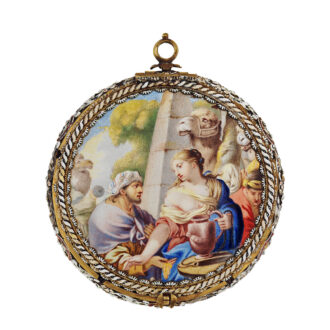
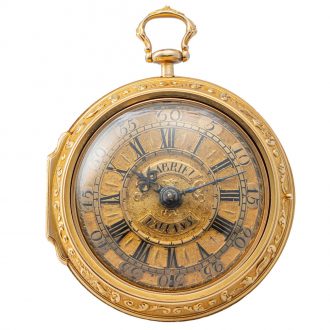
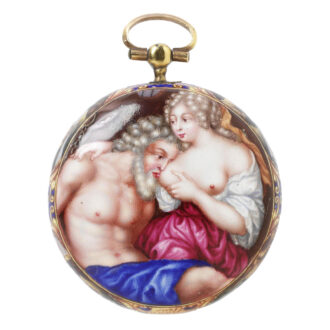
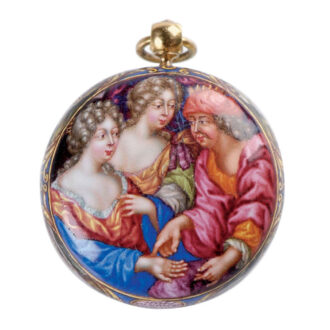
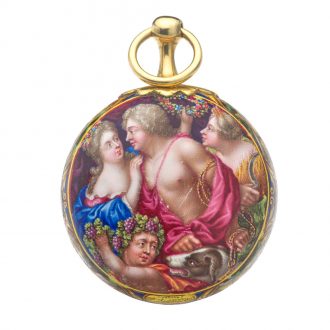
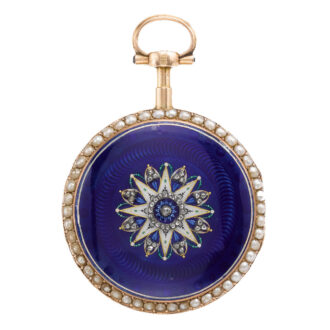
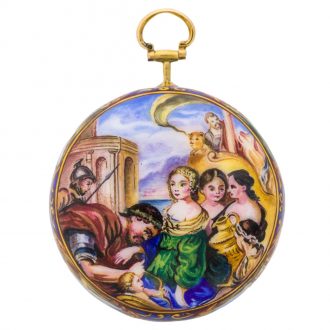
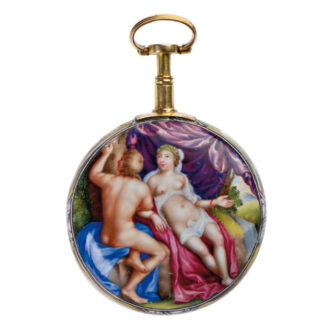
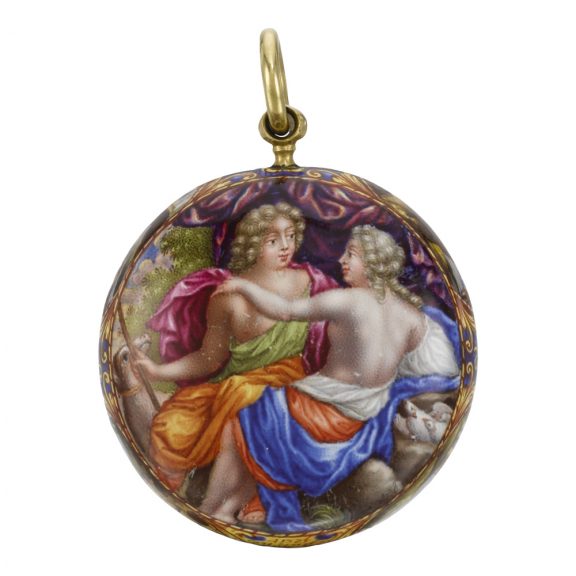
A Swiss gold and polychrome enamel painted pair-cased watch with a later movement signed by Jeremias Kraemer. The reveal case dates back to circa 1680, while the movement dates back to circa 1720. The rare watch features a later Dutch gilded full plate movement with verge escapement, silver decoratively pierced and engraved winged masked balance cock, plain flat three-arm brass balance with short spring, silver regulation disc, fusee and chain, square baluster pillars, signed by Jeremias Kraemer of Reval and numbered 10. The dial is a later white enamel with Roman numerals, an outer Arabic minute ring, blued steel beetle and poker hands, and an aperture for winding. The polychrome enamel painted gold case showcases a scene depicting Venus and Adonis on the back, and a pastoral scene showing a fisherman by a lake in the foreground with a village behind on the inside back. The rounded case sides feature four pastoral scenes interspersed with yellow leaf-form scrolls and bows and is signed by Huaud Le Puisné. The leather-covered outer protective case is decorated with gold piqué work in the form of stylized flower heads, and the bezel is decorated with further gold pinwork.
–
Diameter: 42 mm
–
Signed: Jeremias Kraemer, Huaud Le Puisné
–
The enamel dial has a winding square to the backplate and through the aperture. There are a couple of very small scratches towards the top of the scene on the inside case back. The case has some small abrasions to the pastoral scenes on the sides, and the scene on the case back has some small scratches. The later dial has enamel repair around the winding aperture and chips around the dial catch. The leather on the outer case has some areas of loss, especially on the bezel, with some gold pins also missing.
–
The enamel work of Huaud Frères is highly admired by collectors, as they are considered the most well-known and prolific family of enamellers of their time. Pierre Huaud I (1612-1680), a French Protestant, moved to Geneva in 1630 and completed his apprenticeship as a goldsmith with Laurent Légaré in 1634. He soon became a Master Goldsmith. His three sons, Pierre II (1647-c.1698), Jean-Pierre (1655-1723), and the younger brother Ami (1657-1729), also became enamel painters and were appointed as such by the Brandenburg Elector Frederick III.
Signed: Jeremias Kraemer, Huaud Le Puisné
Share this page: