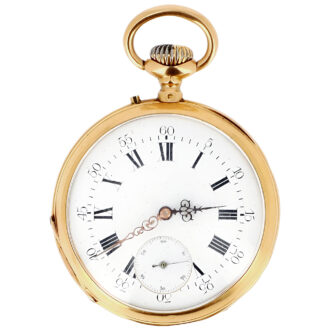
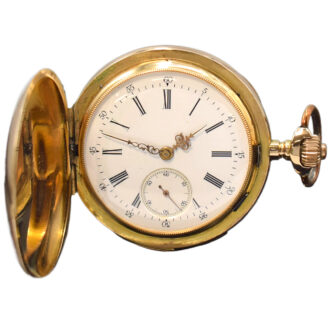
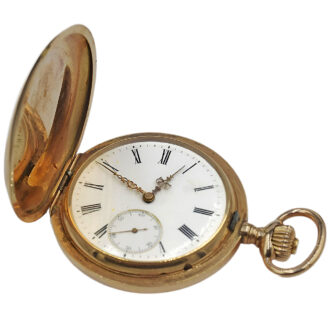
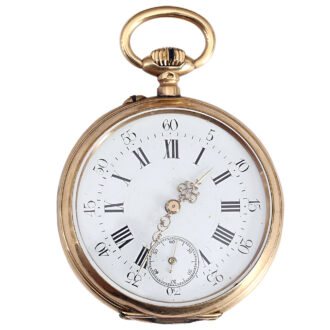
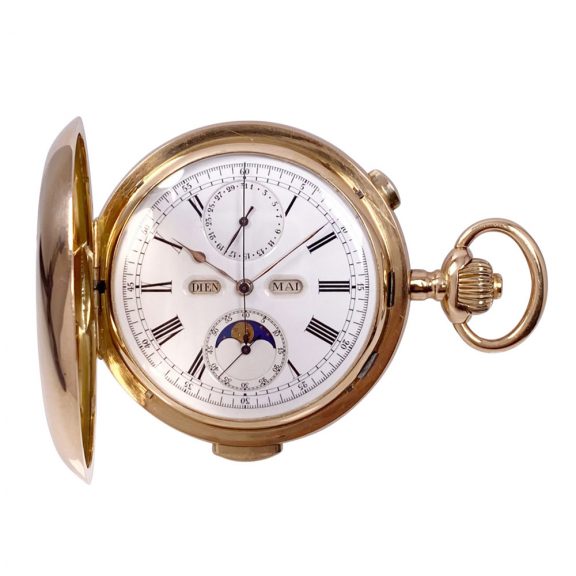
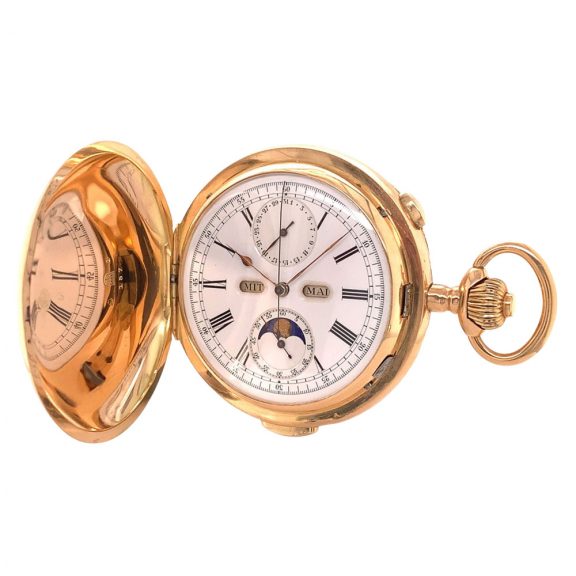
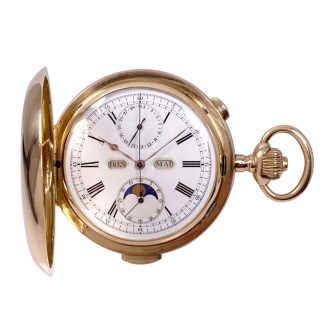
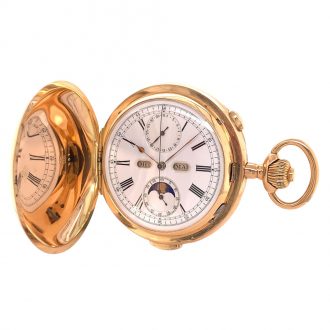
Swiss gold complicated watch for the German market Circa 1900
- Kenmerk
- DB0589
- Diameter
- 58 mm
- Estimate
- € 3.500 - 6.500
- Price sold
- € 6.900
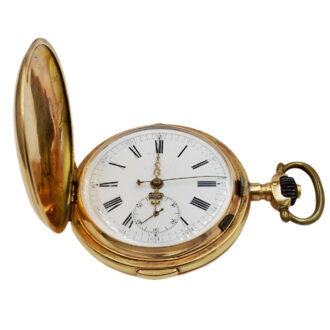
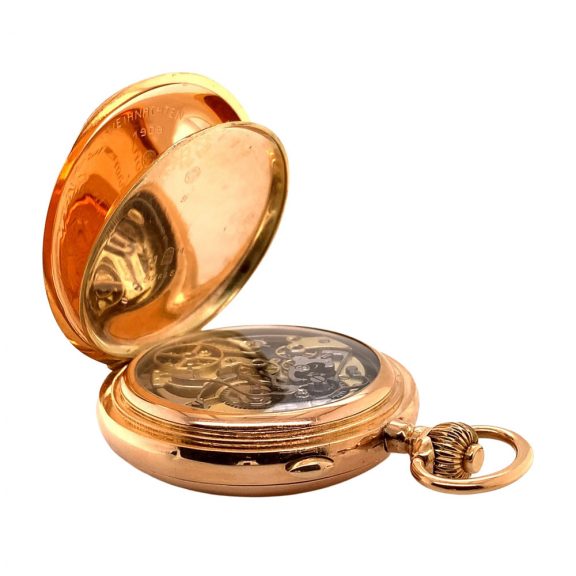
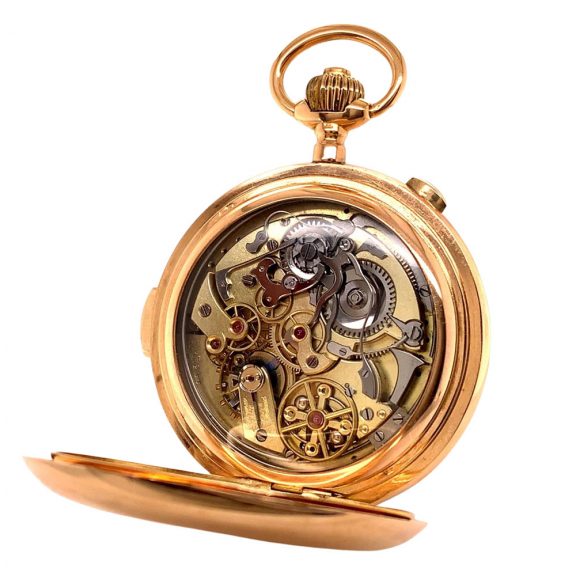
Gold complicated lever watch by Charles Barbezat-Baillot
–
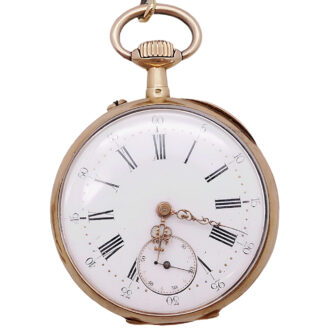
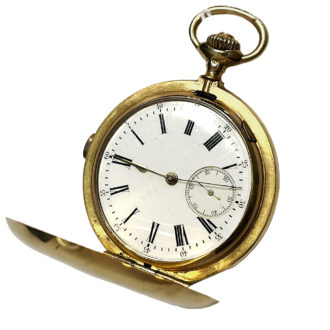
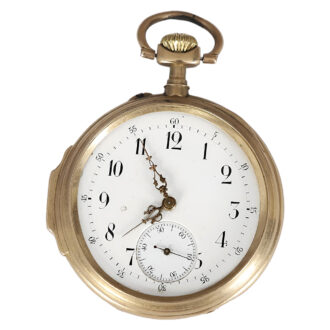
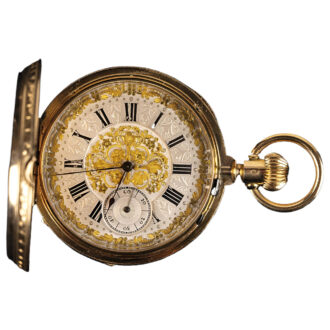
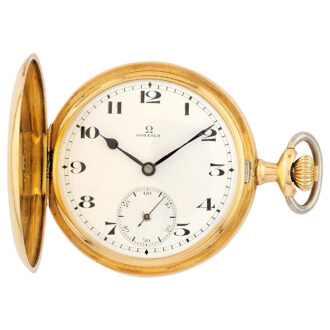
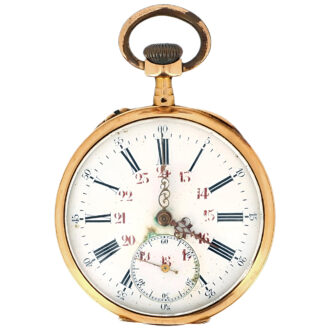
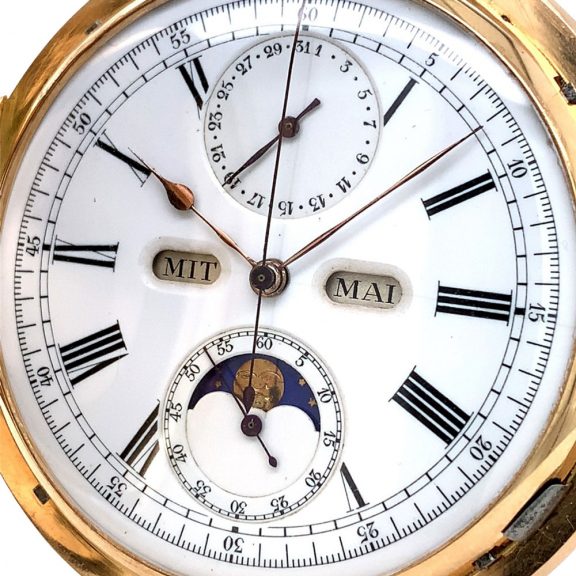
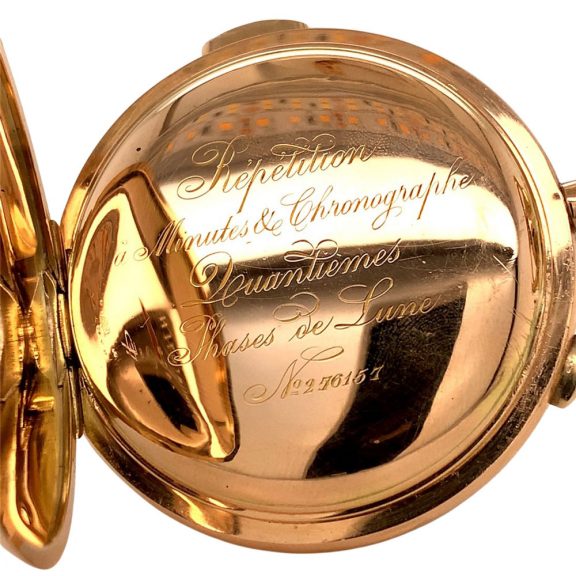
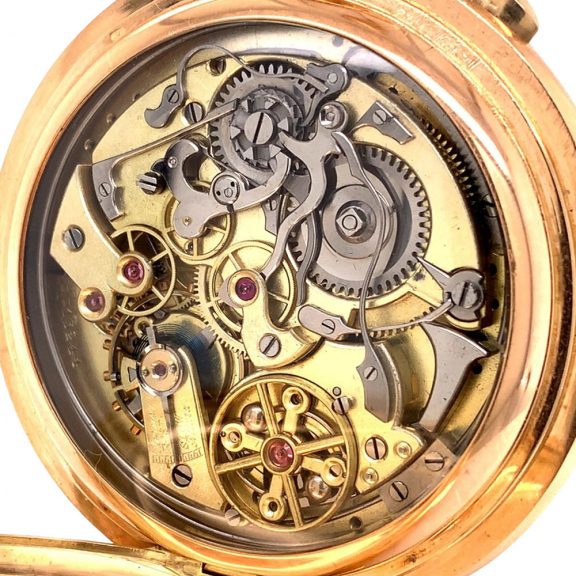
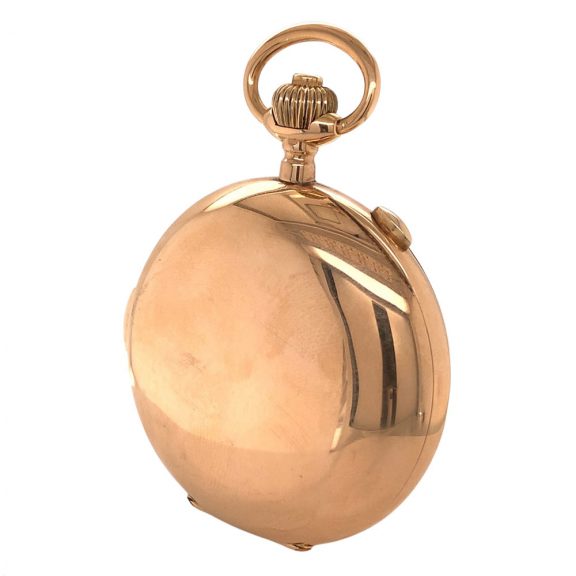
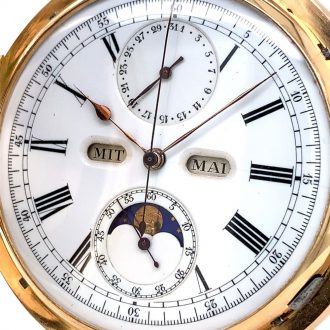
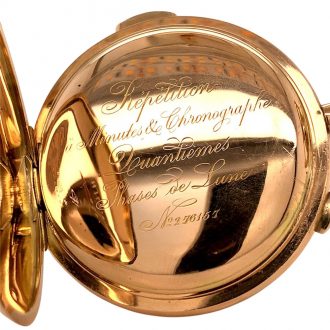
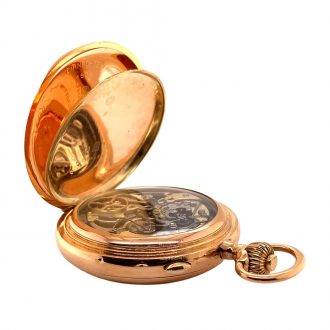
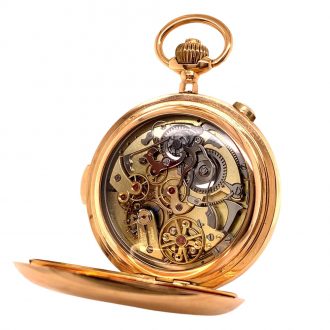
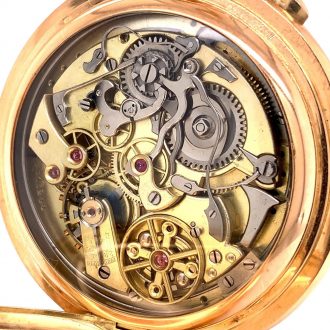
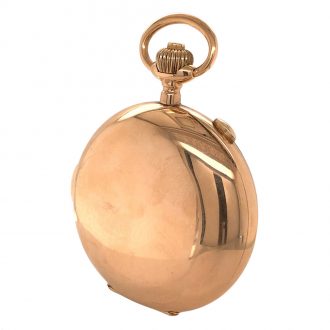
A rare Swiss 14 carat gold hunting cased minute repeating chronograph lever pocket watch with full calendar and moon phases made for the German market, circa 1900. Glazed ½ plate movement, two hammers, two gongs, Swiss Patent 13244 (Barbezat Baillot’s Poussette pour montres), Swiss Patent 334 (Barbezat Baillot’s Perfectionnements apportés à la construction des mécanismes de répétition pour montres de poche de toutes dimensions), a club-tooth lever escapement and screw compensation balance. White enamel dial with Roman hours, outer minute divisions and Arabic five minute numerals, an outermost fifth of a seconds track, sunk subsidiary seconds with concentric phases of the moon, indication of the date at 12, central apertures for the days of the week and the months in German, gold spade & whip hands. A polished case, the inner lid with the presentation engraving Weihnachten 1909, maker’s mark B. The cuvette is numbered and engraved with technical details, the case and movement are also numbered.
–
Diameter: 58 mm
–
Weight: 145 g
–
Signed: Le Phare
–
This timepiece is remarkable in size and weight. It also features the main complications and a very fine dial.
–
Charles Barbezat-Baillot was an extremely gifted watchmaker and inventor who registered a large number of patents. Swiss patent No. 334 was one of his most important inventions and included the use of centrifugal force for the repeater mechanism.
–
Le Phare. The company was originally founded by Charles Barbezat-Baillot (1847-1938) and Henry Guye (1838-1877) under the name Guye & Barbezat in Le Locle, Switzerland, high in the Neuchâtel mountains. In 1888, the firm’s name was changed to Le Phare, being the registered name of their complicated watches. The company, which later launched the Jean d’Eve watch range, has left its mark on the story of Swiss watchmaking. Indeed, from 1889, its watches were rewarded by the most eminent prizes, a gold medal at the National Exhibition of 1896 in Geneva followed that of 1889 at the Great Universal Exhibition in Paris. In 1897 the silent regulator was invented. A veritable technological marvel that overcame the humming problems beset the repeater watches of the day. This brought another gold medal for Le Phare at the Paris Great Exhibition of 1900. In 1900, the company advertised their brands that year as La Locloise, l’Esperanto, Le Phare, Tempora and La Volapuk. The company continued to develop and in 1970 was the second-largest producer of chronograph watches in Switzerland. The management’s strategy is to take maximum advantage of its remarkable know-how to develop new ways of measuring time.
Signed: Le Phare
Share this page: