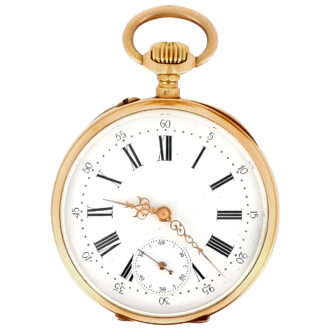
Swiss gold pocket watch with one-minute tourbillon Circa 1862


- Kenmerk
- AD9303
- Diameter
- 55 mm
- Estimate
- € 30.000 - 60.000
- Price sold
- -
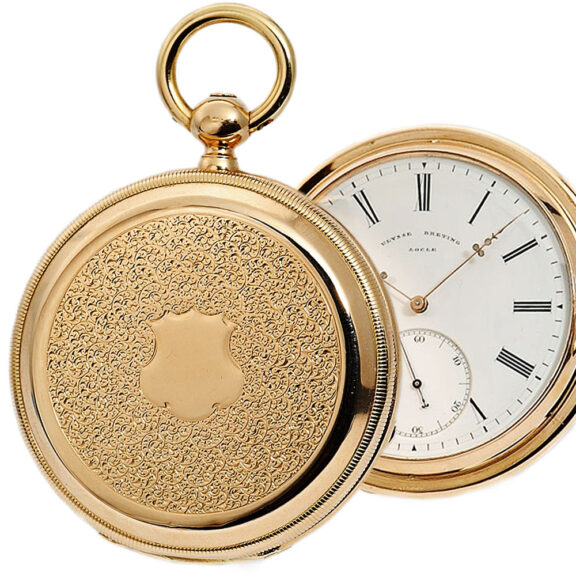
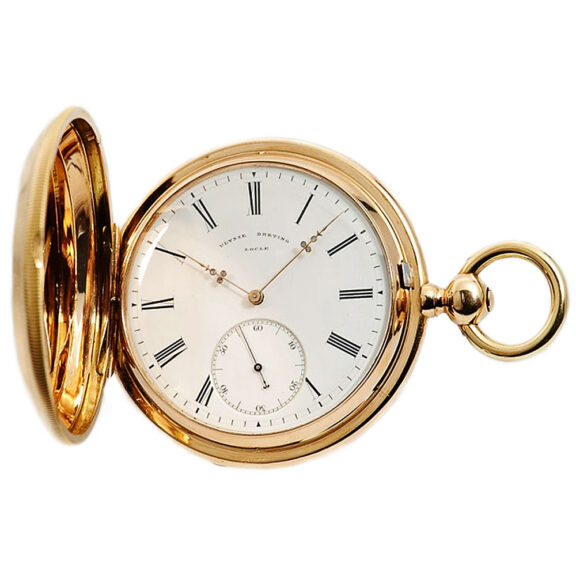
Fine gold hunting cased pocket watch by Ulysse Breting
–
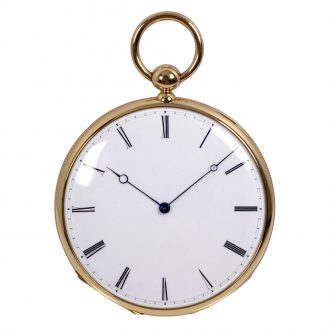
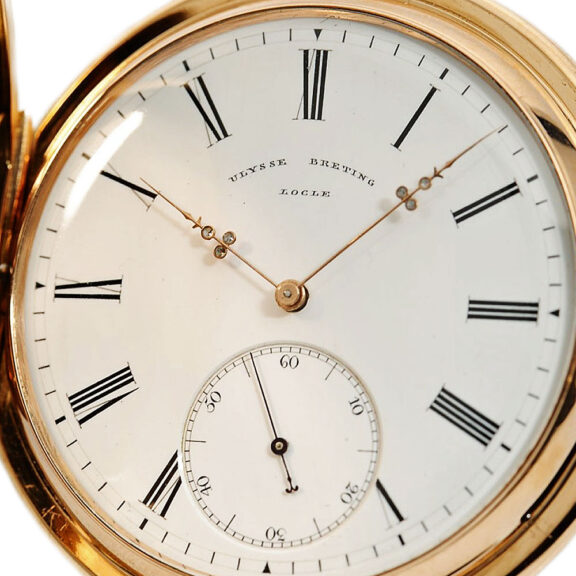
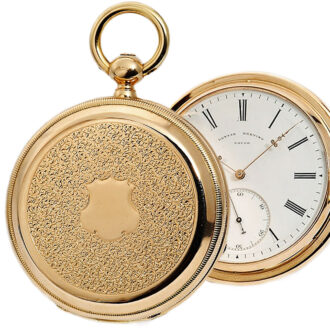
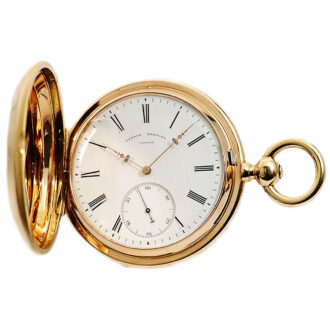
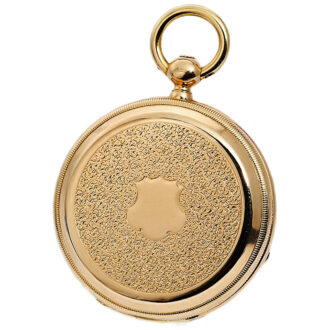
A fine, Swiss hunting cased gold pocket watch with a one-minute tourbillon, circa 1862.
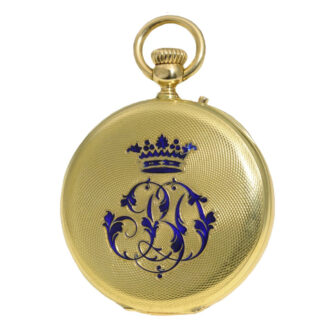
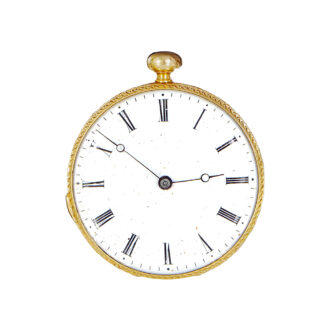
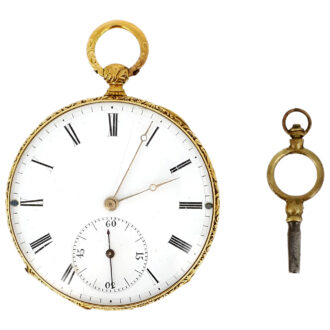
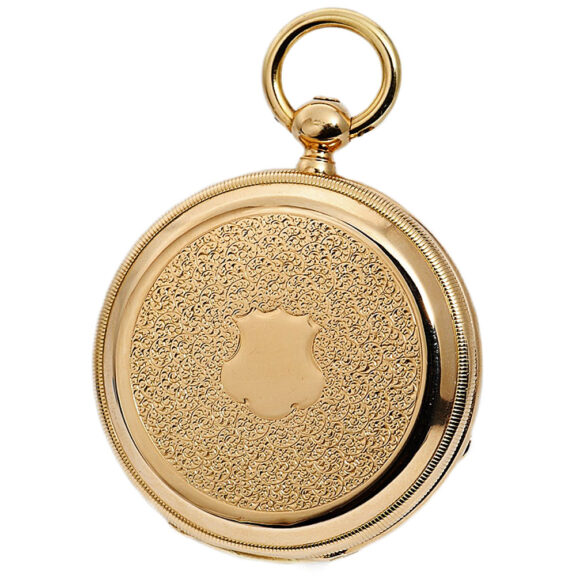
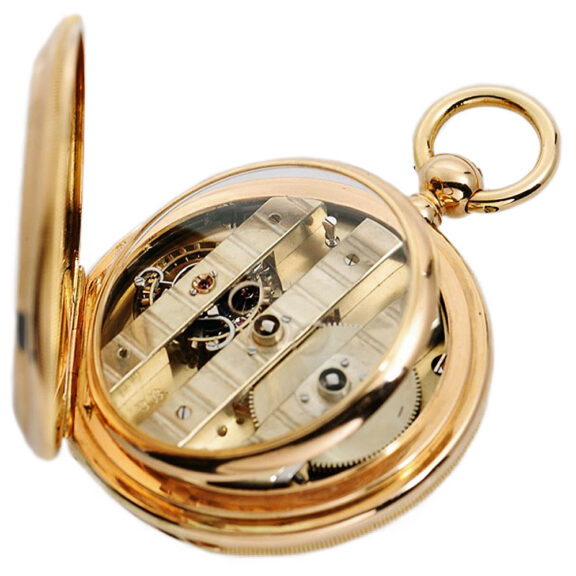
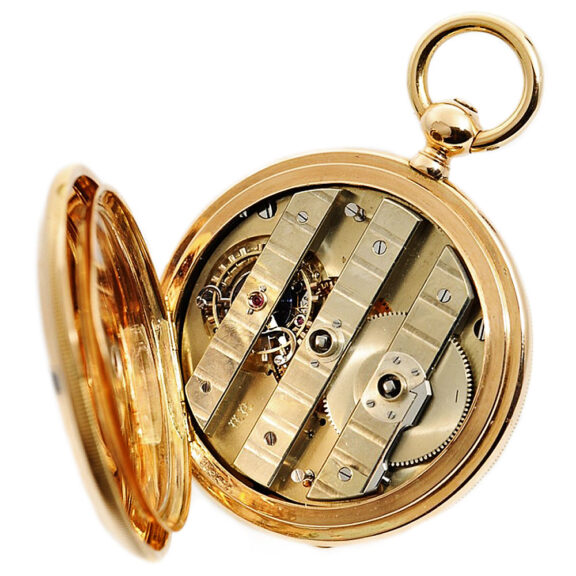
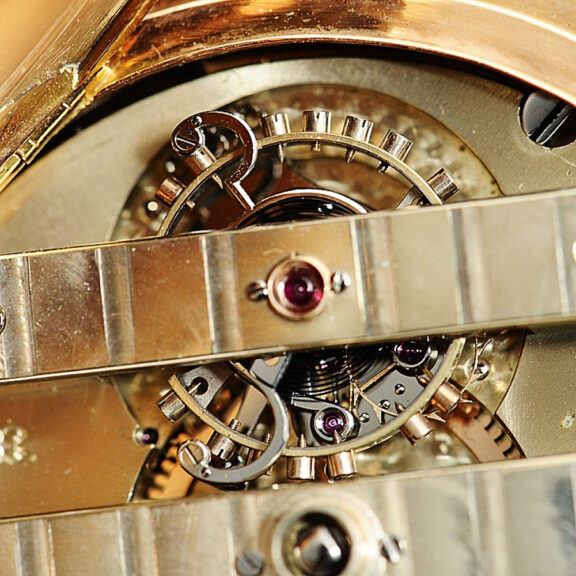
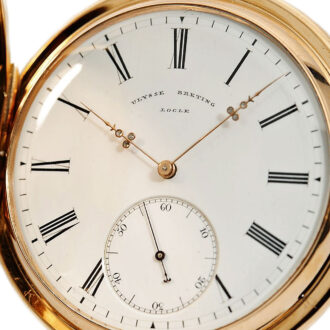
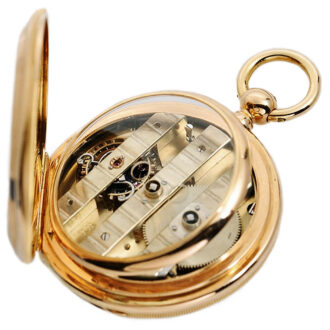
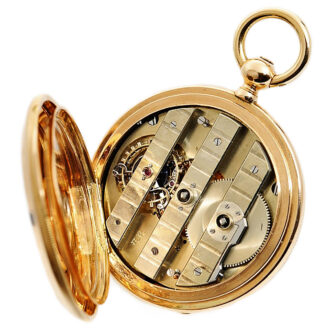
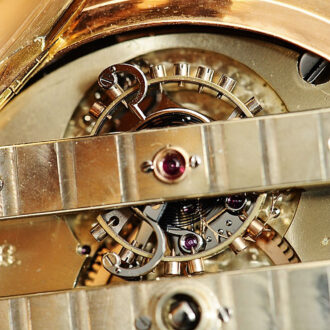
18 Carat rose gold case, circular reeded bands, both covers profusely engraved in a foliate pattern, case maker’s punch mark AF&Cie. Signed enamel dial with radial Roman hours, auxiliary seconds, and filigree gold flower hands with set diamonds. German silver, stripe-decorated, signed, three-bridge movement, keywind, barrel, finely executed mirror-polished steel tourbillon cage, pivoted detent escapement, gold screw compensation balance, blued balance spring with a terminal curve, gold escape wheel.
–
Diameter: 55 mm
–
Weight: 129 g
–
Signed: Ulysse Breting, Le Locle
–
The cage of this tourbillon was without a doubt created by Girard Perregaux; it matches the one described and attributed to Girard Perregaux by Reinhard Meis on page 48 of “Das Tourbillon” (1986). According to Meis, five Swiss companies with a total number of sixtourbillons took part in the 1862 test at Neuchâtel: Ulysse Breting, Le Locle; Robert Brandt, La Chaux de Fonds; Felicien Du Bois, Le Locle; Favre-Leuba & Co. LeLocle and Emile Guinand, Le Locle. The author writes that “none of these watches has come onto the market in recent years” and that “it is not even certain that they still exist”. We presume that this is the tourbillon (or one of the tourbillons) Breting submitted for testing at the time. It is assumed that Ulysse Breting (1812-1891), Le Locle, worked together with his brother Jules. In 1860 the company was awarded a gold medal at the World Exhibition in Besancon and in 1875 it won fourth place in an observatory test at Neuchâtel for a detent pocket chronometer. Sometime between 1875 and 1883 the company Ulysse Breting changed its name to Ginnel & Ottone Freres; however, in 1882 Ulysse Breting still submitted detent pocket chronometers under his own name. His son was born in 1835 and is also called Ulysse.
–
Tourbillon
A system devised and patented by Abraham-Louis Breguet in 1801 to compensate for errors of rate caused by the Earth’s gravitational force in upright positions. The escapement is mounted in a revolving cage with the regulating organ (balance) at the centre.
The escape-wheel pinion turns about the fixed fourth wheel. The cage generally revolves once a minute and, in doing so, compensates for errors of rate caused by the vertical position in which pocket watches spend most of their time.
This delicate and complex structure is one of watchmaking’s most ingenious mechanisms. A simplified and more robust alternative is the carousel where the cage is driven not by the fourth wheel but by the third wheel. A Tourbillon can contain a lever or a detent escapement.
Signed: Ulysse Breting, Le Locle
Share this page: