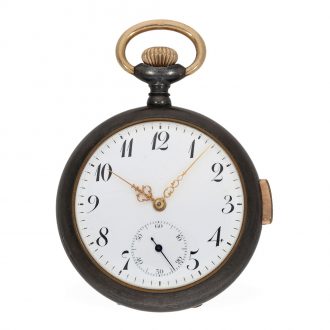
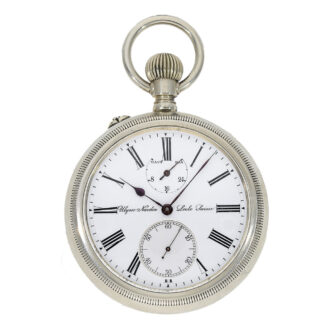
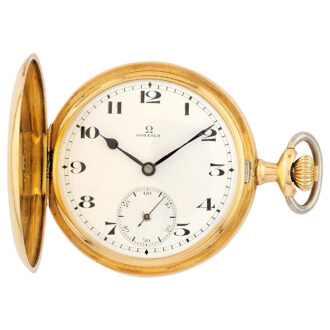
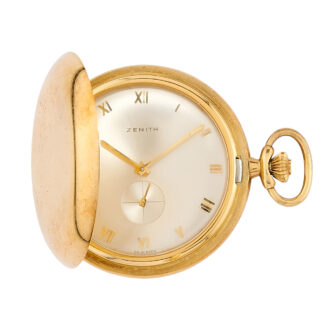
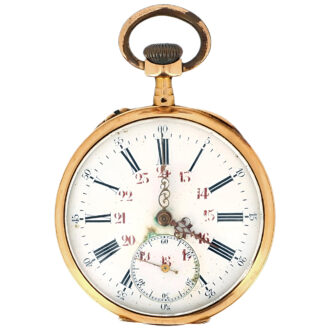
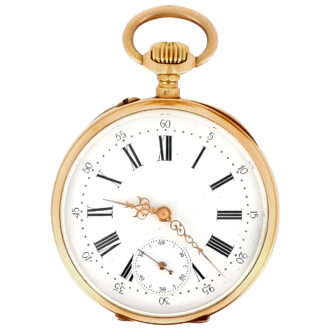
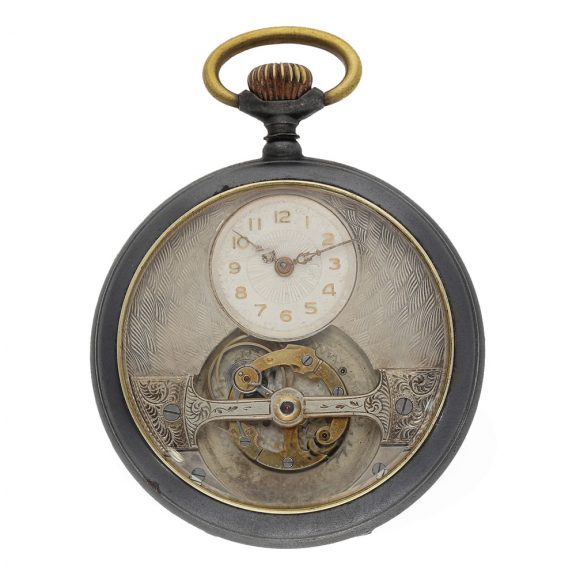
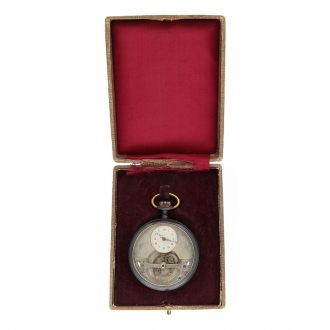
Swiss iron cased tourbillon watch with decentral dial Circa 1915
- Kenmerk
- HC1281
- Diameter
- 53 mm
- Estimate
- € 2.500 - 4.500
- Price sold
- € 2.750
Pocket watch “Mobilis” with lever escapement
–
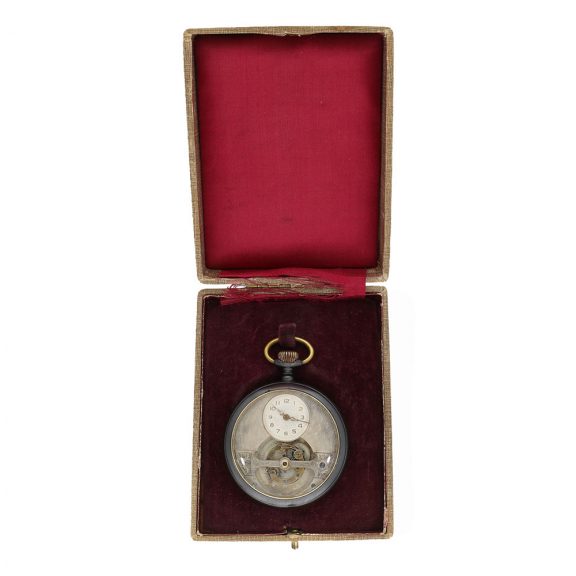
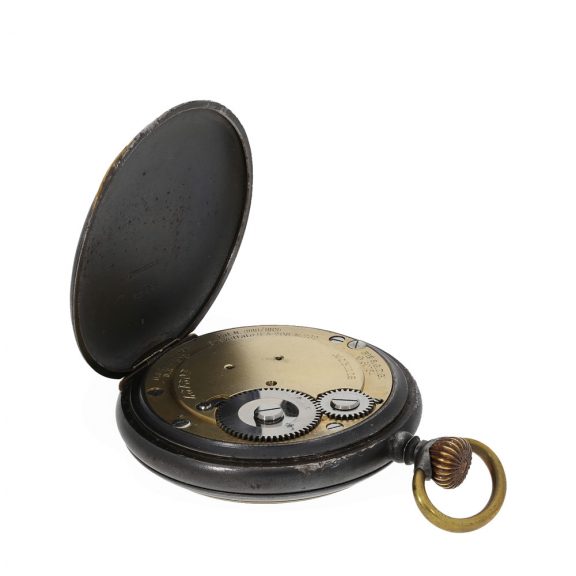
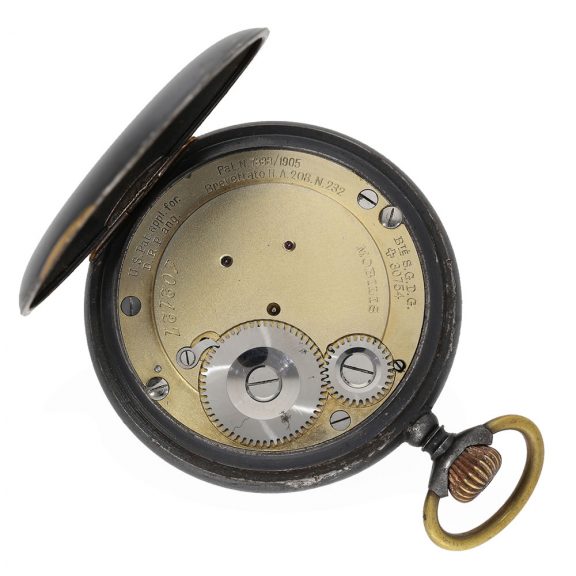
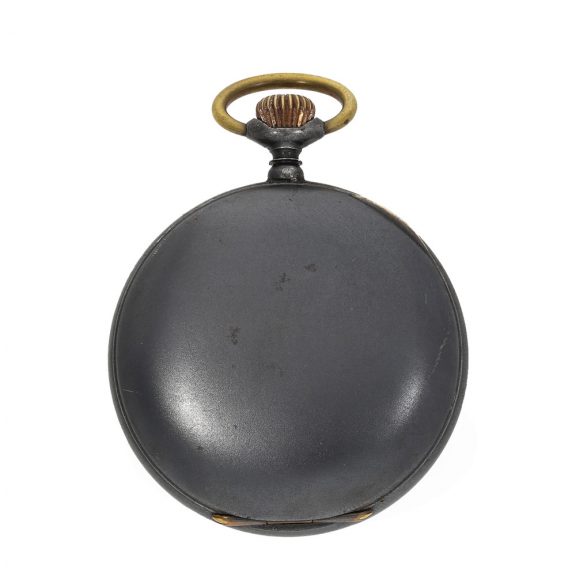
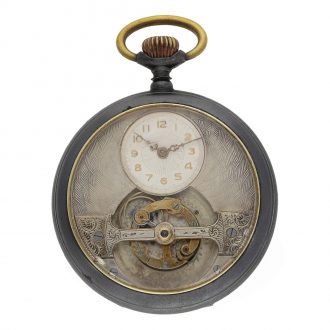
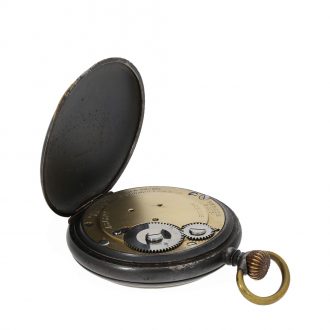
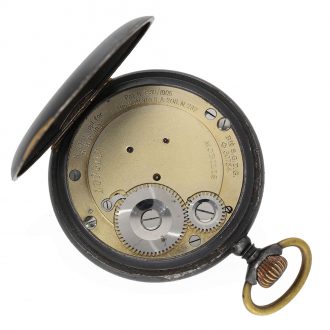
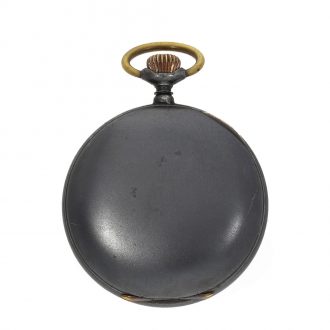
A tourbillon pocket watch with the probably original box, made by Courvoisier Frères in La Chaux-de-Fonds, Switzerland, circa 1915. The case of this watch is crafted from iron and the face with the decentral engine turned dial, with Arabic hour numerals, provides a view to the tourbillon with the lever escapement.
–
Diameter: 53 mm
–
Signed: Mobilis
–
Courvoisier
In 1842, the brothers Henri-Louis and Philippe Auguste established their trading business under the name Courvoisier Frères. In 1882, the name was changed to Courvoisier Fils when additional brothers joined the partnership. They specialized in crafting high quality pocket watches and were commissioned by the city of La Chaux-de-Fonds to create a watch for the Prussian King Frederick William IV. This piece was reputed to be the thinnest watch in the world at that time. The innovative tourbillon movement invented by Swiss watchmaker Paul Loichot was registered by the Courvoisier brothers under the trade name Mobilis on July 4th, 1905, with Patent No. 19062. This movement was turned inside the case to make it visible on the dial side and it was a significant achievement in the watchmaking industry.
–
Tourbillon
It was 1795 when Abraham-Louis Breguet developed the mechanical mechanism (AKA complication) that we call the tourbillon. It’s no surprise that many Breguet watches often have tourbillons. The word “tourbillon” is a French term that means “whirlwind”. If you take one close look at a tourbillon watch in action, then the name makes perfect sense. It has a mesmerizing spiral motion that can be quite hypnotic.
One of the most challenging things watchmakers faced when regulating a pocket watch is the effects that gravity plays on the caliber or movement. A tourbillon acts as a way to counter the drag effect that gravity plays on some of the smaller components in a timepiece’s escapement when held in certain positions.
A tourbillon places certain parts of the watches internal mechanics (the balance wheel and escapement ) into a rotating cage. The escapement is a component of the movement which is comprised of the hairspring, balance wheel, and pallet fork. The tourbillon watch will then slowly rotate this cage holding the aforementioned components, usually at a rate of one RPM and this counteracts the adverse effects that gravity creates when the watch is in certain positions and helps to iron out positional errors of accuracy.
Tourbillons have evolved quite a bit since they were first invented. In fact, there are quite a few new types of tourbillons. Some examples are double – and triple axis tourbillons, double and quadruple tourbillons, flying tourbillons and gyro tourbillons.
Signed: Mobilis
Share this page: