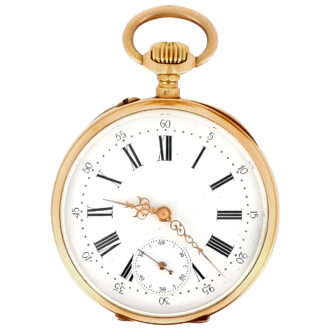
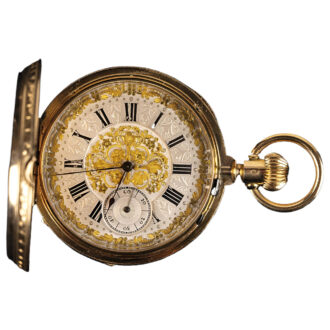
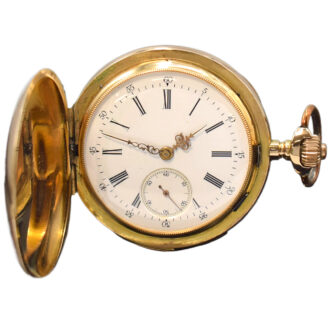
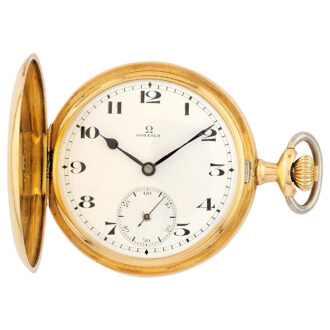
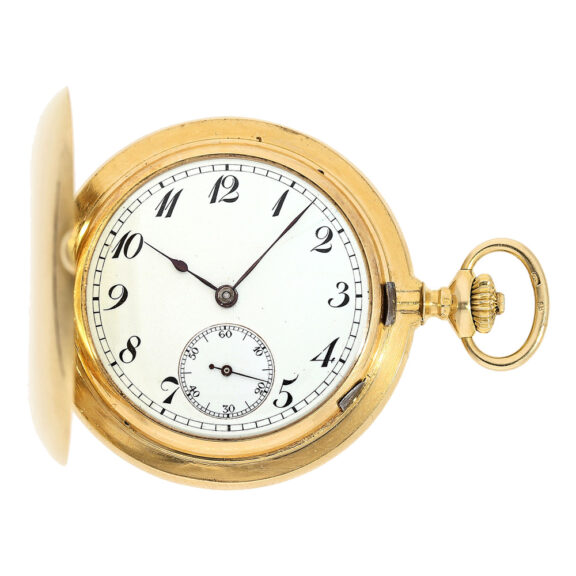
Swiss lady’s pocket hunter watch with detent escapement Circa 1900
- Kenmerk
- AC0063
- Diameter
- 36 mm
- Estimate
- € 2.000 - 8.000
- Price sold
- € 4.550
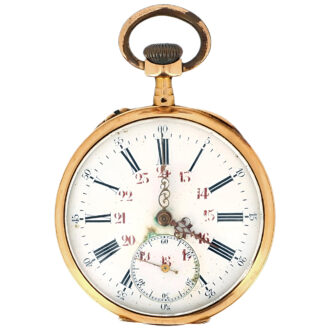
Gold hunting cased pocket watch by Paul Ditisheim
–
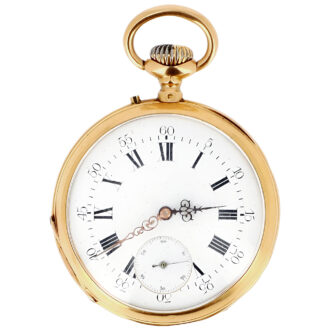
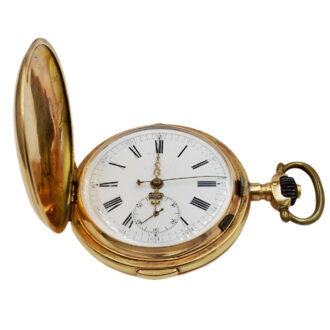
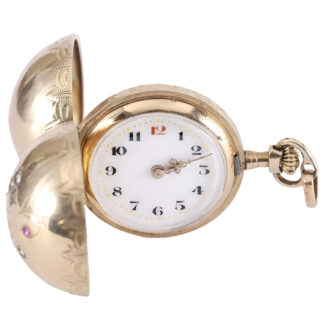
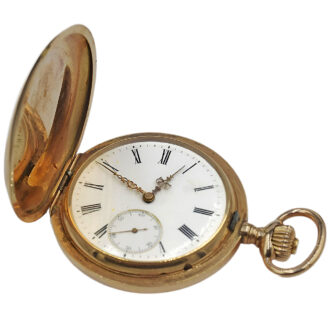
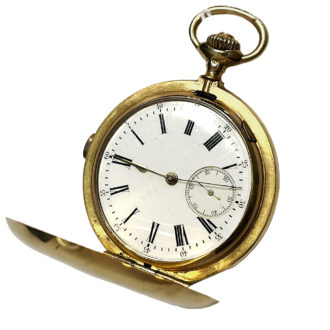
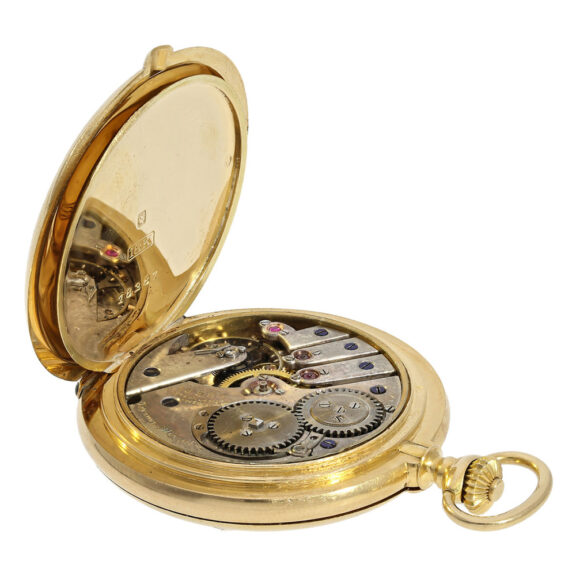
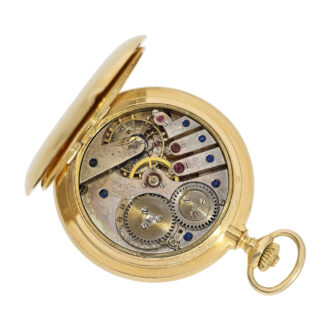
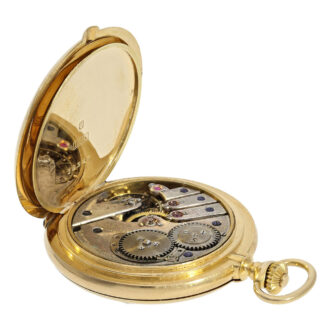
An absolute rare, Swiss ladies hunter watch with chronometer escapement, circa 1900.
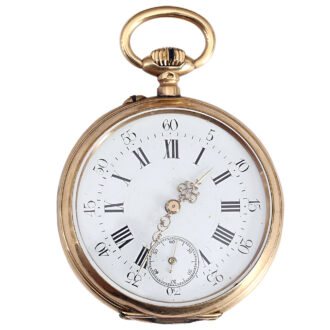
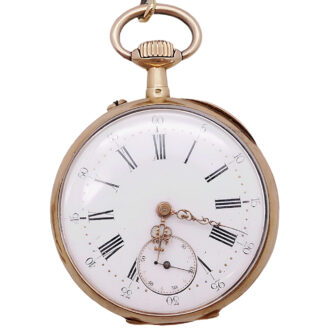
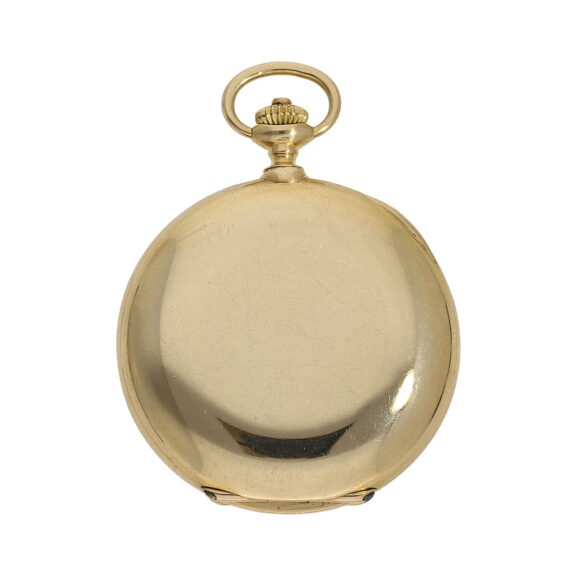
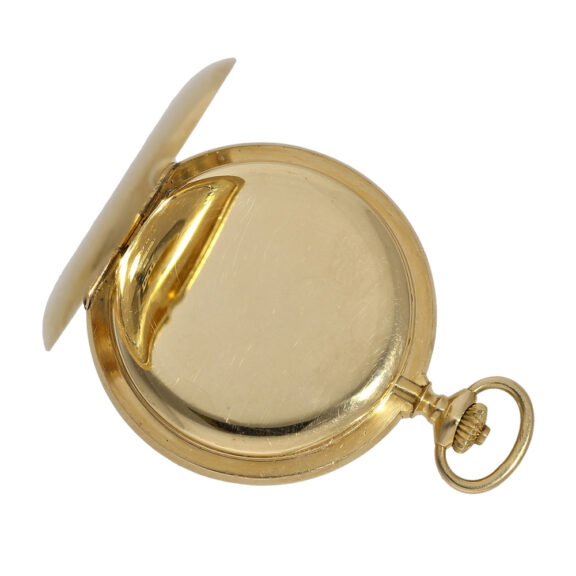
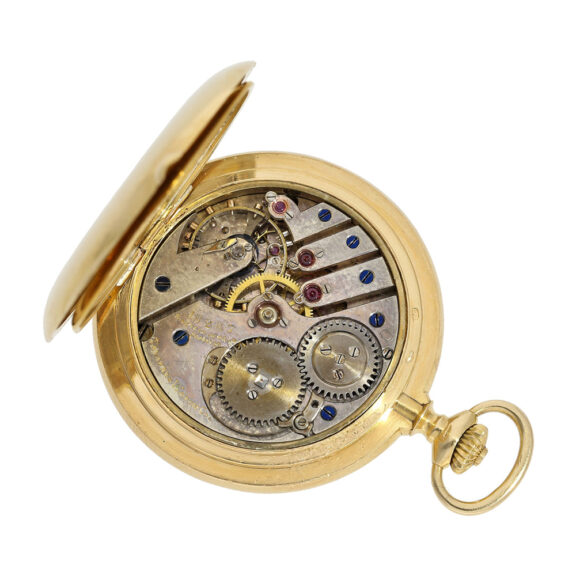
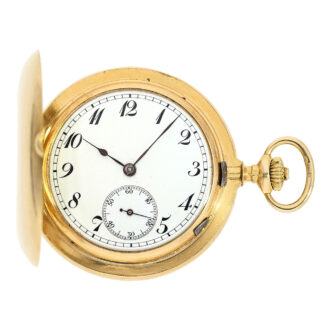
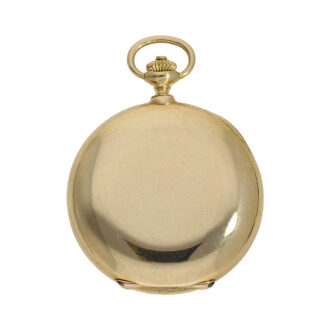
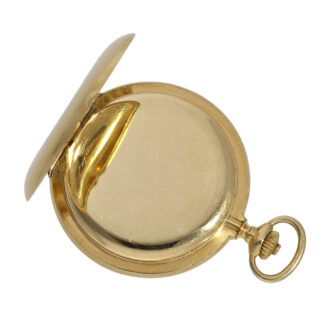
Polished 18K gold à-goutte hunting case, from excellent quality, hallmarked, and matching numbers with the movement. Extremely rare and extremely fine precision movement with chronometer escapement, screwed gold chatons, diamond capstone, and cylindrical spiral. Enamel dial with Breguet-style radial hours, outer minutes track, subsidiary dial for the seconds, and blued steel hands.
–
Diameter: 36 mm
–
Weight: 47 g
–
Signed: Paul Ditisheim / Tavannes
–
The watch is an absolute rarity. We are not aware of any other Ditisheim chronometer in this small size. It is also interesting that the movement is signed with Tavannes Watch Co. The collaboration between Paul Ditisheim and Tavannes is well known, especially regarding marine chronometers.
–
Paul Ditisheim, Swiss watch and chronometer maker.
Paul Bernard Ditisheim was born on October 28, 1868 to Gaspard Ditisheim in La Chaux-de-Fonds . Paul was the brother of Jules Ditisheim , Georges Ditisheim , and Henri Ditisheim . Georges later became Paul’s business partner. Georges Ditisheim’s brother-in-law, Georges Braunschweig , was educated here.
–
Paul Ditisheim was one of the most important Swiss clock and chronometer makers, researching and publishing mainly on precision time measurement topics. He trained at the watchmaking school in La Chaux-de-Fonds before working in Ponts-de-Martel, Berlin, Paris and Rotherham in Coventry. In 1892 he opened a watch factory (Solvil) in La Chaux-de-Fonds. He took part in many exhibitions with his watches and successfully constructed pocket chronometers, mostly with lever escapements. Among other things, he developed a marine chronometer with an exchangeable escapement system. His tested chronometers( marine chronometers, pocket chronometers/deck watches ) won numerous first prizes in competitions at the Neuchatel observatory in England and the US Navy test series. Ditisheim was made a Chevalier of the French Academy and a Fellow of the Royal British Watch Lodge.
–
With Charles Edouard Guillaume, he worked on developing and testing temperature-independent metal alloys. In 1923 he was a member of the Comité neuchâtelois du Centenaire d’ Abraham-Louis Breguet (1823-1923) with, among others, Henri Rosat , Charles Rosat , Paul Berner , Alfred Chapuis and Charles-Albert Vuille .
–
The company went into trouble at the beginning of 1924, and Paul gave up his company; bankruptcy was inevitable. However, the company continued to operate under new management. Since then, he has worked as a partner of Paul Woog in Paris on developing new, improved lubricants for watches. Paul Ditisheim helped the Epilame process achieve a breakthrough in watchmaking. In 1940 he fled from the Nazis to Nice and returned to Switzerland in 1944 .
–
Paul Ditisheim died in Geneva on February 7, 1945 .
Signed: Paul Ditisheim / Tavannes
Share this page: