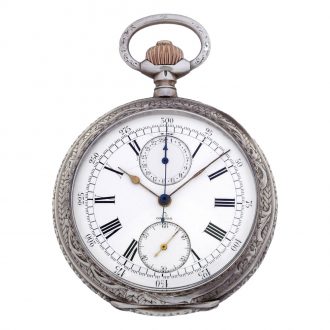
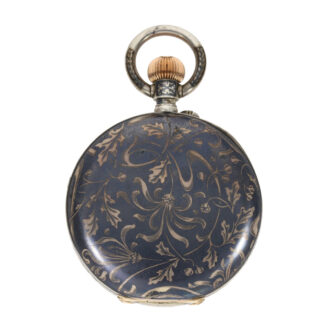
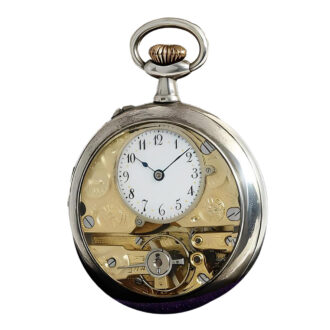
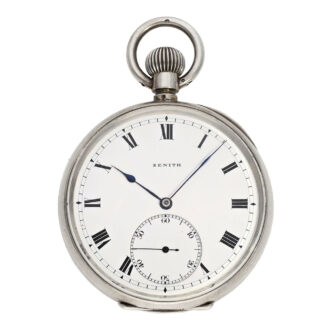
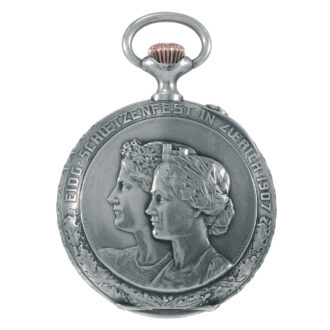
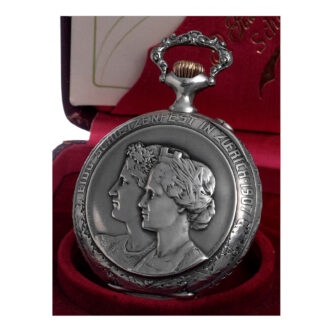
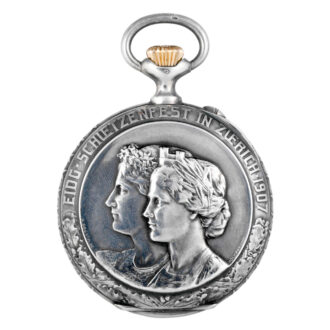
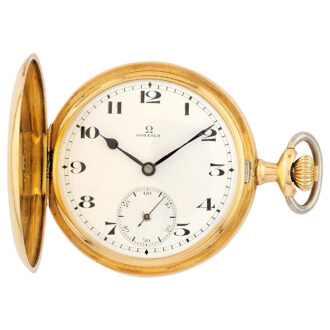
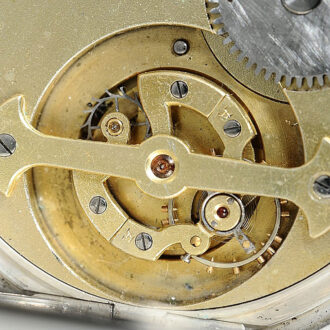
Swiss silver open faced one minute tourbillon watch Circa 1907



- Kenmerk
- AD9942
- Diameter
- 53 mm
- Estimate
- € 2.500 - 4.500
- Price sold
- € 3.600
Silver gentleman’s pocket watch
–
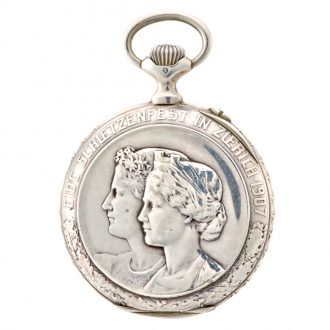
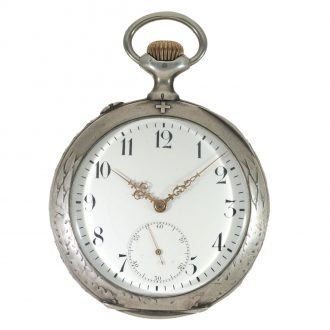
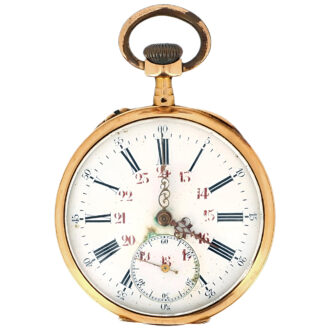
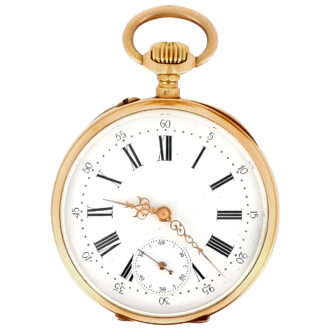
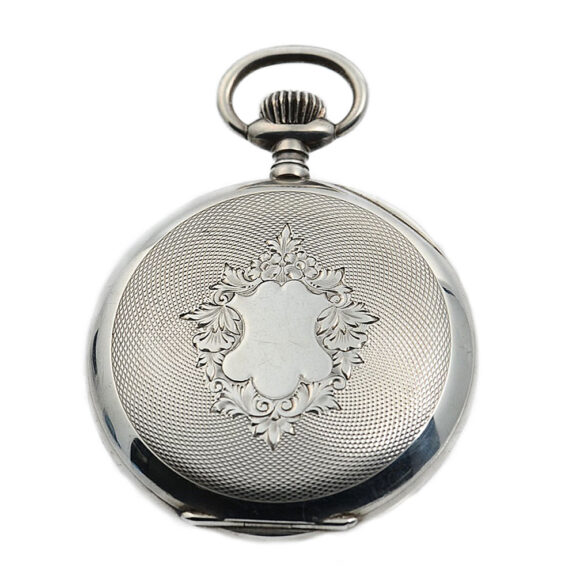
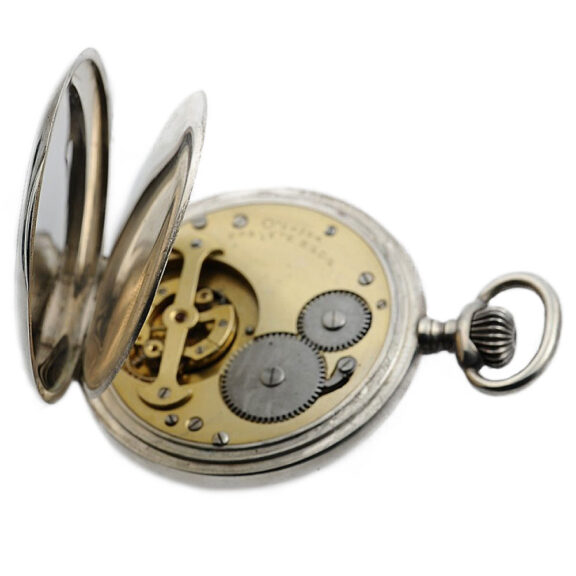
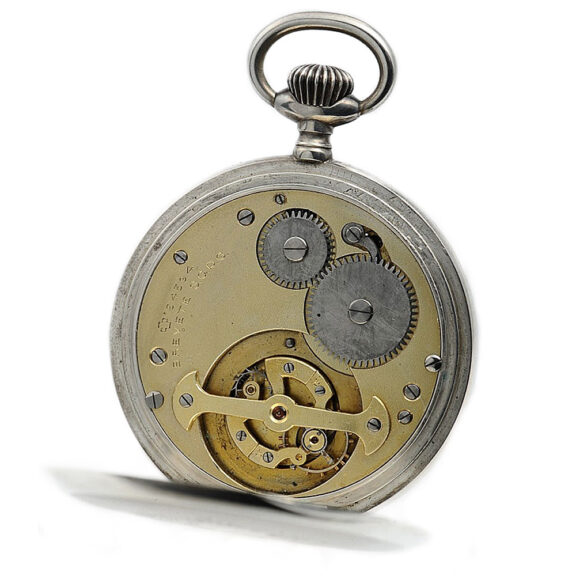
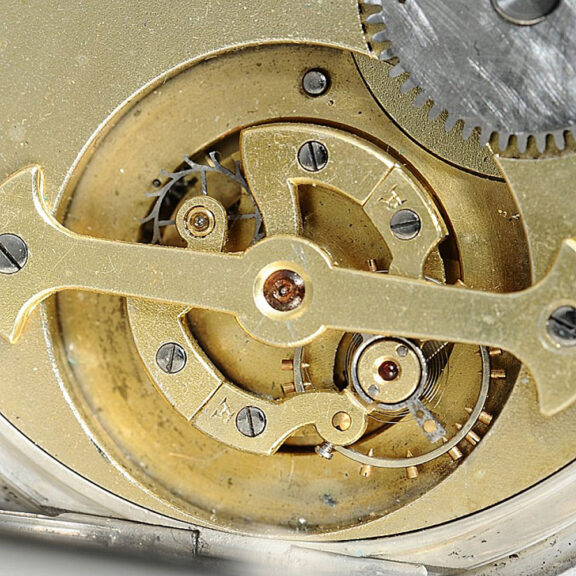
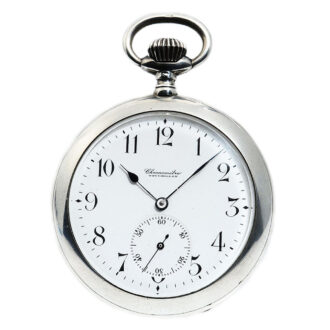
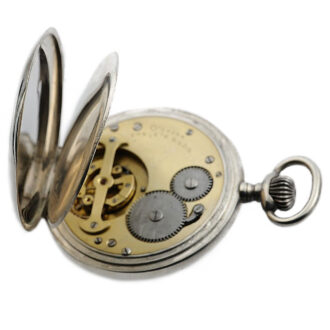
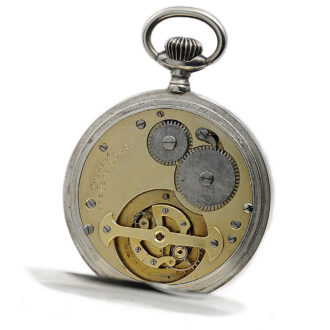
A Swiss silver open faced gentleman’s lever pocket watch with a one minute tourbillon, circa 1900. Full plate movement with lever escapement and a screw compensation balance.
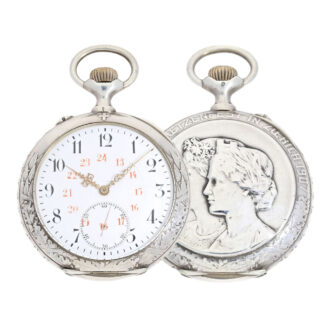
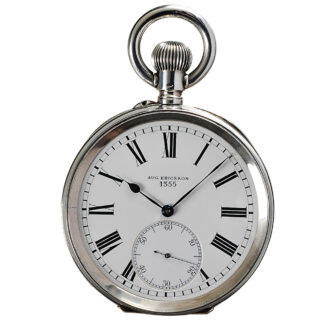
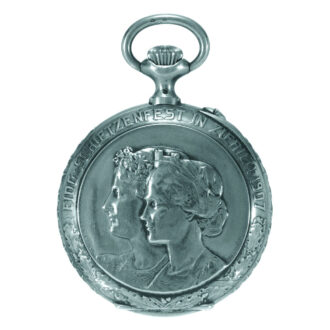
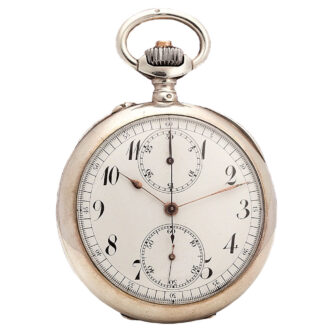
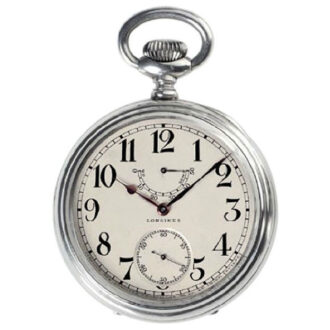
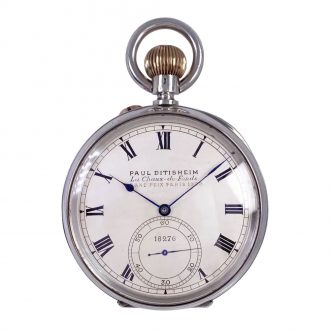
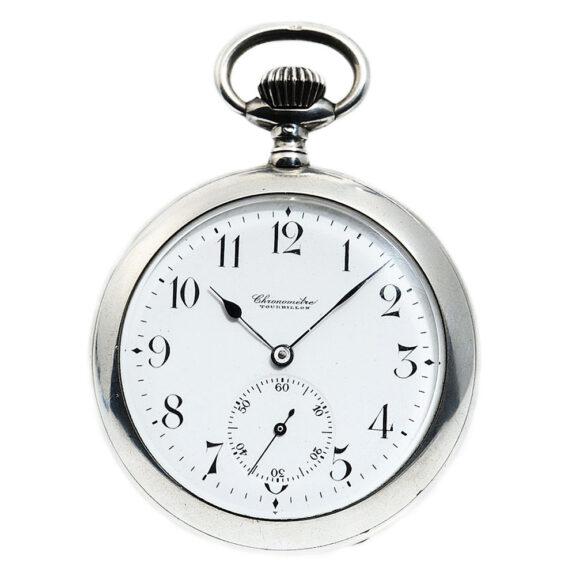
The engine turned case with a decorative engraved blank cartouche on the back and polished bezels. White enamel dial with radial Arabic numerals, an outer minute track, subsidiary seconds at 6 o’clock and spade hands. Dial signed Chronomètre Tourbillon, movement inscribed 34394 Breveté S.G.D.G.
–
Diameter: 53 mm
–
Weight: 108 g
–
Signed: No name
–
L&E. Fallet Fils in Saint-Imier, Swiss watch manufacturers
L&E. Fallet Fils was founded by Louis Fallet and his son Edouard. After Louis passed away, Edouard continued the business. The company was known for manufacturing tourbillon watches of the A-type (a carrousel ). In 1888, they received an Honorable Mention at the National Watch Exhibition in La Chaux-de-Fonds.
–
In 1905, the company received Swiss Patent No. 34394 for a tourbillon. Edouard Fallet avoided the fact that he placed the tourbillon on an axis in the center of the watch, patented by the French Paul Loichot from Charquemont (Doubs) on June 11th, 1904, in Switzerland under No. 30754 and in which the fact that the bogie was visible on the dial side was part of the claim. But presumably, Paul Loichot intervened against the granted patent and patent No. 34394 was declared invalid on April 30th, 1908.
–
Other companies could license these movements or use movements that were supplied by Fallet. For example, Invicta and Courvoisier Frères in La Chaux-de-Fonds or Fureur & Cie in Geneva , which was registered on December 19th, 1903 by Edouard Fallet. From Courvoisier Frères, some of these watches are known under the brand name Mobilis with different patents. Swiss Patent No. 34394 but also Swiss Patent No. 30754 and 19062.
–
Tourbillon
In horology, a tourbillon is an addition to the mechanics of a watch escapement to increase accuracy. It was developed around 1795 and patented by the French-Swiss watchmaker Abraham-Louis Breguet on June 26th, 1801. In a tourbillon, the escapement and balance wheel are mounted in a rotating cage to negate gravity’s effects when the timepiece (thus the escapement) is stuck in a certain position. The tourbillon averages out positional errors by continuously rotating the entire balance wheel/escapement assembly at a slow rate (typically about one revolution per minute).
Signed: Chronomètre Tourbillon
Share this page: