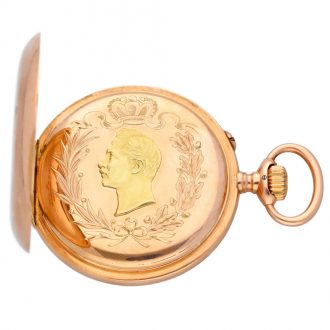
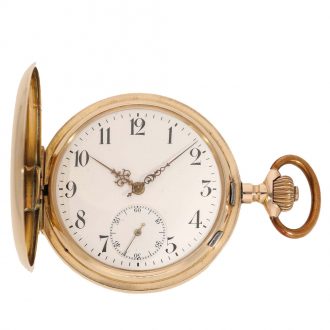
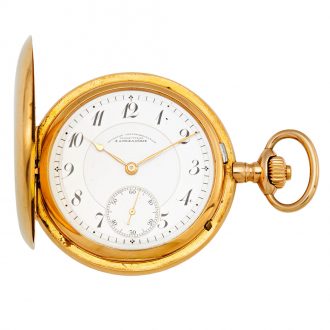
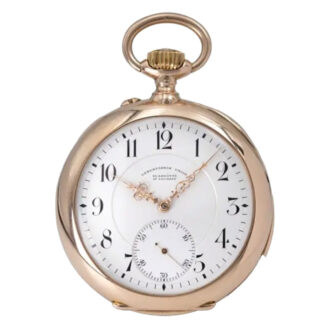
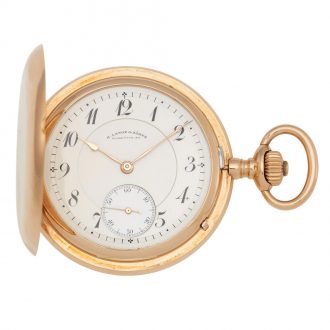
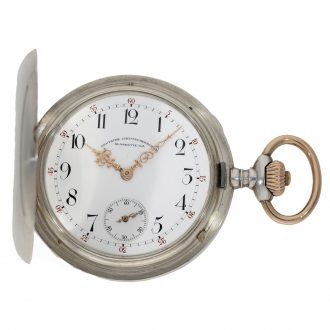
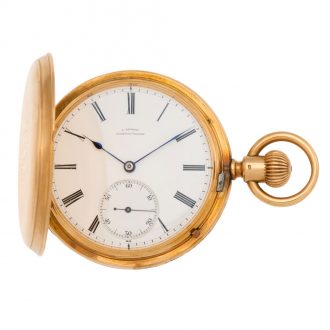
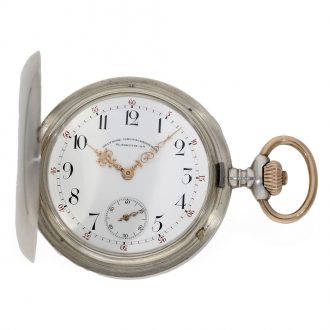
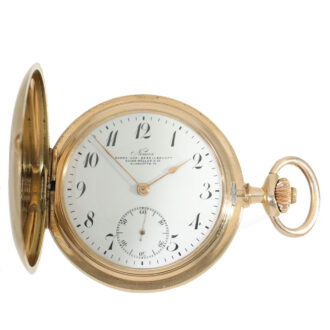
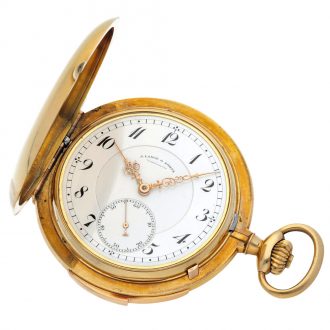
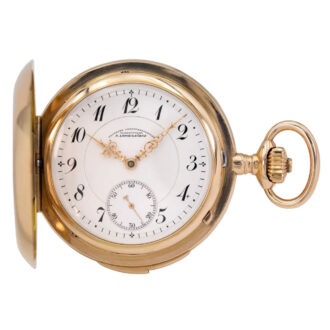
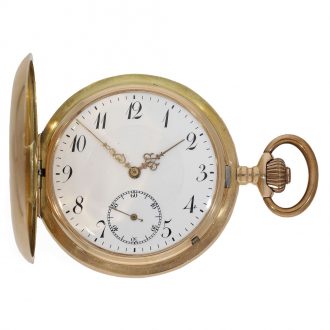
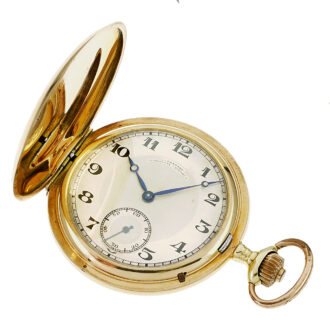
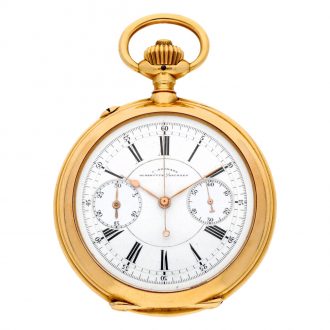
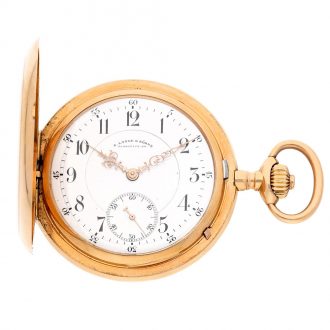
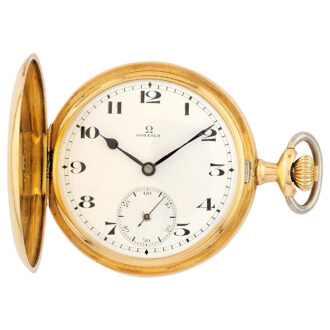
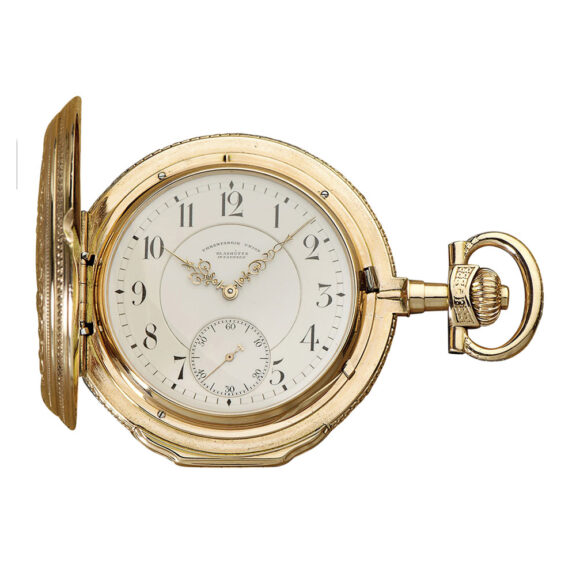
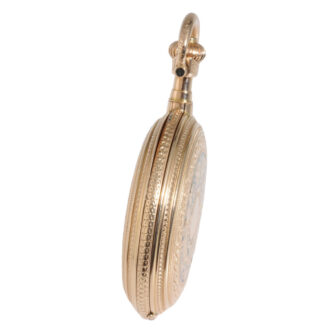
Heavy 14 Carat rose gold hunting cased lever watch Circa 1910
- Kenmerk
- DB0191
- Diameter
- 60 mm
- Estimate
- € 12.500 - 25.000
- Price sold
- € 17.000
Rose gold decorative full hunter by Uhrenfabrik Union
–
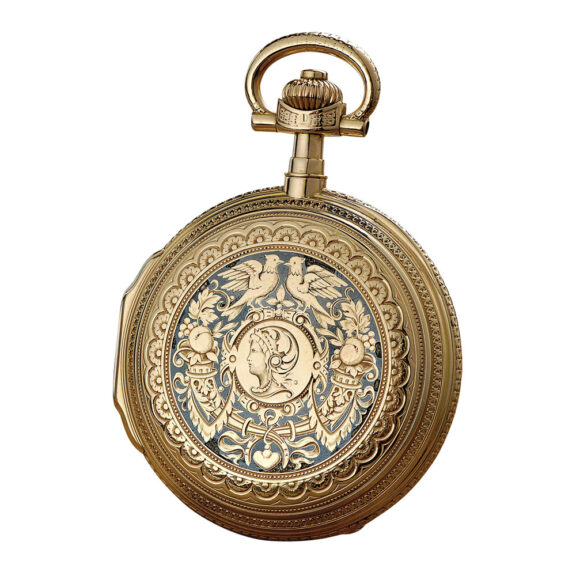
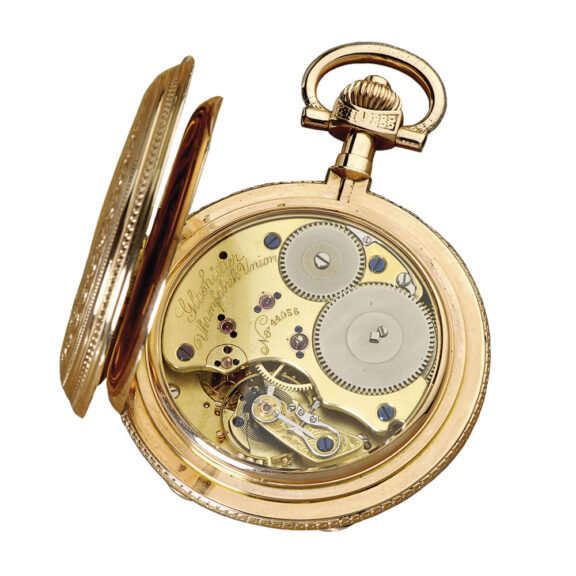
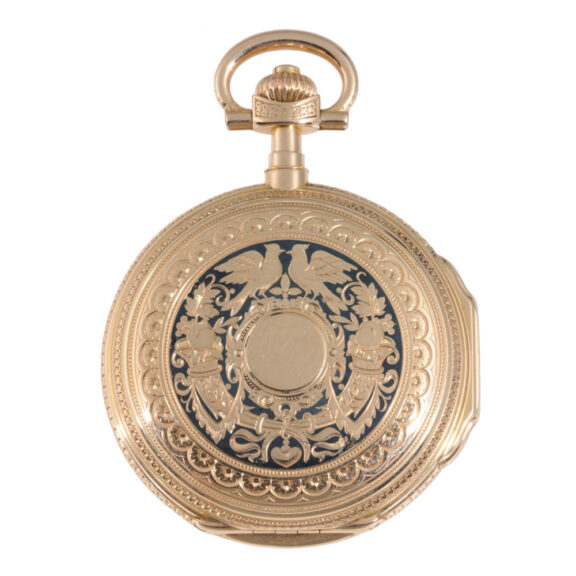
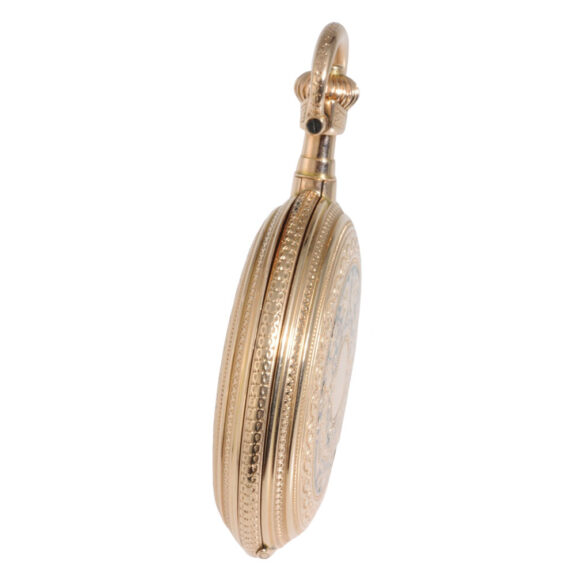
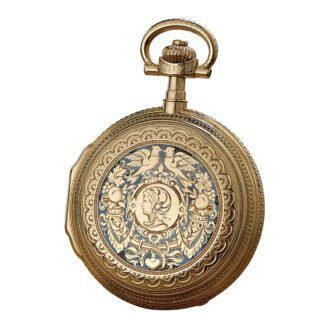
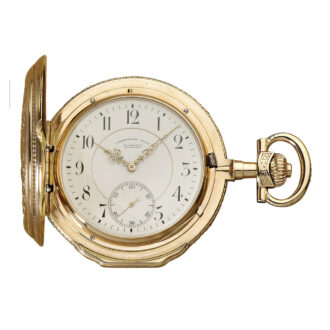
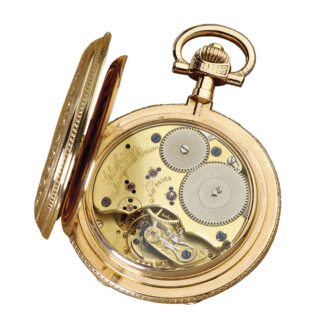
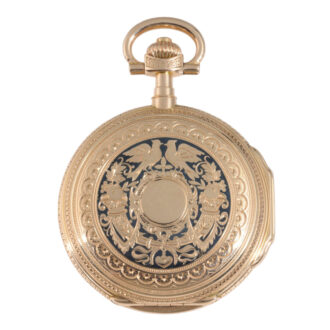
A decorative and heavy 14 Carat rose gold full hunter cased quality 1A lever Glashütte pocket watch, circa 1910. Glazed ¾ plate movement, lever escapement, gold screw compensation balance. White enamel dial with Arabic hours, outer minute divisions and sunk subsidiary seconds. A Louis XV case with Professor Carl Ludwig Graff decoration and an engraved portrait of Minerva.
Dial signed Uhrenfabrik Union Glashütte in Sachsen, case numbered, movement signed and numbered, case and movement with matching numbers.
–
Diameter: 60 mm
–
Weight: 184 g
–
Signed: Glashütter Uhrenfabrik Union
–
This timepiece made in Glashütte is likely to be the largest 1A standard watch in a case by Graff that was ever delivered by the Union Glashütte company.
–
Johannes Dürrstein was born on August 22nd, 1845 in Niederrad and died on May 7th, 1901. Dürrstein grew up in a middle class family and completed a commercial apprenticeship at the Frankfurt watch wholesaler Ludwig & Fries. He was a German entrepreneur and together with his brother Friedrich, he established his own business in 1874. He repeatedly travelled to Switzerland on business and got to know the important watch manufacturers in the country. The company traded as Dürrstein & Co Glashütte and sold Swiss products as well as watches by A. Lange & Söhne. Nearly 20 years later, in 1893, Dürrstein founded the Uhrenfabrik Union. The watches produced in this manufactory were of outstanding quality and could be made to order with high value complications of all kinds. The range included pocket chronometers, tourbillons and perpetual calendars and usually came with a rating certificate from the Hamburg Observatory. Dürrstein always tried to satisfy the universally strong demand for high quality timepieces and mainly used premium Swiss movements which he bought and cased before selling them to his customers.
–
Professor Carl Ludwig Theodor Graff was appointed director of the Institute of Applied Arts in Dresden (Dresdner Kunstgewerbeschule) in 1875, to create designs in this vein. From the 1880s onwards, more and more ostentatious decorations were created at Lange & Söhne, where the medallion showed the image of the ancient Roman goddess Minerva, who had been worshipped as goddess of crafts, poetry and wisdom. Professor Graff then copyrighted his design which had won first prize in the Institute of Applied Arts’ 1890 competition for the design and decoration of pocket watch cases.
Signed: Glashütter Uhrenfabrik Union
Share this page: