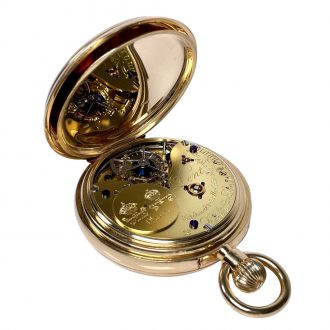
Important English gold complicated precision watch Circa 1902
- Kenmerk
- DB0900
- Diameter
- 65 mm
- Estimate
- € 100.000 - 200.000
- Price sold
- -
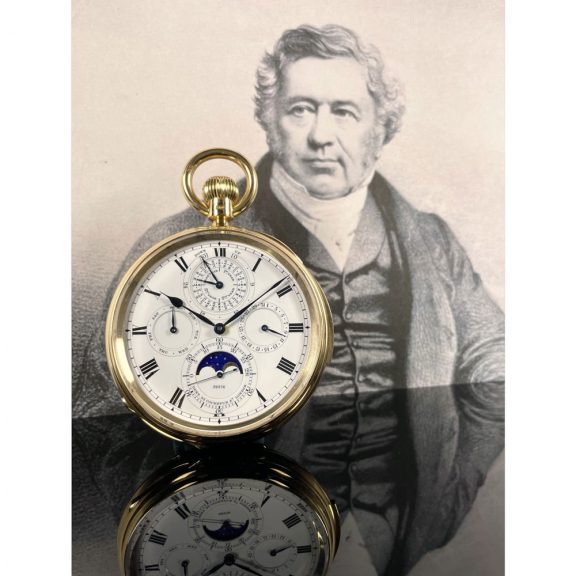
Gold complicated chronometer by Edward John Dent
–
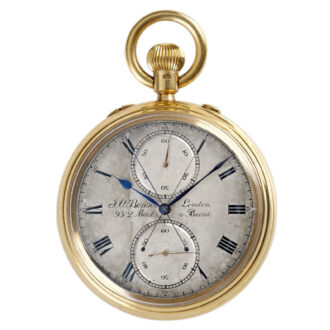
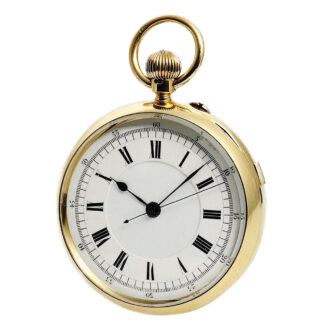
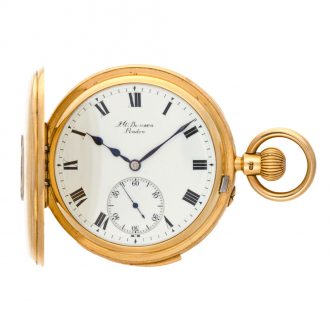
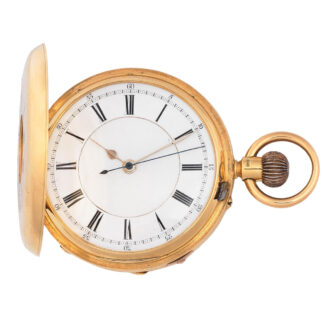
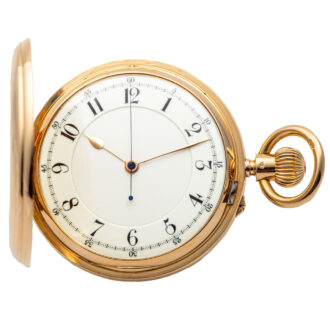
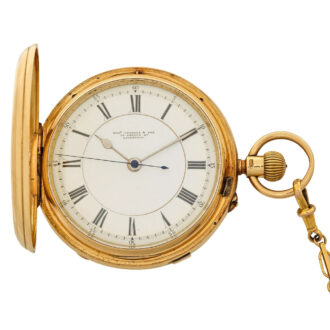
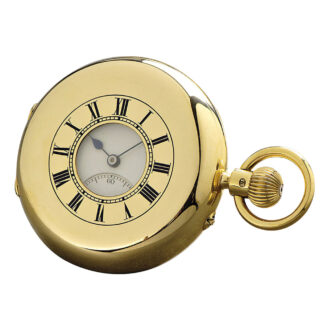
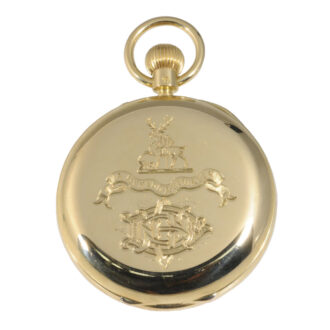
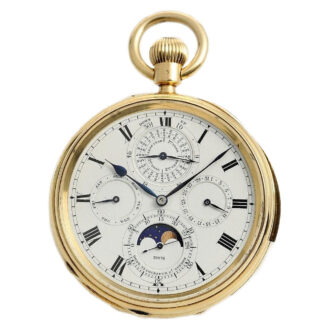
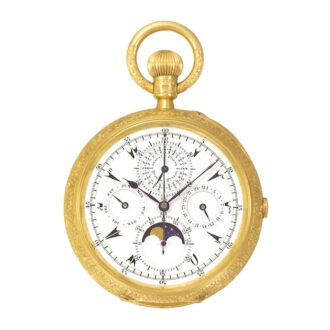
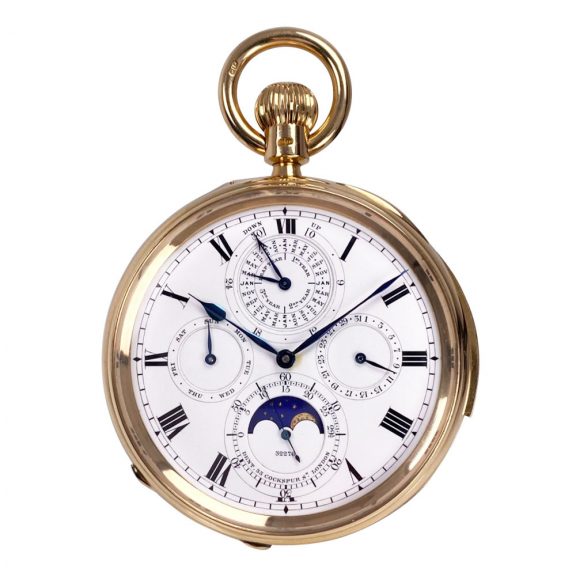
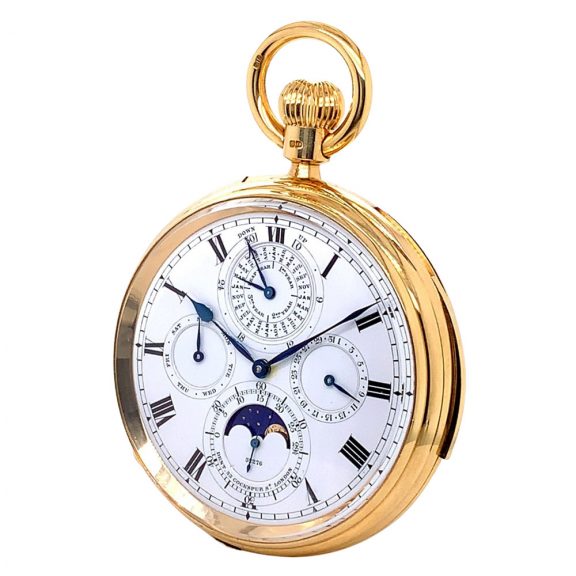
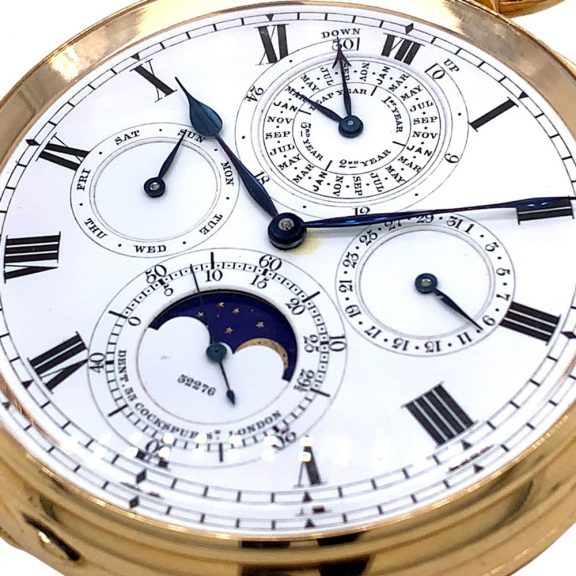
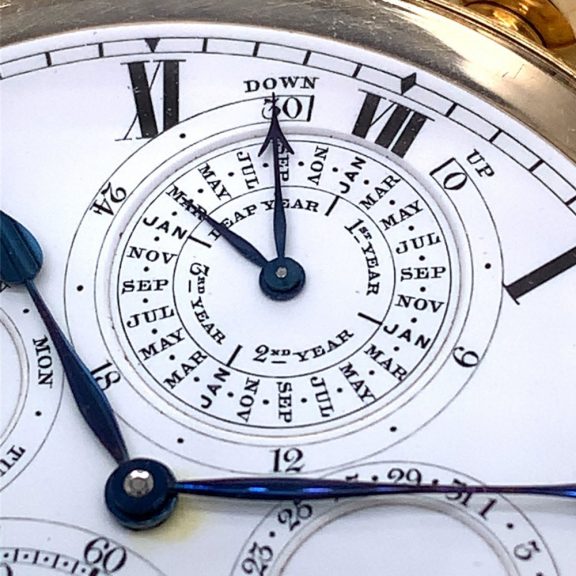
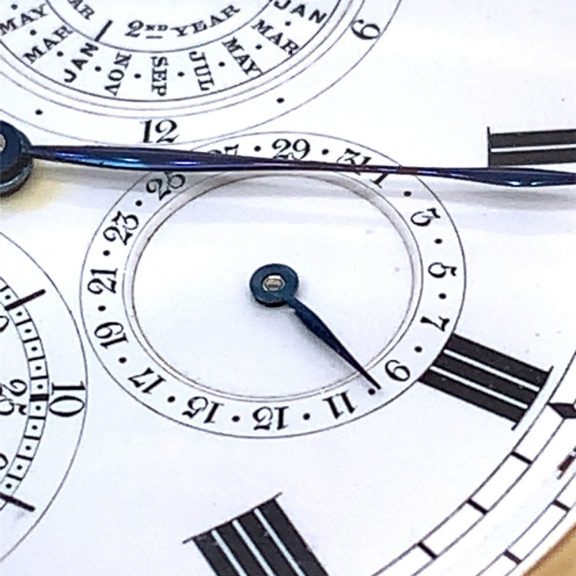
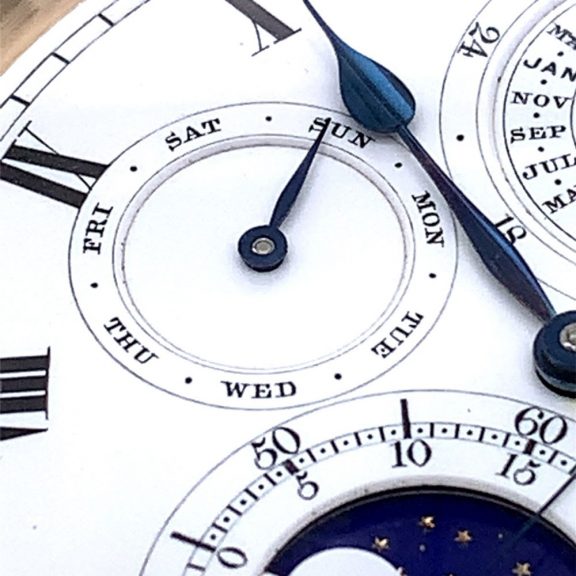
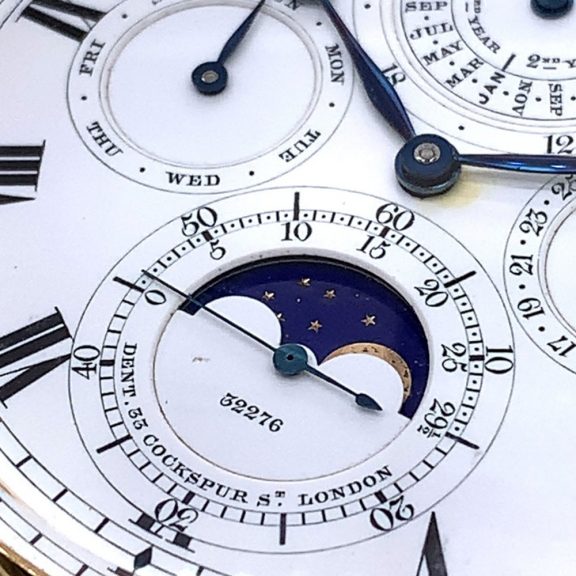
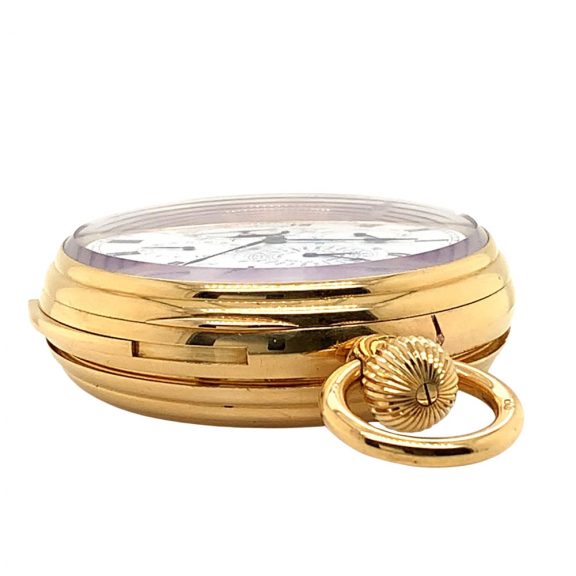
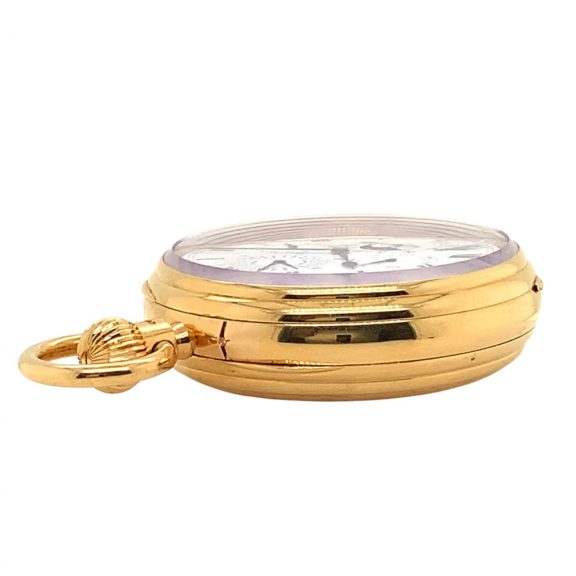
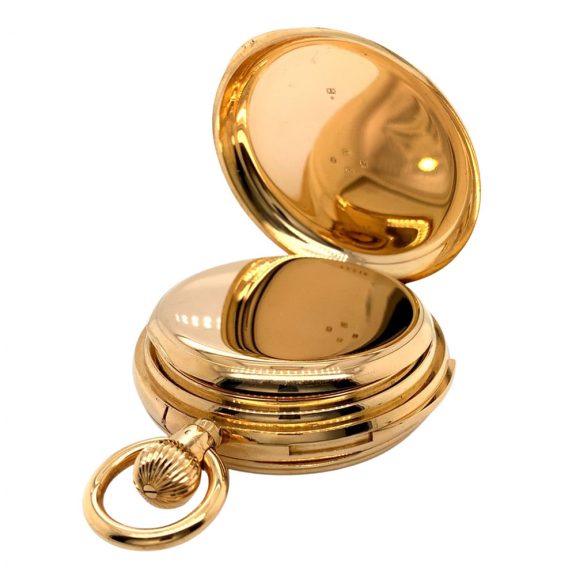
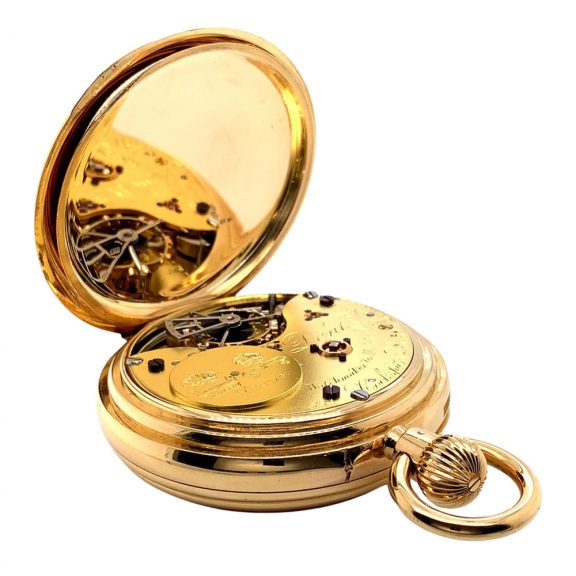
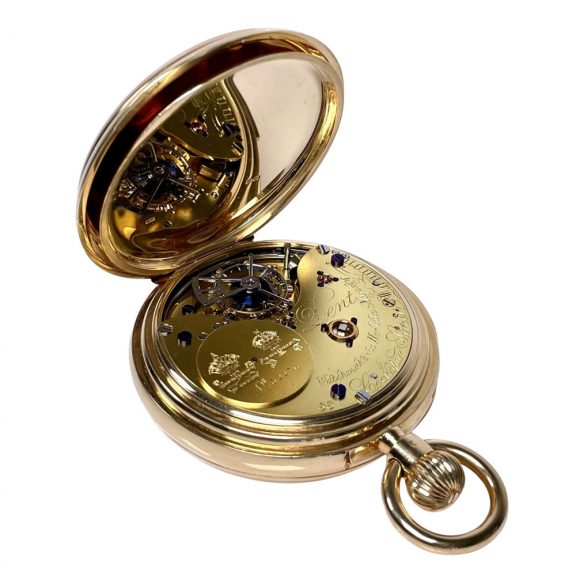
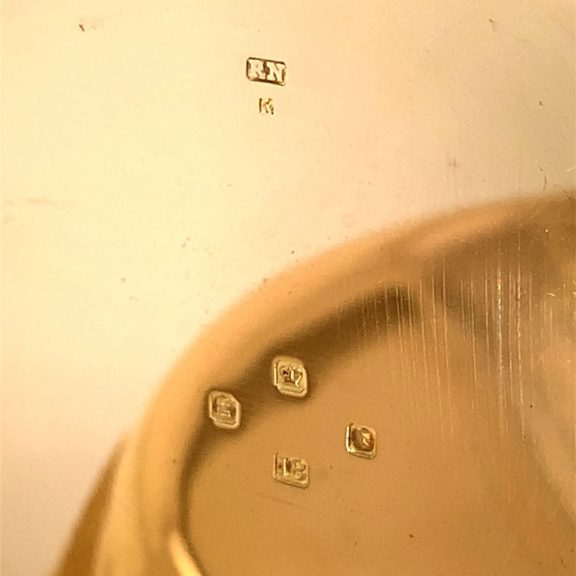
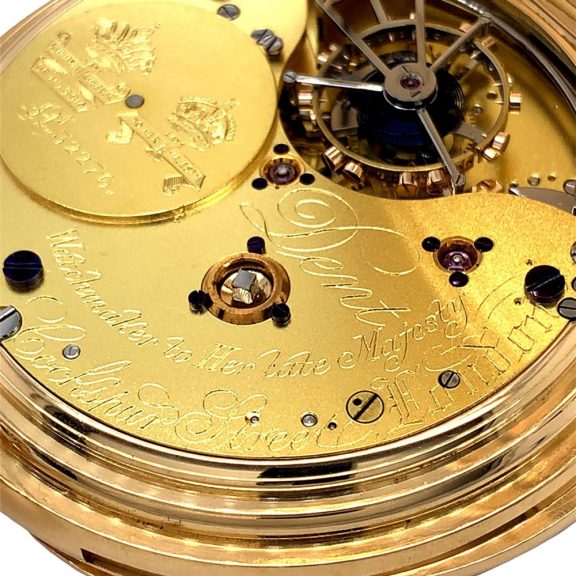
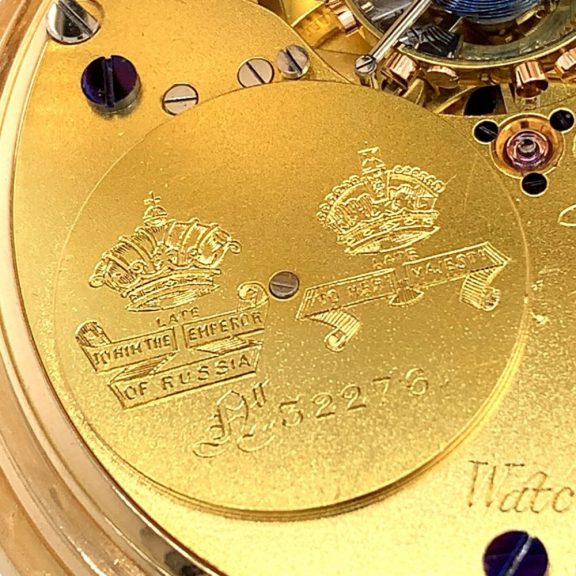
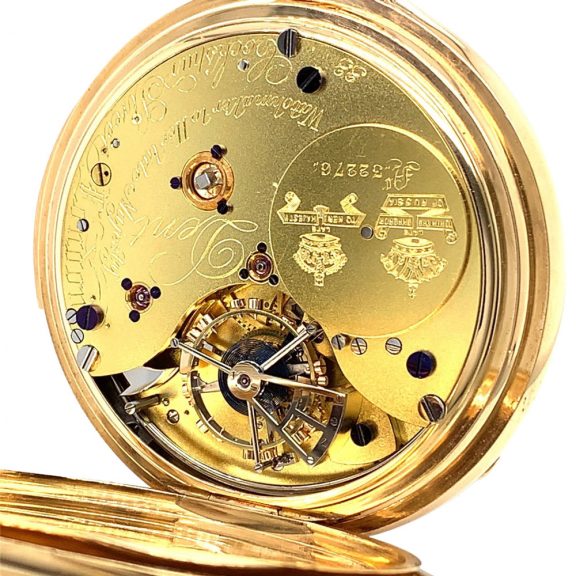
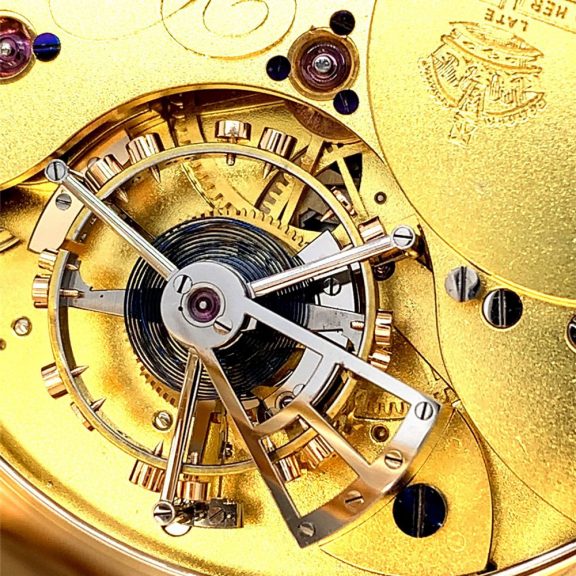
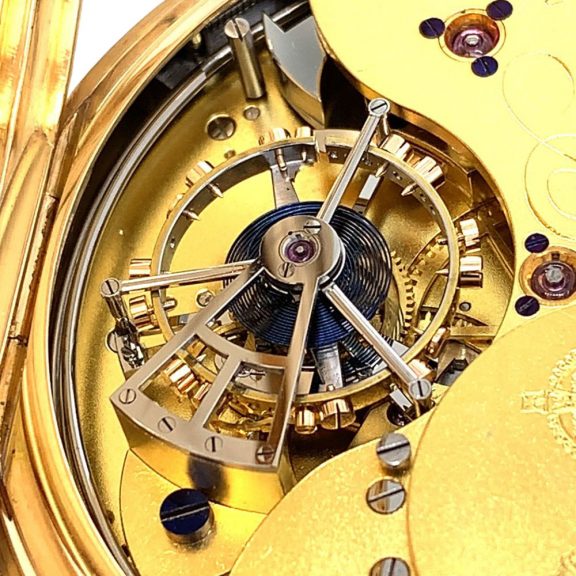
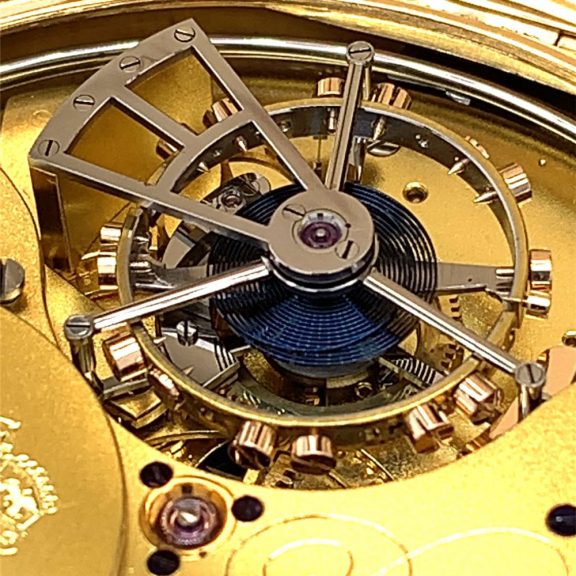
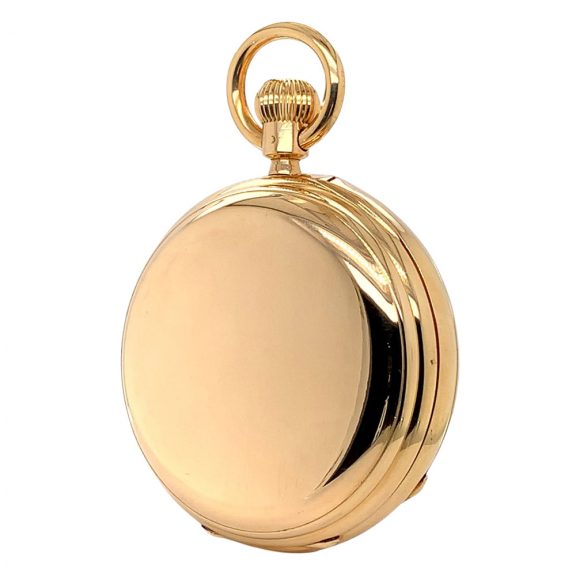
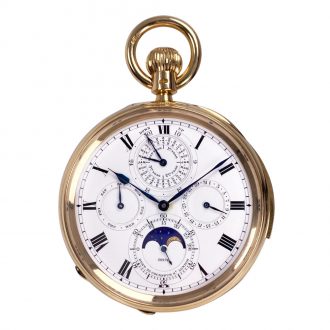
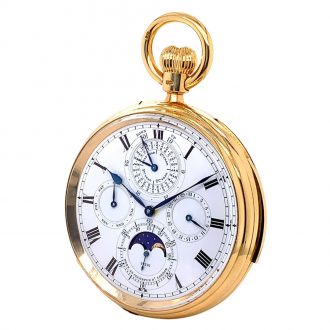
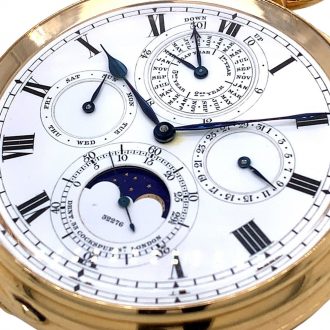
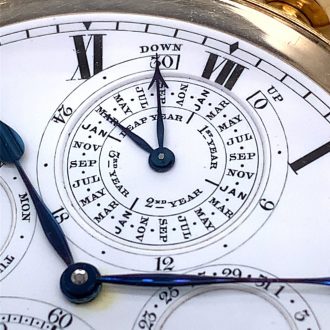
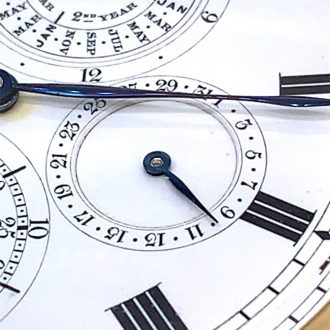
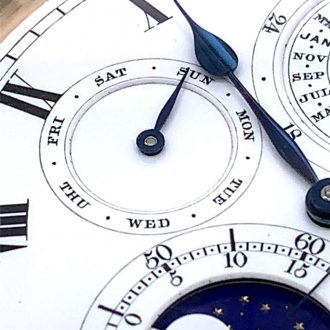
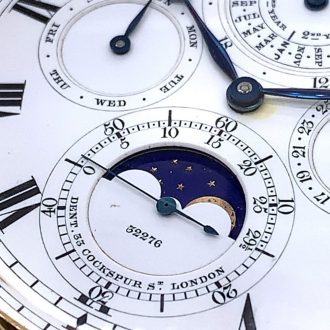
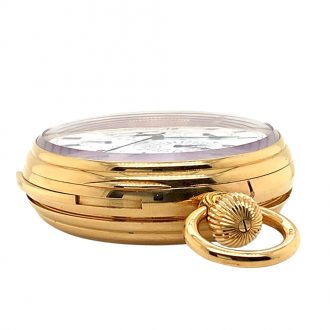
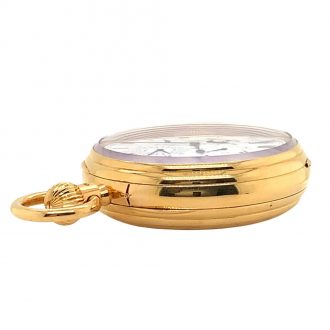
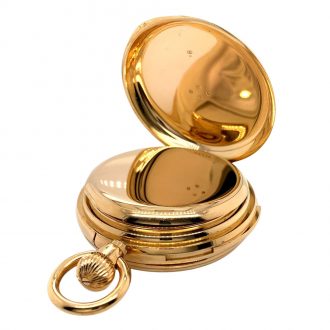
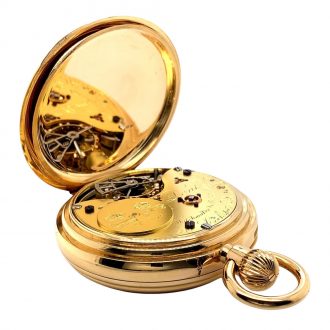
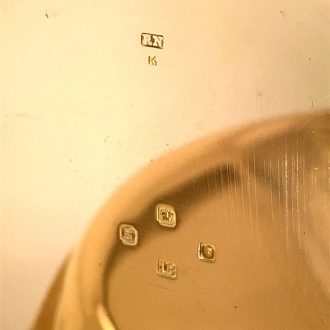
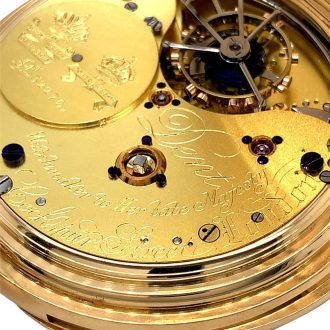
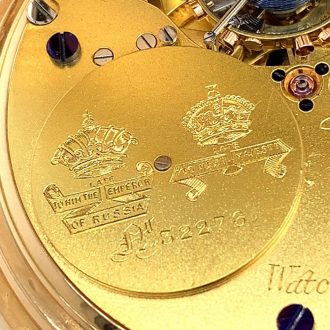
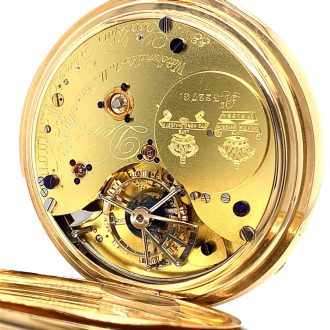
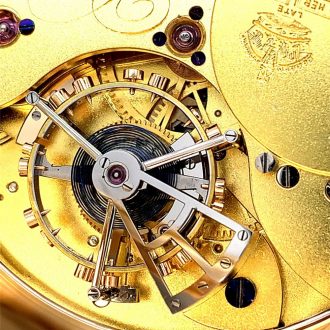
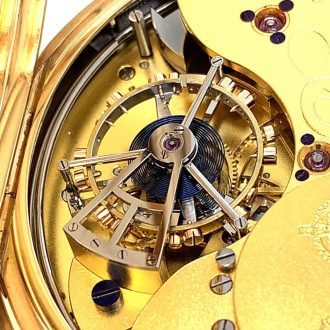
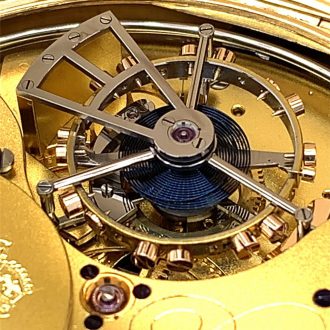
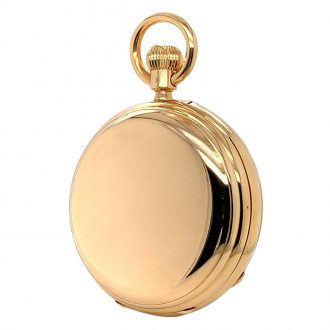
An important, unique and complex English 18 carat gold open faced minute repeating precision pocket chronometer with a minute tourbillon, perpetual calendar and moon phases, circa 1902. Frosted gilt ¾ plate movement, screwed chatons, a raised barrel with engraved honorifics To Him the Late Emperor of Russia (Alexander III 1845-1894) and To Her Late Majesty (Queen Victoria 1819-1901), two hammers, two gongs, chain and fusee, a finely polished Nielsen type 2 steel tourbillon cage with a rose gold counterweight and polished screws, spring detent escapement, gold screw compensation balance and freely oscillating blued balance spring. White enamel dial with Roman hours, an outer minute track, the months taking the leap year into account and a concentric 30 hour power reserve indicator at 12 o’clock, the date at 3, auxiliary seconds with concentric phases of the moon at 6, the cobalt blue enamelled moon phase disc with inlaid golden moon and stars, the day of the week at 9, moon age indication and blued heavy spade hands. The plain case with maker’s mark RN for Robert Benson North and a rotating pendant slide for release of the repeater. Dial numbered and signed Willis on the reverse, movement signed by the watchmaker and numbered, the case numbered twice.
–
Diameter: 65 mm
–
Weight: 270 g
–
Signed: Dent Watchmaker to Her late Majesty 33 Cockspur Street London
–
The present watch represents the quintessence of English watchmaking art. Watches of this complexity embody the ultimate highlight of a collection based on the highest standards.
–
Robert Benson North was the owner of North & Sons from 1917 to 1933 and successor of Nicole Nielsen & Co.
–
Vaudrey Mercer, the author of Edward John Dent’s biography, explains that the Nicole Nielsen company fitted almost all of their tourbillon watches with English lever escapements and that therefore the watches with spring detent escapements were considered to be of superior quality. Meis describes the tourbillon watches as extremely rare and even claims that only about 650 classic tourbillons were made worldwide. About 100 of these were produced in England. Meis also notes that, apart from one’s exception, only the English chronometer makers equipped their tourbillon watches with high performance complications. The latest findings assume a slightly higher number of tourbillons, nevertheless tourbillon watches are rare and very sought after.
When this watch was created the Dents were active in two separate family businesses that had formed after the death of Edward John Dent. This watch was made by M.F. Dent (after Marianna Frederica, Richard Edward Dent’s widow). The second company at that time was called E. (Elizabeth) Dent & Co;. Both companies merged again under the name Dent in 1920.
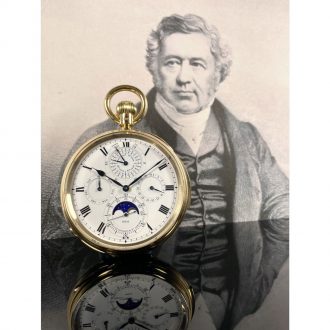
Dent, a celebrated watchmaking dynasty founded by Edward John Dent (1790-1853), was known for high quality watches, clocks, chronometers and regulators. After starting life as a tallow chandler, Edward John switched to watchmaking. From 1815 to 1829, he was employed by the Vulliamys and the Barrauds. In 1830, he entered into a partnership with J.R. Arnold. In 1840, he set up on his own account at 33 Cockspur Street, London. He was the builder of ‘Big Ben’, the famous Westminster clock and made many fine chronometers and watches as well as others of a high commercial grade. The firm continued until relatively recently at 41 Pall Mall, London, as E. Dent & Co. Ltd.
Signed: Dent Watchmaker to Her late Majesty 33 Cockspur Street London
Share this page: