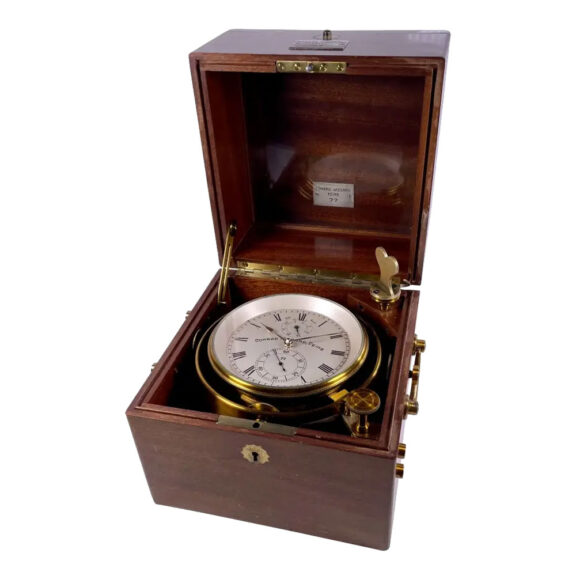
Important German first class deck chronometer Circa 1920
- Kenmerk
- DB1016
- Diameter
- -
- Estimate
- € 5.000 - 10.000
- Price sold
- € 6.250
Deck chronometer with 56h power reserve
–
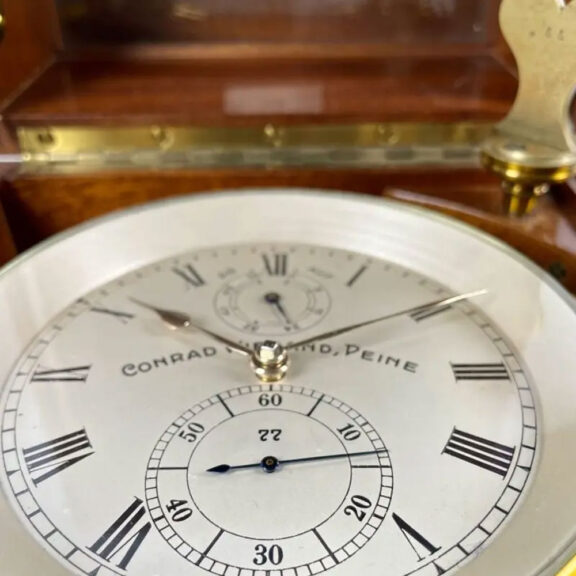
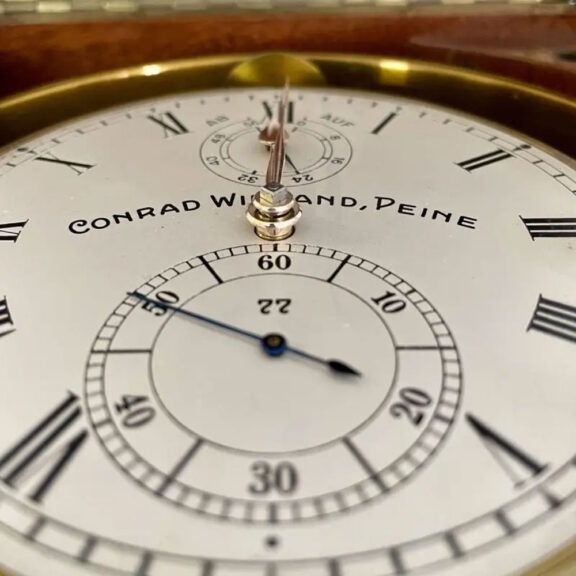
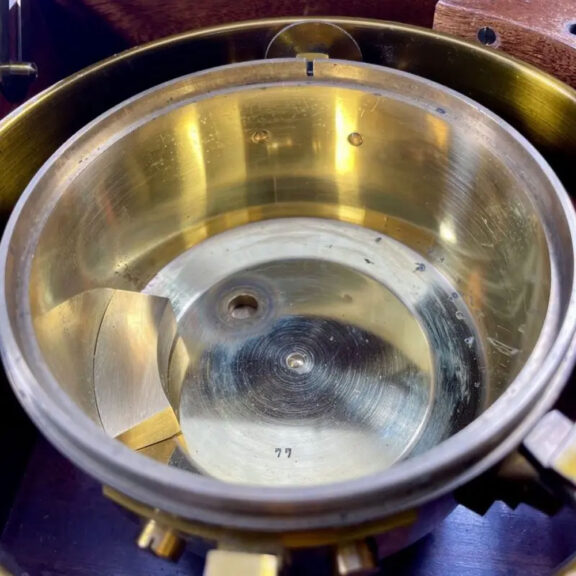
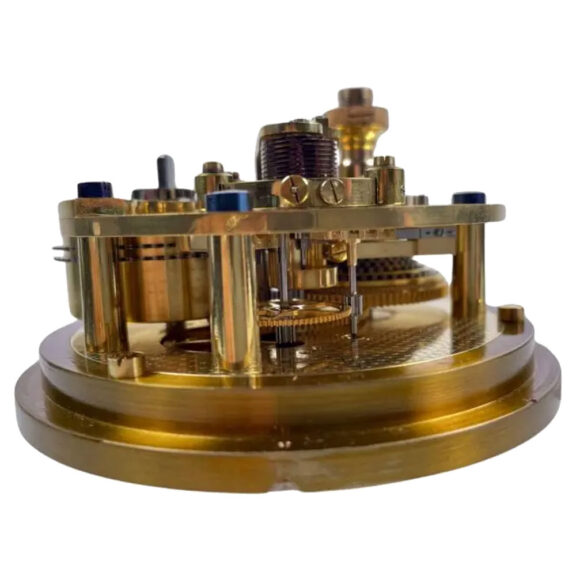
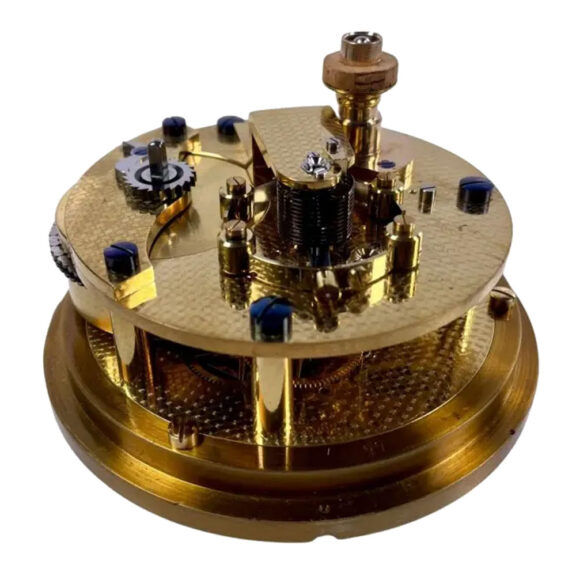
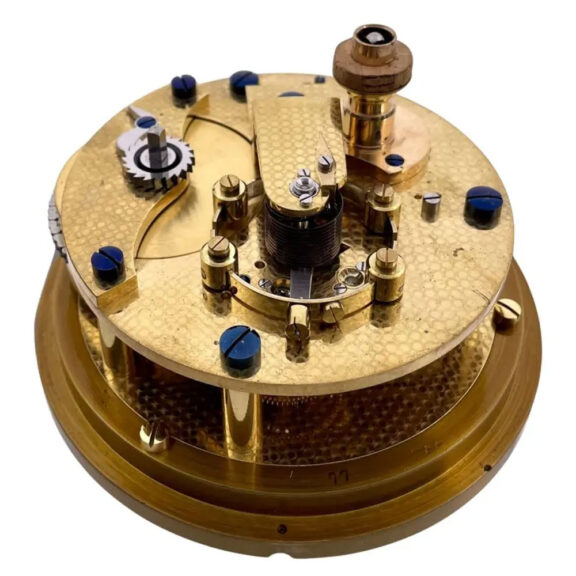
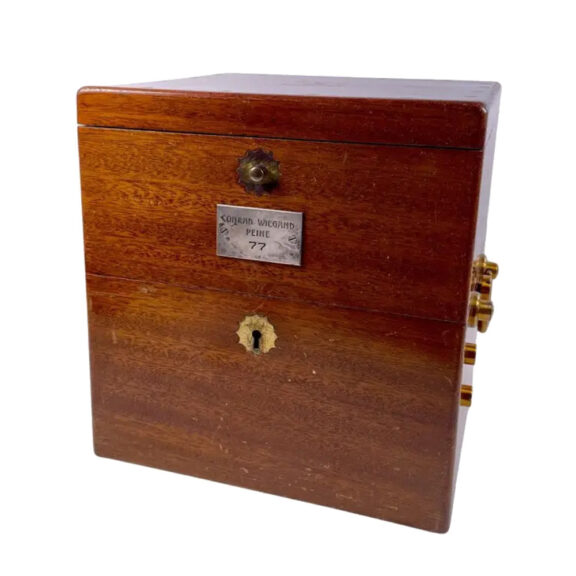
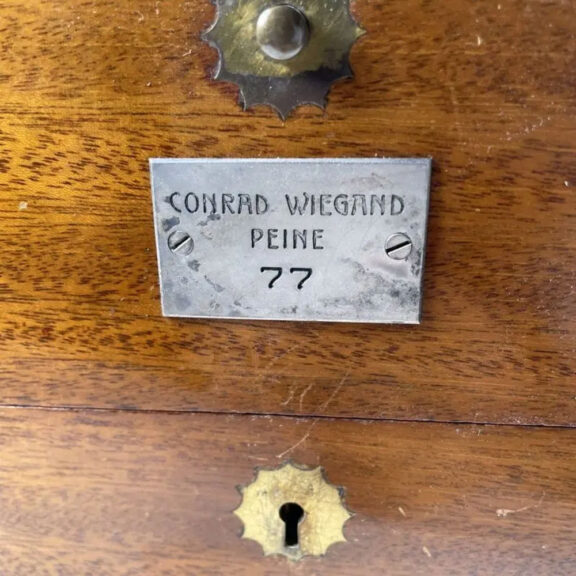
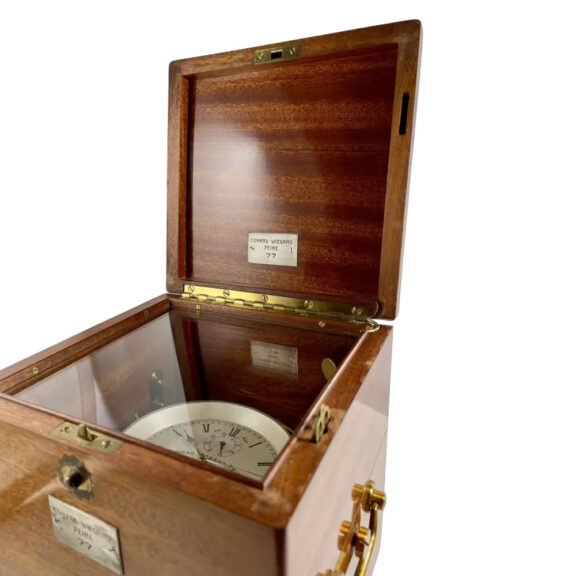
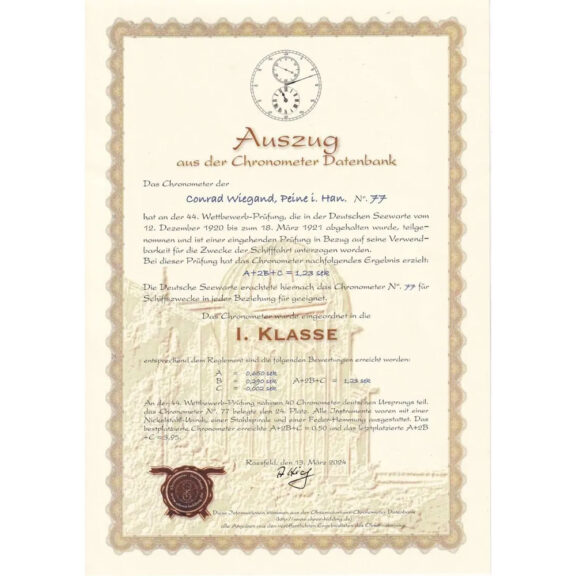
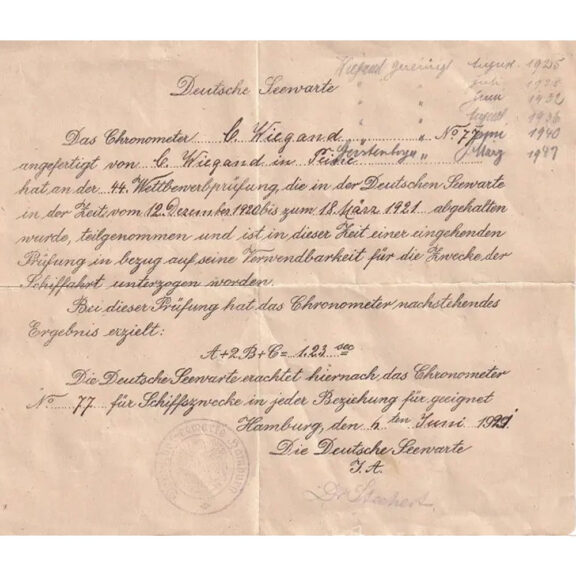
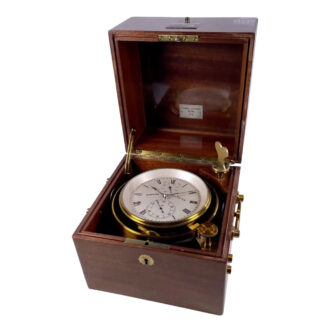
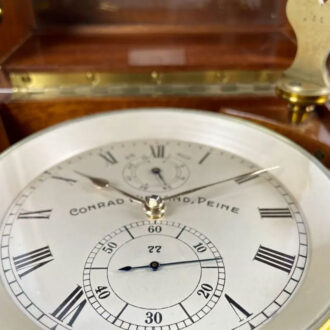
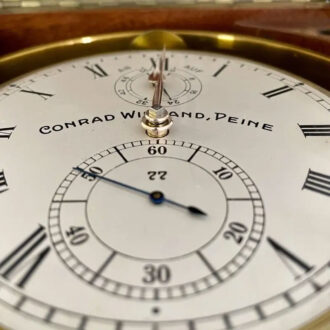
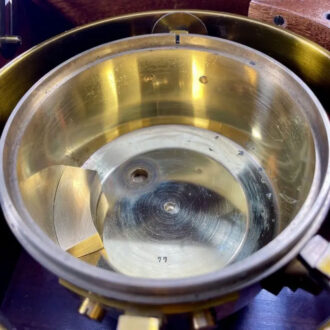
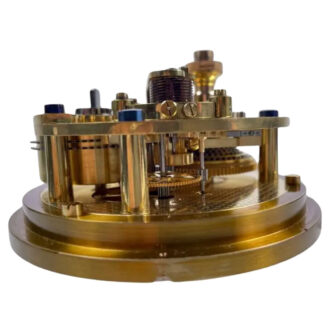
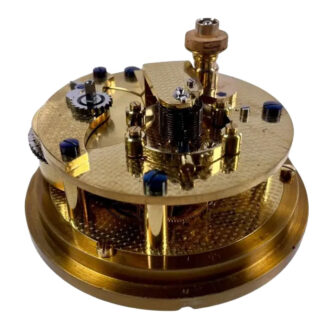
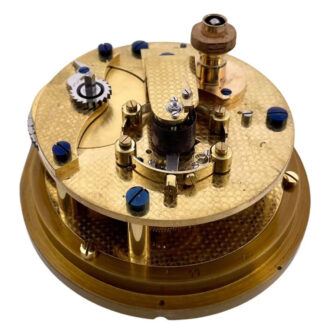
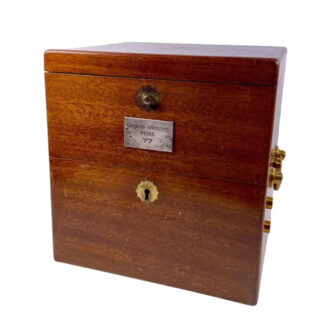
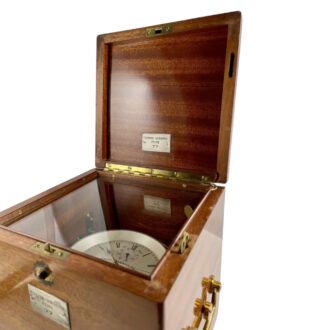
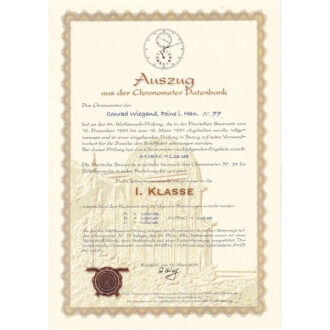
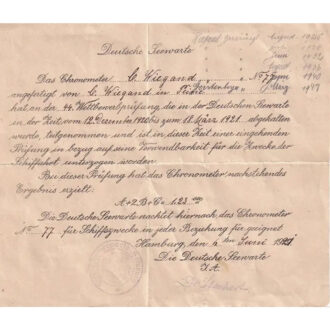
An important German deck chronometer of the 1st class made by Conrad Wiegand in Peine, circa 1920. Comes in a mahogany box with screwed-on handles and brass gimbal housing. Silvered dial with Roman hour numerals, an outer minute track, large seconds at 6 o’clock, a 56 hour power reserve indicator at 12 and gold spade hands. The decorated gilt 2/3 plate movement, ∅ 83 mm, by Paul Stübner in Glashütte with a spring chronometer escapement, blued screws, Gerstenberger’s integral balance, a blued cylindrical balance spring, chatoned diamond endstone on the balance wheel, and chatoned ruby endstone on a chronometer wheel and rocker. Dial signed, housing and box numbered. Accompanied by the original test certificate from the German Maritime Observatory in Hamburg from 1921 and an Extract from the Chronometer database by Andreas Hidding.
–
Dimensions: 185 x 185 x 195 mm
–
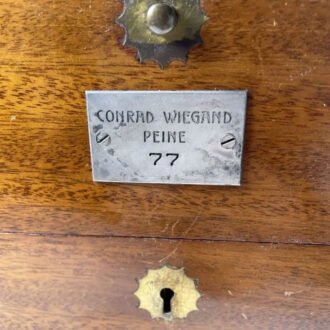
Signed: Conrad Wiegand Peine
–
Conrad Wiegand (1864-1940) from Peine near Hannover was a well known German chronometer maker.
–
First, he apprenticed with watchmaker Chr. Rademann in Peine. From 1885 to 1887, Wiegand worked in Stuttgart with the famous chronometer maker Ernst Kutter. Here he learned how to make astronomical pendulum clocks and chronometers. He then went to Naples for a short time and subsequently worked with the renowned company Hartmann & Felsing in Berlin. Back in Peine, he set up his own workshop.
–
At the suggestion of the Hamburg chronometer maker William Meier, he began building marine chronometers in 1905. These were of such excellent quality that he, as from 1907 with great success, regularly took part in competition tests from the Deutsche Seewarte. Around one hundred of his chronometers were used by the Imperial Navy and later by the Reichsmarine.
–
Wiegand maintained personal contacts with the best watchmakers of his time such as Frielingsdorf, William Meier, Hugo Müller, Georg F.Bley, Strasser, Bröcking, Sackmann and Lidecke.
–
Paul Stübner (1860-1946) from Glashütte in Sachsen specialized in the production of precision second pendulum clocks and other instruments for observatories and scientific institutes. In an advertisement from 1911 he recommends himself as: “Supplier for marine chronometers: specialty ebauches, ready-hung in brass cases. Also with German nickel steel compensation balance. In everything exactly according to the regulations and conditions of the Imperial German Naval Observatory.” Stübner supplied works to all renowned Glashütte manufacturers.
Signed: Conrad Wiegand Peinev
Share this page: