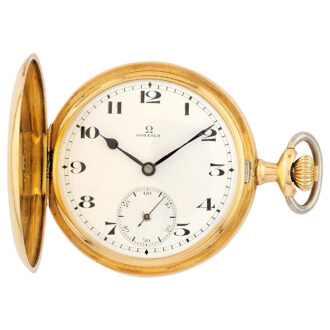
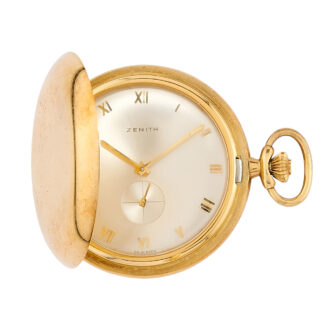
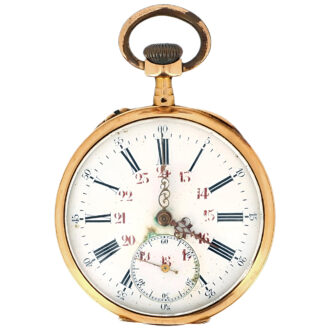
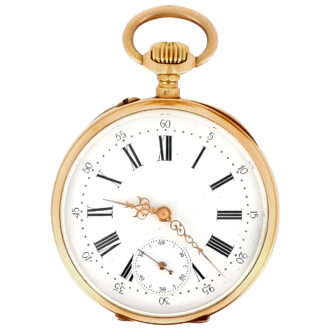
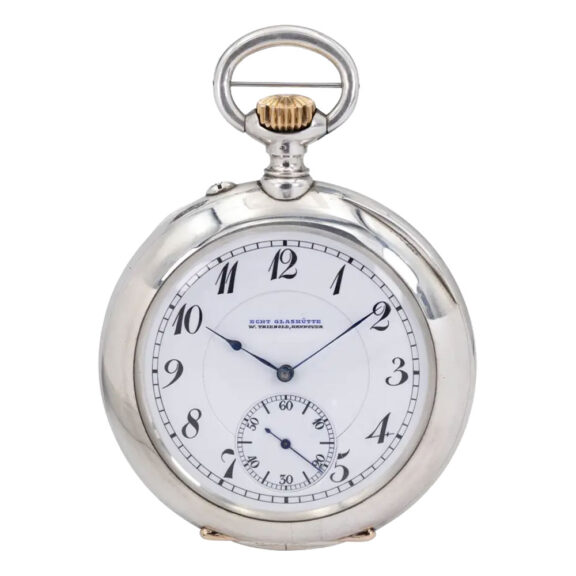
Important German silver open faced chronometer Circa 1904
- Kenmerk
- DB1018
- Diameter
- 67 mm
- Estimate
- € 15.000 - 30.000
- Price sold
- € 22.500
Silver pocket chronometer
–
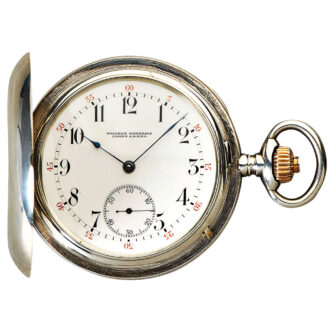
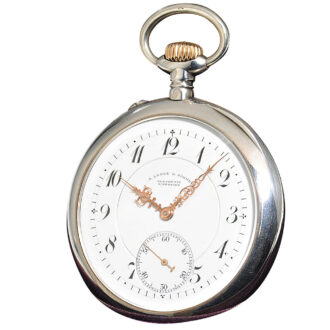
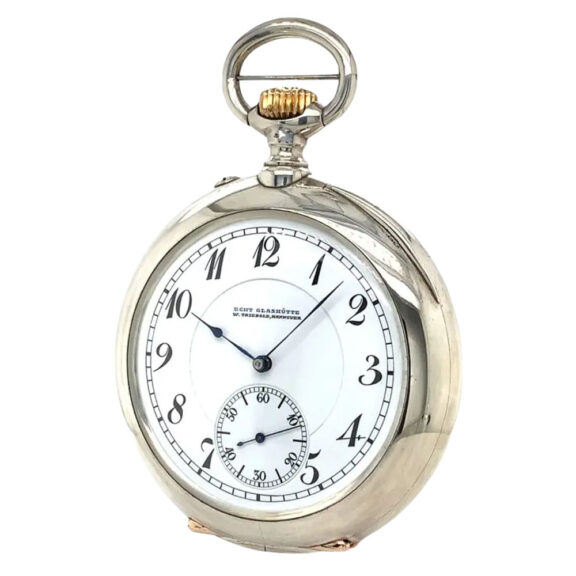
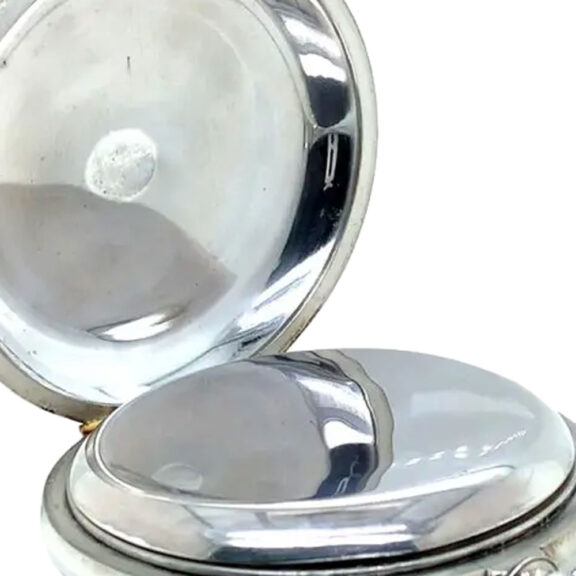
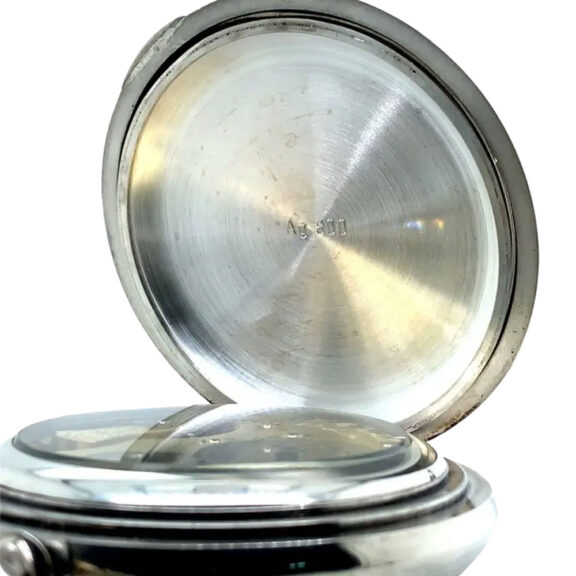
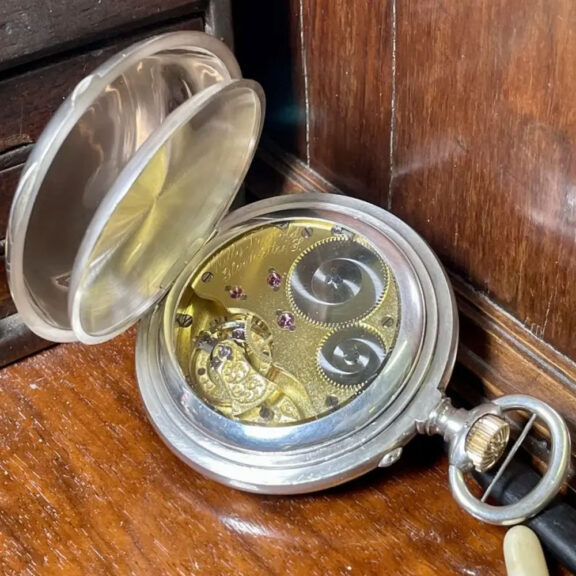
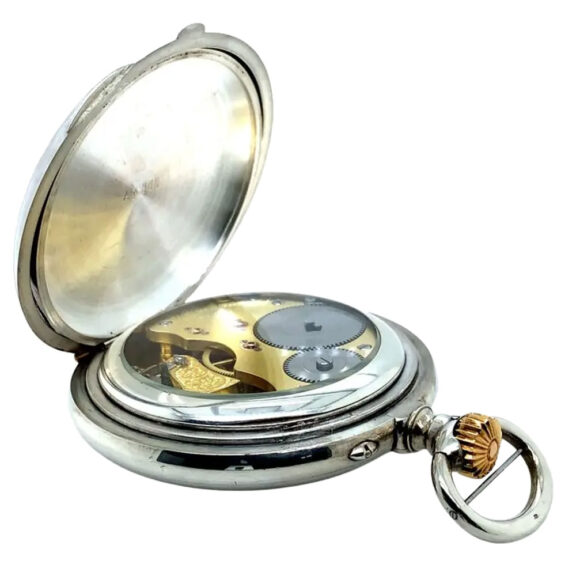
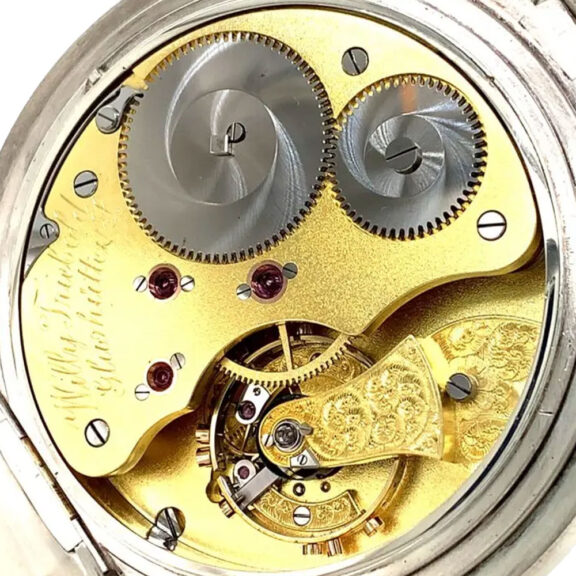
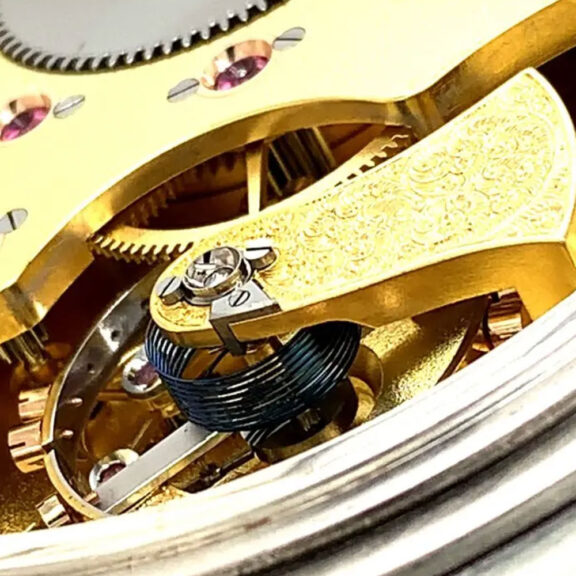
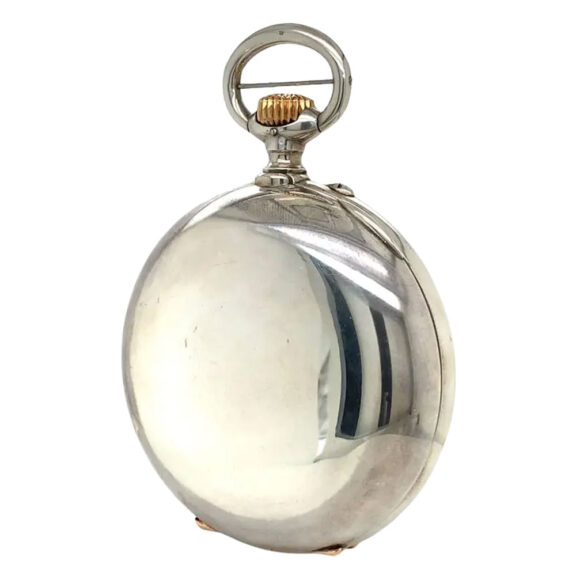
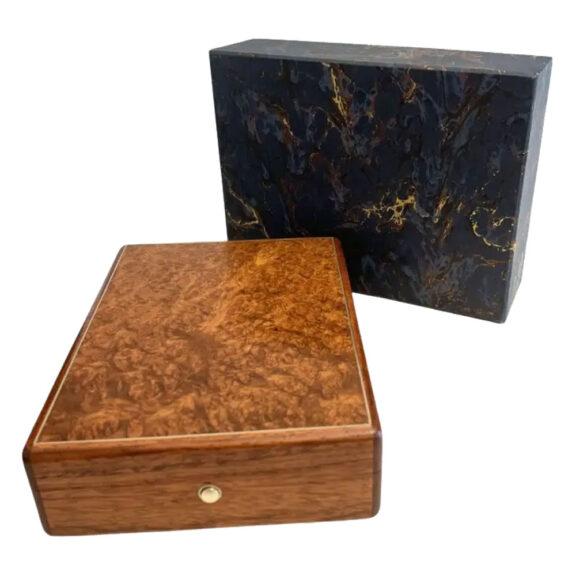
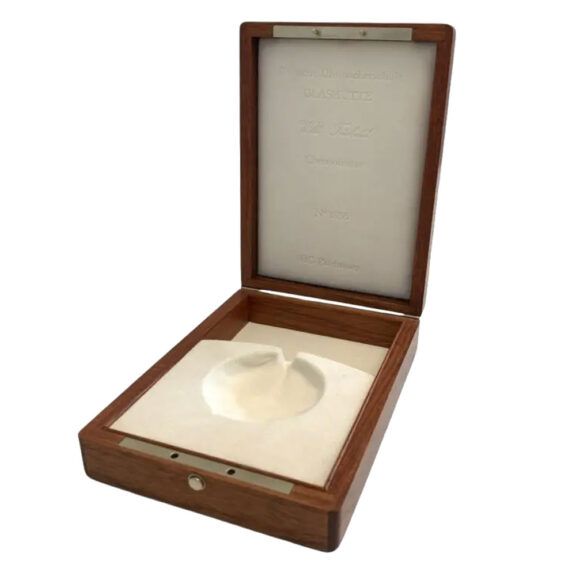
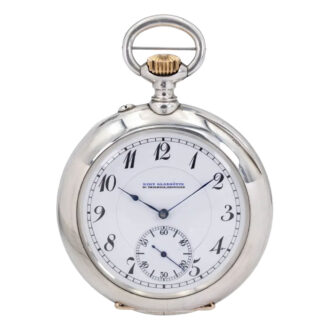
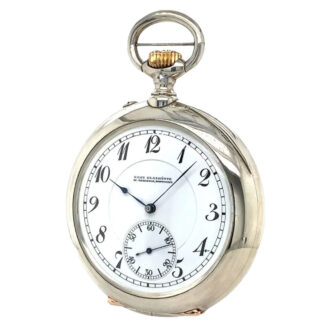
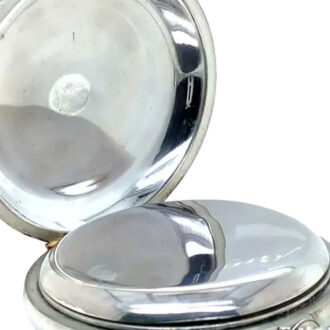
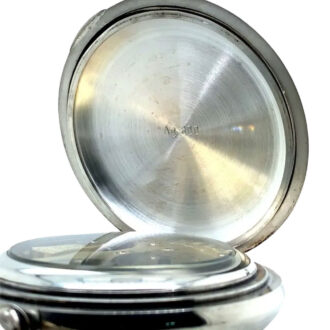
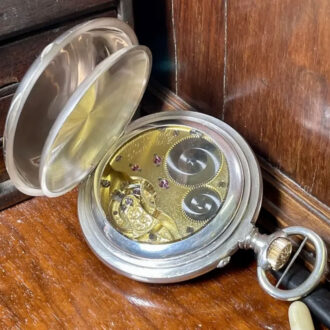
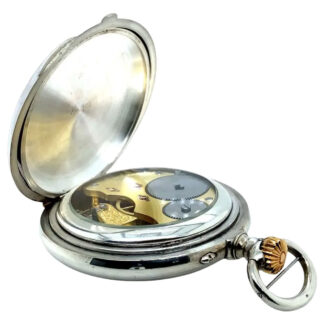
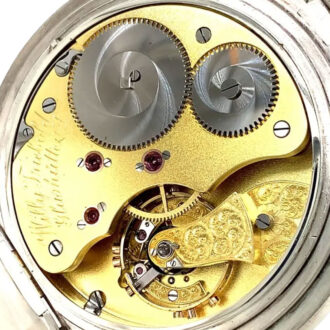
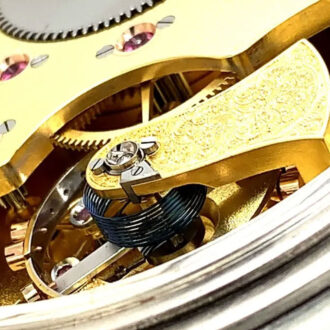
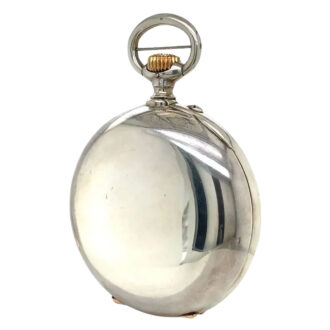
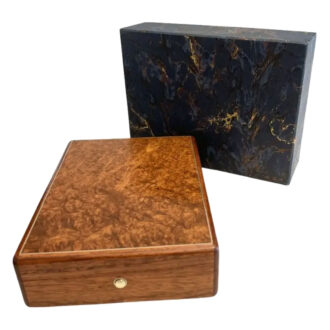
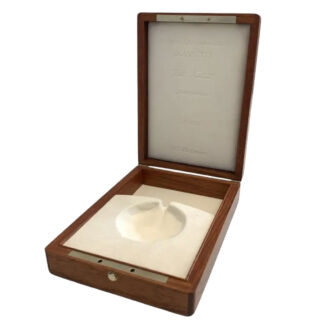
An important, extremely fine and extremely rare German silver and gold open faced pocket chronometer made by one of the most talented students at the Glashütte watchmaking school, Willy Triebold, circa 1904. The glazed ¾ plate movement with a spring chronometer escapement, screwed gold chatons, a large gold screw compensation balance, free swinging, blued, cylindrical balance spring, finely engraved balance cock and gold escape wheel. Later white enamel dial with Arabic hour numerals, an outer minute track, a sunk center, subsidiary seconds at 6 o’clock and blued spade hands. The later, as good as new, plain case with a gold crown and hinge was custom made. Dial signed, case numbered, movement signed and numbered. Comes with its original presentation box.
–
Diameter: 67 mm
–
Weight: 236 g
–
Signed: ECMT Glashütte W. Triebold, Hannover
–
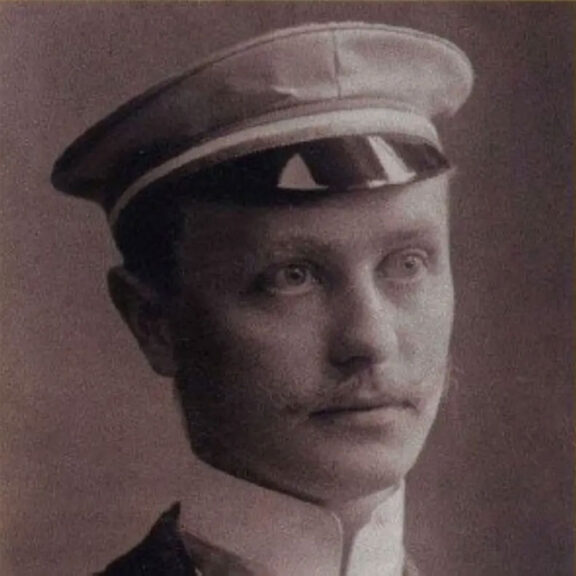
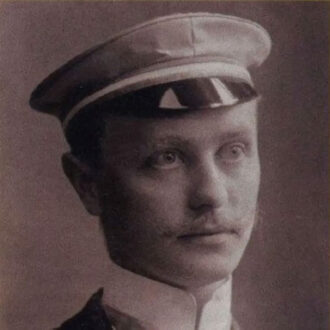
Wilhelm Triebold was born in 1880 in Hessisch-Oldendorf, southwest of Hanover. In 1894, he began his watchmaking career as an apprentice and moved to Berlin in 1898 to become a journeyman. He worked as an assistant for watchmaker Franz Ludwig Löbner (1836-1921).
–
During his time in Berlin, he invented a variety of watchmaking tools and pocket watch components, which he consistently published in the Deutsche Uhrmacher-Zeitung in 1899. His inventions included a screw holder and a new system for attaching the bracket and pendant to the housing. Triebold held more than 30 patents in the field of watchmaking.
–
His talent was quickly recognized and the German Watchmakers Association recommended him to the Royal Prussian Ministry of Trade and Industry. The ministry then granted Triebold a scholarship to the German Watchmaking School in Glashütte, which he attended from May 1904 to June 1905. During this time he demonstrated his outstanding skills as a watchmaker by building four watches:
– the (school) No. 1593, a chronometer model with an escapement;
– the No. 1610, a pocket watch with an anker escapement;
– the No. 1657, a chronometer tourbillon;
– and the present pocket chronometer No. 1656.
–
He made the chronometer tourbillon (No. 1657) with his own caliber, created in 1905. The movement had a diameter of 50 mm, it was driven by a chain and fusee, and equipped with a crown winder. This piece was the third tourbillon made by a student at the school. It is the last in a series of three created under the direction of Gustav Hesse, who taught at the school between 1881 and 1915. This watch was auctioned on May 19th, 1998 at Sotheby’s in Geneva and brought in sales proceeds of CHF 166,300, including buyer’s premium.
–
An article in the Deutsche Uhrmacher-Zeitung from May 15th, 1905 shows that Triebold was the only recipient of the school’s prize for outstanding theoretical and practical knowledge that year. He was also awarded an honorary diploma from the Grossmann Foundation for his impressive talent. In the same year he presented his three watches at the historical watch exhibition in Nuremberg, where he was awarded the silver medal. In 1911, Triebold opened a watch shop in Hannover where he sold Glashütte and Geneva watches. He also became a representative for Gruen-Alpina watches.
–
Triebold was a member of Saxonia. His fraternity name was “Matador”. Saxonia was founded in 1895 by students of the German Watchmaking School in Glashütte in order to make the evenings sociable with technical discussions, to promote a sense of community and to make contacts for future professional life. In 1904, the “Old Lords’ Association of the Saxons (AH)” was founded. After completing their training, the students were automatically accepted into the Old Lords’ Association. If a former student completed further training at the German Watchmaking School, for example an apprenticeship as a master craftsman, he was assigned to the Old Masters Association.
–
Wilhelm was also a passionate watch collector, one of the greatest of his time. He had good contacts with Carl Marfels, the most famous watch collector of the early 20th century. Unfortunately, Triebold’s collection was almost completely destroyed during the Second World War. On the night of October 9th, 1943, Hannover experienced the worst night of bombing in the World War II. 261,000 Bombs fell on the city, killing 1,245 people. What remained was a field of rubble. Almost nothing remained of the center as it had grown over the centuries. The Aegidienkirche burned down and the houses on Georgstrasse collapsed. –
Jürgen Abeler wrote in Klassik Uhren 4/2006:
“A large part of his Renaissance clocks were housed in a heavy iron safe. During a major attack on Hannover, the Triebold House also burned down completely. When the safe was later opened, all of the wooden inlays were there and floors were charred and a tar substance had deposited on all the brass and steel watch parts. This burnt-in coating could no longer be removed using normal means. We therefore tried out rare acids, formic acid and bromic acid to put the clocks back in order.”
–
After the war, Triebold’s company was still active in Hannover. The surviving collection was divided after his death and is now scattered to the four winds. In the Hannover Historical Museum there is a tower watchman’s clock from the collection of Willy Triebold that has been preserved. According to his statement, he bought these in disassembled condition from an “old dealer” on Hannover’s Burgstrasse in 1920/1930. The individual parts came from items cleared from the attic of the Hannover Aegidienkirche. According to Triebold’s son, it originally came from the tower keeper’s room in the market church.
Signed: ECMT Glashütte W. Triebold, Hannover
Share this page: