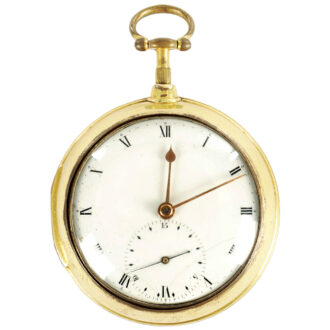
Dutch gilt metal watch with painted enamel scene Circa 1725
- Kenmerk
- AL3479
- Diameter
- 49 mm
- Estimate
- € 8.000 - 16.000
- Price sold
- € 7.000
Gilt and enamel single hand verge pocket watch
–
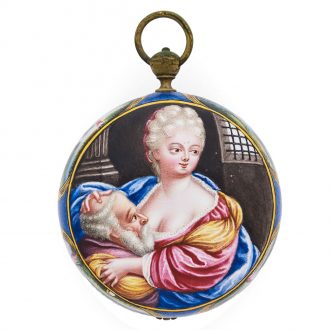
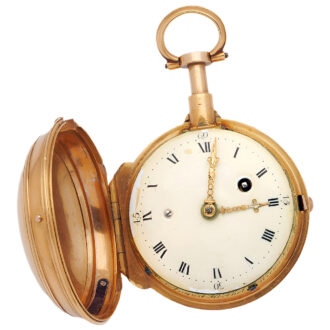
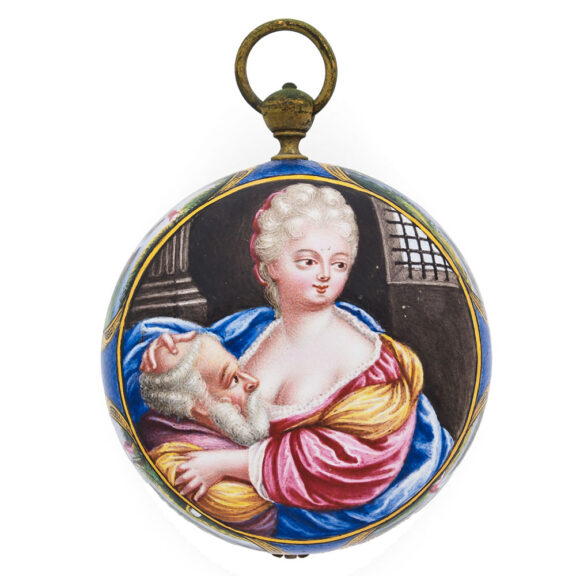
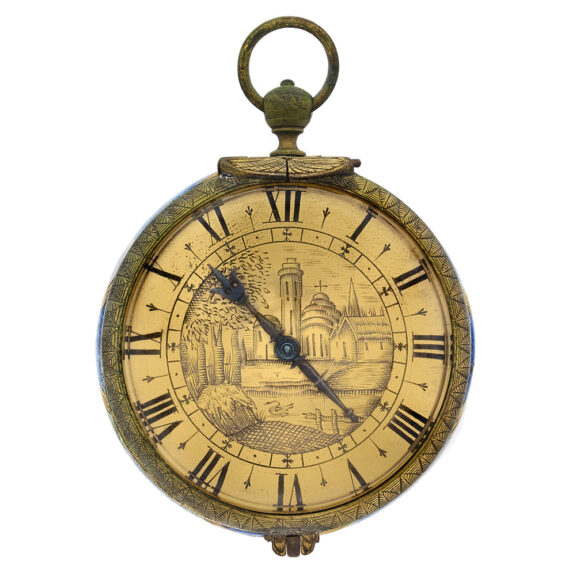
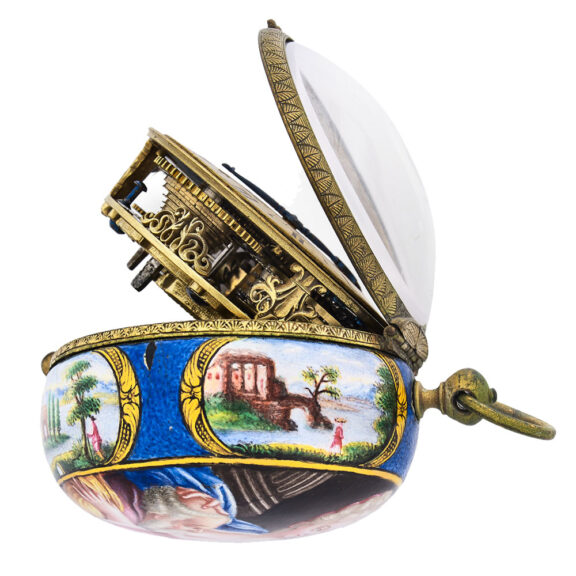
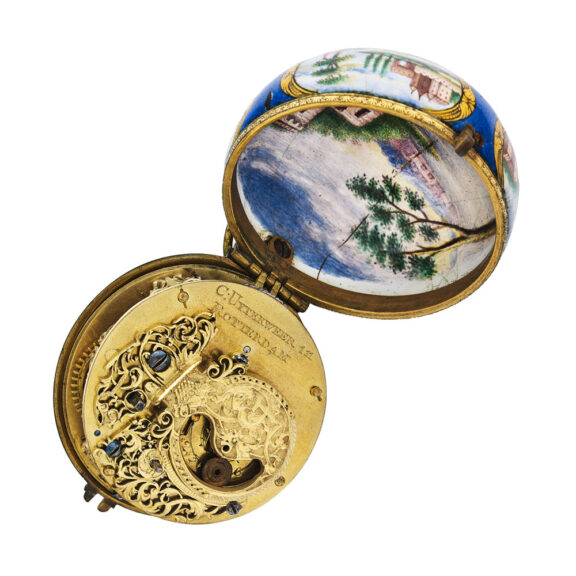
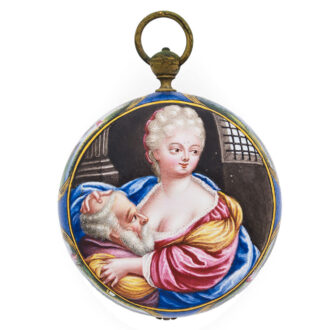
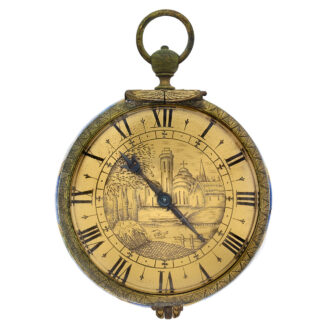
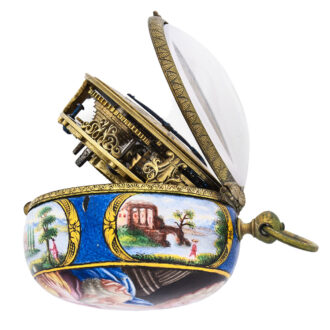
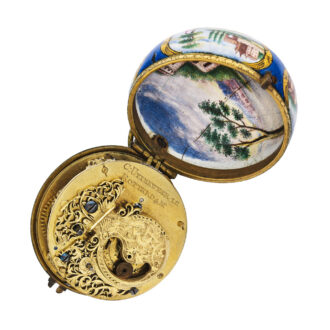
A magnificent and historically significant Dutch gilt metal and enamel single hand onion pocket watch features a pendulum balance wheel and a concealed polychrome enamel scene depicting Roman Charity. It was made by the celebrated Rotterdam maker Cornelis Uyterweer, circa 1725. This watch has a mechanical key wound full plate movement with a verge escapement, a chain fusee, and a solid backplate decorated with meticulously chased and engraved floral motifs. The balance cock is intricately chased and pierced with an opening to reveal an oscillating pendulum balance wheel, signed on the plate C. Uyterweer, Rotterdam.
–
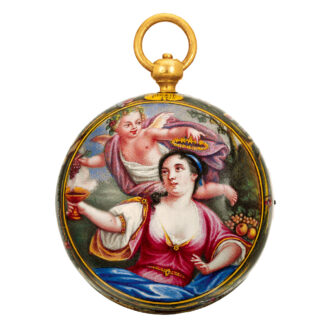
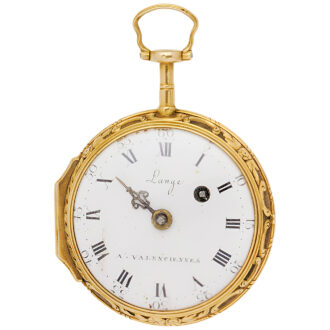
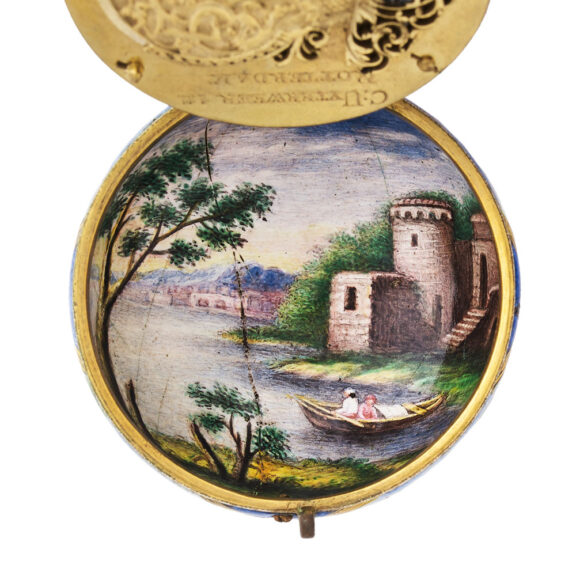
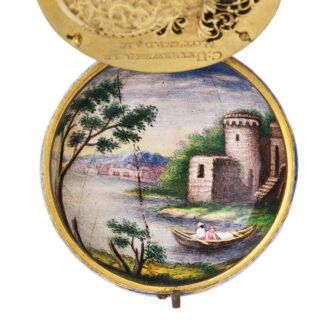
The gilded champlevé dial features bold black Roman numerals for the hours, an inner circle with half hour graduation marks, a single stylized blued steel hand, and a central field engraved with a lake scene inlaid with black enamel. The timepiece is housed in a spectacular, hinged, round, single body gilt metal case. The bezel and outer rim are richly decorated with engraved and chased foliage, framing a caseband adorned with beautifully executed polychrome painted pastoral vignettes over a yellow and blue background in the distinctive manner of the Huaud brothers. The reverse back cover features a vibrant polychrome enamel painting depicting the classical allegorical story of Roman Charity (Caritas Romana). The inner case bowl opens to reveal an additional finely detailed lakeside landscape.
–
Diameter: 49 mm
–
Weight: 83.5 g
–
Signed: C. Uyterweer, Rotterdam
–
The maker of this exceptional timepiece, Cornelis Uyterweer—son of the master clockmaker Pieter Uyterweer the elder—was a prominent member of an elite horological family active in Rotterdam around 1730.
–
This watch showcases the pinnacle of early 18th century decorative watchmaking by using the profound allegory of Roman Charity (Caritas Romana). Originating from ancient Rome’s historical records by Valerius Maximus, the legend tells the story of Cimon, an elderly man condemned to starve in prison, whose life is sustained by his devoted daughter Pero, who secretly breastfeeds him during her visits.
–
In the decorative arts of the late Baroque and emerging Rococo eras, this charged subject was popularized through engravings and masterworks of artists like Peter Paul Rubens, Caravaggio, Simon Vouet, and Carlo Cignani. The theme carried multi-layered significance: it stood as a noble Neoclassical symbol of ultimate filial devotion, sacrifice, unconditional familial love, and the generational transmission of virtues. This message was metaphorically linked to the passage of time itself.
–
However, within the complex subculture of luxury horology, elite Swiss and Dutch enamelers recognized that this emotionally and visually provocative composition bridged the gap between strict moral classicism and the aristocratic taste for libertinism. By enveloping the watch in a respectable facade of ancient history and pastoral landscape vignettes, the owner could openly carry a masterpiece of miniature enamel painting that celebrated the high art tradition of the Old Masters and the private, sophisticated art of dissimulation.
Signed: C. Uyterweer, Rotterdam
Share this page: