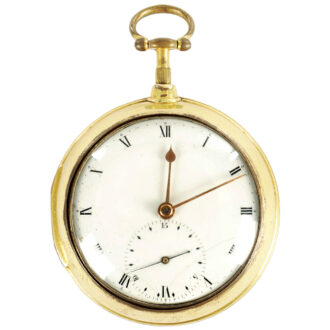
Dutch gilt metal watch with painted enamel scene Circa 1725
- Kenmerk
- FF0035
- Diameter
- 49 mm
- Estimate
- € 8.000 - 16.000
- Price sold
- -
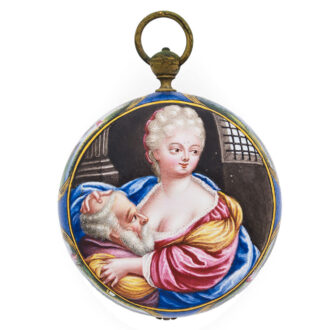
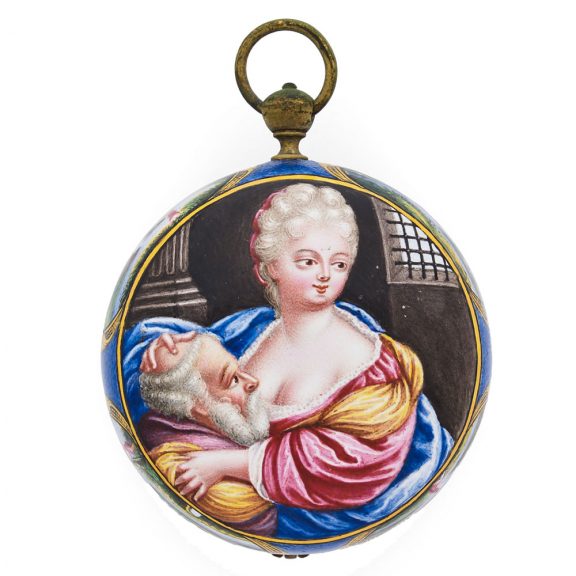
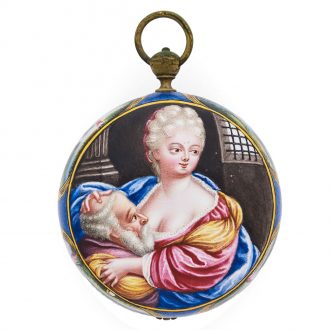
Single hand watch with enamel scene depicting Roman Charity
–
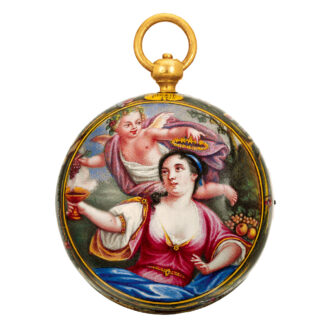
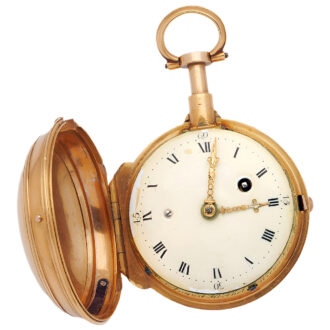
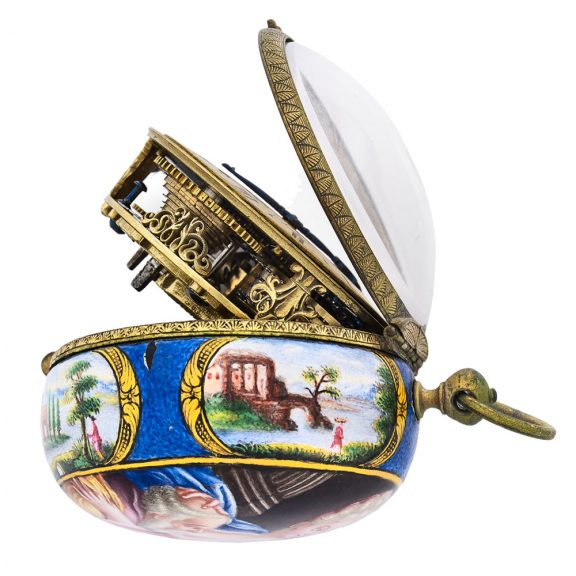
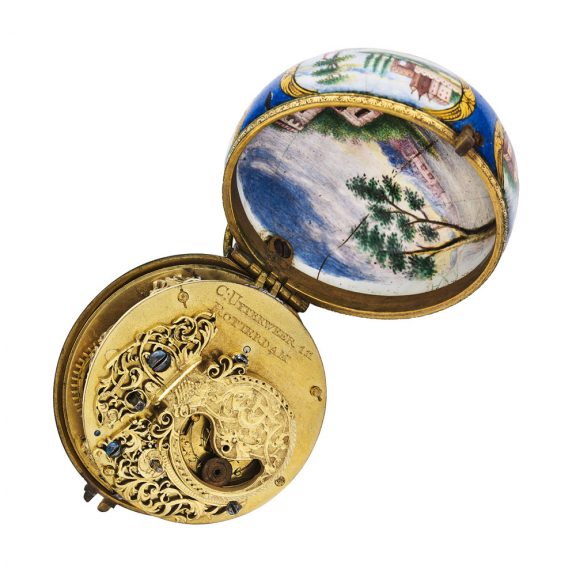
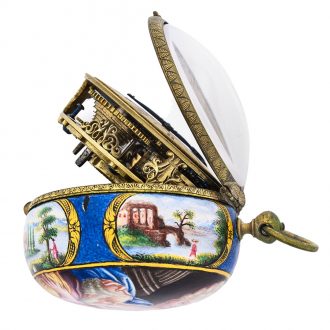
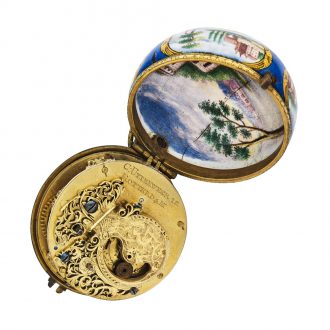
A fine Dutch single hand watch with pendulum balance in gilded metal case with painted enamel scene depicting Roman Charity, circa 1725. Full plate fire gilt movement with key winding, verge escapement, engraved and pierced cock with an opening for the balance pendulum, chain fusee, full plate with chased and engraved floral decoration, signed C. Uyterweer, Rotterdam.
–
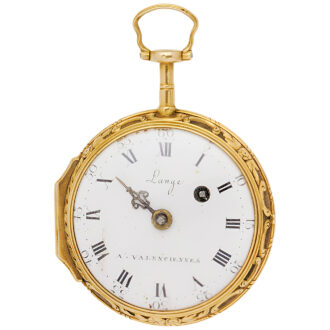
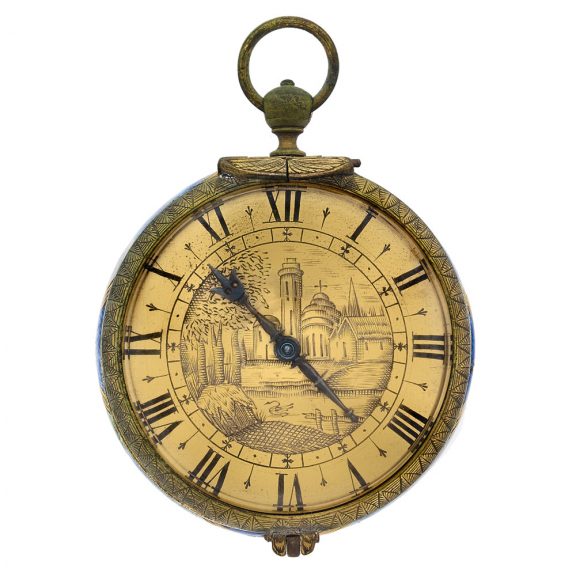
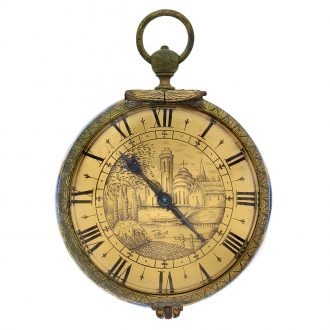
Gilded dial with Roman numerals with a blued steel hand, lake scene engraved and inlaid with black enamel, circle in the centre for the half hour graduation.
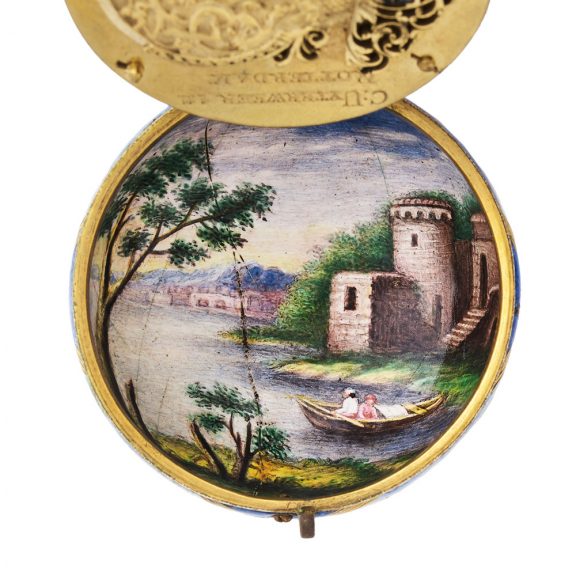
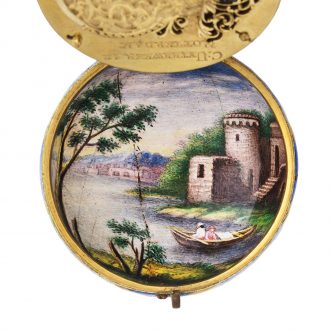
Round case on hinge with bezel and rim decorated with engraved and engraved foliage, the whole polychrome enamelled in the manner of Huaud, the case band decorated with pastoral vignettes, framed by foliage and flowers on a yellow and blue background, polychrome enamelled scene painted on the reverse representing Roman Charity, the interior also decorated with a lake scene.
–
Diameter 49 mm
–
Signed: C. Uyterweer, Rotterdam
–
Cornelis Uyterweer Son of Pieter Uyterweer the elder working circa 1730 in Rotterdam
The theme of Roman Charity in antique watches
The theme of Roman Charity was used in the decorative arts, including on luxury watches in the 18th century.
Roman Charity is the story of a woman, Pero, who secretly breastfeeds her father, Cimon, who is imprisoned and condemned to die of starvation. The scene was often depicted by 17th-century artists, including Rubens and Caravaggio.
These watches, often intended for the elite, combined watchmaking expertise with the art of miniature enamelling by taking up the themes used by the Old Masters of painting.
Roman Charity: Origin and meaning
Origin: The legend of Roman Charity comes from the stories of ancient Rome, notably recounted by Valerius Maximus. It tells the story of Cimon, an old man condemned to starve to death in prison, saved by his daughter, Pero, who secretly breastfeeds him.
Symbolism: This story illustrates an act of filial devotion, sacrifice and extreme charity. It embodies family virtues and unconditional love.
Representation on watches in the 18th century
Miniatures on enamel: The dials and backs of watch cases were often decorated with miniatures painted on enamel.
The scenes typically represented Pero breastfeeding his imprisoned father, in compositions inspired by famous paintings or engravings of the time.
Techniques used: Genevan artisans were particularly renowned for their mastery of painted enamel.
Roman Charity and its interpretations
Fashion of ancient stories: The 18th century saw a strong interest in ancient themes in the decorative arts, particularly with the influence of neoclassicism.
Roman Charity, already popular in painting and engraving, naturally found its place in decorative watchmaking.
Association with time: The theme of Roman Charity could be metaphorically linked to the passage of time and the transmission of family values through the generations. The great artists of the time: Engravings and paintings of this subject, particularly by artists such as Simon Vouet or Carlo Cignani, were widely reproduced. They inspired the watchmakers and enamelers of Geneva.
Classical representation inspired by the theme of Roman Charity
The theme of Roman Charity is a classic representation inspired by an ancient legend that was widely exploited in the decorative arts of the 18th century. This subject, both moral and emotionally charged, is part of the Rococo and Neoclassical aesthetics, combining a taste for historical narratives and moral values.
The theme of Roman Charity, although ancient, found a particular resonance in the early 18th century thanks to the alliance of the moral message and refined aesthetics. It illustrates the way in which classical narratives were adapted to enrich the decorative arts, blending culture and craftsmanship in luxurious creations.
Signed: C. Uyterweer, Rotterdam
Share this page: