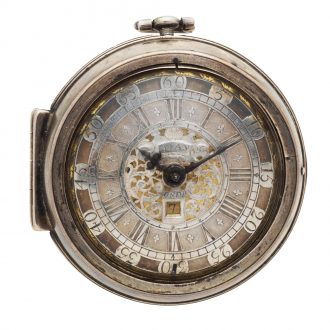
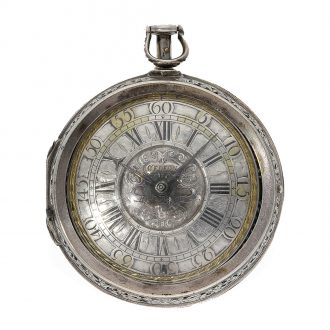
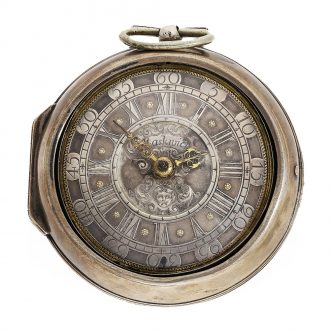
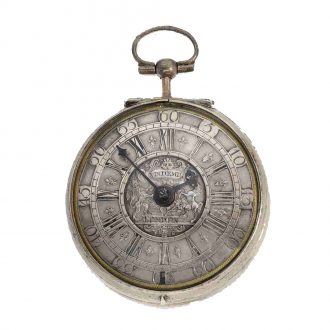
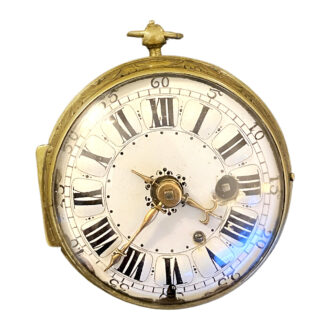
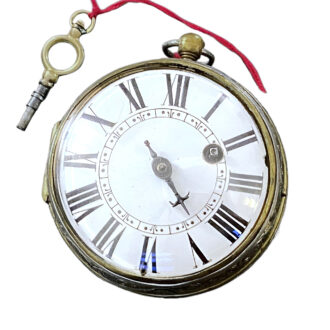
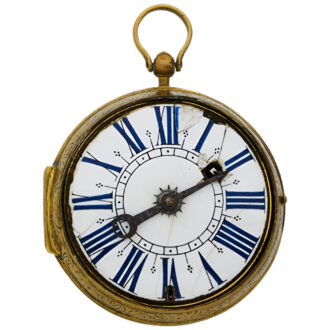
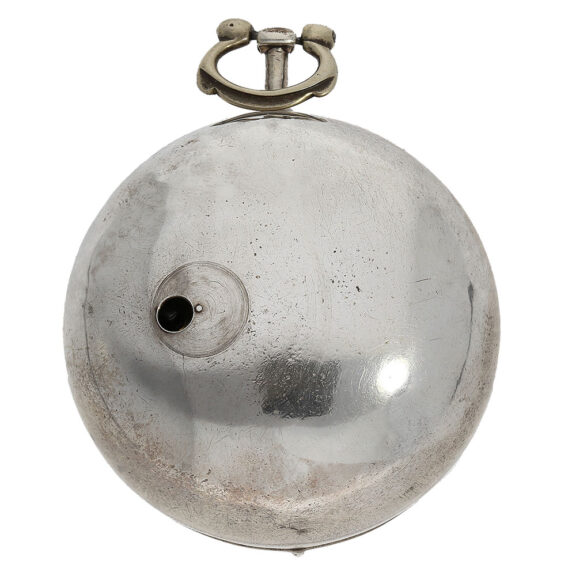
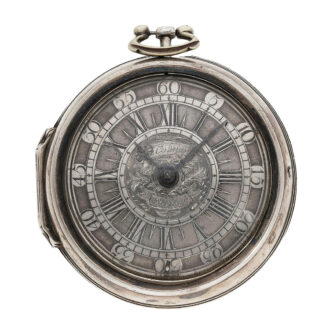
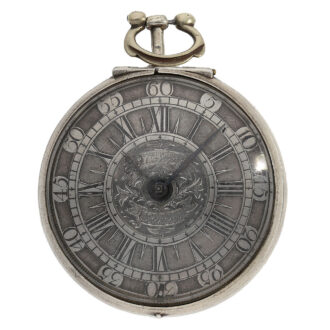
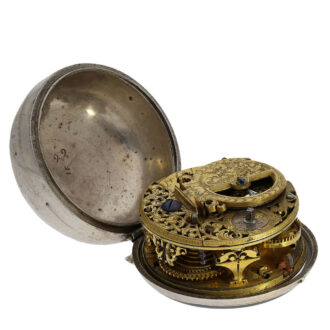
Early English pocket watch with false pendulum Circa 1700
- Kenmerk
- HC0451
- Diameter
- 58 mm
- Estimate
- € 2.500 - 5.000
- Price sold
- € 2.800
Pocket watch very early verge escapement
–
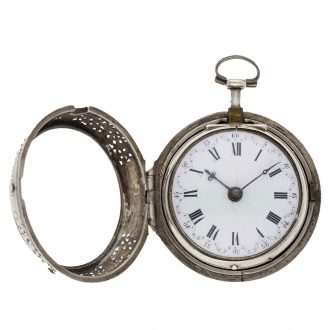
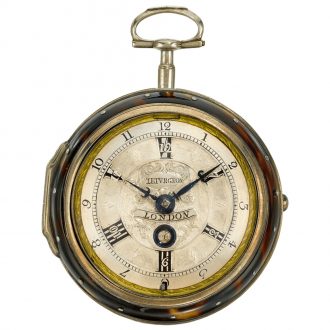
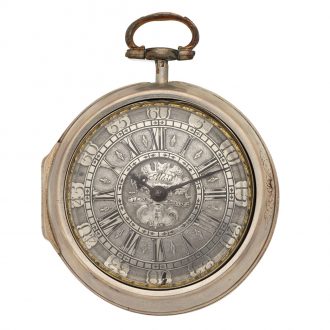
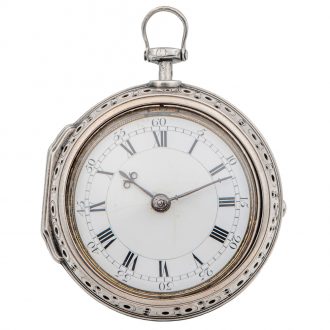
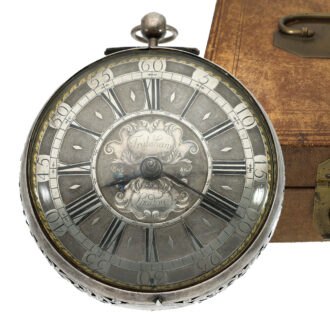
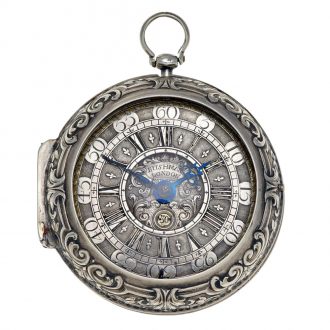
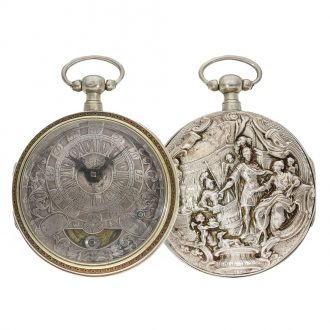
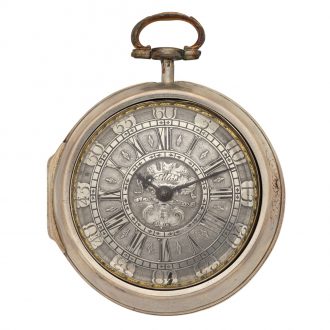
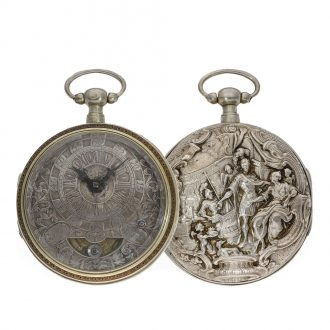
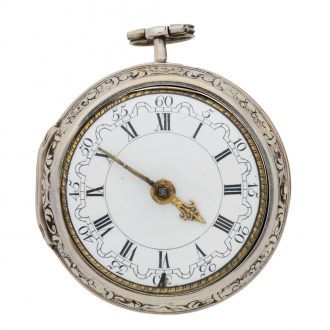
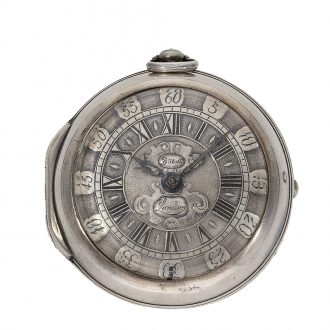
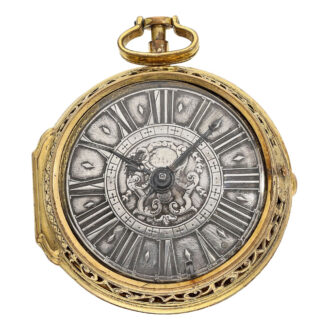
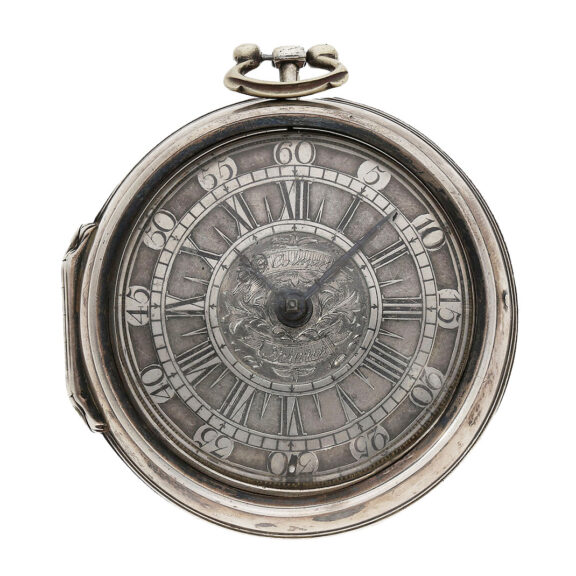
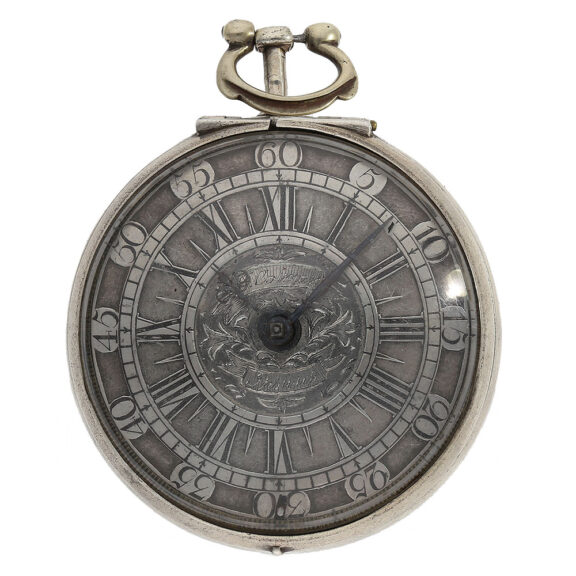
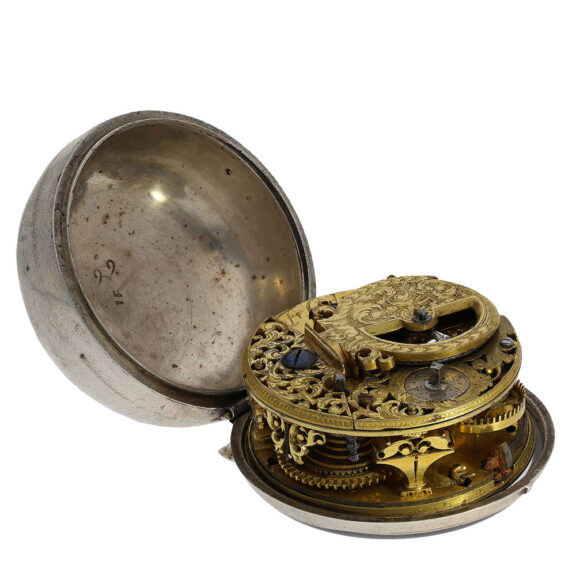
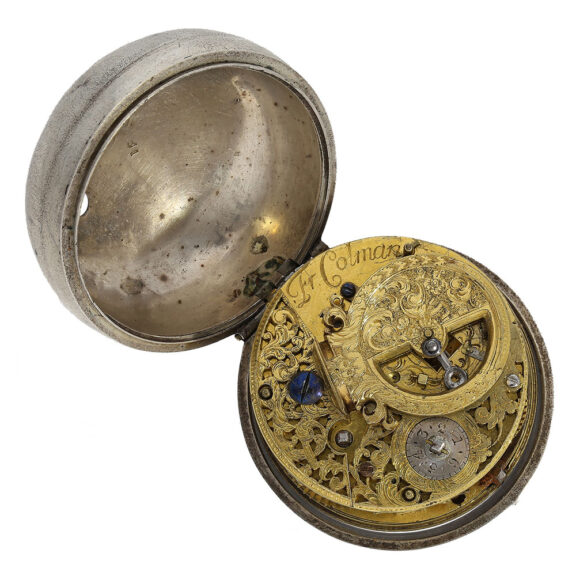
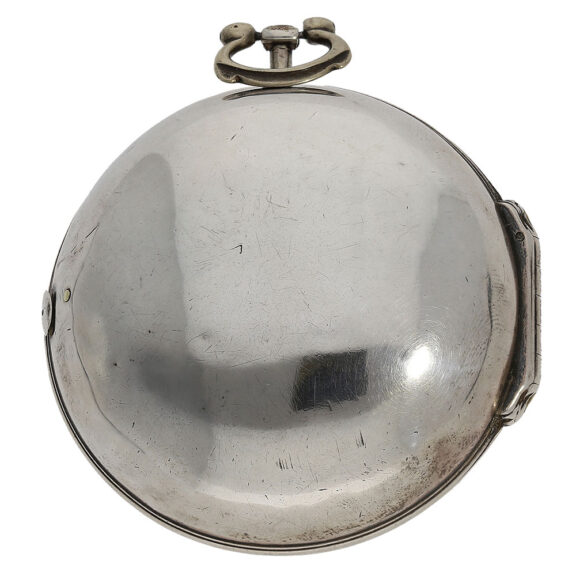
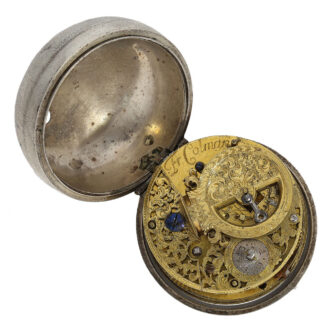
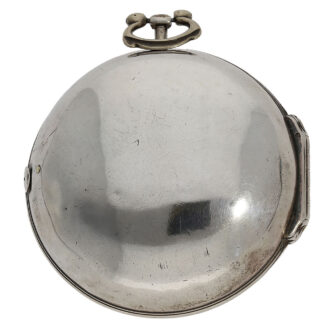
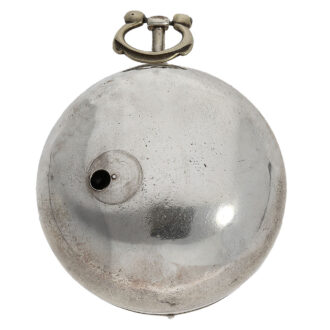
An early English pocket watch with a false pendulum, made by Francois Colman in Ipswich, England, circa 1700. This particular timepiece boasts a double open faced case made of silver, with the master’s mark IP etched onto it. The champlevé dial of the pocket watch made of silver and richly decorated showcases intricate designs that reflect the skill and artistry of the craftsman who created it. The iron hands add a touch of contrast to the dial, making it easier to read the time even in low light conditions. What makes this watch truly unique is its interesting and very early verge movement with a false pendulum and tulip pillars. The false pendulum was a common feature in early pocket watches, designed to mimic the motion of a true pendulum and provide a visual cue for the passage of time. The tulip pillars, on the other hand, were a decorative element that added to the watch’s overall aesthetic appeal.
Dial and movement are signed.
–
Diameter: 58 mm
–
Weight: 150 g
–
Signed: Fr. Colman, Ipswich
–
Francois Colman was a Huguenot, a Protestant group that faced persecution in France during the 17th century. Many Huguenots, including Colman, fled France and settled in England. He produced a variety of watches, including pocket watches and verge watches. His watches were known for their high-quality craftsmanship and intricate designs. Some of his watches featured enamel dials, while others had ornate cases made from gold or silver. Colman was also known for his work on repeating watches, which could chime the time at the push of a button. Overall, Francois Colman was a highly skilled watchmaker who produced a range of beautiful and innovative timepieces during his career.
It is difficult to say exactly how Colman’s Huguenot background influenced his watchmaking, but it is likely that his Protestant beliefs played a role in shaping his work ethic and attention to detail. Huguenots were known for their craftsmanship and precision, and these values may have been instilled in Colman from a young age.
Additionally, Huguenots often found themselves in professions that required a high degree of skill and specialization, such as watchmaking. Colman may have been drawn to this profession because it allowed him to use his talents and expertise to create something of value.
During the time that Francois Colman was active as a watchmaker in Ipswich around 1700, the watchmaking industry in Ipswich was thriving. Ipswich was known for its skilled craftsmen and had a reputation for producing high quality clocks and watches. The town had several prominent clockmakers and watchmakers, and there was a strong demand for their products. In fact, Ipswich was one of the leading centres of clock and watchmaking in England during this period. The industry was supported by the town’s wealthy merchants and aristocrats, who were among the main customers for these luxury items. Overall, the state of the watchmaking industry in Ipswich during Francois Colman’s time was prosperous and well established.
Signed: Fr. Colman, Ipswich
Share this page: