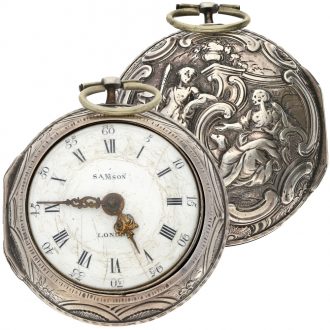
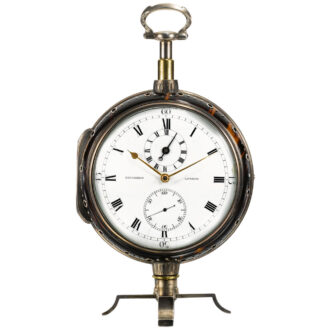
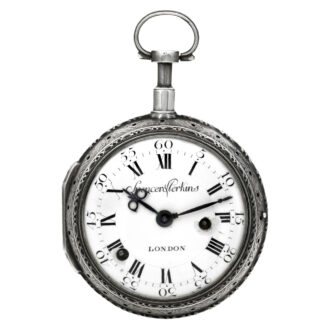
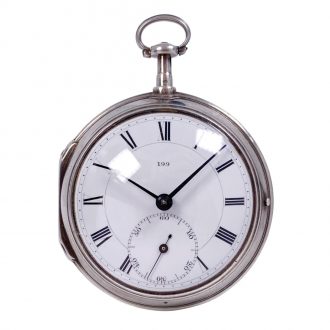
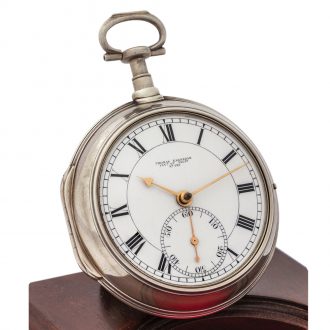
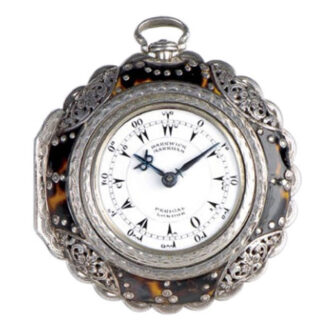
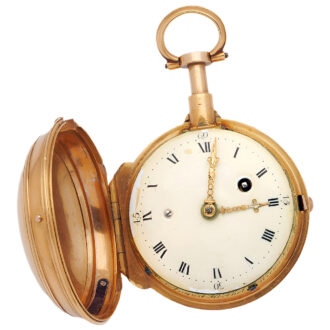
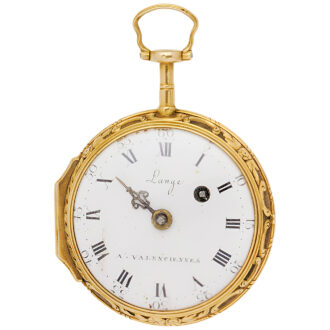
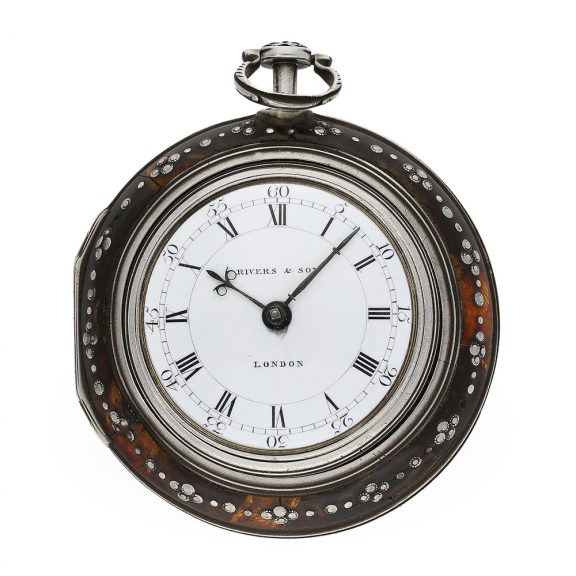
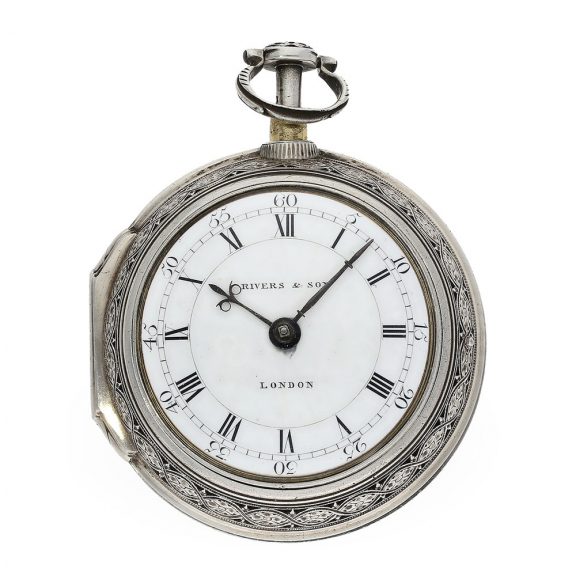
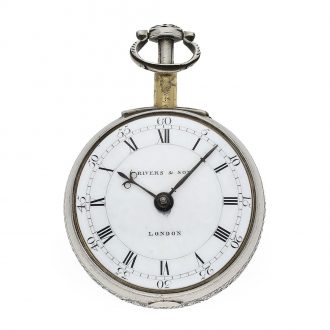
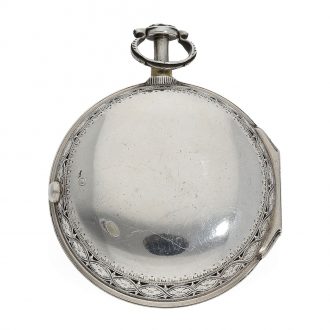
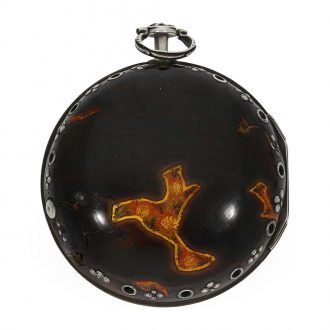
Early English silver triple cased watch with striking mechanism Circa 1785
- Kenmerk
- HC0887
- Diameter
- 58 mm
- Estimate
- € 2.500 - 5.000
- Price sold
- € 3.350
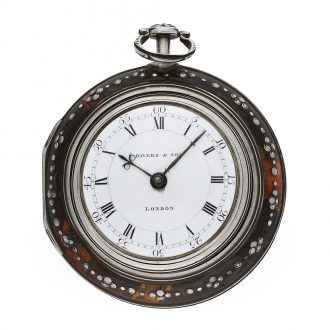
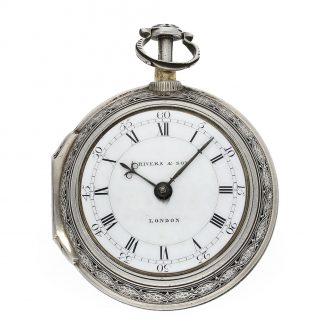
Silver and tortoiseshell verge in triple cases
–
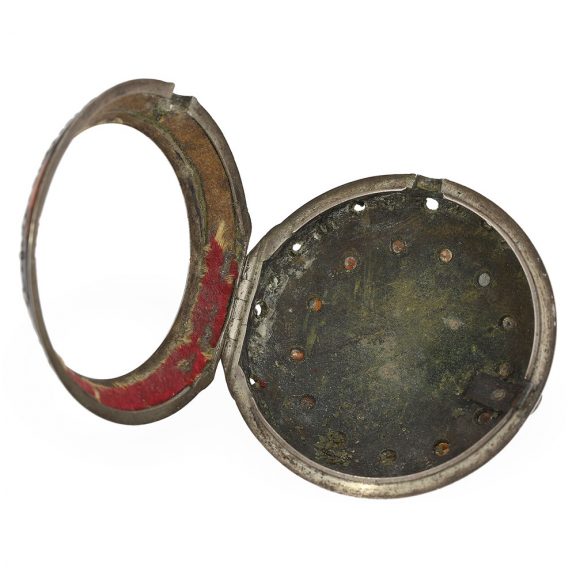
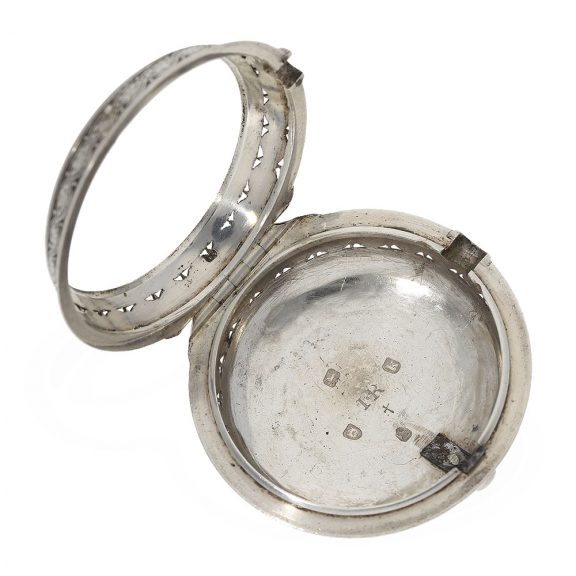
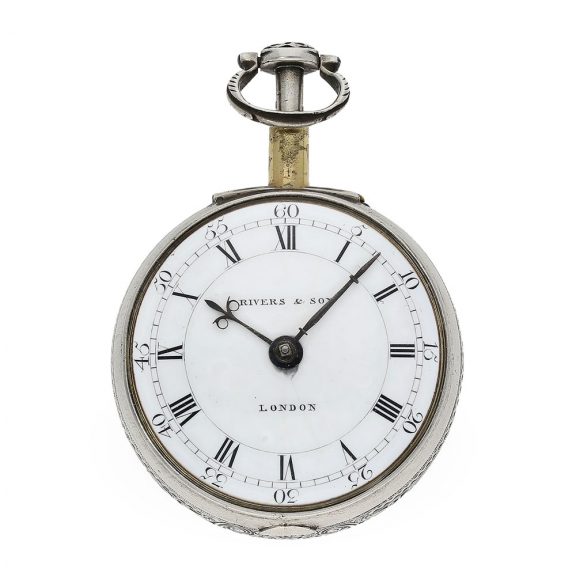
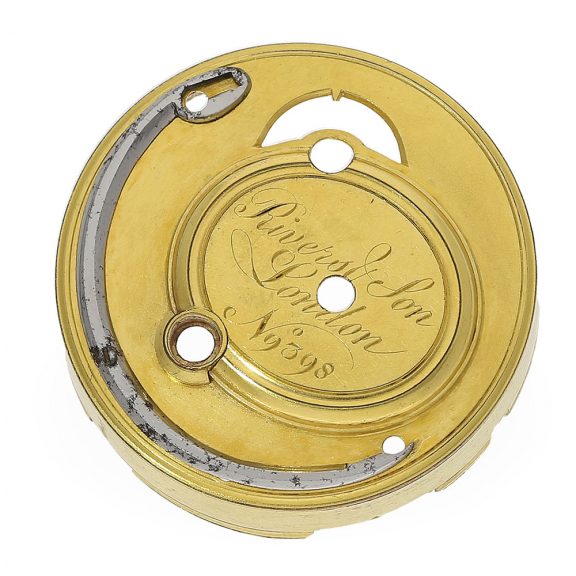
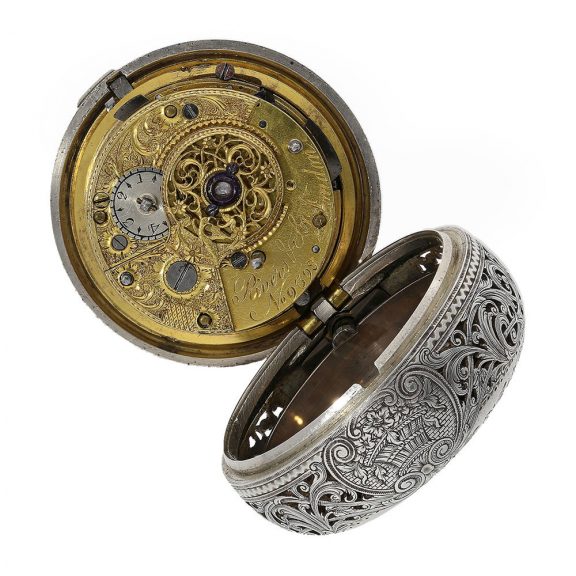
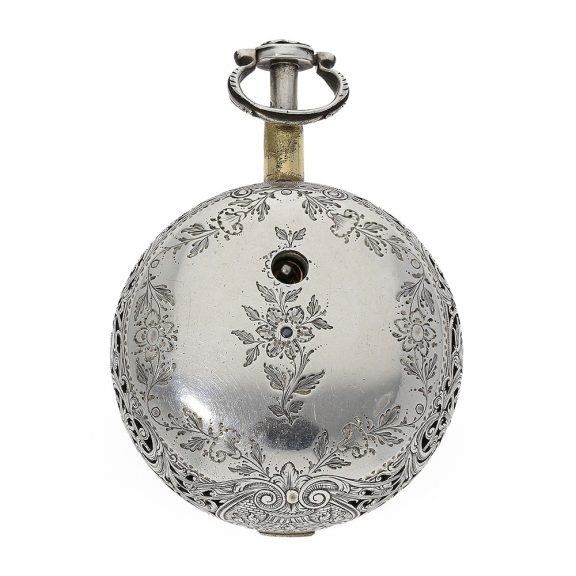
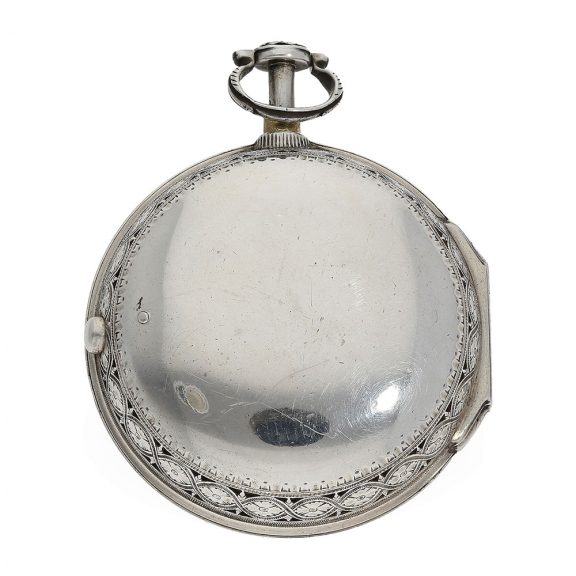
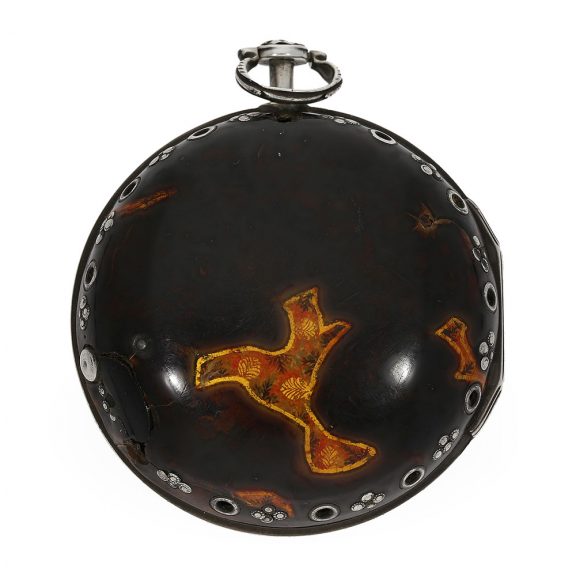
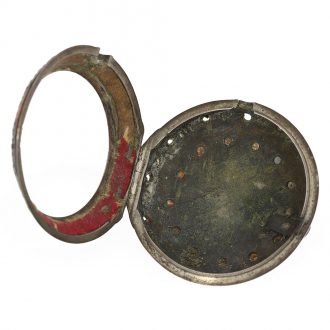
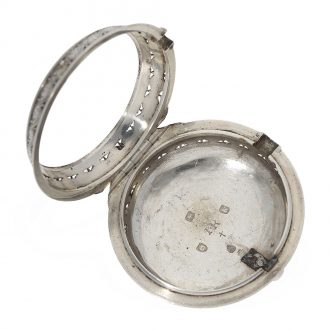
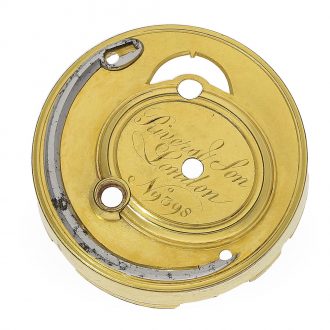
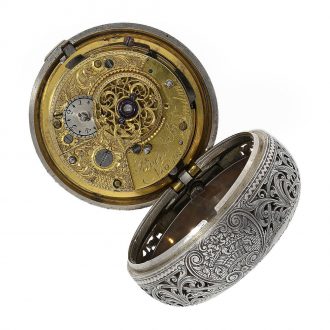
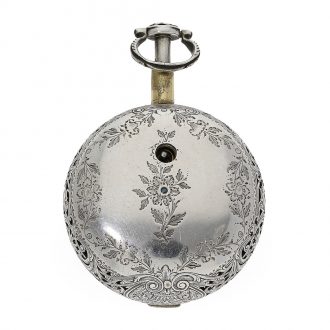
An early triple cased verge pocket watch with a striking mechanism made by Rivers & Son in London, England, circa 1785. This open faced watch is crafted from silver and has three cases. An outer protective case of extremely fine quality covered with tortoiseshell and Hallmarked for 1785, with a so-called under horn painting, where the light tortoiseshell parts are decorated with gold paint from the inside, both the second and inner cases are finely pierced with sound openings and decoratively engraved, the inner case with a bell. The white enamel dial has Roman hours, an outer minute track, outermost Arabic five minute numerals and, probably, original, poker & beetle hands. The high quality movement has a vegre escapement, diamond end stone and a mechanism for repeating the hours and quarter hours. Cuvette and movement have matching numbers, the cuvette, dial and movement are signed.
–
Diameter: 58 mm
–
Weight: 152 g
–
Signed: Rivers & Son London
–
Rivers & Son
Rivers & Son took over the company of Daniel De St. Leu in London, which was in service of the royal house and world famous for its fantastic self striking mechanisms in pocket watches. The signature Rivers & Son was used from 1782 to 1815.
–
Daniel De St. Leu
Daniel De St. Leu was a Genevan of origin. As a watchmaker, he worked in Geneva and London. De st. Leu was listed in London from 1753 until 1797.
He manufactured some of the most exquisite and elaborate watches of the 18th century. Gaining royal favour, he was appointed watchmaker to Queen Charlotte, wife of King George III, in 1765, a title he held for the rest of his life, since all his watches after this date are either signed ‘Sevt. to her Majesty’ or ‘Watch Maker to her Majesty’.
He crafted movements of superior quality and specialized in making watches for affluent Ottoman clients, who requested their watches to be as pieces of jewellery, preferably in lavish decorated gold cases and set with precious stones. In the 18th century, the export of English watches to the Ottoman Empire was conducted on a large scale.
Signed: Rivers & Son London
Share this page: