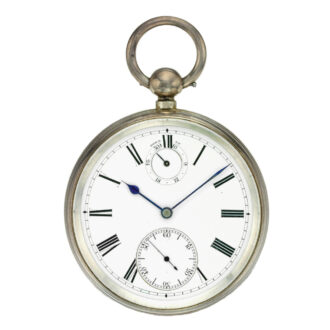
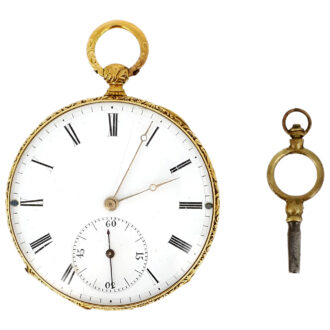
English chronometer with duo-in-uno hairspring Circa 1879
- Kenmerk
- AD9298
- Diameter
- 55 mm
- Estimate
- € 4.500 - 8.000
- Price sold
- € 6.450
Important silver pocket chronometer by Arthur Paul Walsh / John Bliss & Co.
–
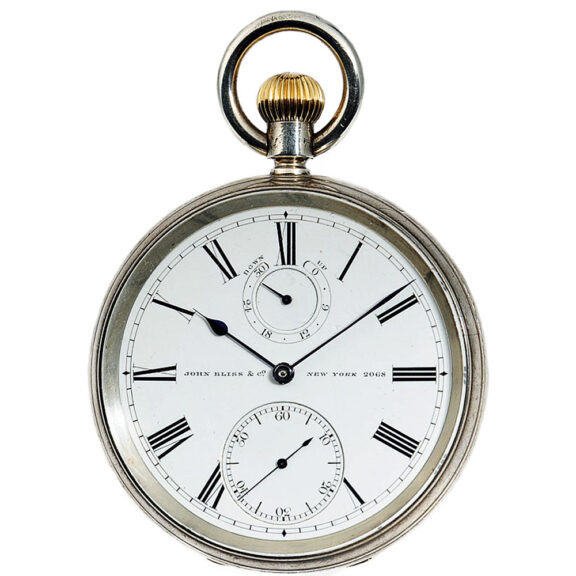
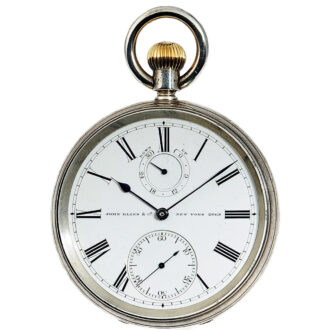
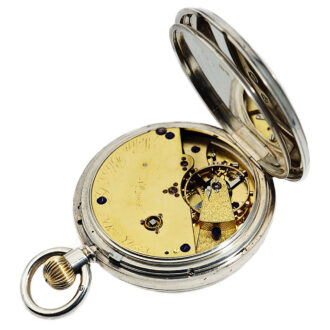
An important English pocket chronometer with 30h power reserve indicator, duo-in-uno hairspring and spring detent escapement, circa 1879.
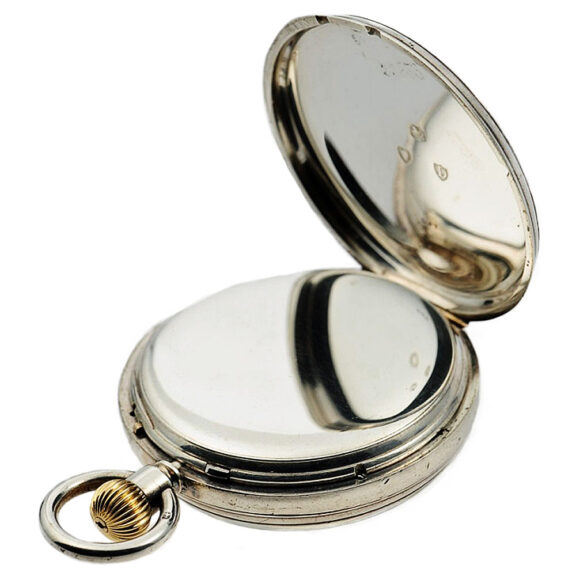
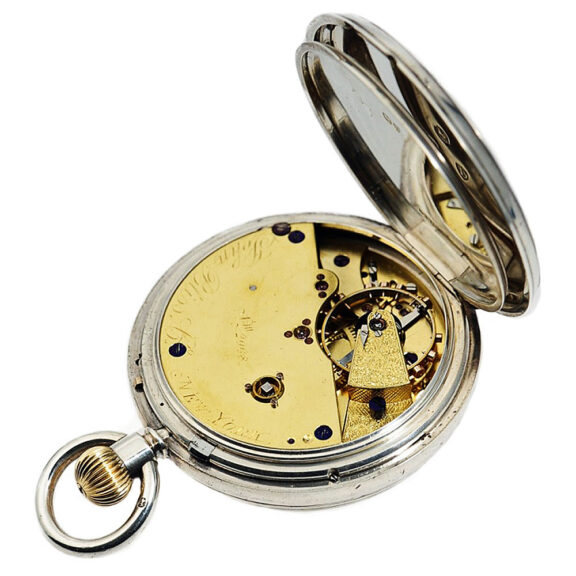
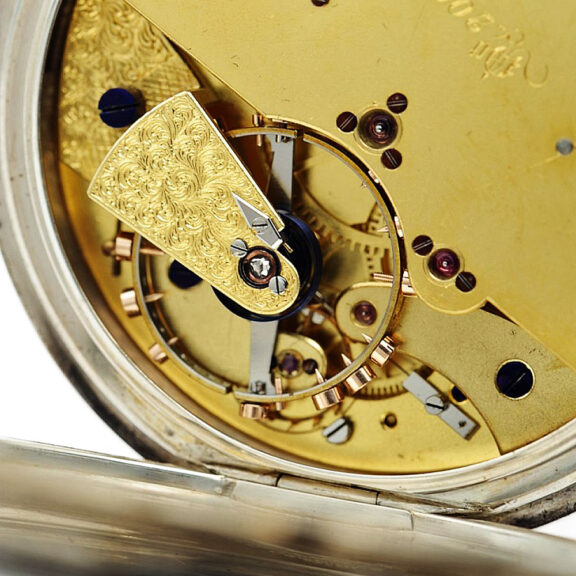
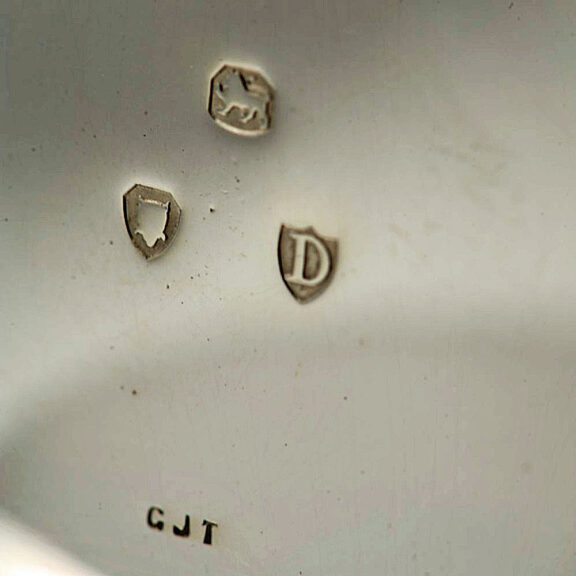
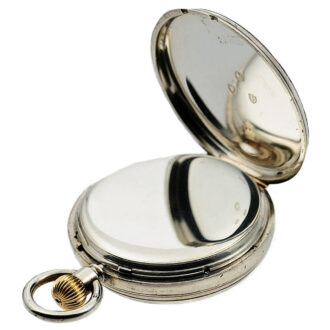
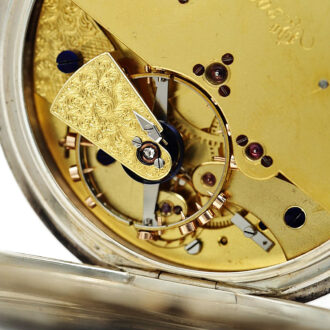
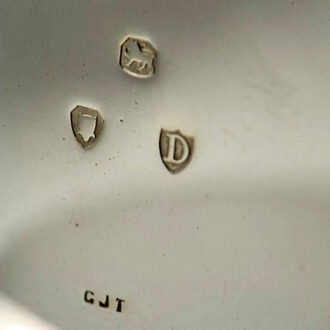
Silver, polished, tiered case with case maker’s punch mark GJT (George James Thickbroom, London) and a gold crown and hinge. Signed enamel dial with radial Roman numerals, auxiliary seconds, and blued spade hands. Signed, chatoned, frosted gilt 2/3 plate movement, crown winding with patented hand setting device, an additional option for keywind, chain/fusee, spring detent escapement, heavy gold screw compensation balance, free-sprung, blued duo-in-uno balance spring, very finely engraved balance cock, and chatoned diamond endstone on balance.
–
Diameter: 55 mm
–
Weight: 155 g
–
Signed: John Bliss & Co., New York
–
Duo-in-uno hairspring
Duo-in-uno hairspring is a combination of Helical and spiral. It has an “up-down” indicator and sub-seconds. It also has a disconnect mechanism that disengages the winding when the bezel is closed.
–
Arthur Paul Walsh (1815-1893)
London watchmaker Arthur Paul Walsh was known as the “prince of chronometer makers”; he created this chronometer for makerJohn Bliss in New York. Arthur Paul Walsh apprenticed with T.F. Cooper in Calthorpe Street (Gray’s Inn Road), who taught him how to build and regulate duplex and chronometer movements.
–
John Bliss
John Bliss, who sold no. 2068, was born in Norwich in Connecticut on July 15, 1775. At the age of 16, he began his apprenticeship with Benjamin Lord in Rutland in Vermont; at the time Lord was the most renowned watchmaker in New England. In 1814 Bliss moved to New York, only to move further west a little later. He opened a shop in Zanesville in Ohio and traded in lathes and mainly in surveying instruments for the land claims. From Ohio Bloss went to New Orleans and had a repair workshop for marine chronometers and other watches; in 1835 he went back to New York.
In New Work Bliss opened a jeweller’s shop and took the excellent English watchmaker Frederick Creighton as a partner two years later. In 1842 the partners – who by now called themselves chronometer makers – are recorded as working at 42 Fulton Street. They bought ebauches in England and finalized them. On August 4, 1845, they obtained the American patent no. 4135 on a special balance for secondary temperature compensation. From 1848 on the company built marine and survey chronometers completely in-house – “real” American products to all intents and purposes. Their no. 817 was used during the Grinnell expedition and none other than oceanographer Matthew Fontaine Maury referred to it as an “instrument with excellent performance”.
Bliss and Creighton separated in 1855 after an argument; Creighton remained at 42 Fulton Street while Bliss established his new company John Bliss & Son two houses down the street. Bliss died on October 15, 1857, his former partner Creighton only seven days later.
Bliss’ son John moved to Wall Street in 1867 and 10 years later from there to 128 Front Street. He and his brother George now traded as “John Bliss & Co.” and imported for example English marine chronometers from Kullberg and pocket chronometers from A.P. Walsh; this was the time when Walsh’s pocket chronometer no. 2068 came to New York.
Signed: John Bliss & Co., New York
Share this page: