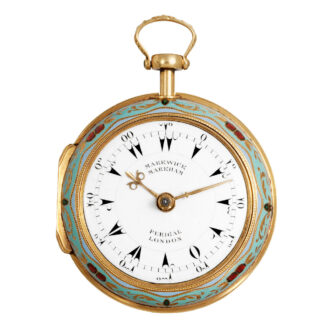
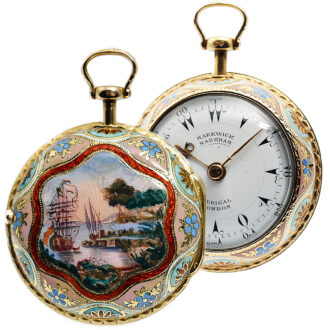
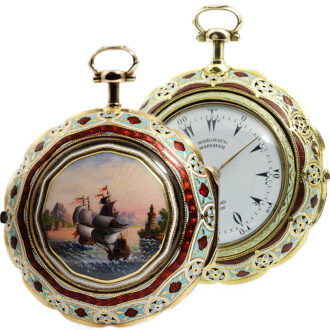
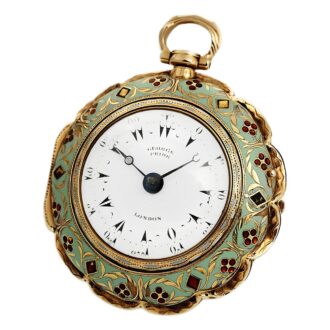
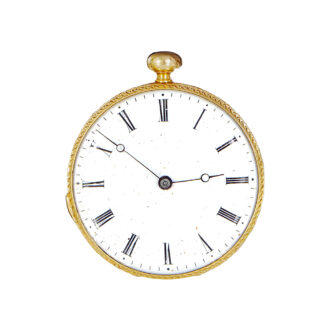
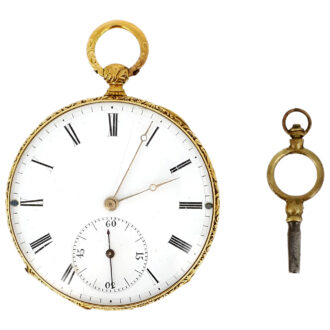
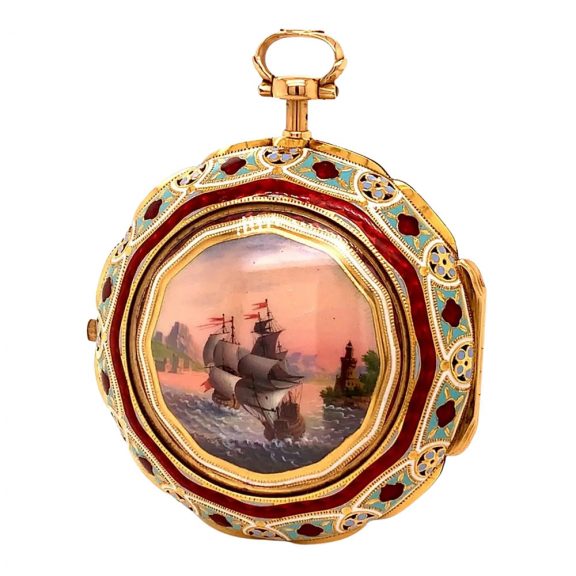
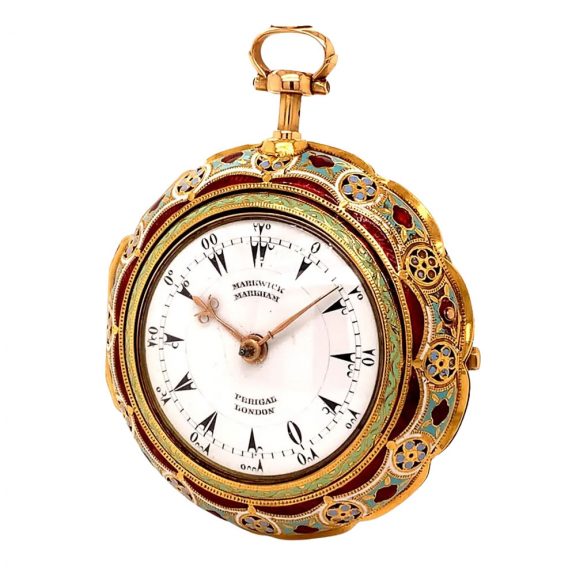
English gold and enamel verge for the Turkish market Circa 1813
- Kenmerk
- DB0762
- Diameter
- 48 mm
- Estimate
- € 12.500 - 25.000
- Price sold
- € 18.800
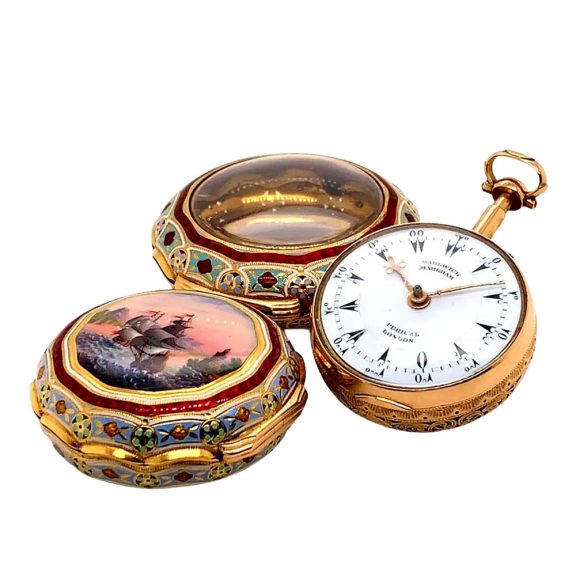
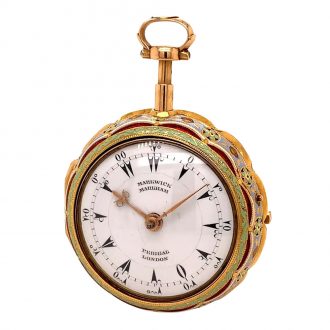
Enamelled gold repeater in triple cases by Markwick Markham & Perigal
–
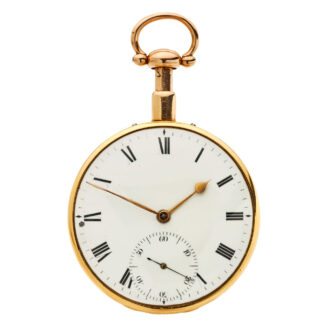
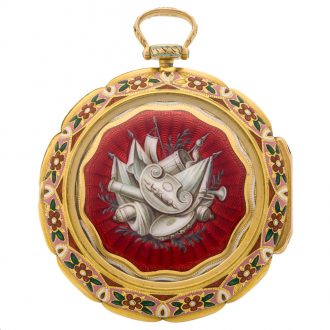
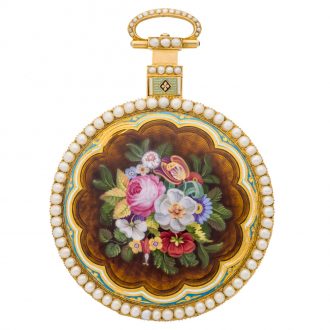
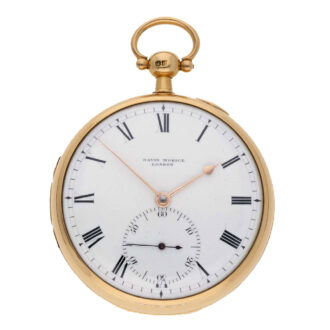
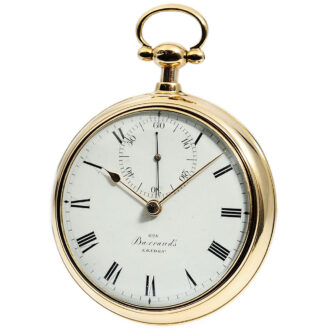
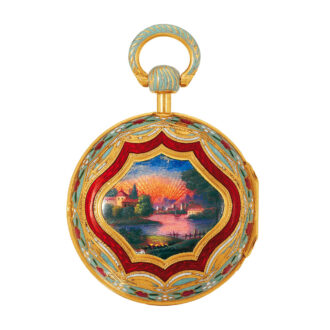
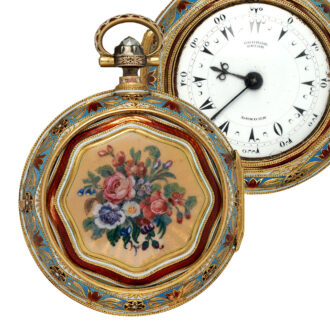
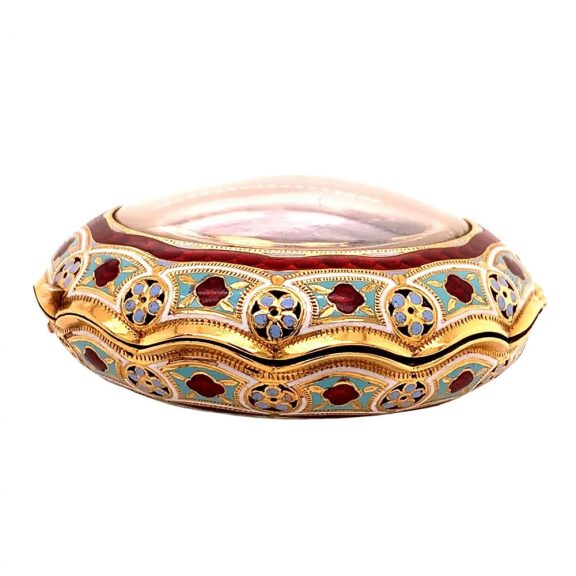
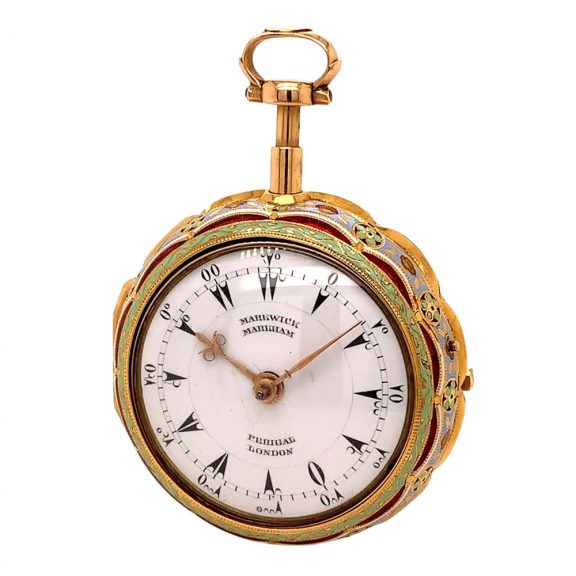
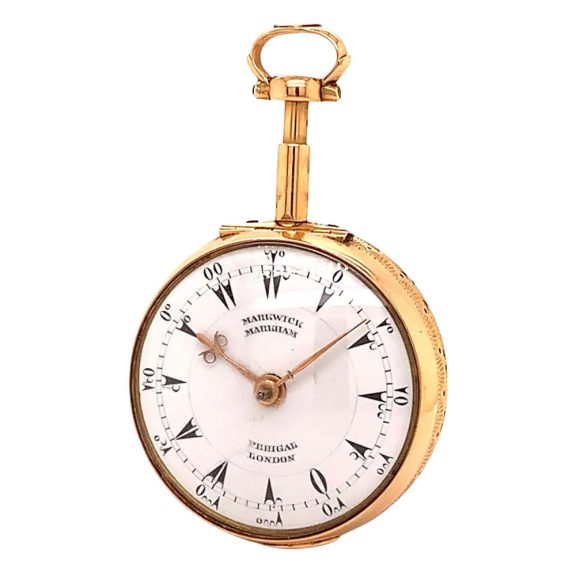
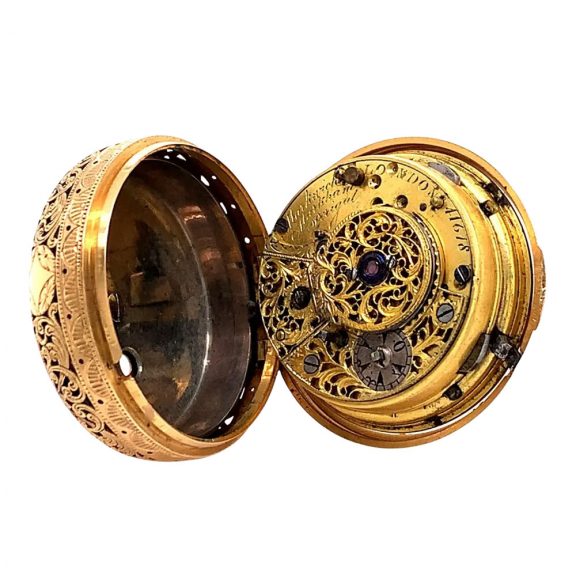
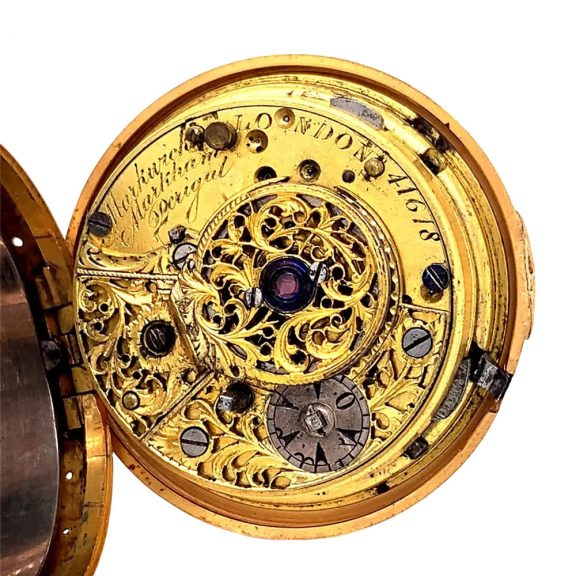
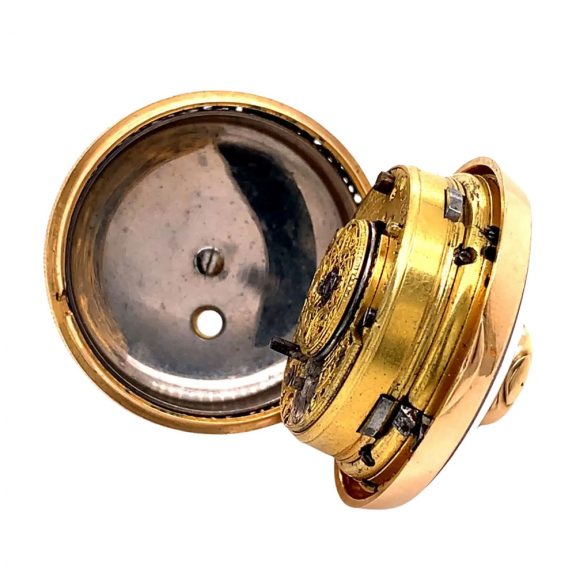
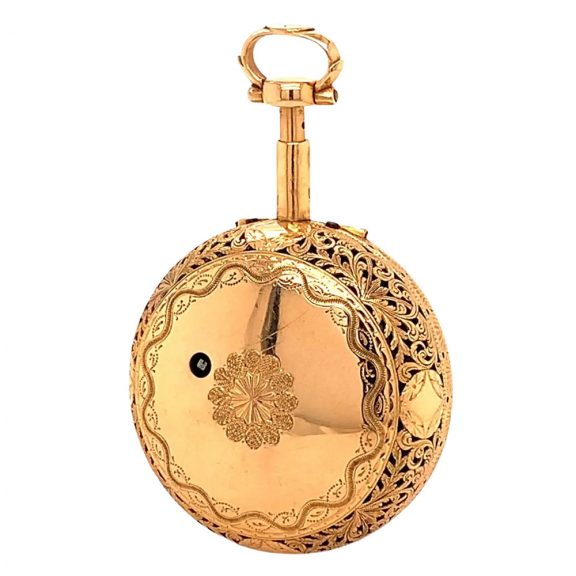
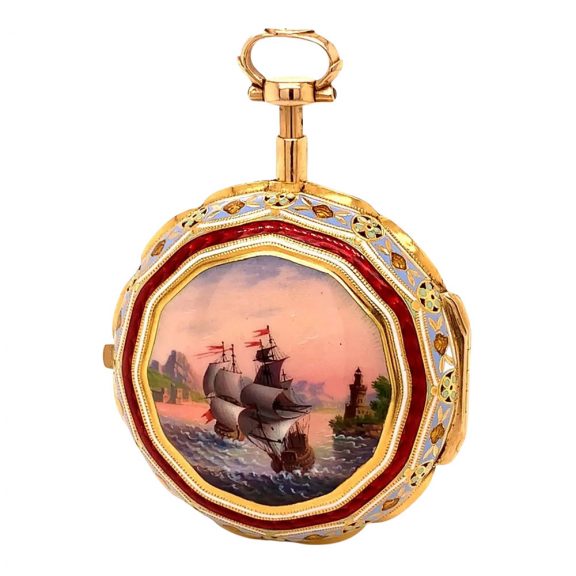
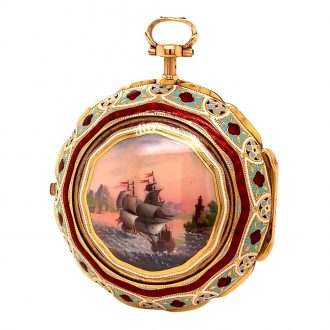
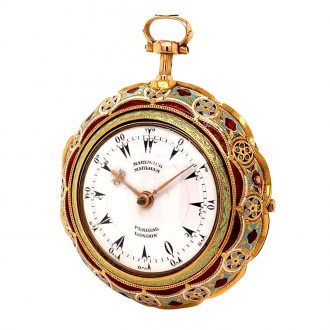
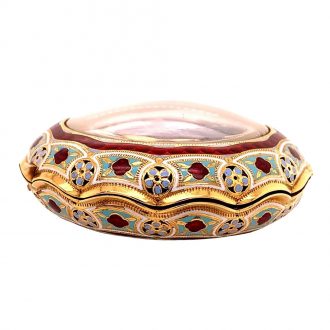
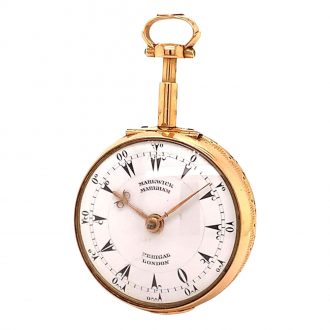
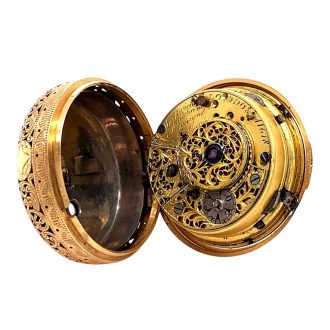
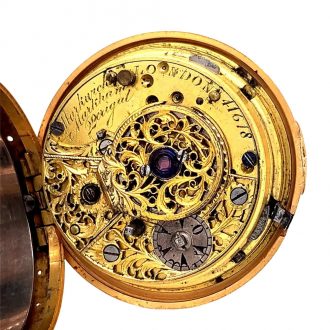
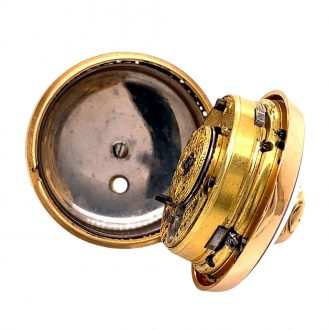
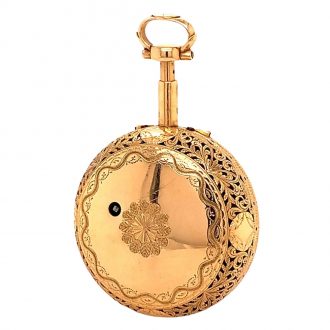
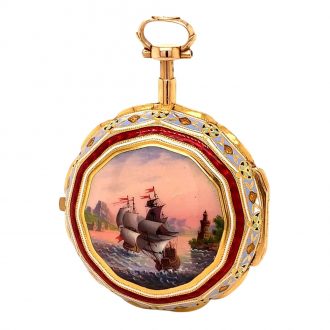
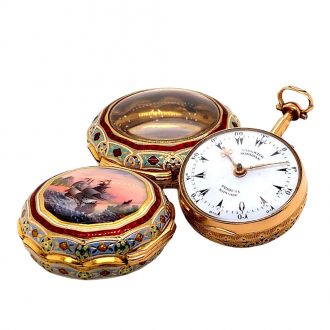
A very fine English 18 carat gold and enamel triple cased quarter repeating verge pocket watch made for the Ottoman market, circa 1813. Full plate movement, key winding, chain and fusee, two hammers and a three arm steel balance. White enamel dial with Turkish numerals and decorative hands. The outer and intermediate cases are scalloped, decorated with opaque light blue and translucent red champlevé enamel flowers, partly openwork, the intermediate case with an exquisite polychrome enamel scene on the back depicting a Turkish coastal landscape and two sailing ships, on the shore a contemporary lighthouse and a city fortification at sunrise against a translucent guilloché pink background, maker’s mark AN for Augustus Newman, London, a bottom bell, the outer case is glazed on both sides, the inner case is richly pierced and engraved. Dial signed, case numbered, movement signed and numbered, case and movement with matching numbers.
–
Diameter: 48 mm
–
Weight: 113 g
–
Signed: Markwick Markham Perigal London
–
Both the watch technology used and the case design of these watches made for the Turkish market were already antiquated at this time, i.e. around 1810 and even later, but Edward Prior and some of his contemporaries, such as George Prior (II), George Charle, Markwick Markham-Perigal and Isaac Rogers specialized in the production of such watches because the Turkish market, in particular, continued to demand them, be it from tradition or the joy of the exquisitely decorated movements and cases. It is right to say that many of these watches never left England because their exotic beauty found them fans in their own country, who placed them in their drawers as pieces of jewellery, hence often, as in this case, the new condition of these precious items.
–
The cases are most likely the work of goldsmith Augustus Newman, 7 Plumptree Street, Bloomsbury, London, whose mark appears for the first time on November 4th, 1813. Who painted the romantic scenes on the outer cases of these watches remains unkown to this day.
–
Markwick Markham. James Markwick and his son James Jr. were both fine watchmakers and worked in London. The elder was apprenticed on 25 June 1656 to Richard Taylor, and subsequently to Edward Gilpin. He became free of the Clockmakers’ Company on 6 August 1666. Six apprentices were bound to him between 1674 and 1699. In 1673 he succeeded the business of Samuel Betts behind the Royal Exchange. Although he held office in the Clockmakers’ Company, he was irregular in attendance, ceasing to tend to its affairs after 1700. He worked until at least 1706. His son, James Markwick Jr., became free of the Company in 1692 by patrimony. The younger James Markwick was an eminent maker, Master of the Clockmakers’ Company in 1720 and a very early user of jewelled bearings. Later, he was in partnership with his son-in-law Robert Markham, who succeeded him using the trading name of Markwick Markham, which became famous for watches destined for the Turkish market. Not only did this notoriety encourage the appearance of spuriously signed watches, but at the end of the century Markham, or his successor, associated the names of other watchmakers with their products intended for the East. The makers thus found associated are Francis Perigal, Peter Upjohn, H. Story, Borrell, John Johnson, Louis Recordon and Dupont. All were reputable watchmakers in their own right, selling other products under their own names.
Signed: Markwick Markham Perigal London
Share this page: