Fine English gold and enamel verge pocket watch Circa 1665
- Kenmerk
- AD8509
- Diameter
- 36 mm
- Estimate
- € 25.000 - 50.000
- Price sold
- € 48.400
Gold and enamel open faced verge watch by Nathanael Barrow
–
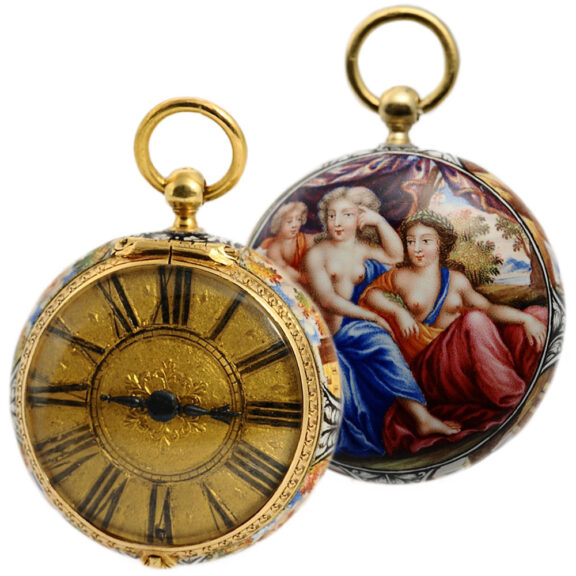
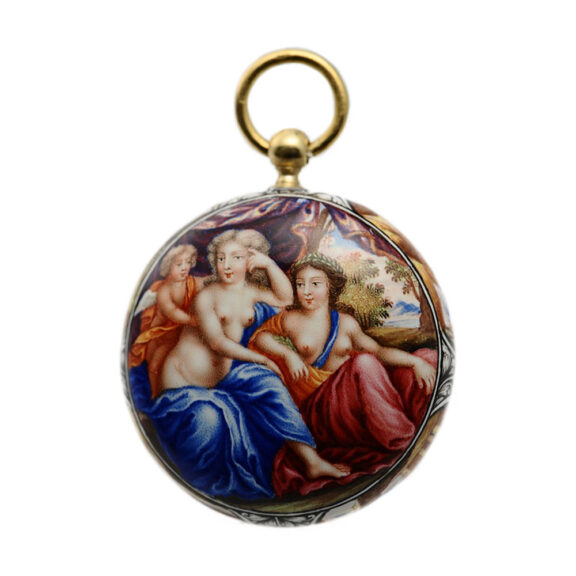
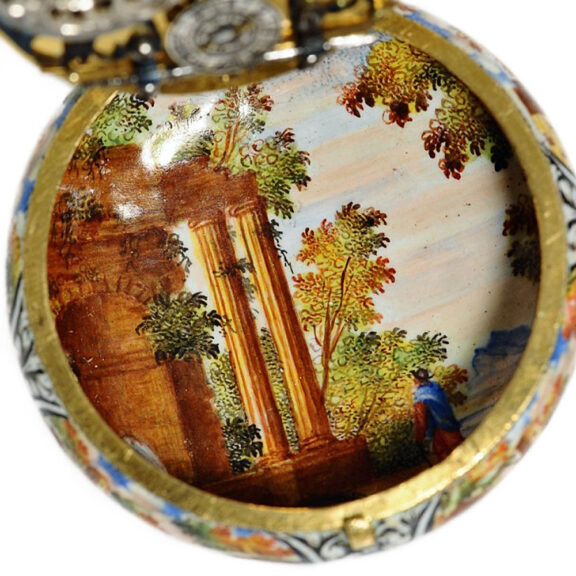
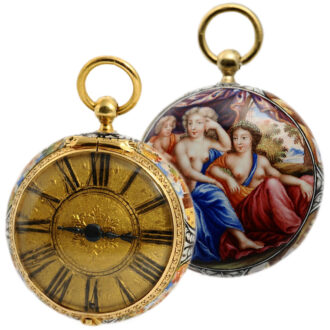
An important English gold and enamel open faced verge pocket watch, circa 1665. The artistic quality of the enamel painting and the perfection of the finish suggests that this was created by Pierre II Huaud.
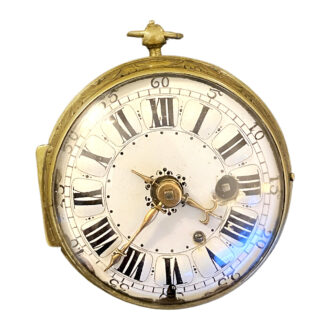
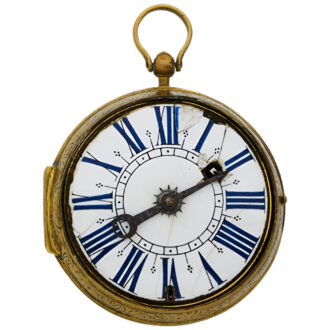
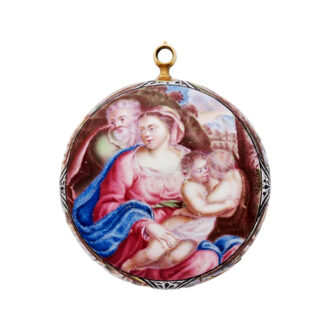
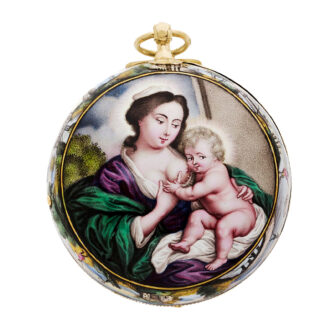
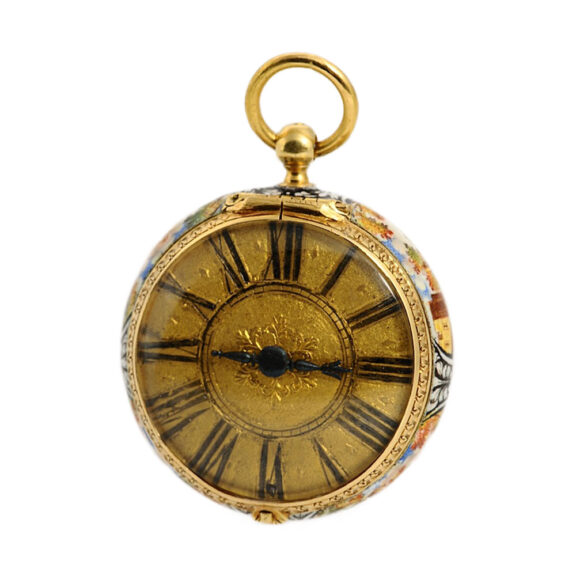
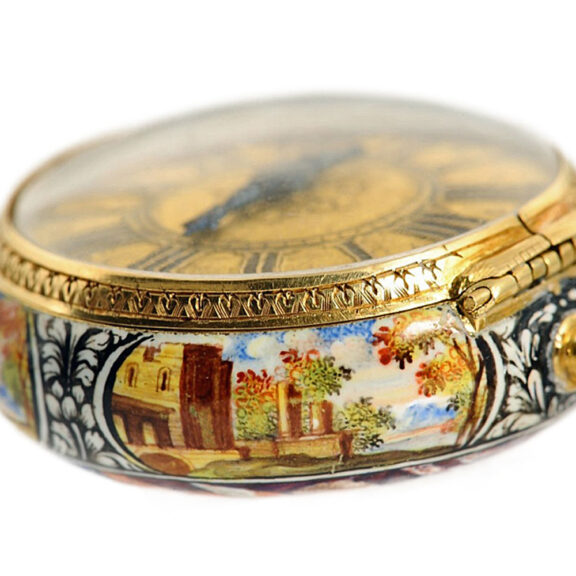
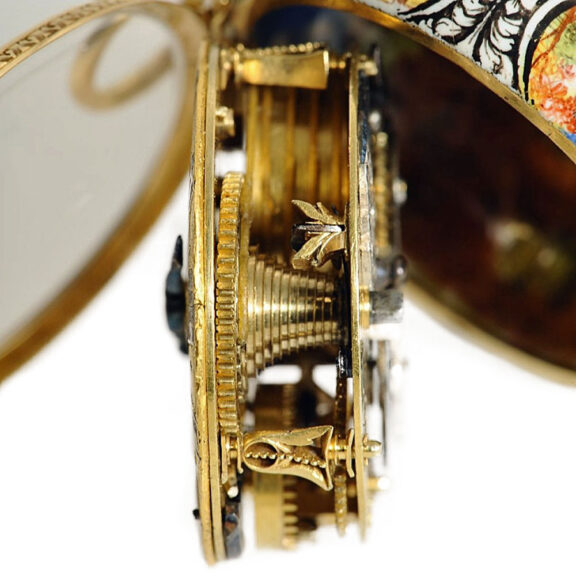
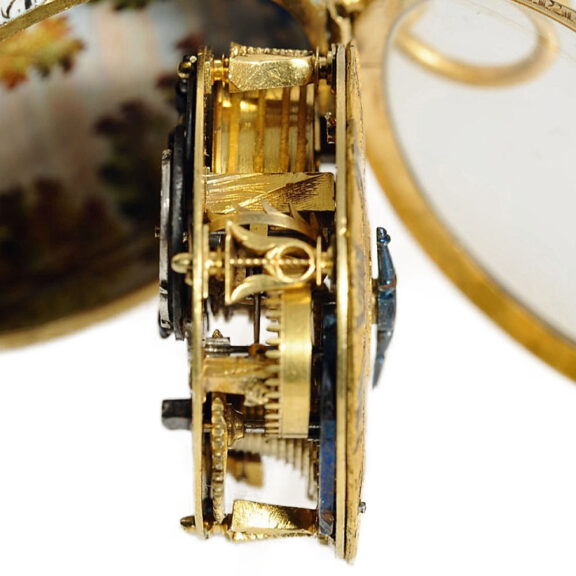
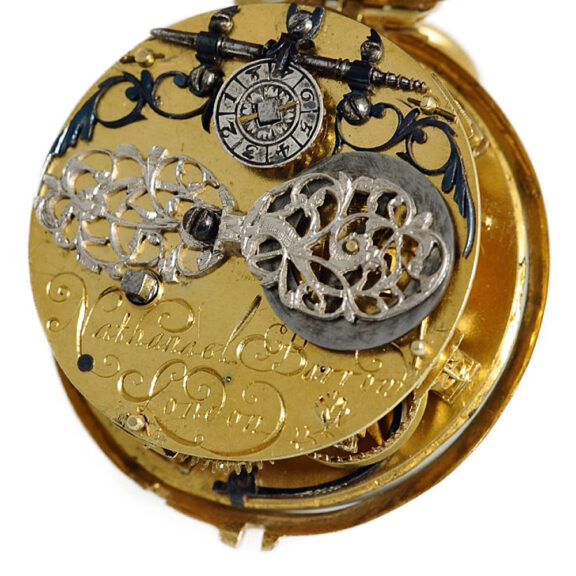
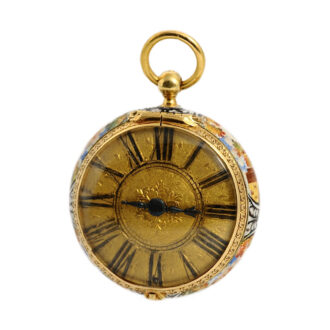
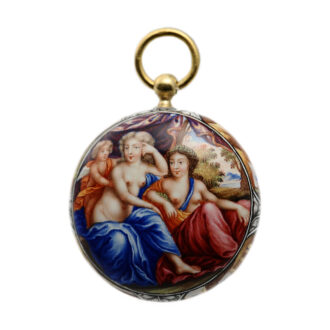
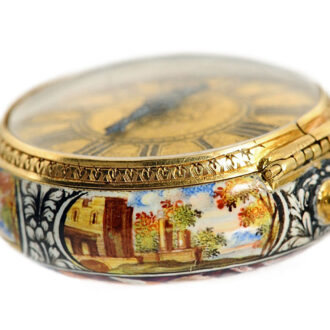
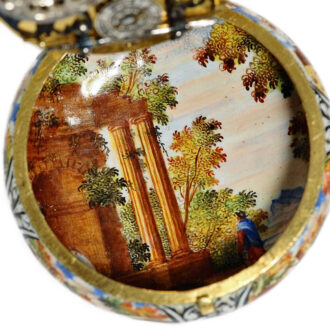
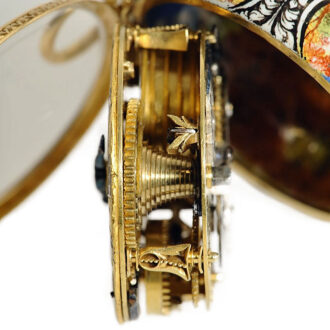
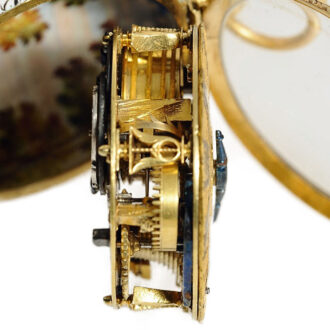
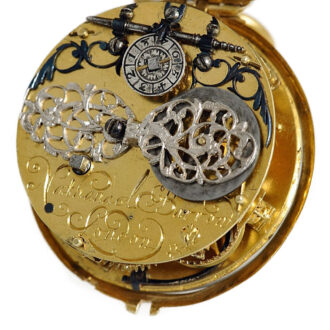
The reverse of the case with a polychrome enamelled scene of Jupiter and Callisto, the band with landscape vignettes separated by monochrome acanthus scrolls, the interior with a classical landscape depicting ruins and figures, a lavishly engraved bezel. Gold champlevé dial with radial Roman numerals and blued tulip hand. Signed fire gilt full plate movement, keywind, gut and fusee, tulip pillars, verge escapement, plain two-arm iron balance without spring, pierced and engraved balance cock, a top lock with blued click work.
–
Diameter: 36 mm
–
Weight: 41 g
–
Signed: Nathanael Barrow London
–
Jupiter and Callisto. According to Hesiod, Callisto, whose name means “the most beautiful”, was a daughter of Arcadian king Lycaon. As a nymph of Diana, she had taken a vow of chastity but was seduced by Jupiter in the guise of Diana. When Callisto was found out to be pregnant while bathing with the other nymphs, Diana cast her out and she was turned into a bear by the ever-jealous Juno. Ovid describes how Jupiter finally placed Callisto and her son Arcas amongst the stars as Ursa major and Ursa minor.
–
Nathaniel Barrow, circa 1639-circa 1700. The date of birth and date of death of Nathaniel Barrow is not known. He apprenticed with Job Payne in 1653 and was made free of the Clockmaker’s Company in January 1660. Barrow became a master of the Company in 1689. Although the case of this watch is unsigned, it was undoubtedly created by Pierre Huaud II. The vignettes are divided by a black and white design that reminds us of a piece in the Dr E. Gschwind Collection, which has a movement by Richard Street. While watches with Geneva cases and English movements are rare, they can still be found occasionally.
–
Les Frères Huaut (or Huaud). The cases painted on enamel by ‘Les deux Frères Huaut’ were among the finest examples of their kind from the Geneva School and were not only highly valued when originally made, but remained as art treasures in the centuries that followed. Pierre I was the founder of the Huaud dynasty. He was born in 1612 in Geneva as the son of a French goldsmith Jean Huaud. He settled in Geneva in 1630 and three of his 11 children became famous enamellists like their father: Pierre II (1647-1698), Jean-Pierre (1655-1723) and Ami (1657-1724). The brothers were most likely trained by their father and worked with him. Pierre II started his own business around 1680. Jean-Pierre and Ami became partners in 1682 and were appointed painters to the Prussian court in 1686 when they moved to Berlin and started working for Elector Frederick William of Brandenburg (1620-1688). Among their most well-known works are Diana and Actaeon, The Judgement of Paris, The Holy Family, St. John the Baptist, The Nativity and The Adoration of the Shepherds.
Signed: Nathanael Barrow London
Share this page: