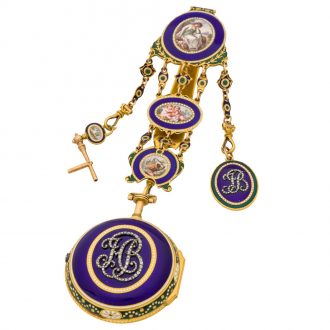
Fine English gold and enamel verge pocket watch Circa 1665
- Kenmerk
- PD0266
- Diameter
- 36 mm
- Estimate
- € 25.000 - 50.000
- Price sold
- € 23.750
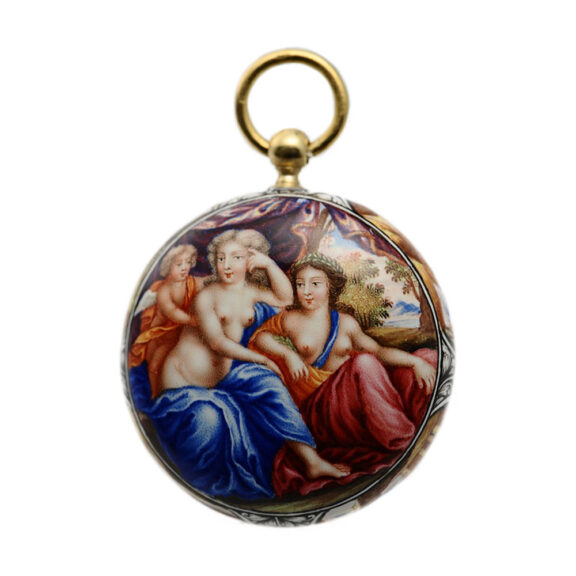
Gold watch with enamel painting of Jupiter and Callisto
–
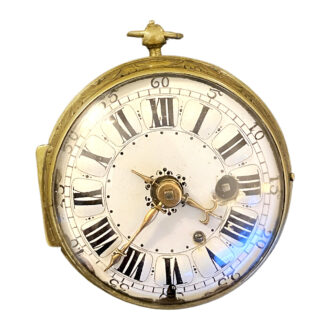
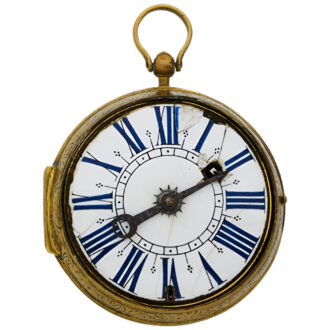
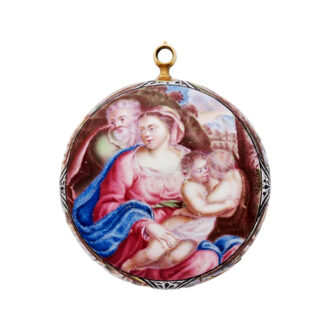
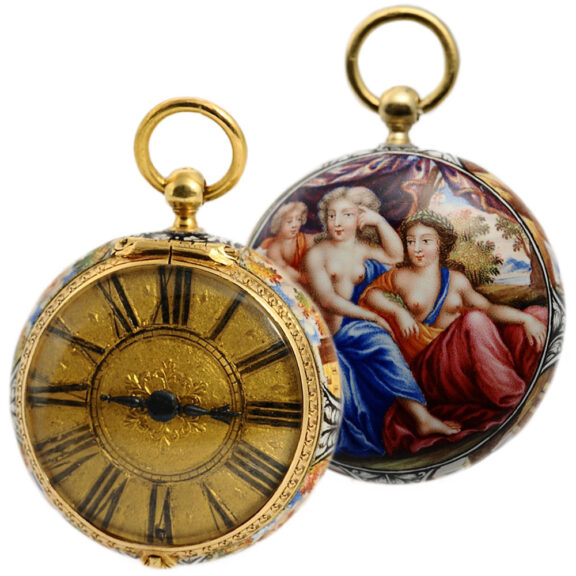
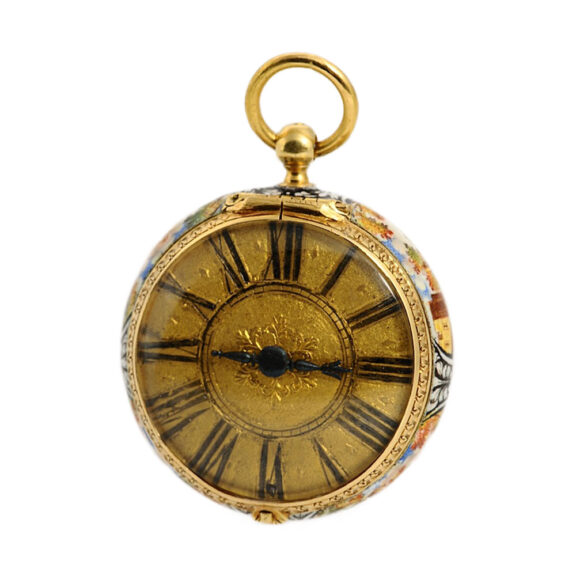
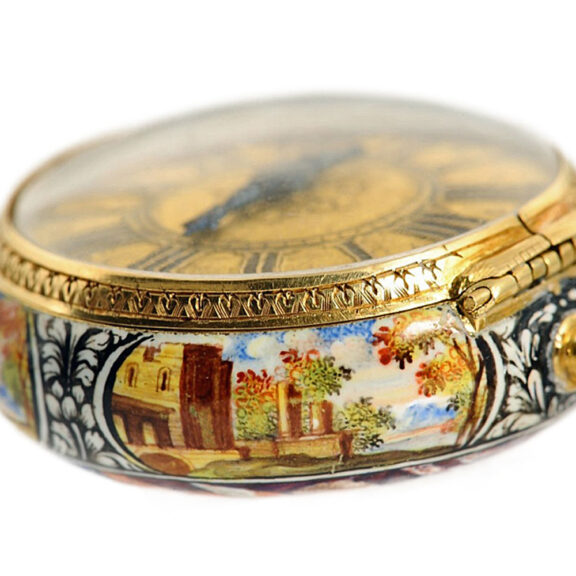
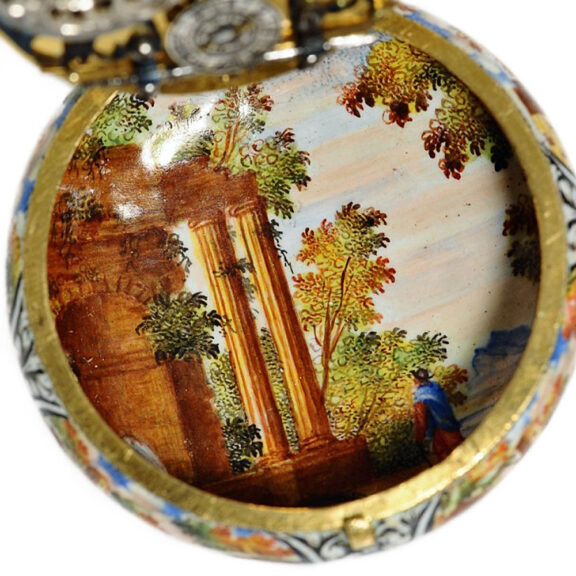
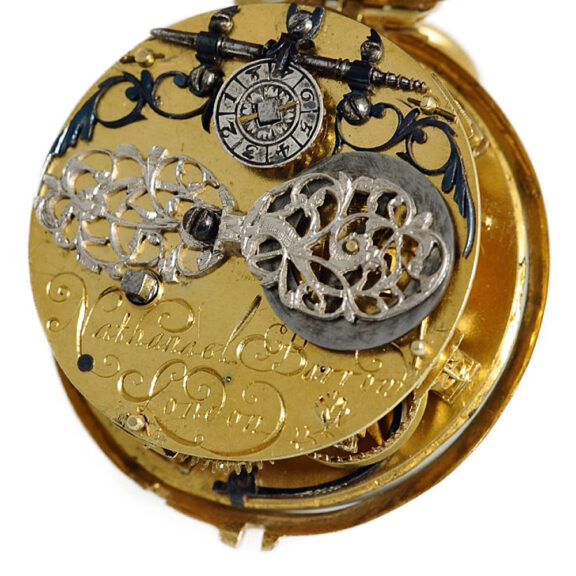
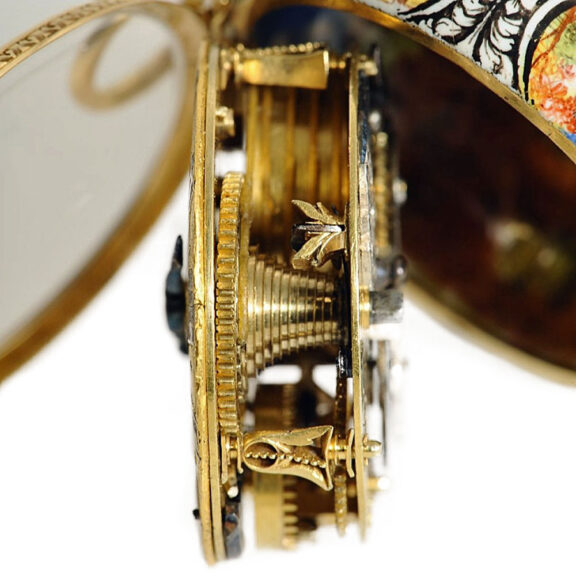
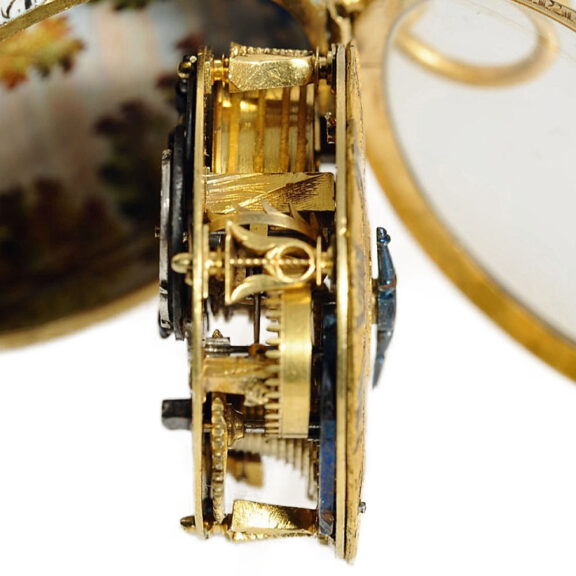
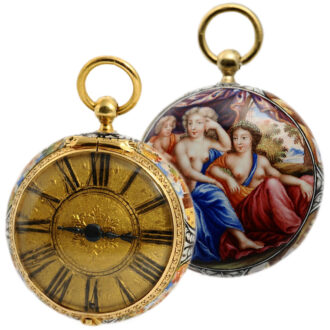
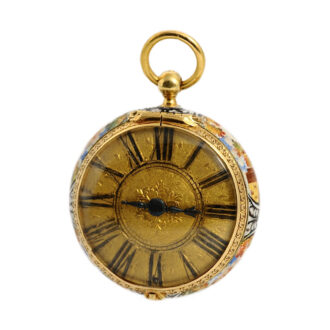
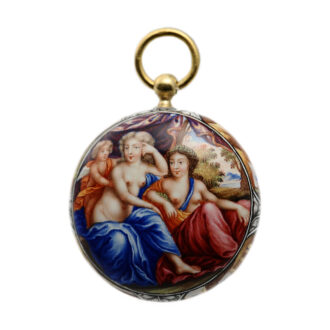
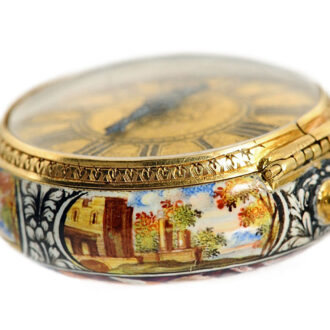
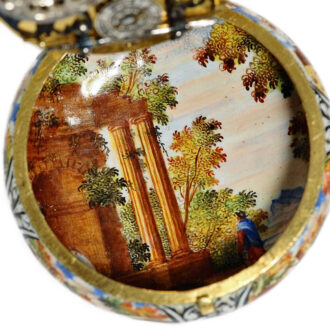
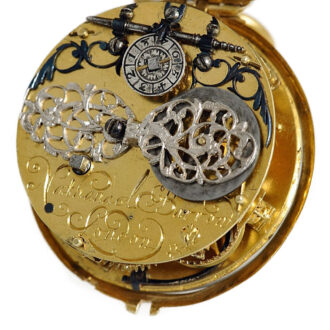
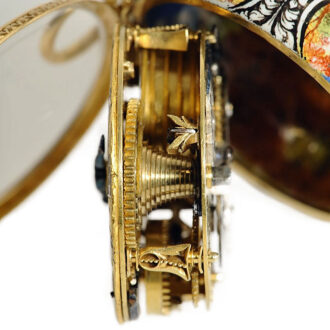
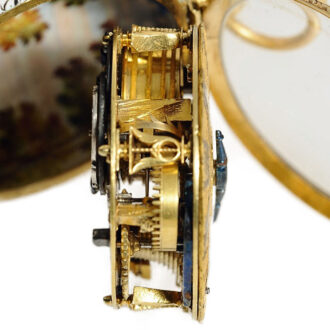
An important English gold and enamel verge pocket watch, circa 1665. A polychrome enamel scene of Jupiter and Callisto on the case back, the band with landscape vignettes separated by monochrome acanthus scrolls, the interior with a classical landscape depicting ruins and figures, lavishly engraved bezel. Gold champlevé dial with radial Roman numerals and blued tulip hand. Fire gilt full plate movement, keywind, tulip pillars, verge escapement, plain two-arm iron balance without spring, pierced engraved balance cock. Movement signed.
–
Diameter: 36 mm
–
Weight: 41 g
–
Signed: Nathanael Barrow London
–
The artistic quality of the enamel painting and the perfection of the finish suggests that it was created by Pierre II Huaud.
–
Les Frères Huaut (or Huaud). The cases painted on enamel by ‘Les deux Frères Huaut’ were among the finest examples of their kind from the Geneva School and were not only highly valued when originally made, but remained as art treasures in the centuries that followed. Pierre I was the founder of the Huaud dynasty. He was born in 1612 in Geneva as the son of a French goldsmith Jean Huaud. He settled in Geneva in 1630 and three of his 11 children became famous enamellists like their father: Pierre II (1647-1698), Jean-Pierre (1655-1723) and Ami (1657-1724). The brothers were most likely trained by their father and worked with him. Pierre II started his own business around 1680. Jean-Pierre and Ami became partners in 1682 and were appointed painters to the Prussian court in 1686 when they moved to Berlin and started working for Elector Frederick William of Brandenburg (1620-1688). Among their most well-known works are Diana and Actaeon, The Judgement of Paris, The Holy Family, St. John the Baptist, The Nativity and The Adoration of the Shepherds.
–
In Greek mythology, Callisto was a nymph or the daughter of King Lycaon. The myth varies in such details. She was believed to be one of the followers of Artemis (Diana for the Romans) who attracted Zeus. Many versions of Callisto’s story survive. According to some writers, Zeus transformed himself into the figure of Artemis to pursue Callisto, and she slept with him believing Zeus to be Artemis. She became pregnant and when this was eventually discovered, she was expelled from Artemis’s group, after which a furious Hera, the wife of Zeus, transformed her into a bear, although in some versions Artemis is the one to give her an ursine form. Later, just as she was about to be killed by her son when he was hunting, she was set among the stars as Ursa Major (the Great Bear) by Zeus. She was the bear-mother of the Arcadians, through her son Arcas by Zeus.
Signed: Nathanael Barrow London
Share this page: