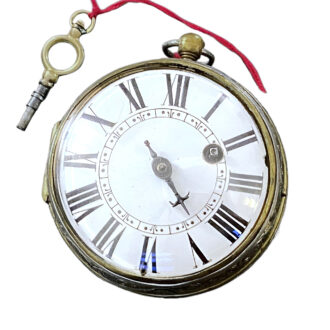
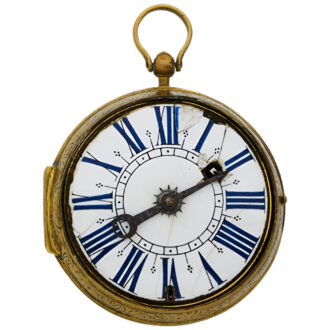
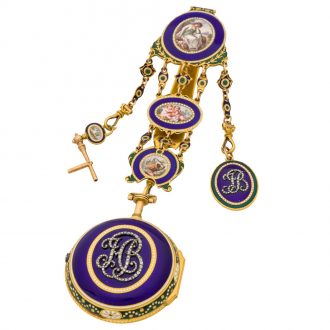
English gold double cased enamel verge watch Circa 1687
- Kenmerk
- AD8519
- Diameter
- 49 mm
- Estimate
- € 45.000 - 75.000
- Price sold
- € 72.500
Gold and enamel verge watch by Thomas Rayment
–
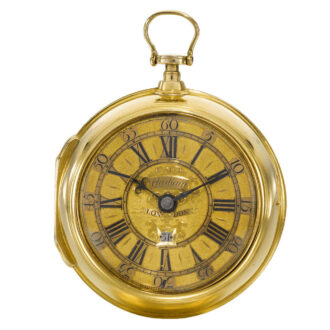
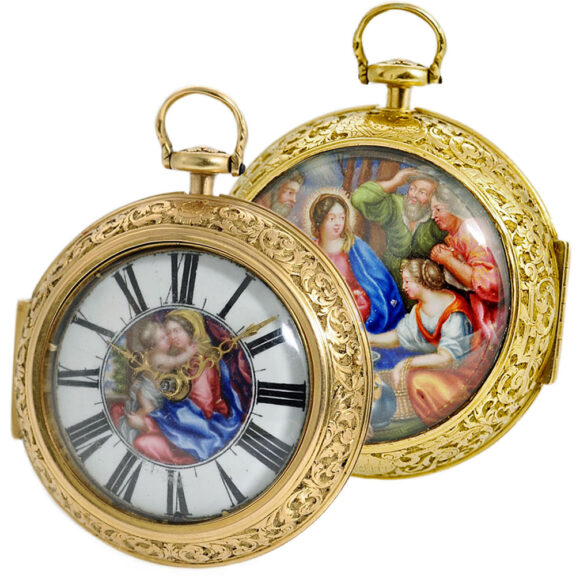
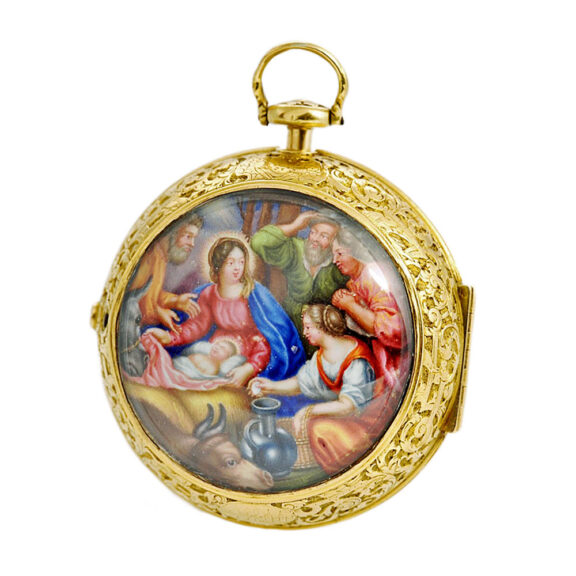
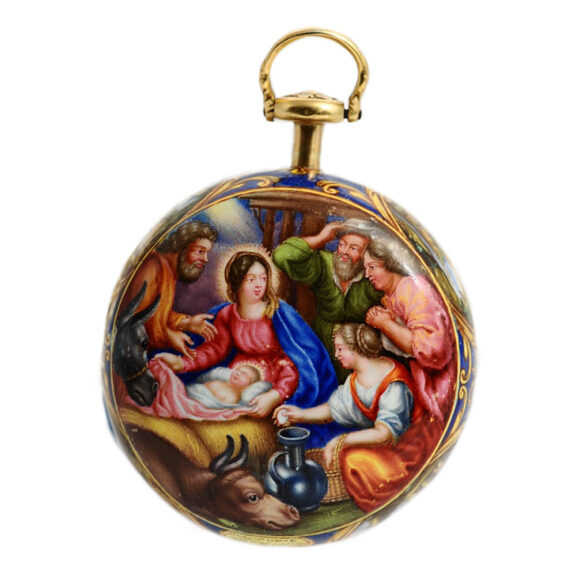
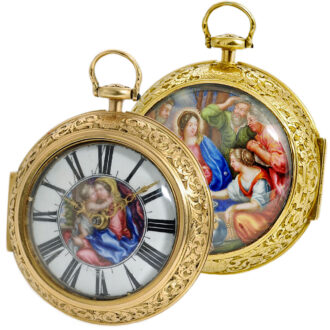
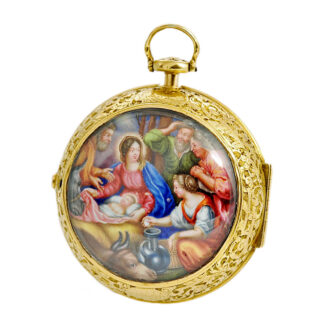
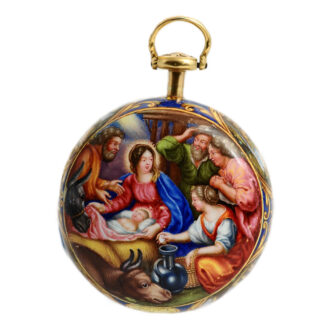
An important English gold and enamel double cased verge pocket watch, The Adoration of the Shepherds, circa 1687.
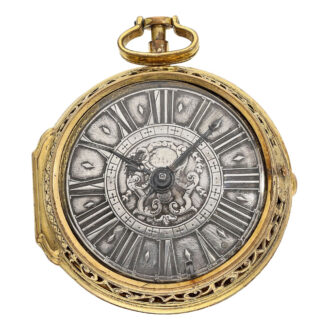
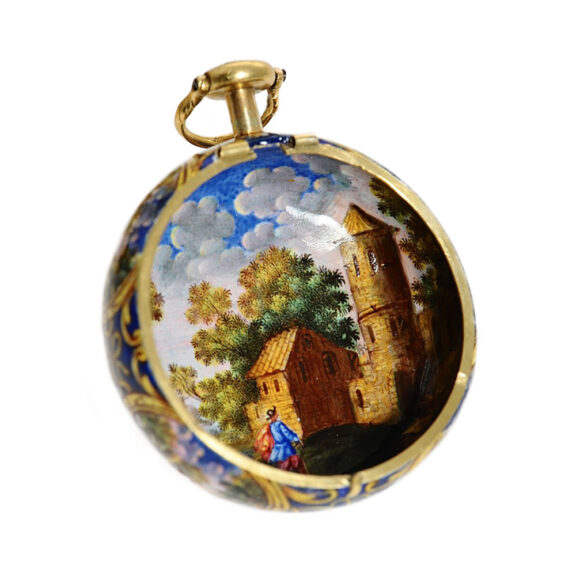
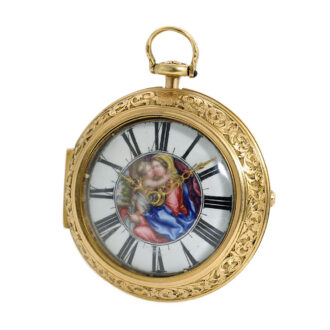
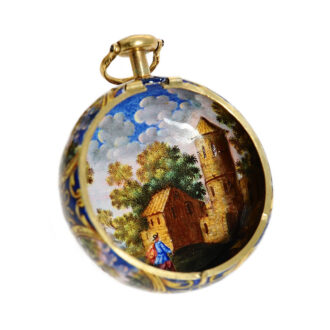
Two cases: an outstanding gold outer case, the band chased with a floral and foliate pattern, two oval cartouches with an engraved cherub face and the view of a town, glazed back, large lateral hinge, the magnificent inner case gold and enamel, a polychrome enamel painting of a biblical scene on the back depicting The Adoration of the Shepherds, lateral cartouches with landscape motifs separated by yellow volutes and ornamental bands, a cartouche with a signature near the lower edge Les Deux Frères Huaud peintre de son A(ltesse) E(lecteur) le Brandebour(g), on the inside a polychrome enamel painting of an idealized landscape with a wayfaring man.
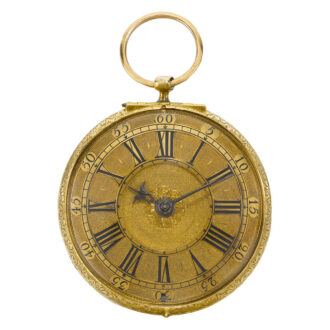
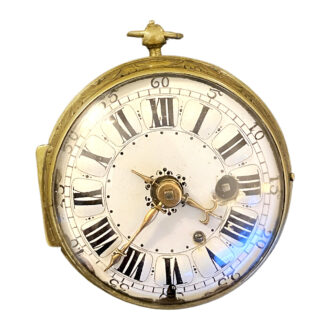
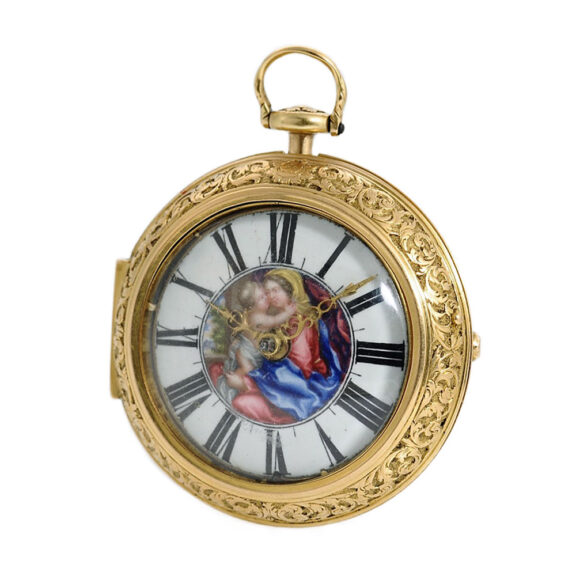
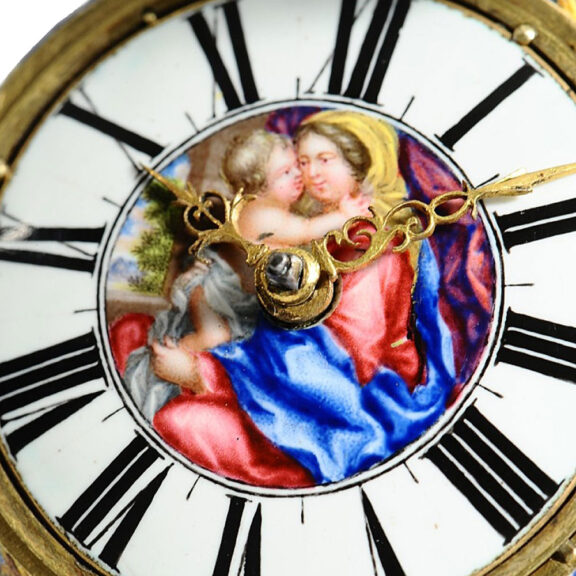
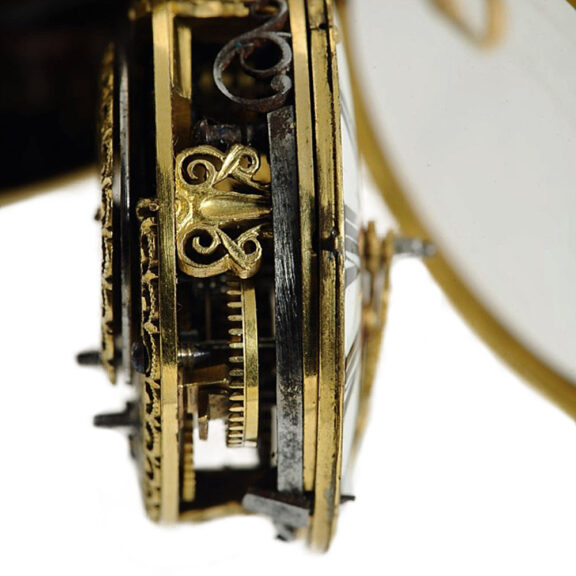
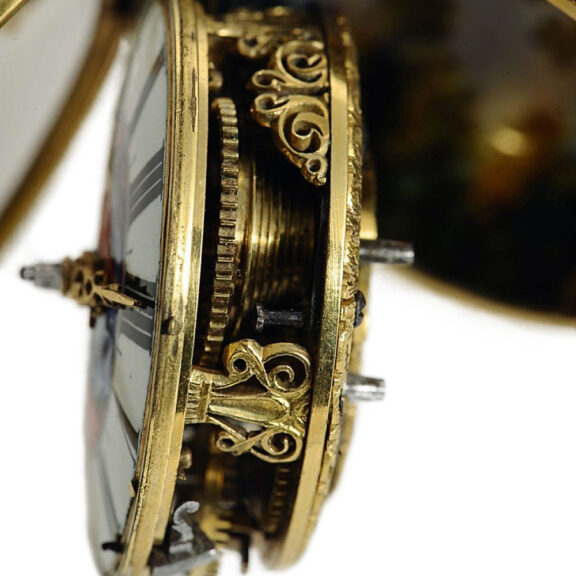
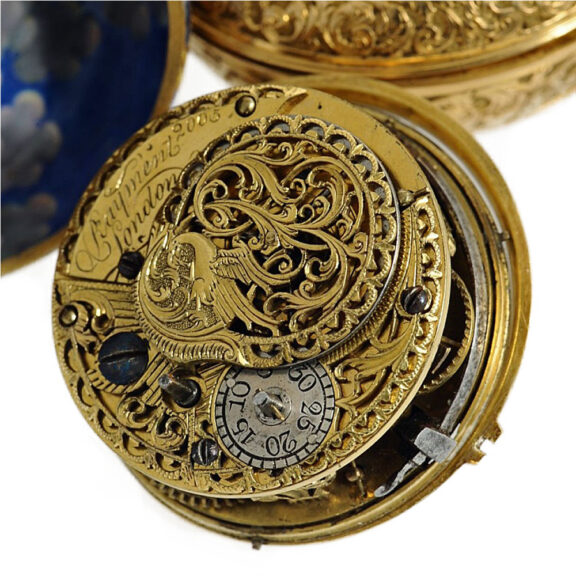
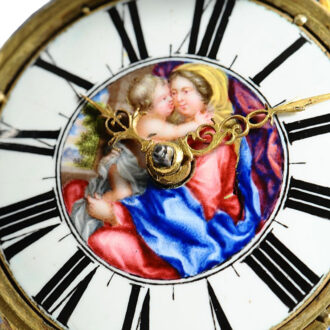
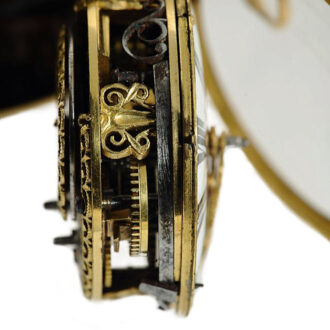
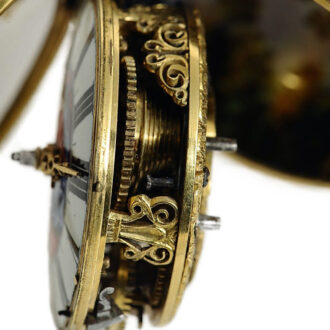
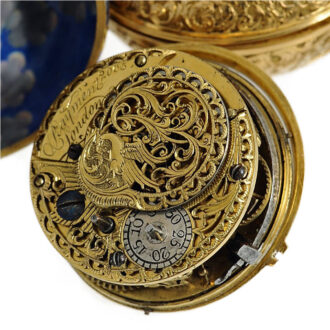
Gold enamel dial, chapter ring with radial Roman numerals, in the centre a polychrome enamel plaque showing the scene of Madonna with Child and pierced hands. Fire gilt full plate movement, key wind, signed by the watchmaker, with chain and fusee, pierced movement pillars, three-arm steel balance, engraved and florally pierced balance cock decorated with a dragon.
–
Diameter: 49 mm
–
Weight: 99 g
–
Signed: Rayment London
–
This watch is in excellent condition and the outstanding quality of the work is unusual even for such exceptional artists at the Huauds.
–
Thomas Rayment was a clockmaker in London and a member of the Clockmakers Company. He worked from around 1700 to 1740. Rayment was the tutor of Robert Barnard from April 4, 1726, to January 20, 1740, and of John Pawlett from January 20, 1728, to January 19, 1740. There was also a Thomas Rayment active from 1764 to 1792 in High Street, Stamford, a town in the district of South Kesteven, Lincolnshire. This was possibly the son of Richard Rayment and brother of Giffin Rayment from Bury St Edmunds, a town in the county of Suffolk. It is unknown whether the London Thomas Rayment was related to Richard Rayment.
–
Les Frères Huaut (or Huaud). The cases painted on enamel by ‘Les deux Frères Huaut’ were among the finest examples of their kind from the Geneva School and were not only highly valued when originally made, but remained as art treasures in the centuries that followed. Pierre I was the founder of the Huaud dynasty. He was born in 1612 in Geneva as the son of a French goldsmith Jean Huaud. He settled in Geneva in 1630 and three of his 11 children became famous enamellists like their father: Pierre II (1647-1698), Jean-Pierre (1655-1723) and Ami (1657-1724). The brothers were most likely trained by their father and worked with him. Pierre II started his own business around 1680. Jean-Pierre and Ami became partners in 1682 and were appointed painters to the Prussian court in 1686 when they moved to Berlin and started working for Elector Frederick William of Brandenburg (1620-1688). Among their most well-known works are Diana and Actaeon, The Judgement of Paris, The Holy Family, St. John the Baptist, The Nativity and The Adoration of the Shepherds.
Signed: Rayment London
Share this page: