Very fine English gold repousse cylinder watch Circa 1763
- Kenmerk
- SA0335
- Diameter
- 48 mm
- Estimate
- € 5.000 - 10.000
- Price sold
- € 11.000
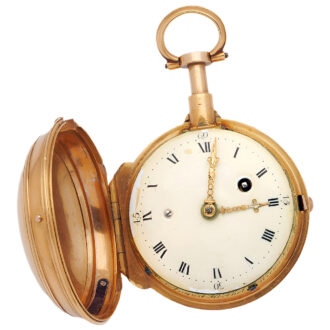
Very fine gold pair cased repousse cylinder watch
–
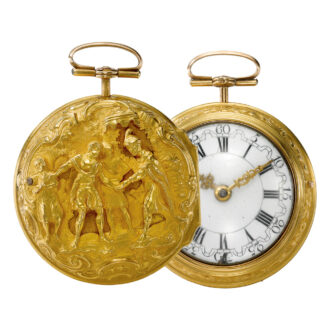
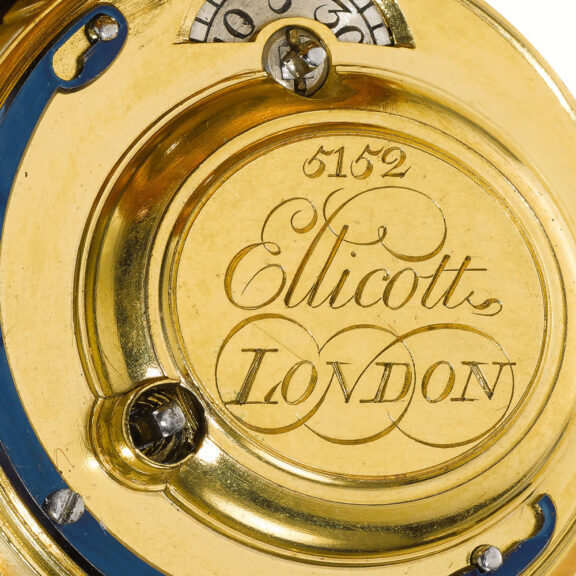
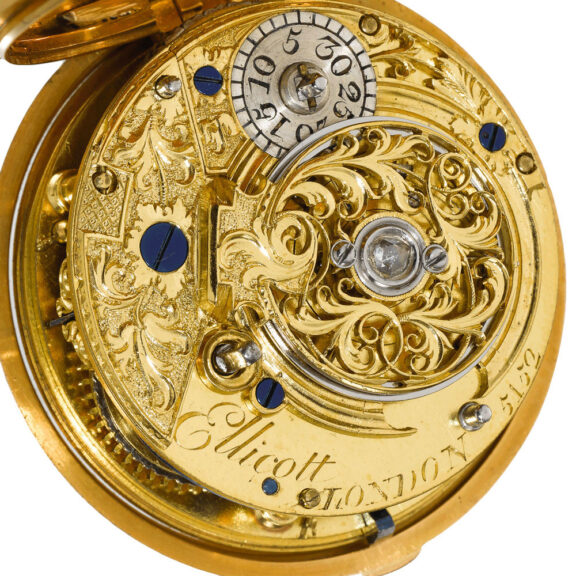
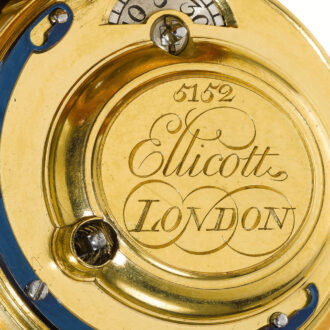
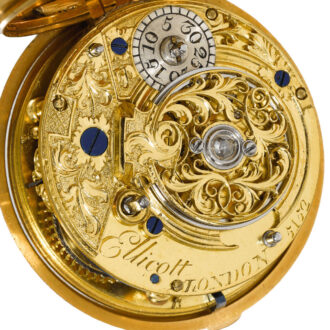
A very fine English gold pair cased repousse cylinder watch, circa 1763, gilded full plate movement, cylinder escapement, decoratively pierced and floral engraved balance cock, flat three-arm balance, diamond endstone, fusee and chain, cylindrical pillars, gilt metal dust cap, movement and dust cap signed Ellicott, London.
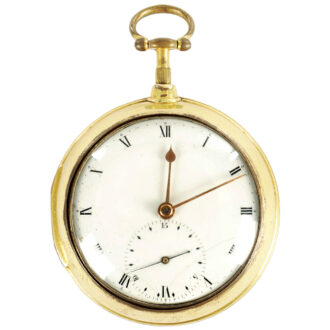
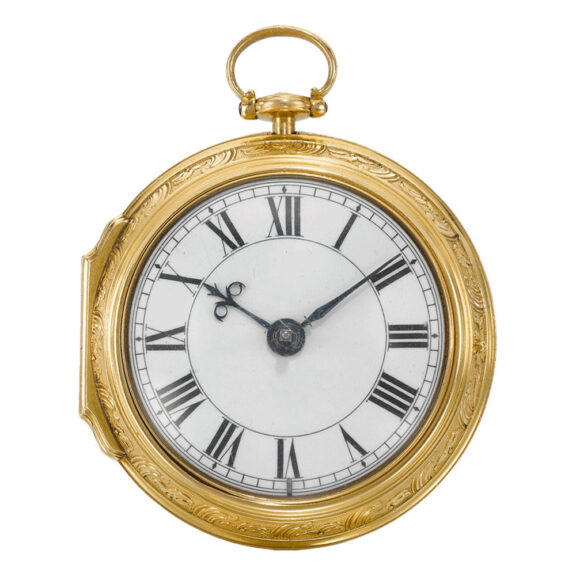
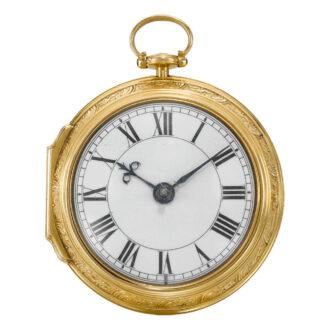
White enamel dial, Roman numerals, outer minute ring, blued steel beetle and poker hands.
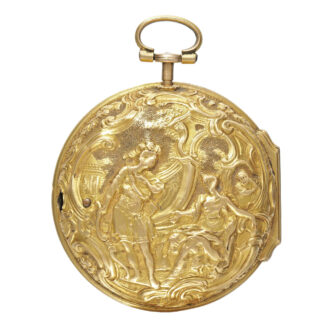
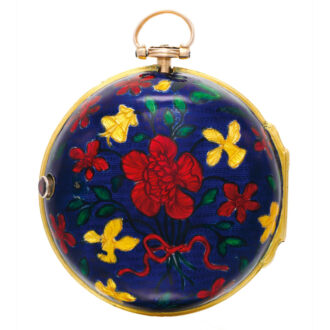
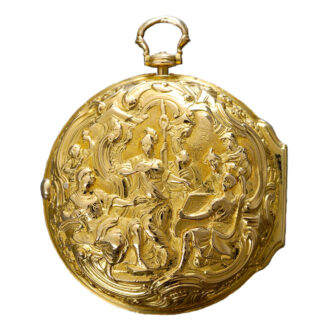
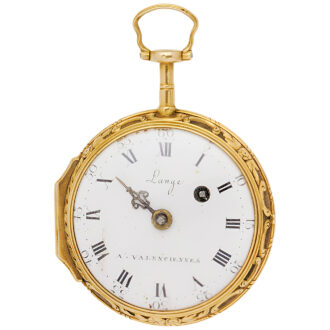
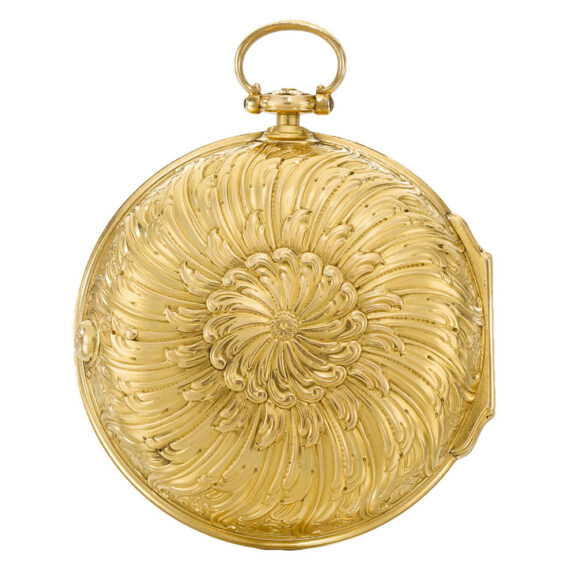
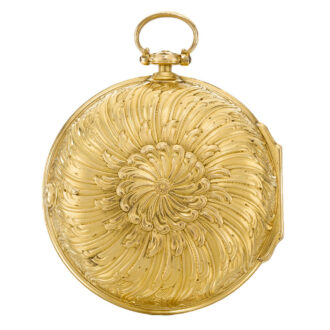
Plain gold inner case, the back with an aperture for winding, stirrup pendant and bow, with maker’s mark HT incuse probably for either Henry Cleaver Taylor or Henry Teague, gold outer repoussé case, the back with chased and engraved radiating flower, the front bezel with flowers and scrolls.
–
Diameter: 48 mm
–
Signed: Ellicott London
–
The outer case of this watch is in wonderful condition with a central rosette and radiating foliage that is perhaps reminiscent of a chrysanthemum. Ellicott appears to have used this design of outer case on a number of his watches. Another example, but in a silver case, Ellicott no. 4887, is illustrated in: The Camerer Cuss Book of Antique Watches. Interestingly, in his book The Art of the Gold Chaser, Richard Edgcumbe illustrates and describes Ellicott no. 5936 which is hallmarked for 1767 and which features a repoussé case that again bears similarities in design to the present watch and which is attributed to George Michael Moser.
John Ellicott, one of the most famous 18th-century English clock and watchmakers, was born in 1706 and succeeded his clockmaker father who died in 1733. He worked at 17 Sweetings Alley, Royal Exchange, London from 1728 to his death in 1772. In 1738 he was elected a Fellow of the Royal Society and served as a Councillor for three years. Later he became a clockmaker to King George III and made many fine and unusual clocks. He is probably best known for the invention of a compensated pendulum in which the bob is raised or lowered, by means of levers, to counteract the expansion or contraction of the rod. John Ellicott took his son Edward into partnership in 1760 and the clocks and watches made after this time were signed Ellicott with no forename until circa 1769 when the signature was changed to John Ellicott and Son.
Signed: Ellicott London
Share this page: