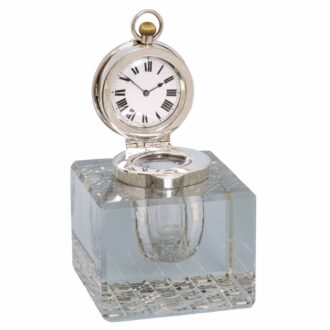
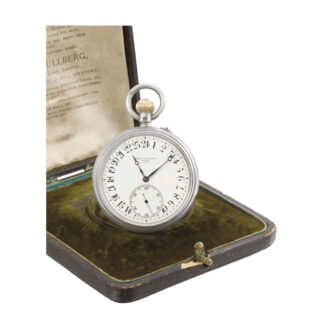
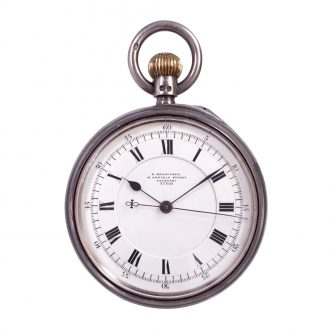
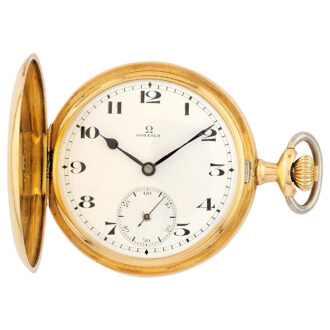
English heavy silver lever deck watch with carousel Circa 1905
- Kenmerk
- AD8562
- Diameter
- 59 mm
- Estimate
- € 5.000 - 9.000
- Price sold
- € 6.700
Silver deck watch by S. Smith & Son
–
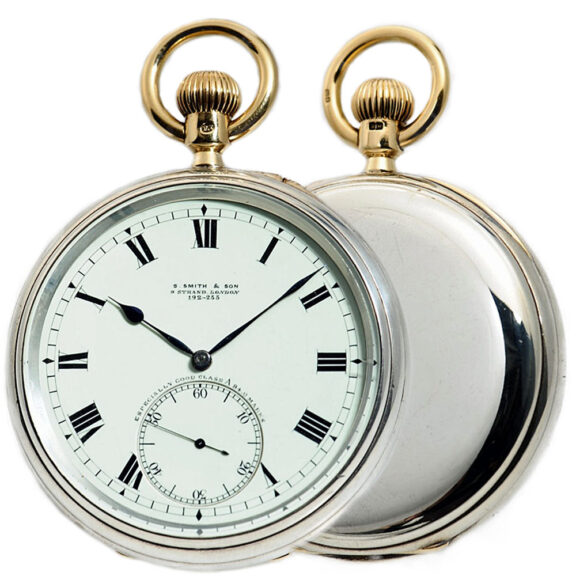
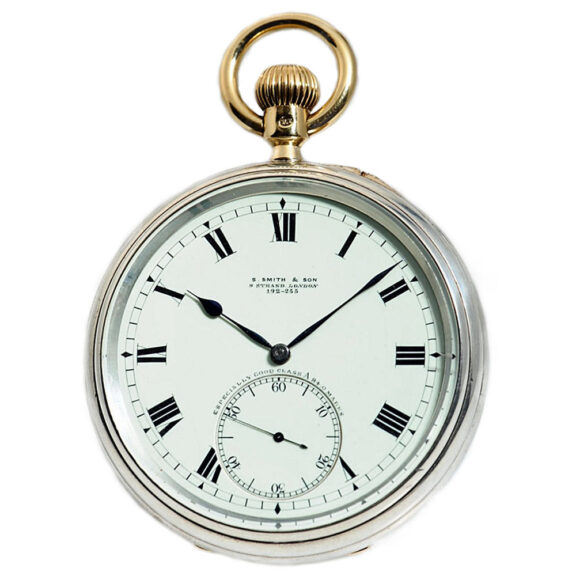
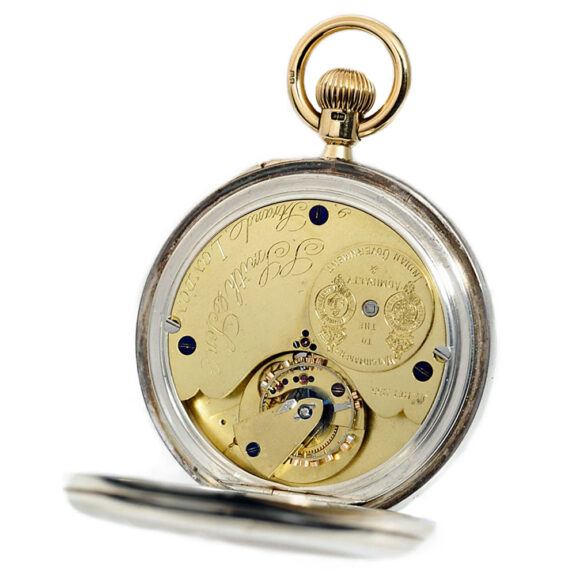
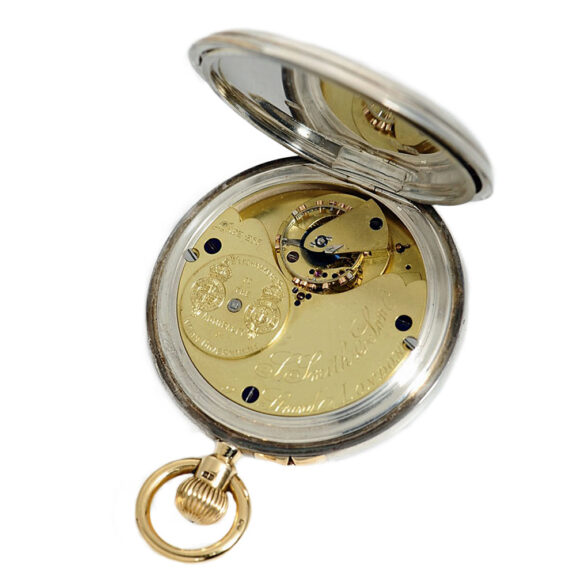
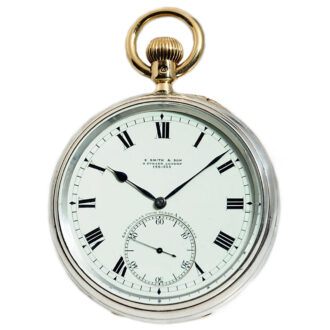
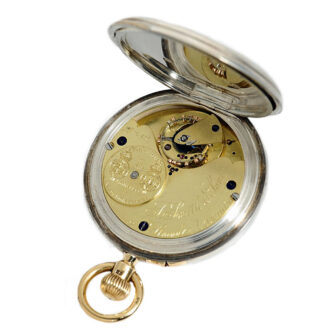
A heavy English deck watch with a 52,5-minute carousel, circa 1905. According to Bahne Bonniksen and formerly with Kew Class A certificate Especially good Class A 84,0 Marks.
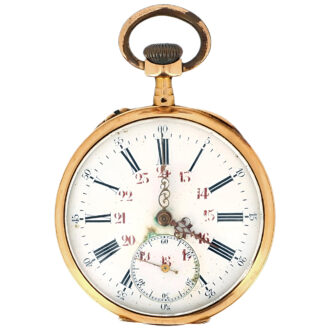
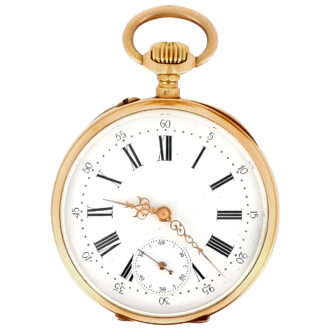
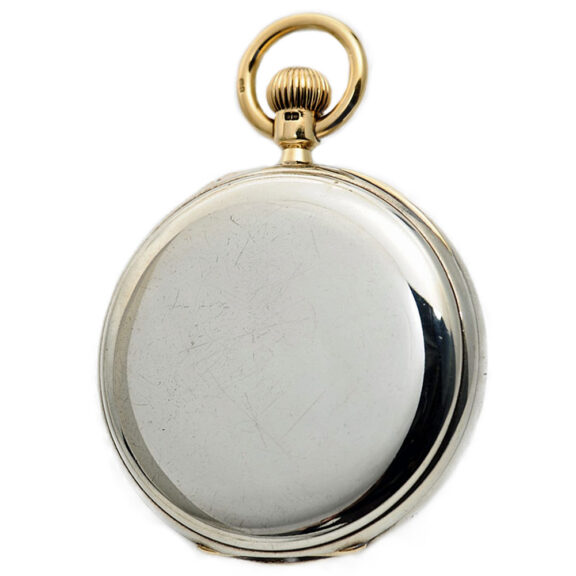
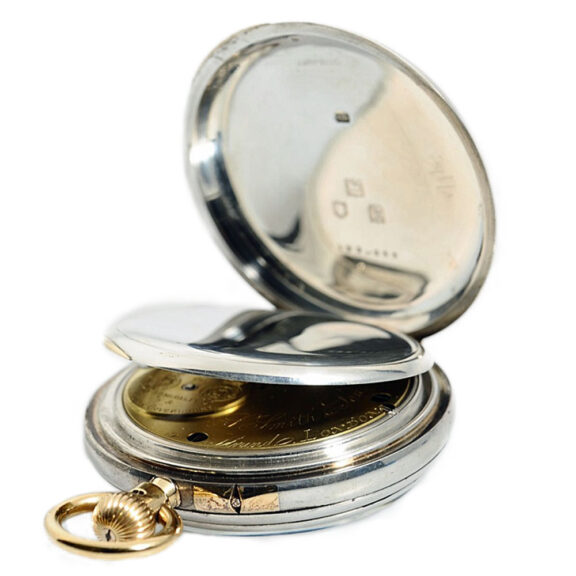
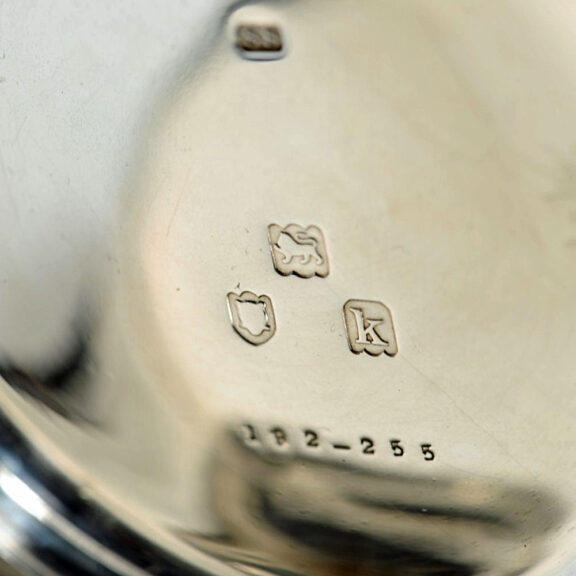
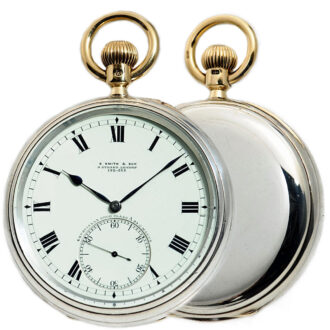
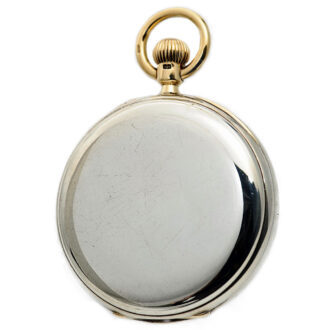
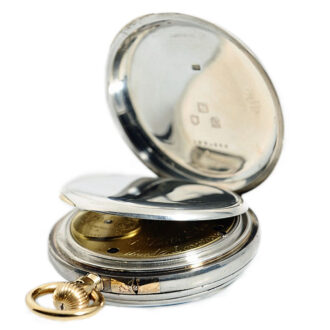
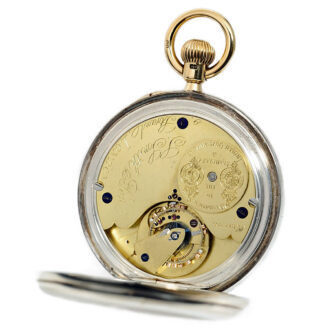
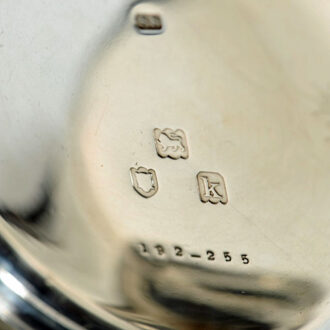
Silver, tiered, polished case with case maker’s punch mark SS, gold crown, and hinge and shackle. Signed, off-white (Willis), enamel dial with radial Roman hours, auxiliary seconds, and blued spade hands. Signed, frosted gilt 3/4 plate movement with engraved honour cyphers on the raised barrel, carousel revolving in 52,5 minutes, chatoned centre wheel, English lever escapement, gold screw compensation balance, free-sprung balance spring, and chatoned diamond endstone on balance.
–
Diameter: 59 mm
–
Weight: 188 g
–
Signed: S. Smith & Son, 9 Strand, London
–
Carousel watches are designed by the Danish watchmaker B. Bonniksen, who registered the patent in 1892 in England. His intention was to create a compromise between the “expensive” tourbillon and a normal chronometer – and he actually achieved better results with his carousel than some of the tourbillons.
–
In 1899 Richard Lange improved the design and received the protection of utility patents D.R.G.M 121267 for it. The escapement in a carousel with auxiliary seconds turns around itself in 52,5 minutes, and thus avoids the variation caused by gravity. The model shown here is the 12th carousel watch made by Lange & Soehne.
–
Smith & Son, Makers to the Admiralty & the Indian government
A leading firm in London for high quality and complicated watches at the turn of the century, S. Smith & Son was founded in 1851 by the jeweller and watchmaker Samuel Smith. In addition to the wide range of watches and clocks for private customers, Smith’s also built reliable chronometers, making the firm a supplier to the Admiralty. Under the management of Herbert S.A. Smith, the firm developed into a large manufacturing company that had its own research laboratories; in the next generation, Sir Alan Herbert Smith extended the company product range further and began with the production of automobile and aircraft instruments. Around this time, a period of general decline for British horology began; even so, a few British watchmakers created magnificent, ultra-complicated watches to prove to the world that they were still the best. Some of these watches were made in collaboration with the most renowned Swiss watch companies.
Charles Frodsham, Edward John Dent, and Samuel Smith were the London watchmakers best known for this, as well as J. W. Player in Coventry.
–
Even among all the British Grand Complication watches of the 20th century, this watch stands out. Its dial was made by the famous British maker Willis, whose dials are always outstanding. The movement is equally exceptional. It is large and has a very cleverly designed mechanism; it often utilizes the same arbour in the quadrature for two functions and is finished with extreme attention to detail. Some of the solutions, although not new, employ innovative ideas. This is the mechanism that disengages the striking while setting the watch planned in a simple and yet very secure manner.
Signed: S. Smith & Son, 9 Strand, London
Share this page: