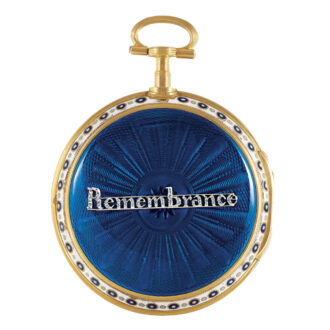
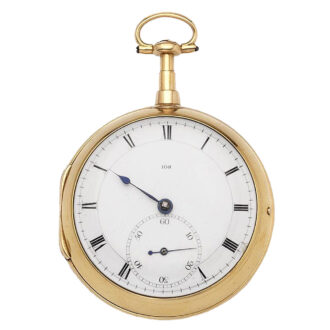
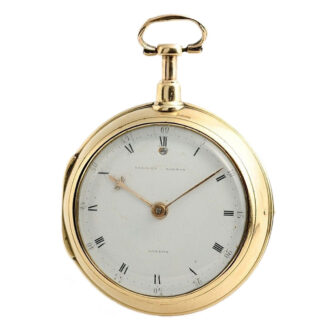
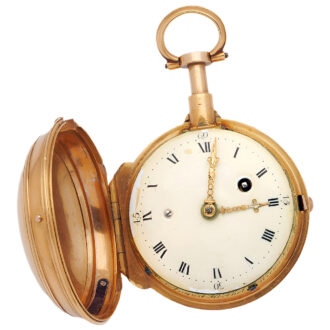
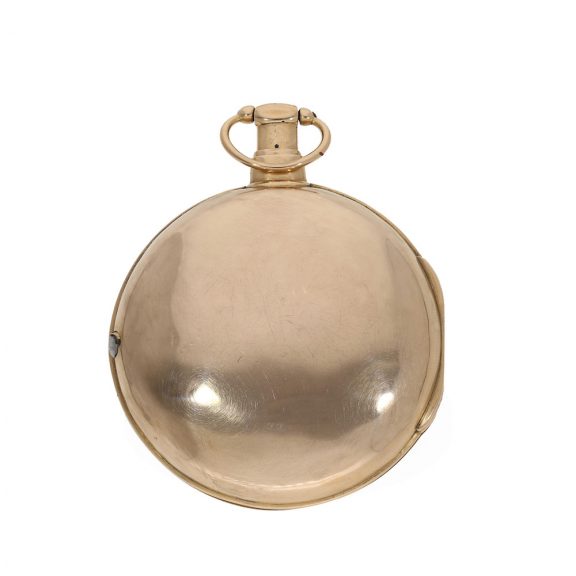
English large 18 carat gold pair cased verge watch Circa 1794
- Kenmerk
- HC1268
- Diameter
- 58 mm
- Estimate
- € 4.500 - 7.000
- Price sold
- € 3.450
Gold quarter repeater with date
–
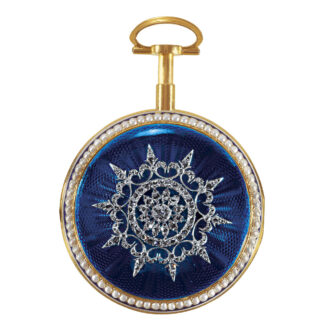
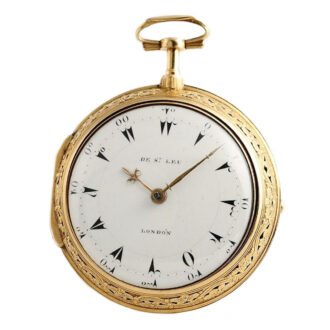
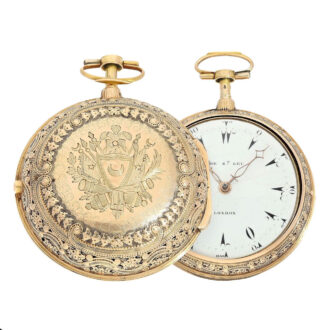
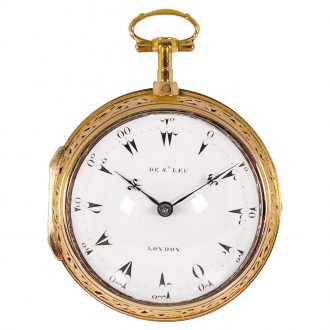
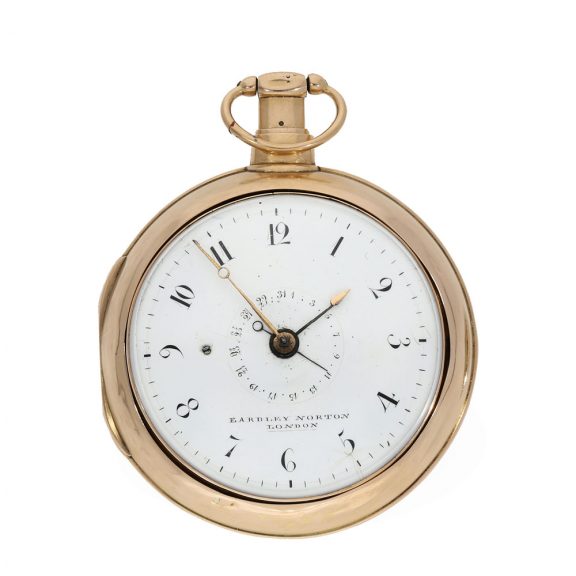
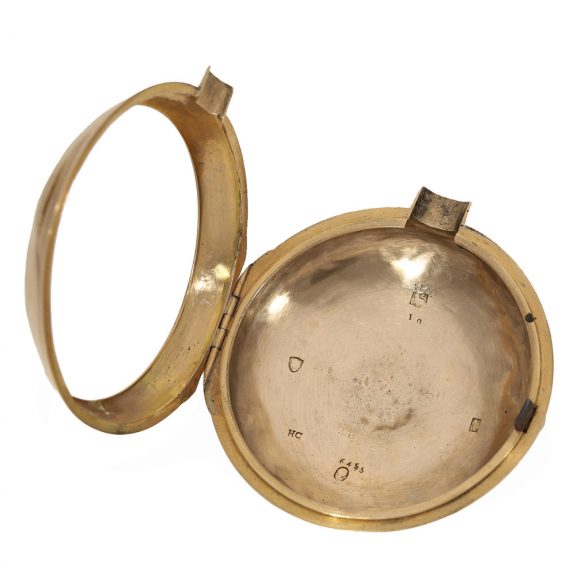
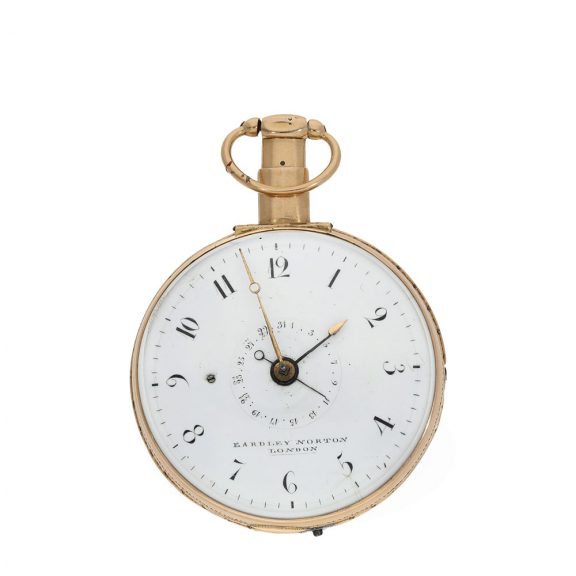
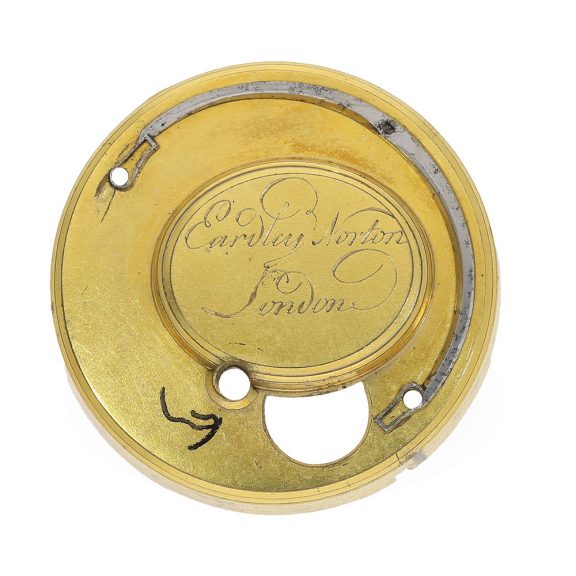
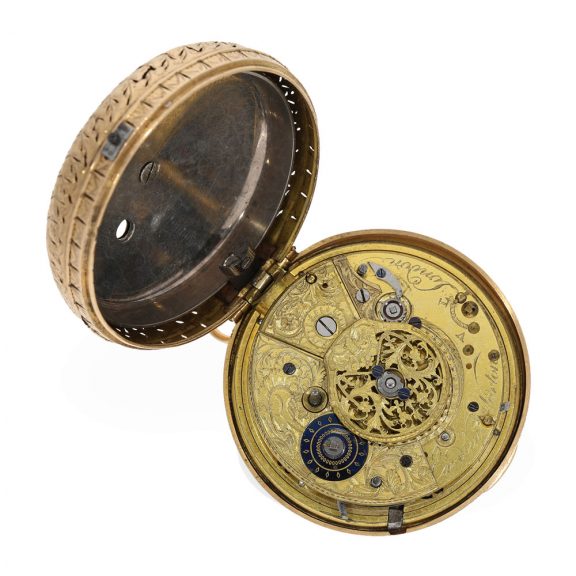
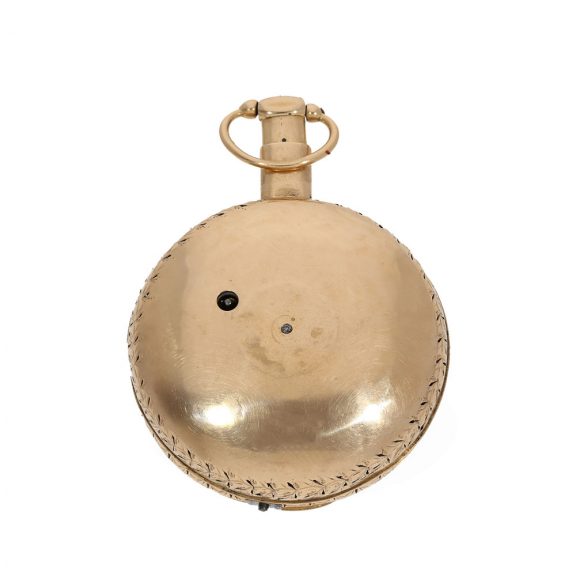
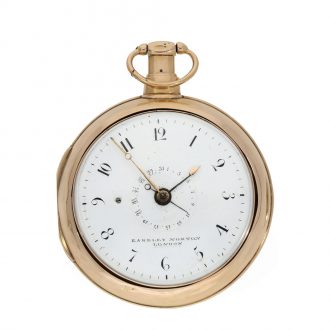
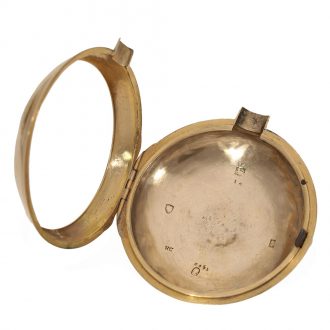
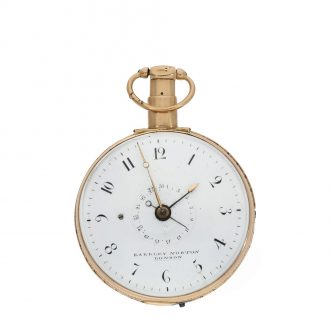
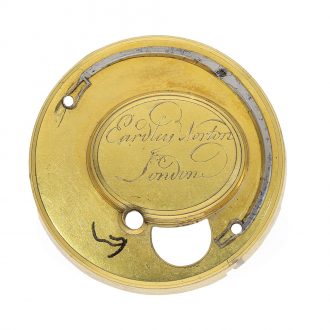
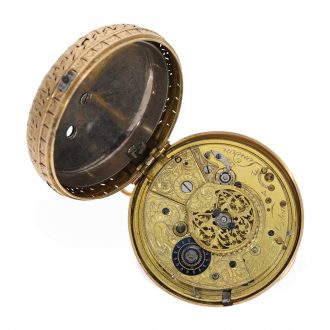
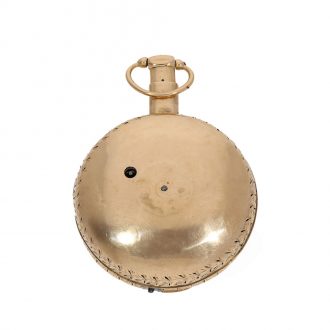
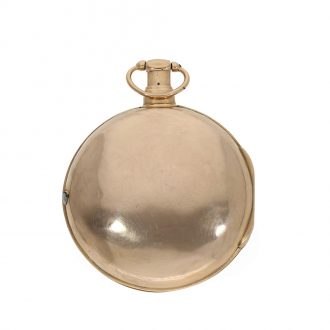
A large gold pair cased quarter repeating à toc and à tact verge pocket watch with date made by Eardley Norton in London, England, circa 1794. The two cases of this watch are crafted from 18 carat gold and Hallmarked London 1794, the inner case is pierced with sound holes, a numbered cuvette and a lateral slide for selecting the repeater type, either on the bell or the case band. The white enamel dial has Arabic hour numerals, outer minute divisions, radial date indication in the center and fine hands. The movement has a signed verge escapement repeating the hours and quarter hours.
Cuvette, dial and movement are signed.
–
Diameter: 58 mm
–
Weight: 153 g
–
Signed: Eardley Norton London
–
Norton
Eardley Norton was an English watch and chronometer maker of great repute born in 1728 in Lincolnshire and died in 1792. He apprenticed as a clockmaker on May 25th, 1743 to Robert Dawson of Alford. In 1760, he was working in London at 49 John Street, Clerkenwell and he was a member of the Clockmakers’ Company from 1770 until he died. He mainly made complicated timepieces but also had his name on some cheaper watches, which he signed with Yeldrae (Eardley backwards). His name was further sometimes faked on Swiss watches. In 1771, he patented a new type of striking mechanism for clocks and watches. For George III, he made a Royal watch collection of which the showpiece was an astronomical clock with four dials. Norton received 1.042 pounds sterling for these watches, a considerable sum at that time. Another notable work is the musical clock he made for the Russian Tsarina Katharina.
–
Montre à toc. A ‘dumb’ repeater watch in which a hammer strikes the inside of the case to produce a muffled sound. Invented by Julian Le Roy in 1740.
–
Montre à tact. A type of watch made after 1795 by Abraham Louis Breguet to give time by touch. In the late 18th century it was considered impolite to consult one’s watch in company, a question of etiquette which the à tact watch helped to solve (the French tact, meaning touch, has given the English tact and tactful). Knobs representing the hours are positioned around the case with a large hand that could be turned until it met resistance. Its position to the knobs gave the time. This kind of tactile watch is now mainly used by the blind and visually impaired.
Signed: Eardley Norton London
Share this page: