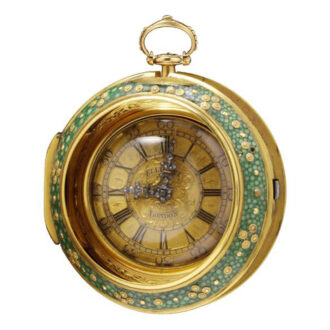
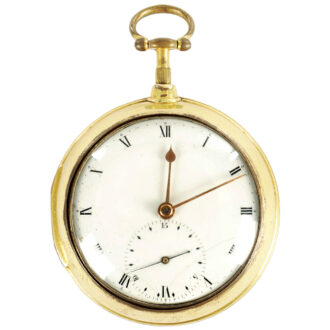
English rare pair cased gold Repoussé pocket watch Circa 1753
- Kenmerk
- AD6322
- Diameter
- 49 mm
- Estimate
- € 10.000 - 20.000
- Price sold
- € 7.500
Gold pair cased repoussé pocket watch
–
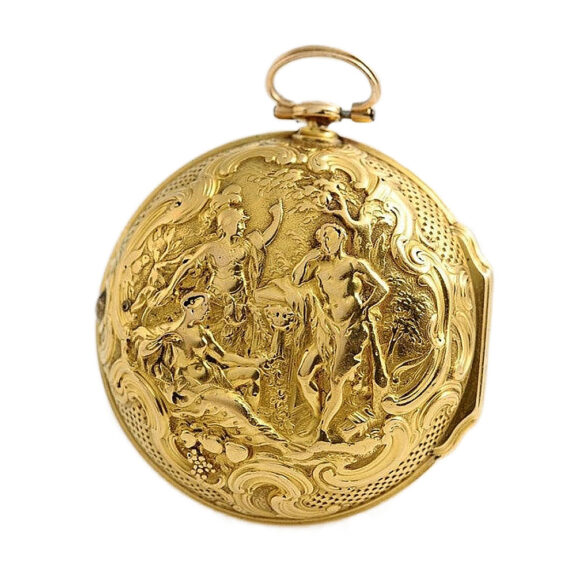
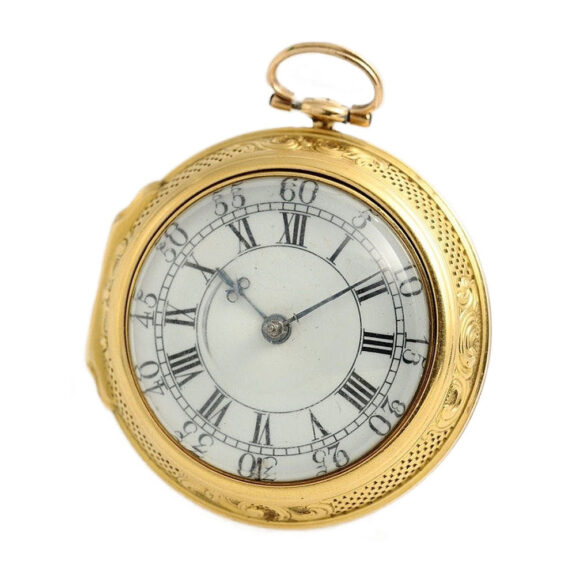
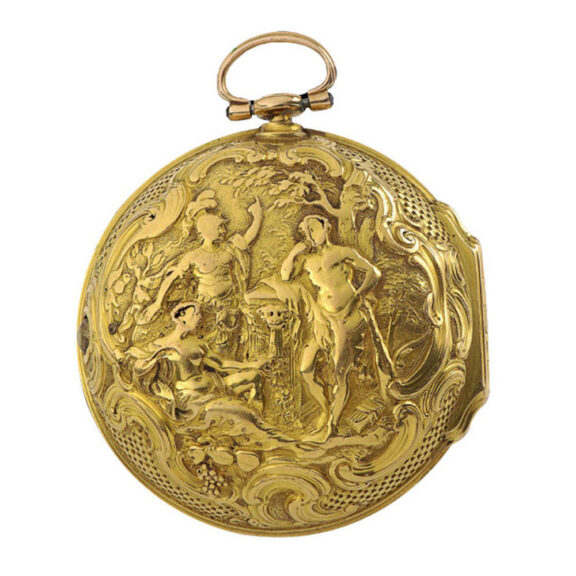
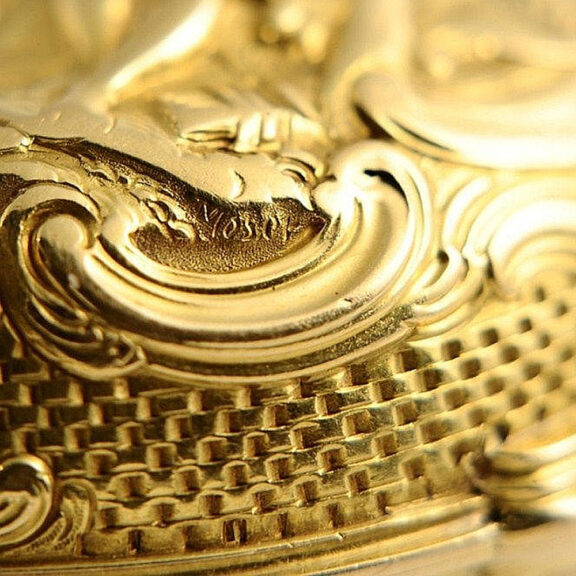
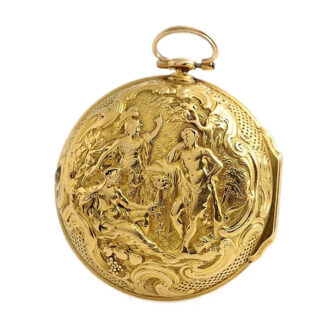
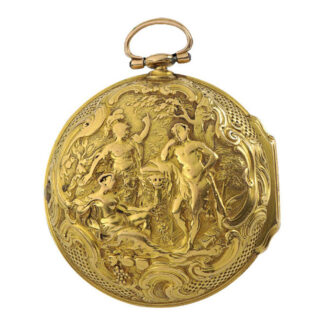
A fine, rare pair cased English pocket watch “Hercules at the Crossroads”, circa 1753.
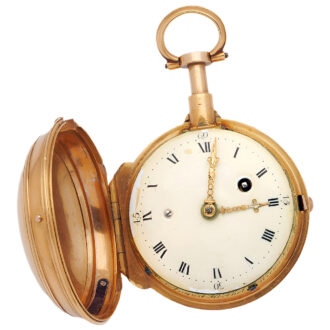
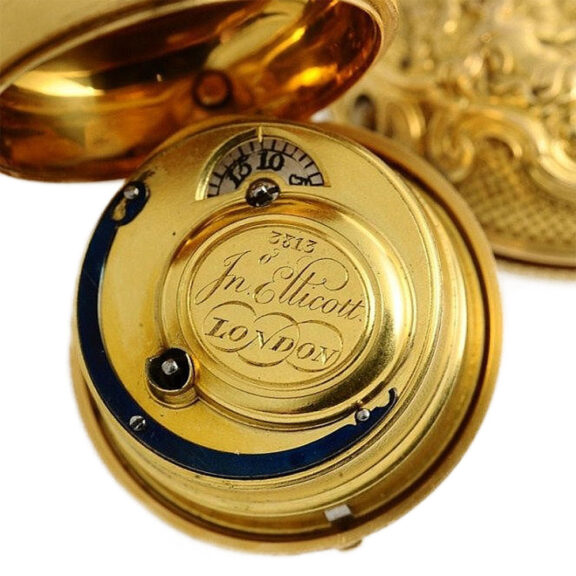
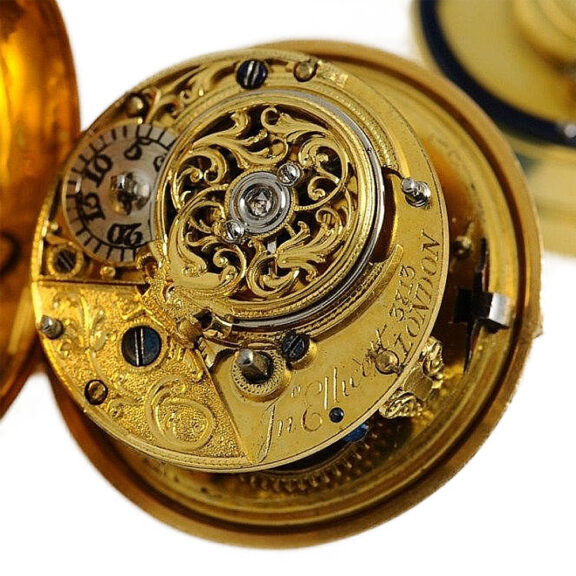
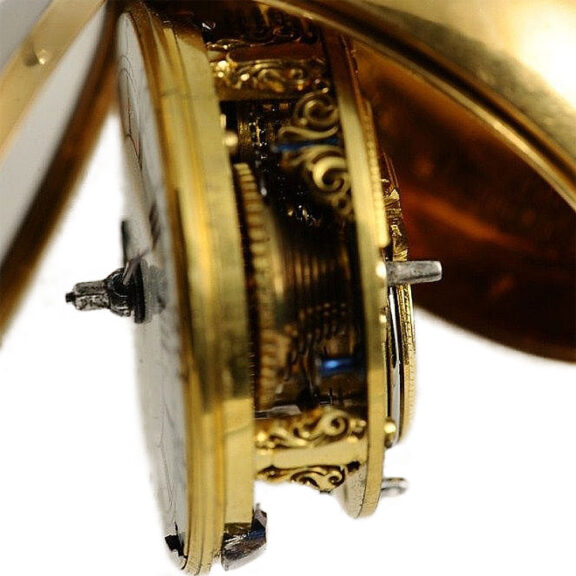
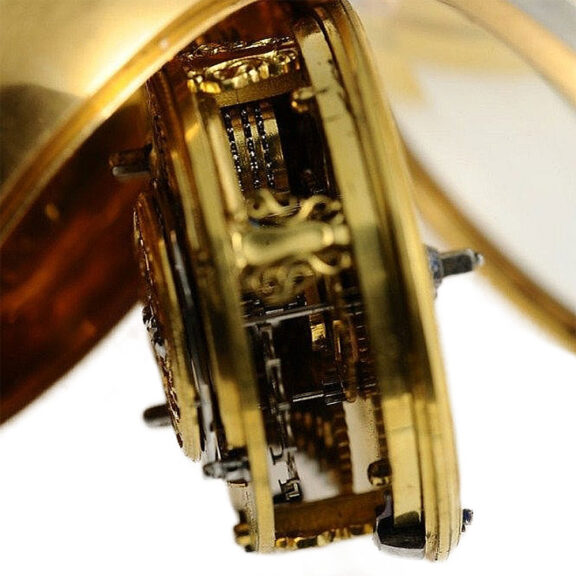
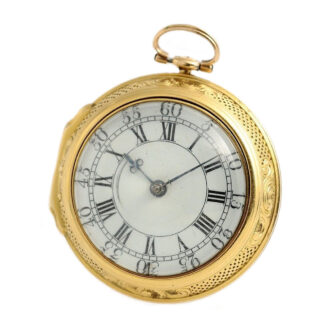
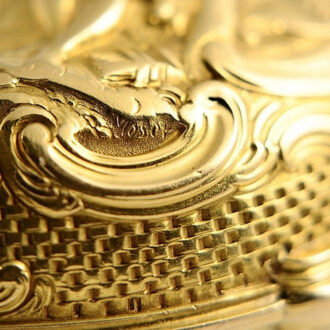
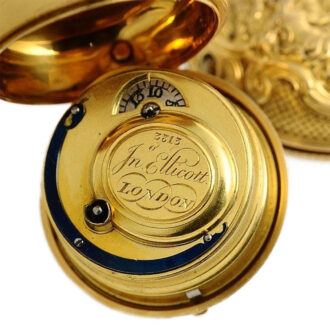
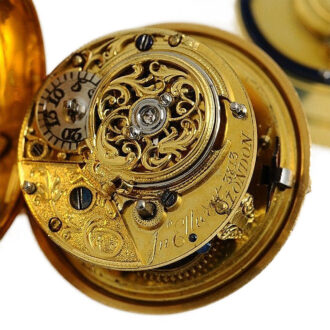
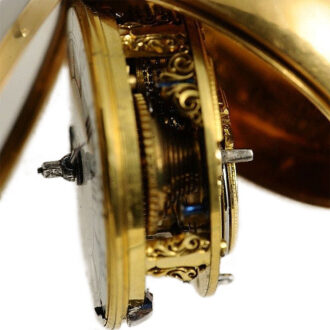
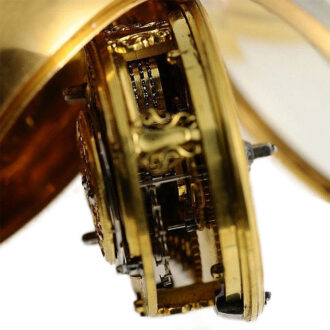
Two cases: Repoussé, gold, à goutte outer case, signed by Moser, with depiction of “Hercules at the Crossroads”, engraved and chased volutes and scrollwork and large lateral hinge; Gold polished inner case with case maker’s punch mark “JB” and signed and numbered movement protection cap. Enamel dial with radial Roman hours and blued steel “Poker & Beetle” hands. Full plate movement, keywind, firegilt, with applied engraved ornaments, chain/fusee, pierced movement pillars, cylinder escapement, three arm steel balance, steel cylinder wheel, very finely florally engraved, pierced balance cock and large chatoned diamond endstone.
–
Diameter: 49 mm
–
Weight: 137 g
–
Signed: John Ellicot, London
–
John Ellicott (1706-1791)
One of the most eminent English watch- and clock-makers, established himself in business about 1728 and became a Fellow of the Royal Society in 1738. Ellicott was the inventor of a compensation pendulum and paid great attention to the use of the cylinder escapement only a few years after its improvement by Graham. In some of his later pieces the cylinders were made of ruby.
–
George Michael Moser (1706-1783)
George Michael Moser was born in Schaffhausen on January 17, 1706. He studied chasing and gilding under his father Michael, a coppersmith. He moved to London in 1726 and worked for John Valentine Haidt, goldsmith and watch chaser. By 1737 he was working on his own account at Craven Buildings off Drury Lane. In addition to chasing he also produced fine enamel cases of which only about twenty are known to survive. He designed the great seal of George III and painted enamel portraits of the royal children for Queen Charlotte. In the 1740’s Moser became a leading figure at the St Martins Lane Academy and later, in 1769 he became the first Keeper of the Royal Academy. His repoussé watch case work is among the finest to be found. Moser continued to work at least until the late 1770’s, and was active for the Royal Academy until the end of his life. On January 30, 1783, the “Gentleman’s Magazine” reported that Moser “was followed to his grave in grand funeral pomp by all the capital artists, Sir Joshua Reynolds at their head as chief mourner, Sir William Chambers, etc. Ten mourning coaches, besides two gentlemen’s coaches, were in the procession”. In The Art of the Gold Chaser in Eighteenth-Century London, Richard Edgcumbe devotes over 40 pages of text to Moser’s work in addition to the many illustrations included.
–
Hercules at the Crossroads
A vigorous and plastic Hercules is depicted with two women flanking him, who represent the opposite destinies which the life could reserve him: Virtue is calling him to the hardest path leading to glory through hardship, while the second, the Pleasure, the easier path, is enticing him to the vice.
Signed: John Ellicot, London
Share this page: