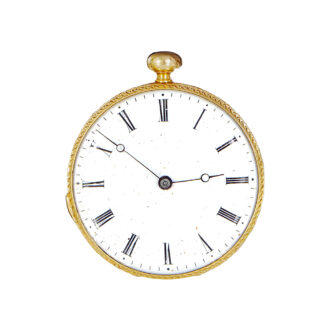
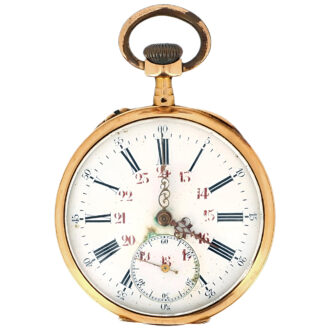
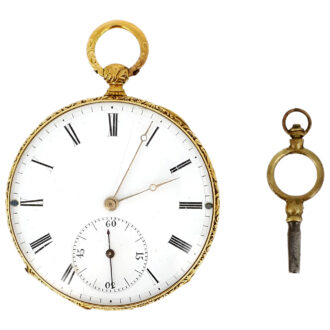
English pocket watch with Grande & Petite Sonnerie Circa 1890


- Kenmerk
- HC0594
- Diameter
- 54 mm
- Estimate
- € 20.000 - 40.000
- Price sold
- -
Gold hunter cased watch with trip minute repeater
–
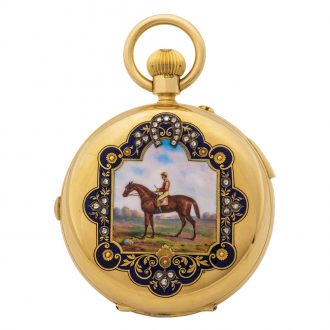
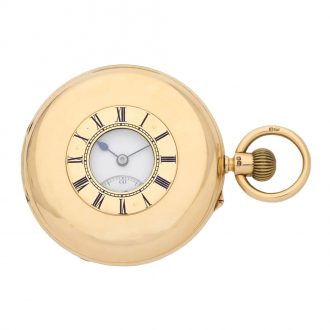
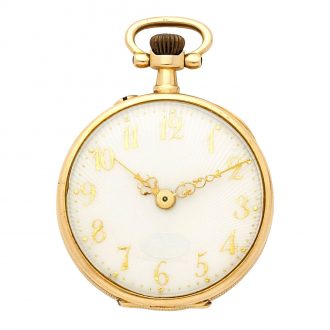
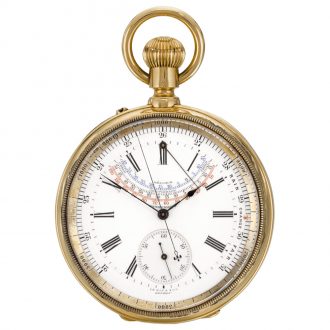
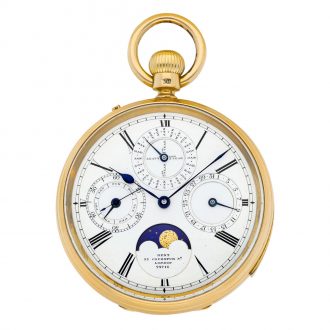
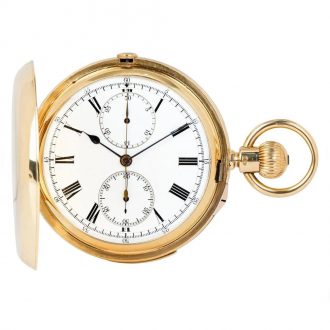
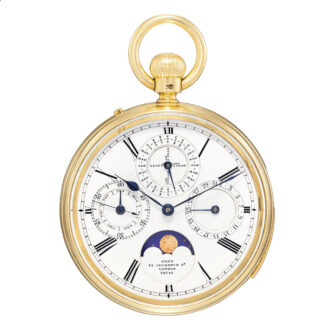
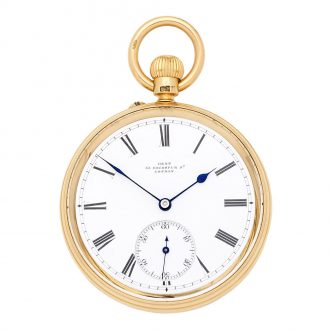
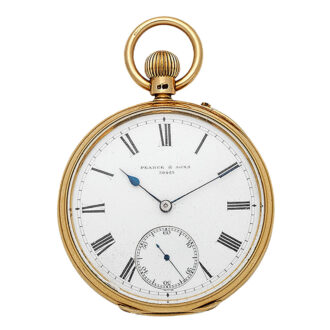
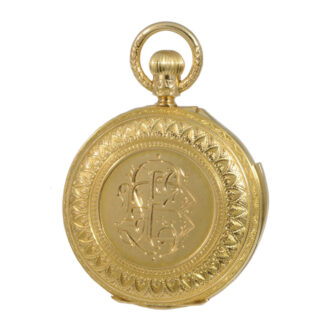
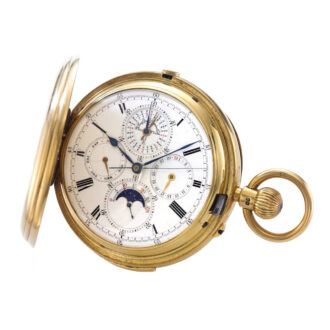
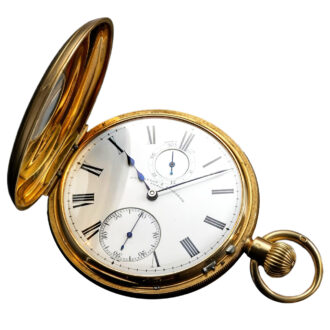
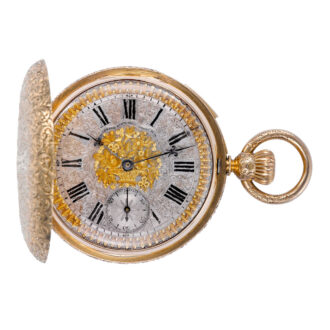
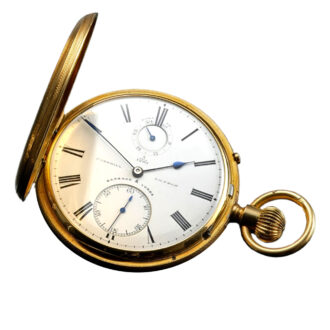
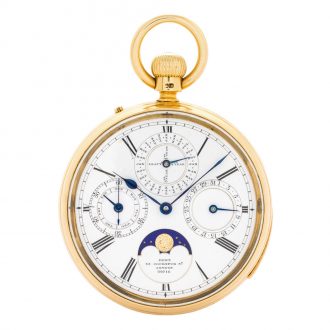
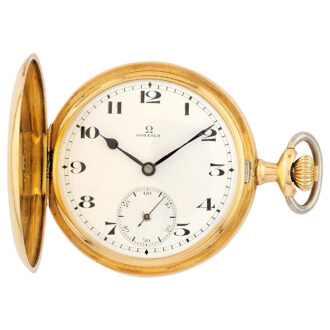
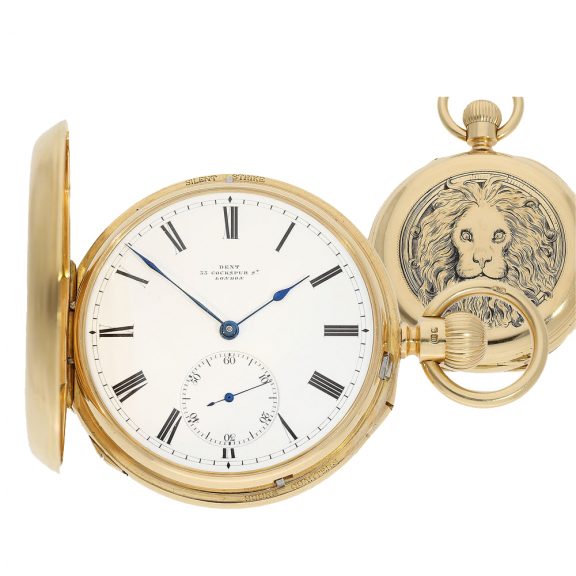
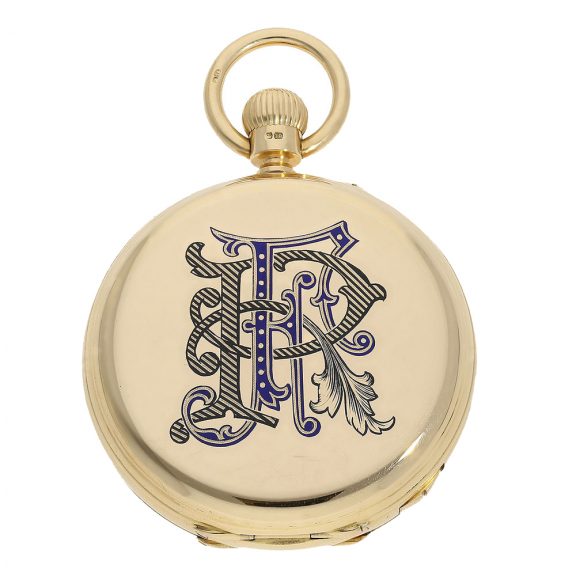
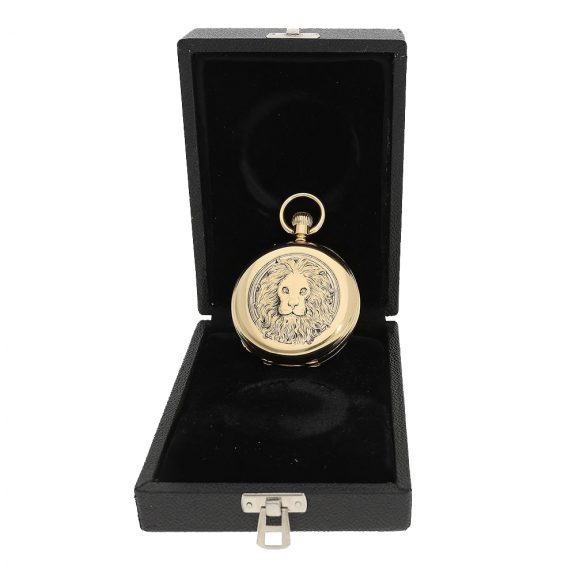
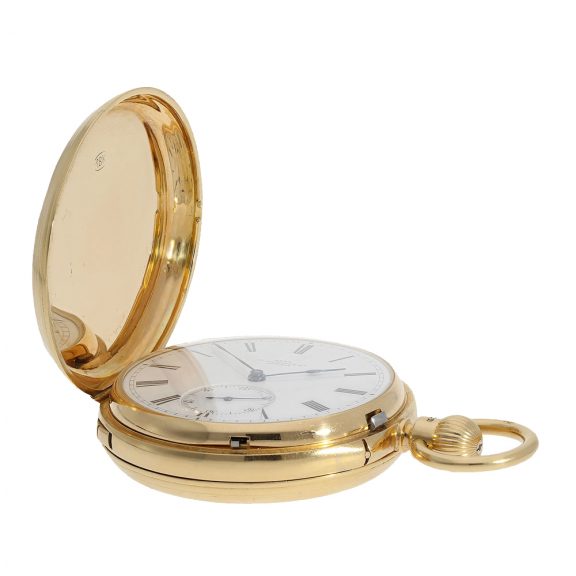
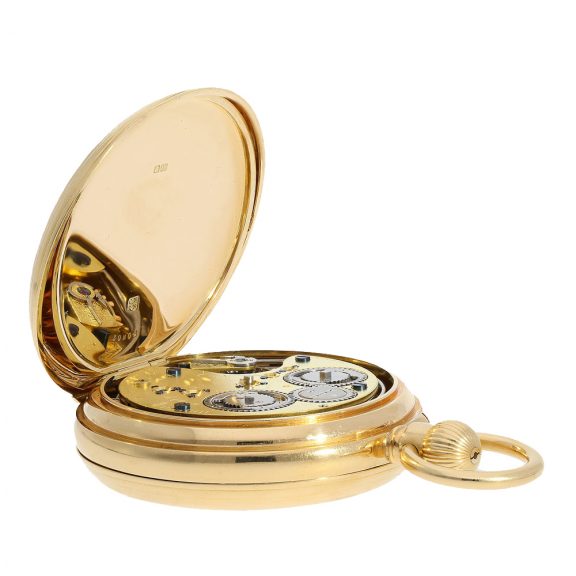
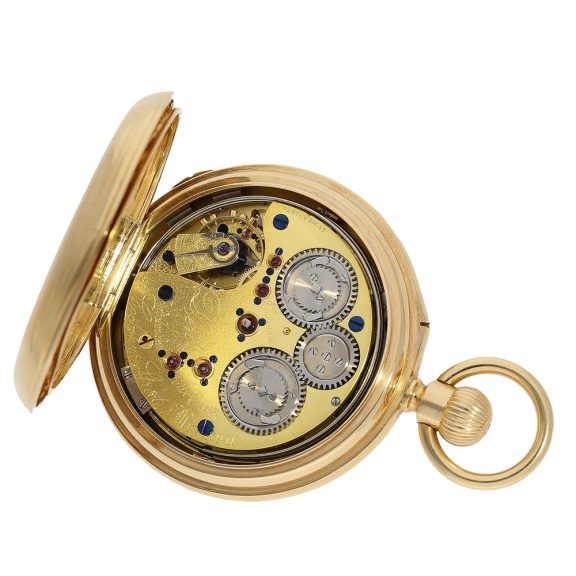
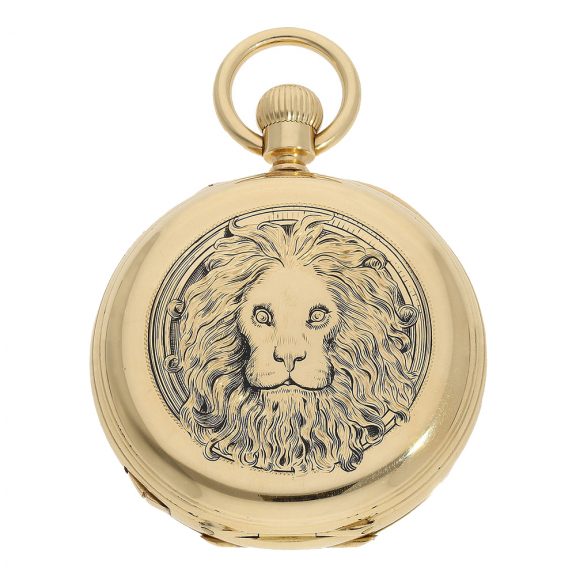
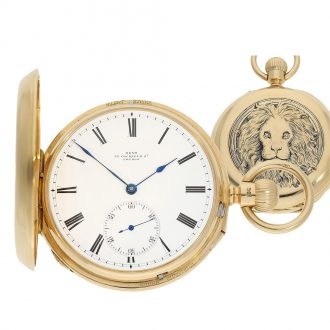
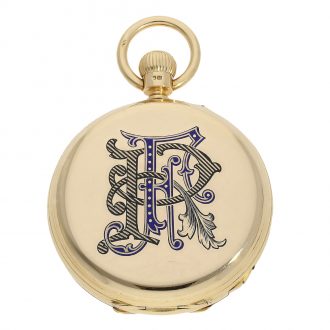
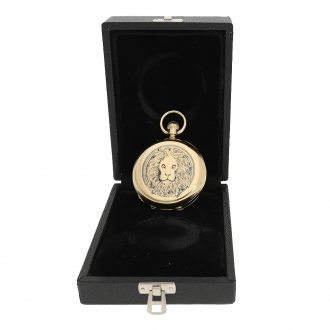
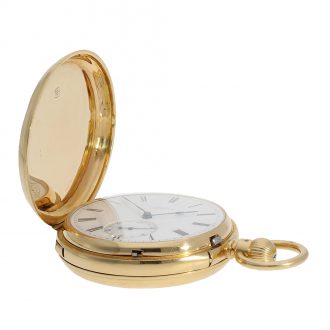
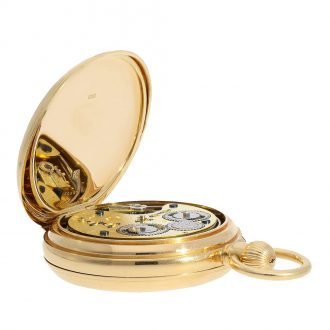
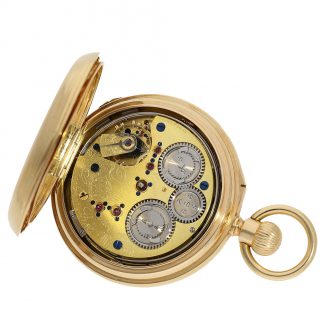
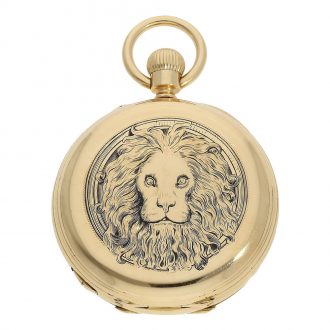
An important gold full hunter cased numbered pocket watch with Grande & Petite Sonnerie and trip minute repeater, made by the royal watchmaker Frederick Dent in London, England, circa 1890. The full hunter numbered case was crafted from 18 Carat gold and has a spring cover with an enamelled monogram “FR”, a back cover with an engraved lion’s head and a dust cover whose number is identical to the work number and also has the master’s mark CN/FN. The white enamel dial has an outer ring with Roman numerals four the hours, a subsidiary dial at six o’clock with Arabic numerals for the seconds and blued steel hands. The movement has a highly complicated and extra fine precision lever movement with screwed gold chatons and tandem winding, under the dial has one of the very finest striking mechanisms that can be found in pocket watches, the very highest quality and perfection, a Grande & Petite Sonnerie and a trip minute repeater.
Dial and movement signed.
–
Diameter: 54 mm
–
Weight: 179 g
–
Signed: Dent, 33 Cockspur ST, London
–
The watch comes in a box and is a masterpiece of English watchmaking. A comparable watch by Dent was auctioned in Geneva in 2001 and achieved 57.500 Swiss francs.
–
Dent
Dent is a renowned British watchmaker that was established by Edward J. Dent in 1814. The company is famous for producing high quality timepieces, including those made for royalty. Dent was appointed as a watchmaker to the Queen and the Prince of Wales, and the company has a long history of creating exquisite and precise timepieces When E.J. Dent passed away in 1853, his son Frederick continued the business.
Today the history of Dent & Co. spans three centuries of precision watch and clock making in Great Britain. Established in 1814 by Edward J. Dent, the company embraced the Victorian fervour for technological innovation and created precision chronometers to navigate the Royal Navy and guide some of the most intrepid explorers on their voyages. The British Empire was in full expansion and its maritime tradition had produced some remarkable technological breakthroughs from the late 18th century; John Harrison’s triumphant mechanical solution in 1764 to locate a ship’s position at sea won the coveted Board of Longitudes prize money and further consolidated Britain as the horological force in the world. Propelling the impetus of Britain’s primacy, Dent proved a key player in Victorian horological history manufacturing the Standard Clock at the Royal Observatory, Greenwich which was to keep “Greenwich Mean Time” the time to which all others in the Empire were referred (better known today as G.M.T.) and continued to do so until replaced by an electronic clock in 1946. Dent also made probably the most famous clock in the world – the Great Clock for the Houses of Parliament, familiarly known as Big Ben.
–
Trip minute repeater
A trip minute repeater is a complex mechanical complication found in high end pocket watches. It allows the wearer to audibly hear the time on demand, without the need to look at the watch face.
When activated, the repeater mechanism strikes a series of gongs or bells to indicate the hours, quarters and minutes. The number of strikes for each unit of time is determined by the watch’s design. For example, a watch with a quarter repeater will strike once for each quarter hour, twice for each half hour and three times for each three quarter hour.
Trip minute repeaters are considered one of the most intricate and challenging complications to create, requiring a high level of skill and precision from the watchmaker. They are often found in luxury pocket watches and are highly prized by collectors.
Signed: Dent, 33 Cockspur ST, London
Share this page: