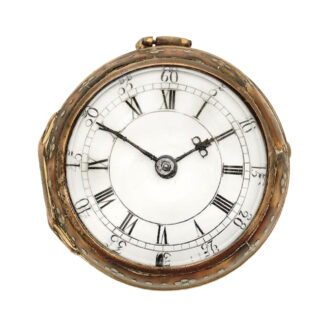
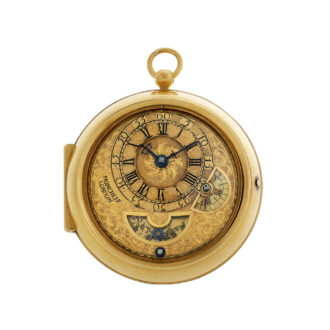
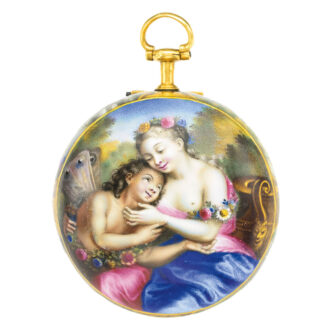
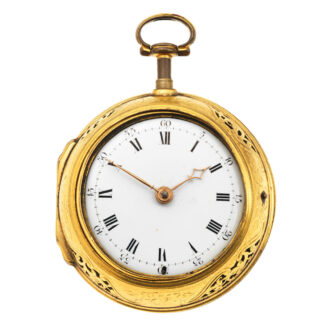
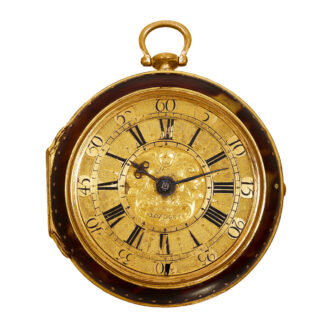
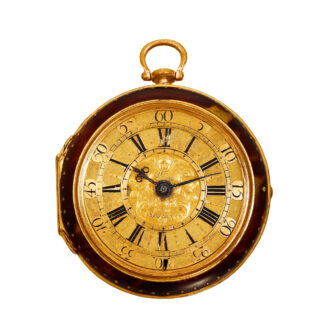
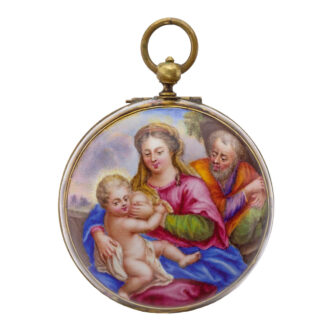
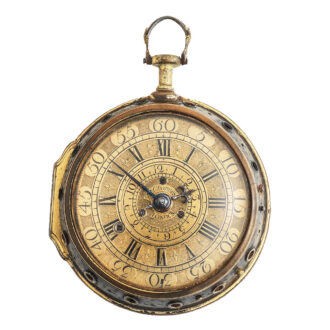
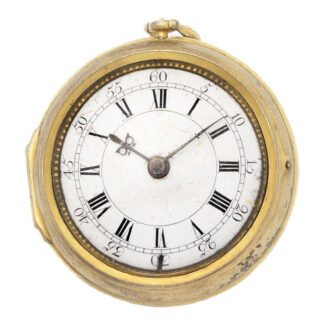
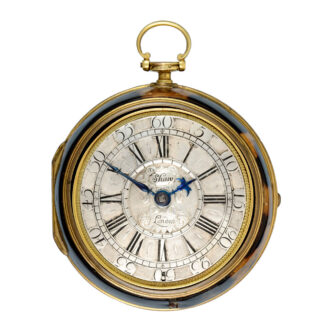
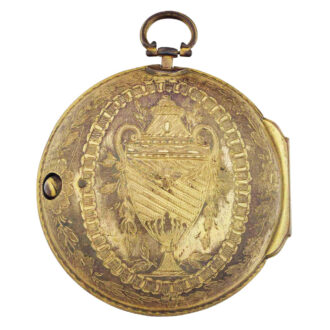
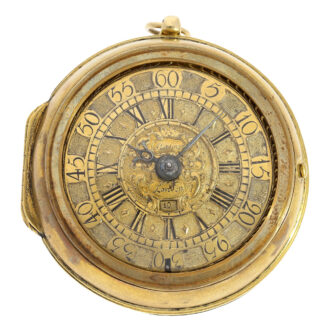
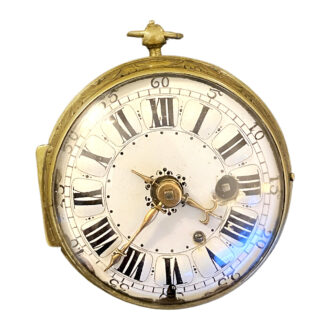
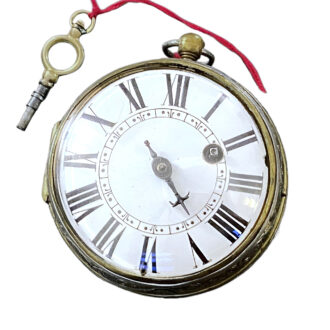
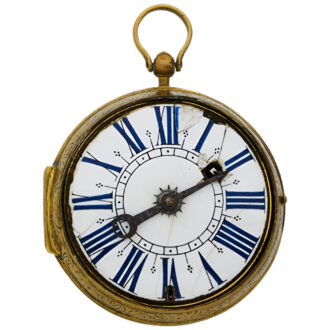
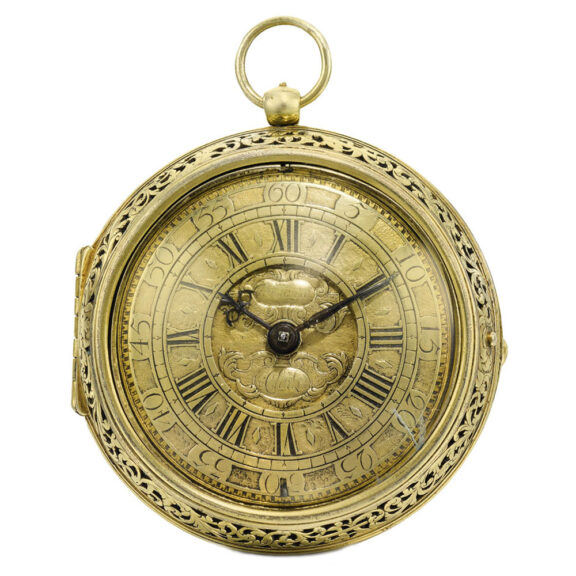
English silver gilt pair cased two train clock watch Circa 1700
- Kenmerk
- SA0410
- Diameter
- 58 mm
- Estimate
- € 6.500 - 12.000
- Price sold
- € 9.000
Silver gilt pair cased two train clock watch
–
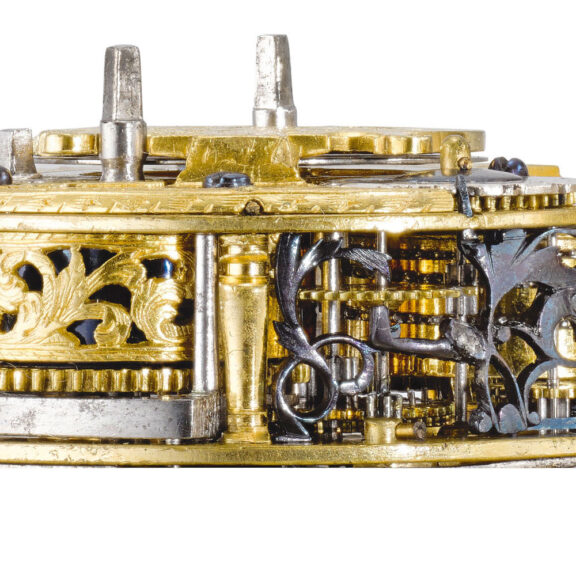
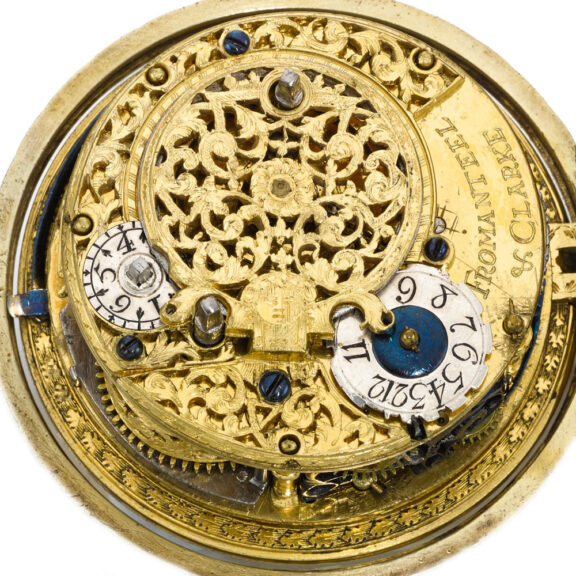
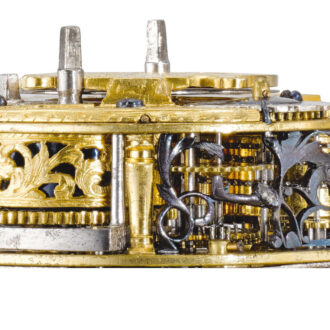
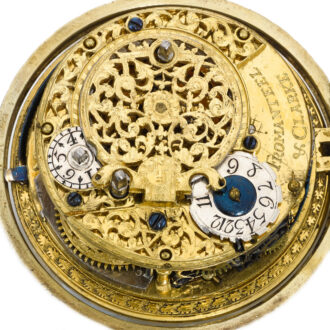
An English silver gilt pair cased two train clock watch, circa 1700, gilded full plate movement, verge escapement, decoratively pierced and floral engraved balance cock, a mask at the neck with short streamers, silver locking plate visible to the backplate, plain flat balance, fusee and chain, Egyptian and turned baluster pillars.
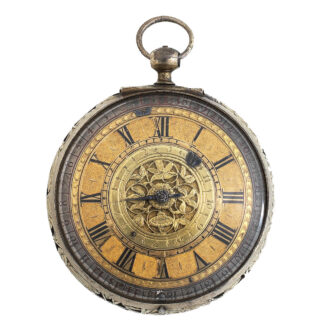
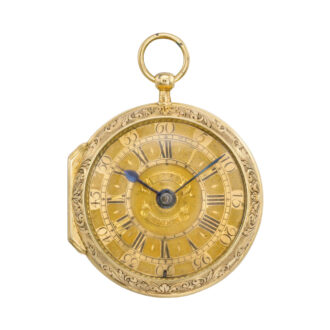
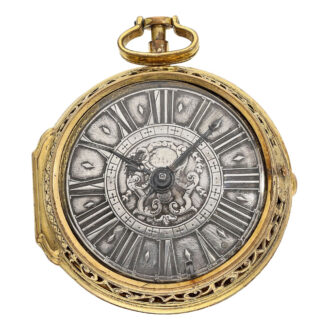
Silver-gilt champlevé dial and Roman numerals with half-hour divisions between and to the ring beneath, outer Arabic minute ring, the center with two cartouches flanked by scrolling foliage and blued steel beetle and poker hands.
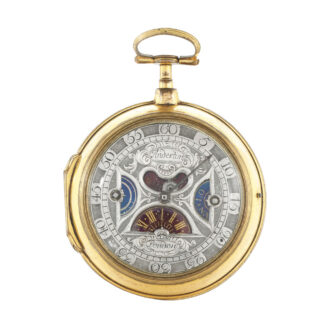
Silver-gilt inner case, the band pierced and engraved with flowers, foliage and birds, a grotesque mask beneath the pendant, the back with winding apertures for going and striking trains, ring bow and pendant, outer silver-gilt case with similar pierced and engraved decoration to bezel and band and with case maker’s mark IB with coronet above, probably for John Banbury. Movement and dial signed.
–
Diameter: 58 mm
–
Signed: Fromanteel & Clarke
–
This watch was part of the famous collection of Rare and Important Watches, assembled by Edward Hornby.
The makers’ signatures are signed to the backplate in capital letters rather than the more traditional script style of signature. By this period, block lettering was beginning to be used by several makers, including Tompion and Banger. Ahasuerus Fromanteel the Younger and Christopher Clarke began a partnership in circa 1680 to form the firm of Fromanteel and Clarke. Fromanteel came from a family of distinguished watch and clockmakers and worked in both London and Amsterdam. He earned his Freedom from the Clockmakers’ Company in 1672. Clarke, a British ex-patriate who resided in Amsterdam, married Fromanteel’s daughter in 1694. Clocks and watches signed ‘Fromanteel and Clarke’ were sometimes manufactured in Amsterdam, and sold both there and in London. Their partnership ended in 1703 when Fromanteel died, Clarke continued to work, forming a partnership with Fromanteel’s younger brother, Abraham.
Signed: Fromanteel and Clarke
Share this page: