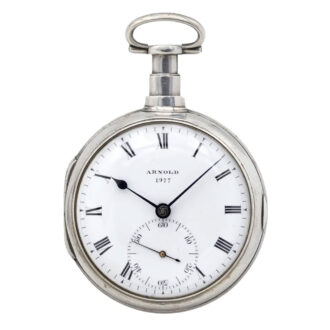
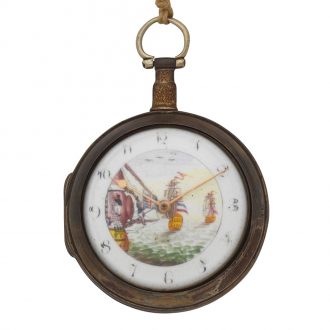
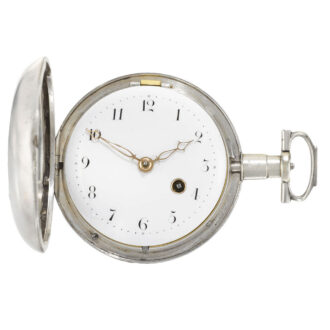
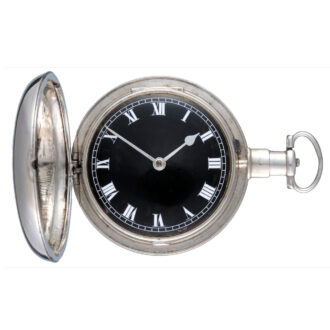
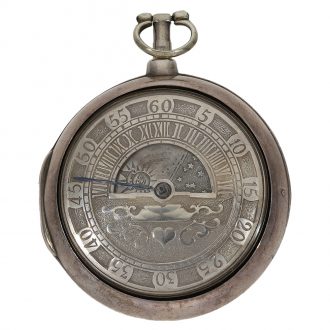
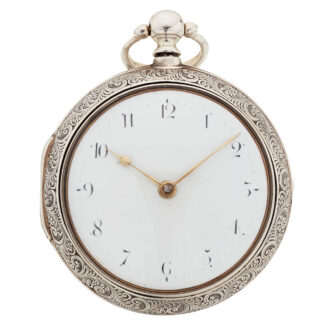
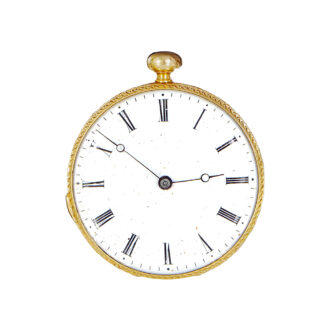
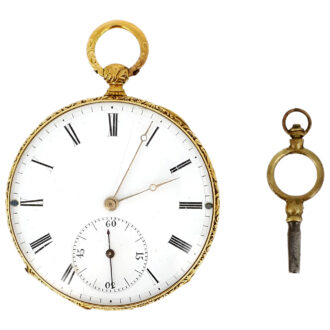
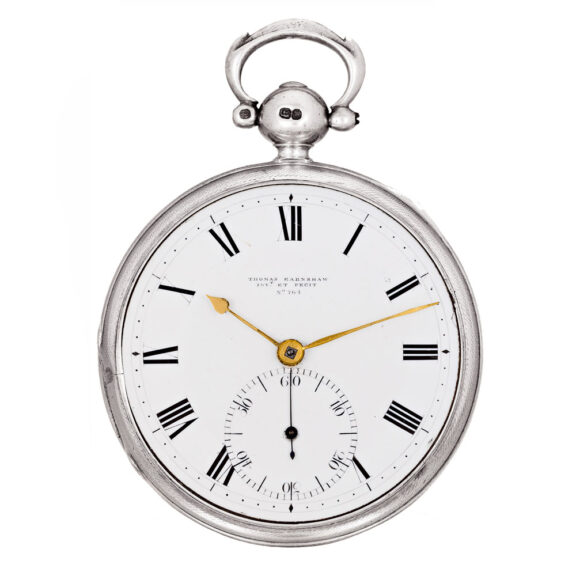
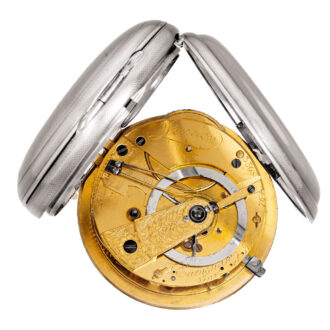
Fine English silver key wound chronometer watch Circa 1804
- Kenmerk
- FA0216
- Diameter
- 55 mm
- Estimate
- € 5.000 - 10.000
- Price sold
- -
Silver key wound chronometer watch by Thomas Earnshaw
–
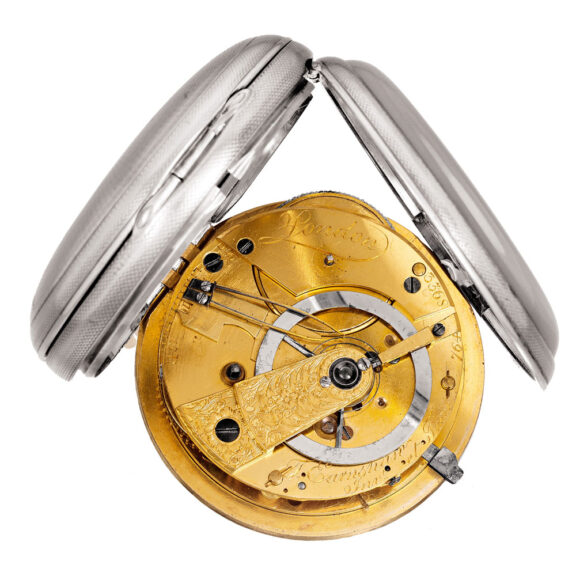
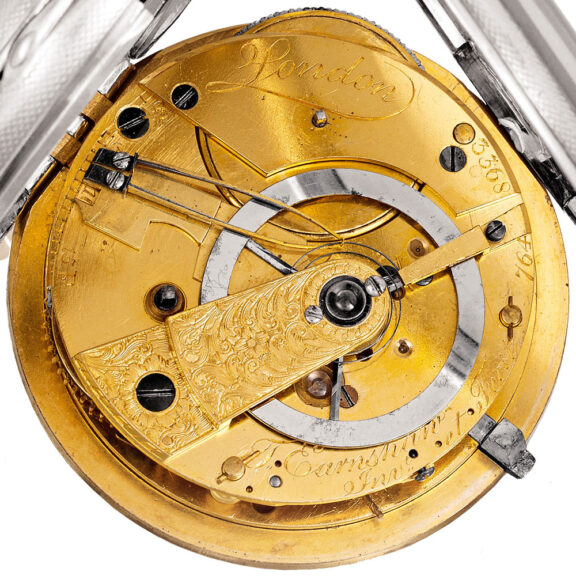
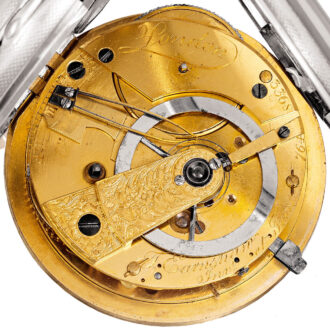
An English fine and rare, silver pocket chronometer with Earnshaw’s spring detent escapement and patent bimetallic sugar tong compensation, the movement made circa 1804. Gilt brass full plate movement with ring turned pillars, five jewels, fusee and chain, Harrison’s maintaining power, Earnshaw’s escapement with spring footed detent, large polished steel flat rim three arm balance, flat blued steel balance spring, foliate engraved balance cock, bimetallic sugar tongs compensation coupled with the index regulator.
Engine turned silver case with maker’s mark JB (Josiah Barnett).
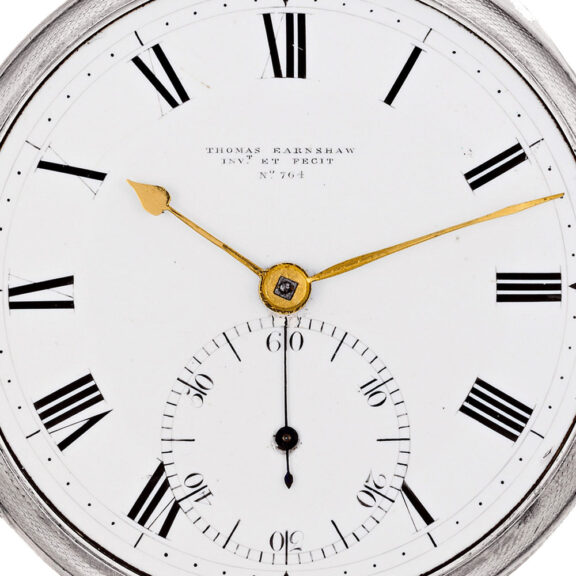
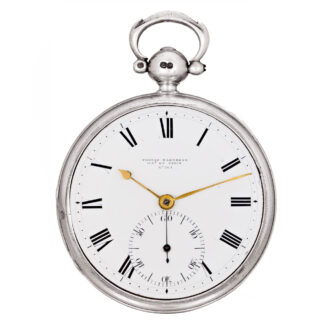
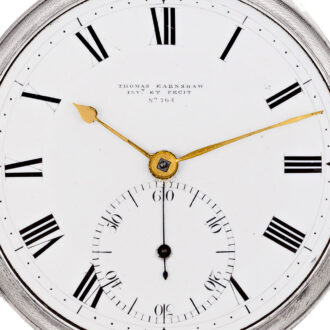
White enamel dial with radial Roman numerals and outer minute track, subsidiary seconds. Gold hour and minute hands. Blued steel subsidiary seconds hand.
–
Diameter: 55 mm
–
Signed: Thomas Earnshaw, Invenit et Fecit
–
Using Earnshaw’s numbering system, the movement of this watch can be dated to around 1804. Watch No. 457 dates from 1800, No. 808 from 1805. The second number, in this case 3368, is the total number of watches produced at that point in production. The case of this watch has London hallmarks for 1836, suggesting that either it was a movement that was in stock and cased by Thomas Earnshaw Junior who carried on the business, or that the watch was re cased (perhaps due to being damaged) in 1836. This watch is listed in: The Time Museum Catalogue of Chronometers, Anthony G. Randall, 1992. This watch was previously sold by Antiquorum Hong Kong, on June 3, 1996.
Thomas Earnshaw (1749-1829) Born in Ashton-Under-Lyne in Lancashire, by 1780 he had the reputation of being a very fine watch finisher. He invented the modern chronometer spring detent escapement towards the end of 1780, a design that he insisted was stolen by Arnold . However, it is likely that Earnshaw and Arnold arrived at their conclusions separately. Earnshaw perfected the fusing together of brass and steel to make a laminae for compensation balances which previously had had to be riveted. The Sugar Tong Compensation. Although Earnshaw made pocket watches with bi metallic balances and free sprung helical springs, he equally often turned them out with an uncut flat steel balance, spiral spring, regulator and compensation curb. This arrangement has two arms with a pin on each end, instead of sliding along the balance spring the gap between the two pins widened in cold weather and narrowed in hot, which has the same effect. Owing to the pincer like appearance and action, this curb is commonly known as a sugar tong compensation. It is thought that these watches were for clients who needed a watch that could withstand robust use rather than watches with the heavier bi metallic balances that could easily break the balance pivots if subjected to shock.
Signed: Thomas Earnshaw, Invenit et Fecit
Share this page: